BLOGS · HARDWARE BLOGS
PUBLISHED
READING12 min
Testing AMD Athlon II X3 450 and Intel Xeon X3430 processors in popular multiplayer games
This article tests AMD Athlon II X3 450 and Intel Xeon X3430 processors in popular games, evaluating their performance, limitations, and overclocking challenges.
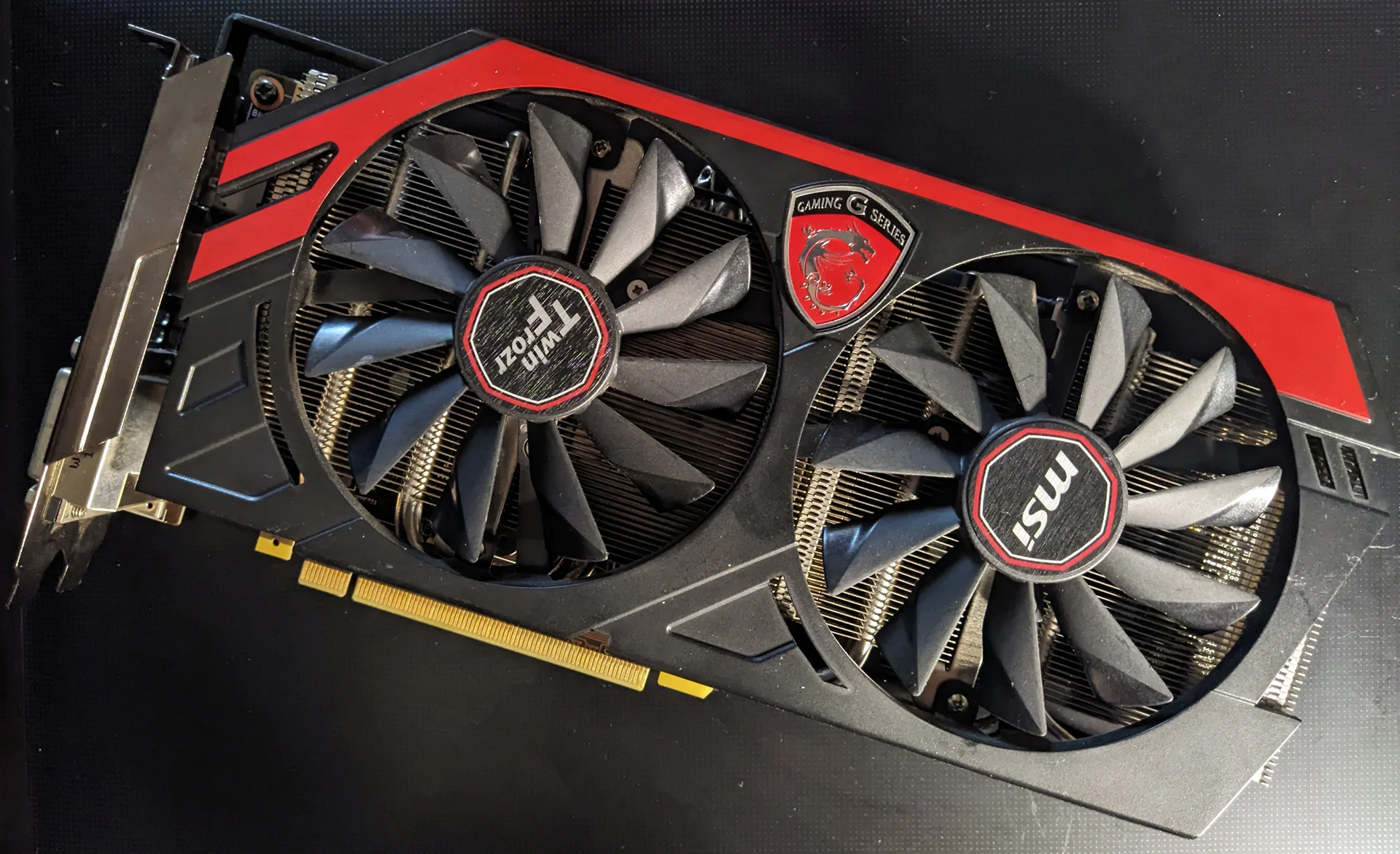
After a successful overclock of the AMD Athlon II X3 450 chip, a relatively unsuccessful Athlon II X3 440 overclock, and a rather interesting exploration of two Athlon II X2 260s' potential, I set out to test these processors in several games and compare their performance against similarly priced rivals. Especially since I currently lack a powerful enough graphics card to write full-fledged articles anyway. However, testing old quad-core, triple-core, and dual-core chips in 2020 only requires a weaker GPU like the GeForce GTX 760, which I'm currently using mostly as a placeholder during various CPU overclocks.
Coincidentally, I also got my hands on an old but still interesting Intel Xeon X3430 chip for a short time, which, by coincidence, sits in the same price bracket as the Athlon II X3 450 ($4-7).
All that remained was to outfit the AM2+ test bench with the other necessary components. Adequate testing in modern games required at least 8GB of RAM. Getting four 2GB DDR2 modules wasn't hard; they're very cheap now ($4-5 per 2GB 800MHz stick). However, I completely forgot that K10.5-based chips become finicky with four DDR2 slots filled, no longer reaching the same overclocked frequencies they easily hit with one or two RAM modules.
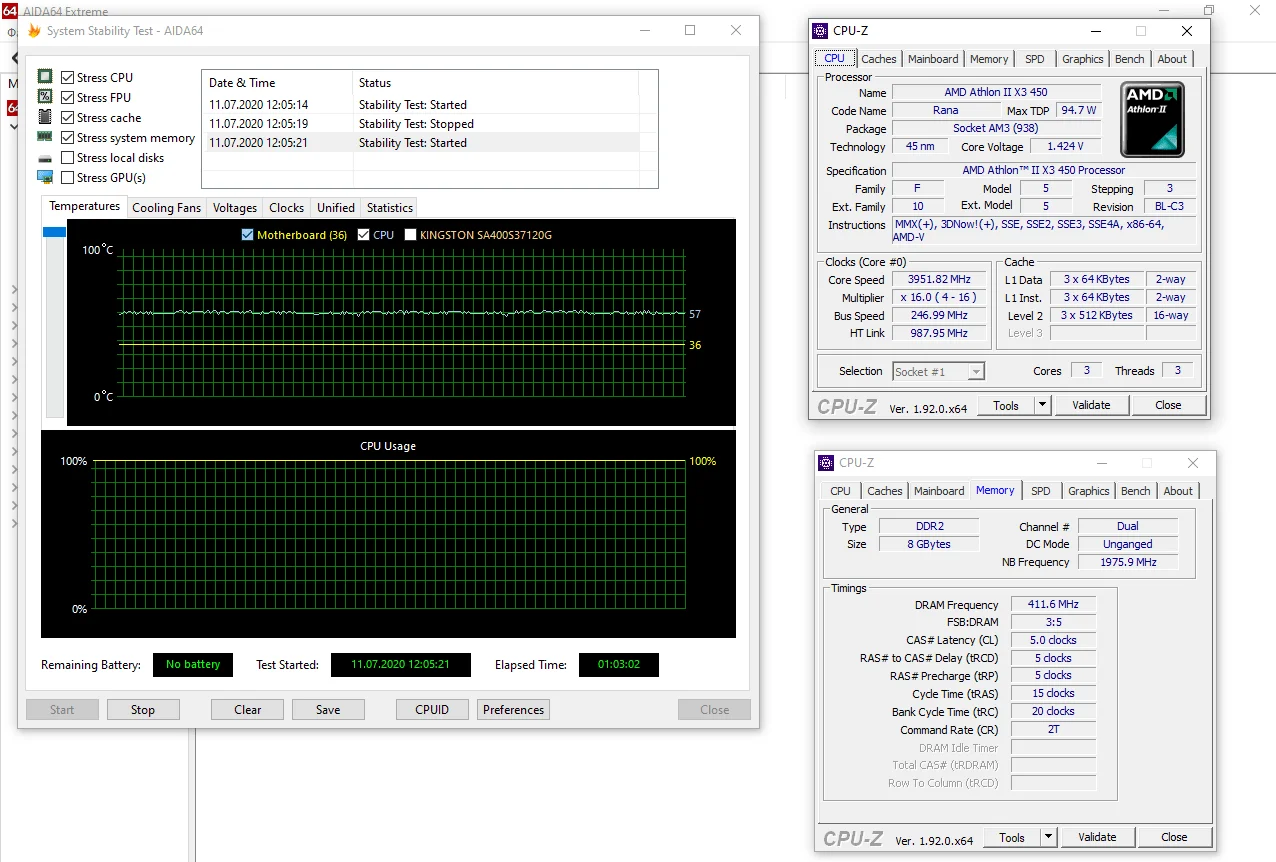
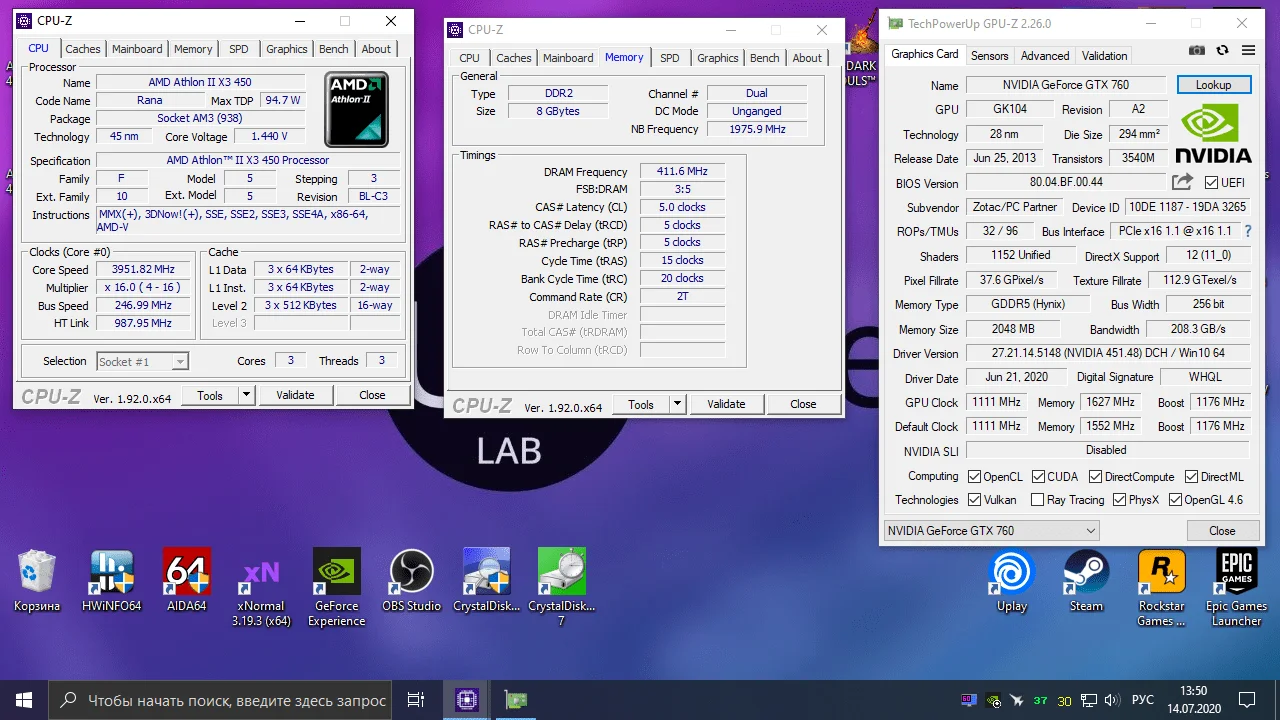
This brings me to a rather unpleasant detail for this article: Unlike the overclocking blog post where this very Athlon II X3 450 easily hit 4GHz with a single RAM module, here, with four 2GB Kingston 99U5429-007.A00LF sticks, the stable frequency dropped slightly to 3951MHz:
 ⤢ ВІДКРИТИ
Is this a significant loss? Obviously not. But did it sting my pride? Immensely: To stop just short of testing the Athlon II X3 at 4GHz in games is incredibly frustrating. But what can you do? This CPU sample simply won't hit higher frequencies when paired with the ASUS M2N-E motherboard and four 2GB modules.
 ⤢ ВІДКРИТИ
Test setup
Processors - Athlon II X3 450 (rev. C3) and Xeon X3430 (rev. B1)
AM2+ Motherboard - ASUS M2N-E
LGA 1156 Motherboard - ASUS P7P55 LX
CPU Cooler - Cooler Master Hyper 212 EVO
AM2+ RAM - 4x 2GB Kingston (99U5429-007.A00LF 34CC2E04) totaling 8GB
LGA 1156 RAM - 2x 8GB HyperX Genesis Na’Vi Edition (KHX16C9C2K2/8) totaling 16GB
Graphics Card - ZOTAC GeForce GTX 760 AMP!
Storage - KINGSTON 120GB SA400S37120G (Windows 10, Software) and Seagate 2TB ST2000DM008-2FR102 (Games)
Power Supply - Chieftec GPS-1250C 1250W
Operating System - Windows 10 with latest updates as of June 2020
Testing specifics
Due to the Athlon II X3 450's extremely low performance, I had to use virtually minimal graphics settings in some games. For instance, in Destiny 2, the Athlon II X3 450 chip couldn't deliver acceptable performance even when overclocked to 3951MHz, regardless of settings. Nevertheless, at 'minimal' settings, you'll at least get an idea of the game and can then decide if it's worth upgrading for.
In general, Athlon II processors don't support the currently necessary SSE4.1 and SSE4.2 instruction sets. This means many modern and relatively modern games might simply fail to launch on them. As you've probably guessed, without these limitations and the Athlon II's meager performance, there would be many more test games and higher graphics settings. But alas, it is what it is.
Tests will be conducted in the following games:
Counter-Strike: Global Offensive (FPS Benchmark v1.01 from the Steam Workshop)
Destiny 2 (Custom Gambit Map)
Fortnite (Free Play)
For Honor (Benchmark)
Grand Theft Auto 5 (Benchmark)
In all games except Fortnite, repeatable results are somewhat achievable. However, with Epic Games' creation, I had to settle for essentially random metrics obtained on the same map. Because of this, it's quite difficult to assess performance gains from CPU overclocking in Fortnite. Still, given the insane popularity of this battle royale, I simply couldn't exclude it from testing.
To answer the very reasonable question, 'Where are the usual Shadow of the Tomb Raider, Battlefield V, and Watch_Dogs 2?', I'll put it simply: These games run extremely poorly on such old and weak processors. For instance, Shadow of the Tomb Raider on the Athlon II X3 450 at 3951MHz shows 23-30 frames per second, but the benchmark loading times stretch to five minutes. Moreover, in the final 'Market' scene, the chip can't even render the background mountains until the very end of the test segment. Battlefield V crashed before reaching the main menu, and Watch_Dogs 2 presented a mysterious black screen, never even getting to the intro cutscenes. But I think this was entirely expected and obvious; K10.5 architecture chips are, after all, over a decade old and aren't obligated to run relatively new or evolving projects.
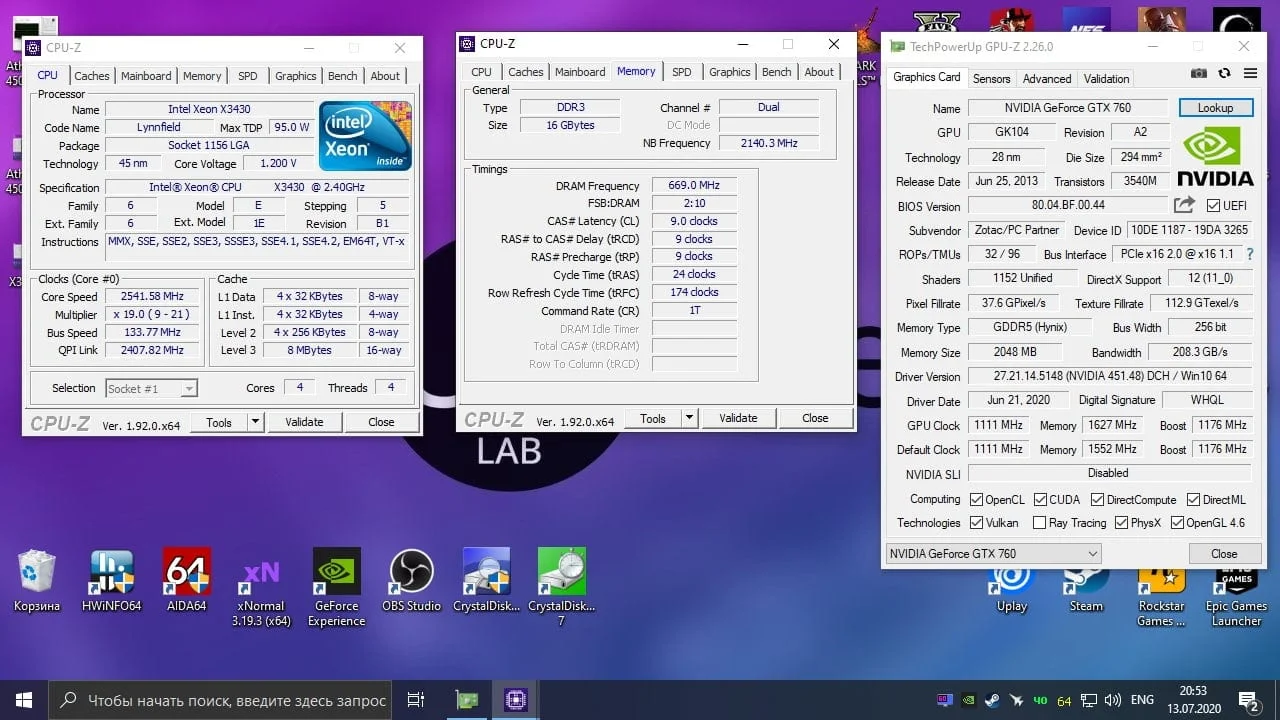
A few words about the Xeon X3430 chip: Unfortunately, I only had the processor for a few hours, so I simply didn't have time to overclock it or run additional tests at higher frequencies. If you wanted to see the Xeon X3430 tested overclocked with a relatively modern graphics card, don't worry. I'll soon add this chip to my collection and conduct a detailed review.
 ⤢ ВІДКРИТИ
Average and minimum FPS measurements were taken using MSI Afterburner's built-in benchmark, with video recorded via NVIDIA ShadowPlay.
Counter-Strike: Global Offensive
For CS:GO testing, I used the 'FPS Benchmark v1.01' downloaded from the Steam Workshop and minimal graphics quality settings:
 ⤢ ВІДКРИТИ
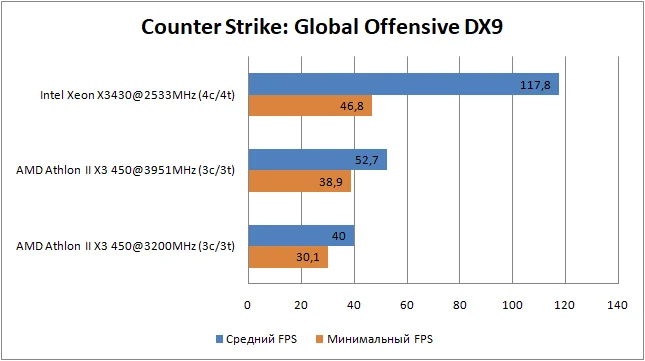
Based on these results, it's clear that neither CPU is suitable for competitive Counter-Strike: Global Offensive. Nevertheless, if CS:GO is just 'evening entertainment' for you, and not your 'esports future,' then you shouldn't have any issues with a few casual rounds. But to clutch a win, 38 frames per second likely won't cut it.
Destiny 2
For D2 testing, I used the custom 'Deadly Depths' map from Gambit mode and minimal graphics quality settings:
 ⤢ ВІДКРИТИ
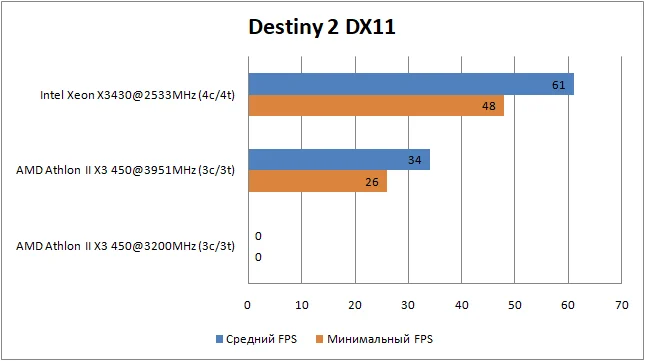
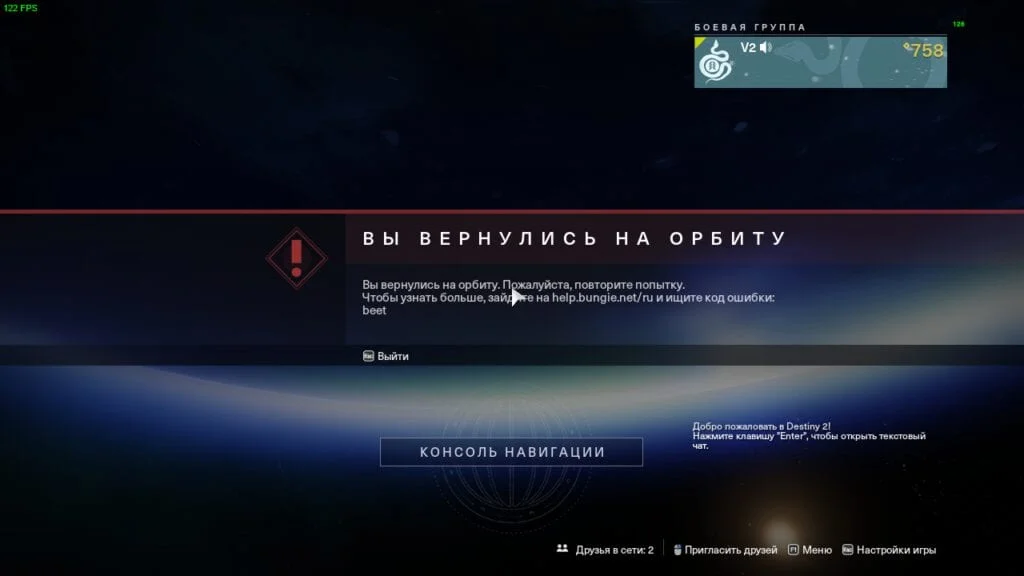
At its nominal 3200MHz frequency, the Athlon II X3 450 couldn't even load the Gambit test scene, constantly sending the character back to orbit. Only when overclocked to 3951MHz was I able to run the benchmark in the 'Deadly Depths' test location against 'Fallen' enemies.
 ⤢ ВІДКРИТИ
Overall, at 3200MHz, the Athlon II X3 450 took 3-5 minutes to load different locations, and competitive modes (Crucible/Gambit) were simply inaccessible due to loading time limits (timeouts). Therefore, I couldn't adequately test the processor in its stock state in Destiny 2. But considering the chip's performance when overclocked, the stock X3 450 wouldn't have been able to hit the minimum required 24 frames per second anyway.
The same can't be said for the Xeon X3430. This processor easily delivered a coveted 60 FPS at minimal quality settings. However, don't be fooled – slightly increasing settings (e.g., shadow resolution and/or character quality) will yield performance similar to an overclocked Athlon II X3. So, with the X3430, it's best to stick to minimal graphics settings and enjoy the relatively high FPS.
Fortnite
Epic Games' creation lacks a built-in benchmark, so I had to capture FPS metrics during a solo battle royale match.
 ⤢ ВІДКРИТИ
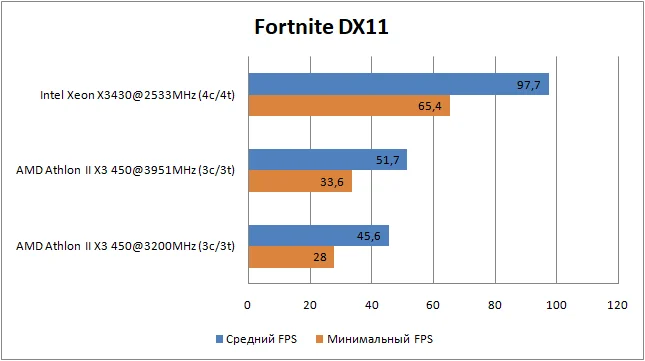
To my surprise, Fortnite gave me the most ambiguous results of the entire test suite. See for yourself: The X3430 chip's FPS is leaps and bounds higher than the overclocked X3 450's. However, watching the test footage reveals why the Xeon delivers such wild results. Due to its low clock speed, the Intel processor simply can't load the necessary high-detail models into the scene, settling instead for 3D models with relatively simple polygonal meshes and blurry, low-resolution textures. Additionally, during Fortnite testing, I observed frequent 'freezes' on both the Athlon II X3 450 and Xeon X3430, making the game extremely uncomfortable to play.
The 'freezes' are even more noticeable in the video recordings. And this is despite the fact that the GPU handles the main load during video recording, as I deliberately used NVIDIA ShadowPlay. Fortnite itself was launched from a modern 2TB T2000DM008-2FR102 HDD (defragmented before testing), while recording was done to an SSD. In general, with more powerful processors (Core i5-2500K, Xeon X5660, Xeon E5-2643), the same storage, and the same graphics card, no 'freezes' are observed in Fortnite.
For Honor
 ⤢ ВІДКРИТИ
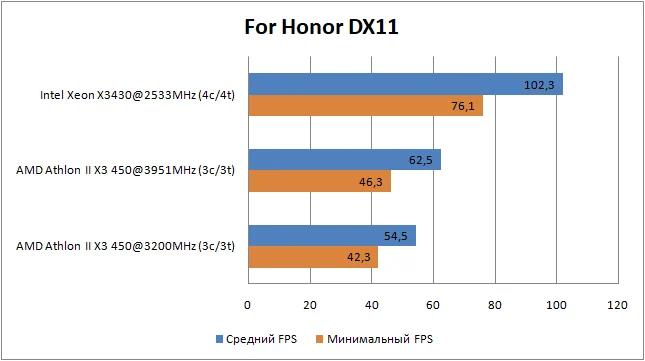
Throughout all the testing, this is probably the only game where there's almost nothing to complain about. Gritting your teeth, you can even play For Honor on a stock Athlon II X3 chip, let alone the Xeon X3430, which shows quite confident results at minimal settings.
Grand Theft Auto 5
 ⤢ ВІДКРИТИ
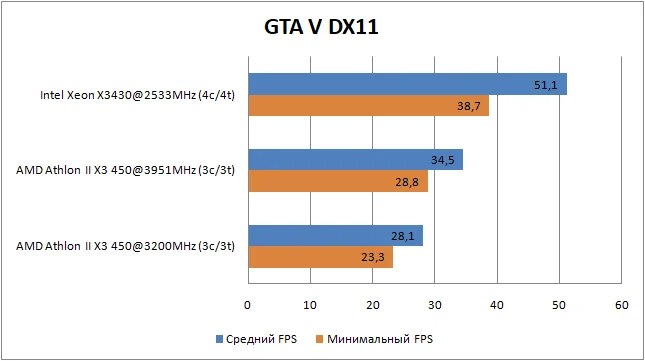
And finally, the last game in our testing is GTA 5, which has recently become relevant again. Its benchmark clearly shows that playing online comfortably on either the Athlon II X3 450 or the Xeon X3430 won't be possible. After all, frame rates in GTA 5's online mode are often almost 40% lower than in story mode. However, you can still enjoy the latter on these chips. And on the X3430, it's even relatively comfortable.
Below is a video recording of all games from this benchmark session:
YouTube
By loading, you allow content from YouTube (cookies may be set).
Conclusion
Ultimately, the interesting and exciting idea of 'testing the once decent, budget triple-core Athlon II X3 450 processor in games' devolved into painful attempts to find compatible games and get any results at all from the chip's nominal operating mode. Moreover, all tested projects, with the sole exception of CS:GO, loaded for so long that during their loading times, you could not only make tea and go to the restroom, but also earn enough for a new system that clearly wouldn't be so slow.
And you know what? It was completely obvious that in 2020, an old Athlon II X3 is in no way suitable for even slightly budget gaming with virtually any graphics card from 2013 or newer. Yet, I somehow hoped to see slightly more confident results.
Besides testing the Athlon II X3 450, I had planned to investigate the performance of the Athlon II X3 440 chip. However, after seeing the results from the processor in this article, any desire to test its younger sibling vanished. The same goes for the Athlon II X2 260 – unfortunately, there won't be tests for it either. If you want an idea of the Athlon II X3 440's performance, just look at the Athlon II X3 450 results in this article. They're entirely representative for the lower-end CPU as well.
Finally, I'd like to talk a bit about the stock Intel Xeon X3430's results: Overall, as a placeholder before a more powerful X3470 or X3480, this chip is quite viable. However, it's crucial to understand that its performance is heavily limited by its four threads, which are no longer sufficient for current games. What's more, even the 8-thread Xeon X3470 isn't always capable of delivering acceptable FPS.
Furthermore, from an overclocking perspective, things aren't so smooth with the Xeon X3430 either. This is because the chip has a low multiplier, which will significantly restrict owners of budget motherboards. Not to mention owners of Chinese 'motherboards' that can't overclock processors at all.
That's why if you already have an LGA 1156 motherboard, it's better to spend a little more and get a more powerful chip (X3450 or X3470) rather than buying a Xeon X3430 and then trying to make it work.
Happy overclocking, and see you in the next article!