BLOGS · HARDWARE BLOGS
PUBLISHED
READING12 min
Kepler in 2025: Benchmarking the GeForce GTX 770 in modern games (MSI GTX 770 Gaming OC)
Can a decade-old Kepler GPU still handle modern gaming? We put the veteran GeForce GTX 770 through its paces in today's demanding titles and explore its technical limitations.
Back in the now distant, and as it turned out, carefree and joyful 2020, we noted the questionable prospects for graphics cards built on NVIDIA's Kepler architecture. The theoretical GTX 670, which at launch easily outperformed the Radeon HD 7950, nipping at the heels of the HD 7970, was on par with the much weaker and cheaper HD 7870 in relevant games of 2020.
Now, a full five years later, it's time to revisit the Kepler architecture and see if a 12-year-old pre-flagship graphics card can offer its owner... anything at all.
The graphics card
First, let's clarify something upfront: the GeForce GTX 770 is nothing more than a slightly overclocked version of the GTX 680. Therefore, its relation to the 700 series is purely nominal.
The most telling example here is the supported DirectX and CUDA versions. While the GTX 780 and GTX 780 Ti are also built on the Kepler architecture, they were released slightly later and received significant improvements, including DirectX 11.1 and CUDA 3.5. Everything below them in the hierarchy, including the subject of this article, is limited to DirectX 11.0 and CUDA 3.0.
What's more, some games that run reasonably well on the GTX 780 won't even launch on the GTX 770. We can also add that it's quite possible to experiment with simple neural networks on the “real” 700 series GeForce cards, but unfortunately, that's not possible on our GTX 770.
In a way, you could consider this article a test of a "slightly" overclocked GeForce GTX 680. With the preamble out of the way, it's finally time to look at the card itself.
 ⤢ ВІДКРИТИ
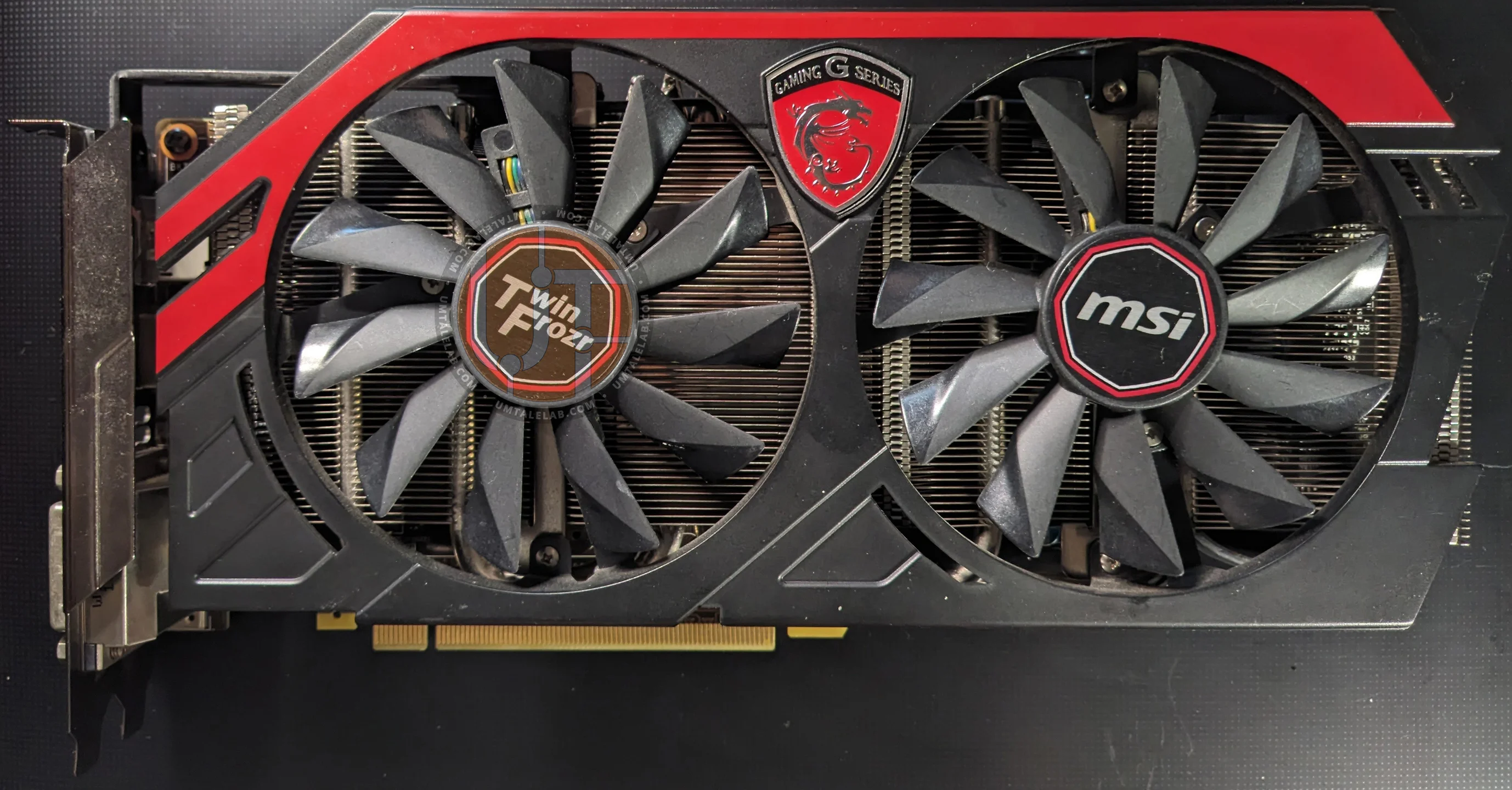
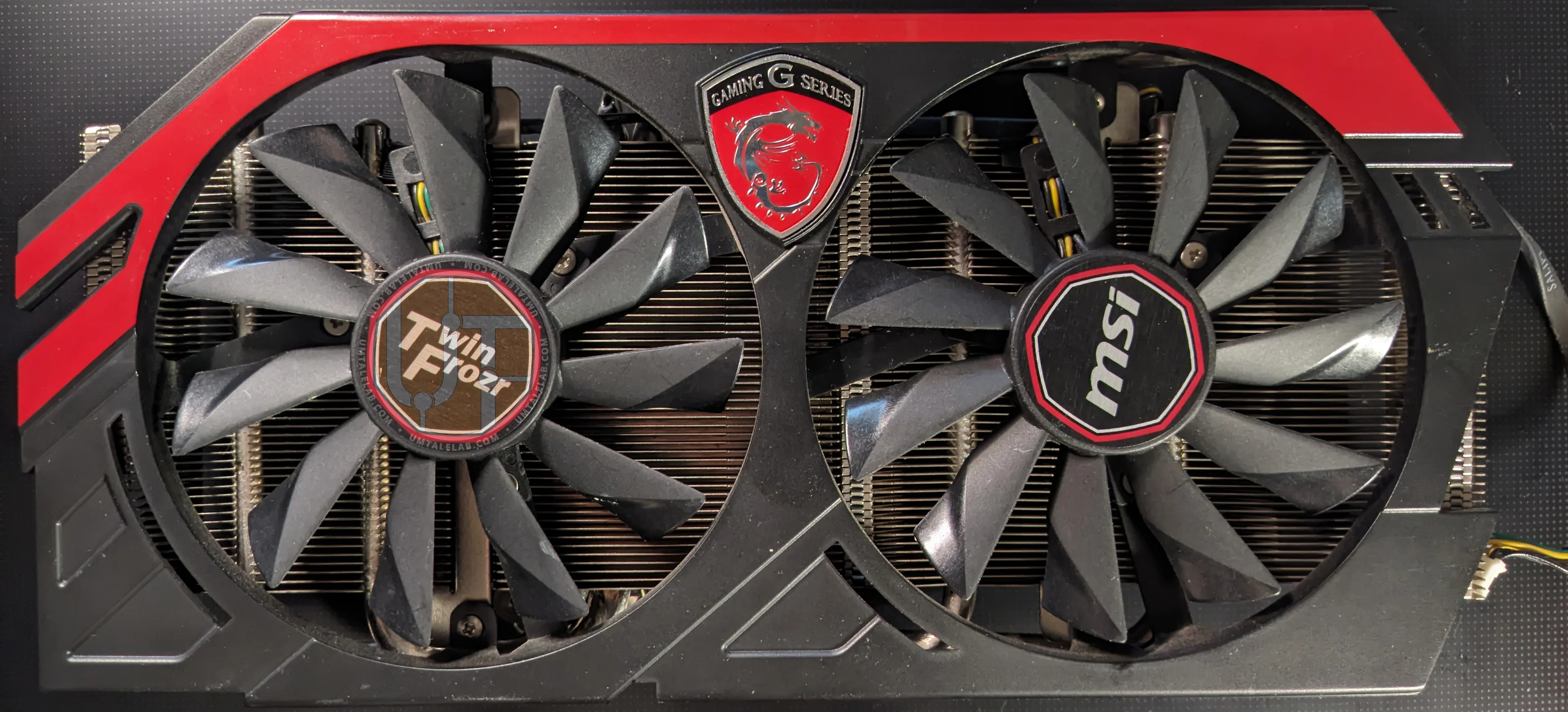
Back in its day, the MSI GTX 770 Gaming OC graphics card boasted a pretty impressive aesthetic.
Its distinctive, vibrant design, a relatively effective cooling system, and a Lamborghini-esque logo all played a part. These features paid off: MSI sold quite a few of these cards in 2013-2014.
Cooling system
The MSI GTX 770 Gaming OC's cooling system features a relatively large heatsink (by modern standards) with five heat pipes, cooled by two 90mm fans.
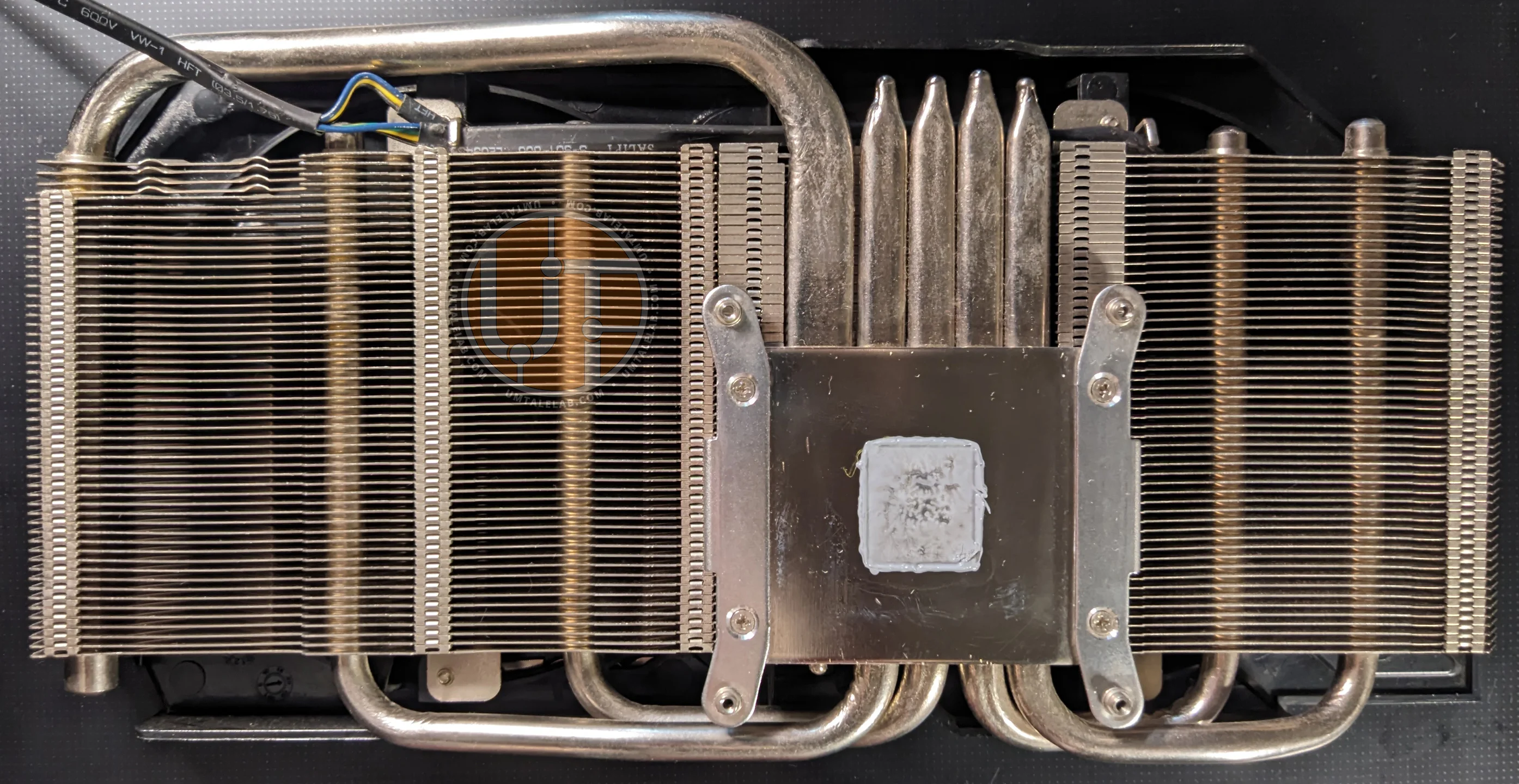
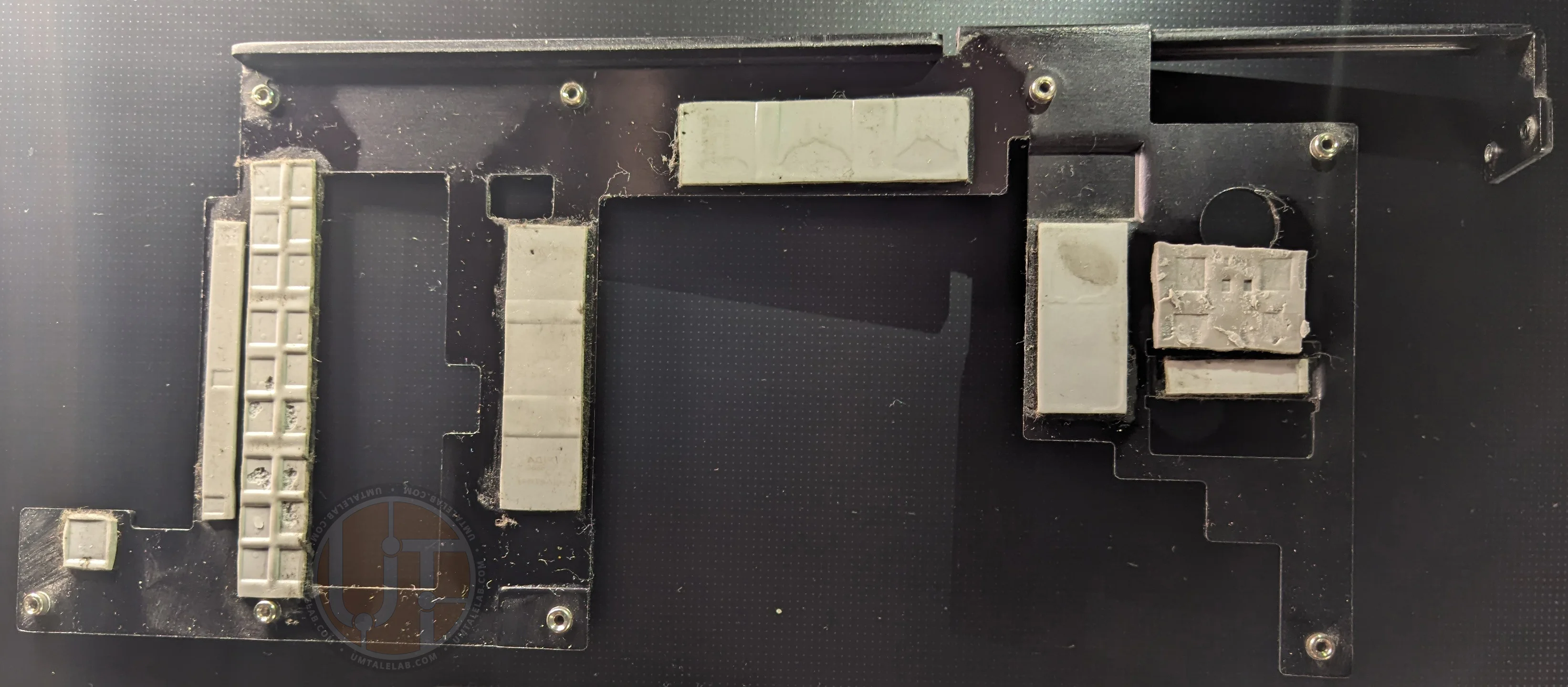
A very simple aluminum plate is responsible for cooling the rest of the card's components, like the GDDR5 VRAM and the GPU/VRAM power delivery systems. It also doubles, in part, as a rigidity brace, intended to protect the card from bending. Clearly, it fails entirely at this. The graphics card we got our hands on was severely sagging near the PCI-e power connectors.
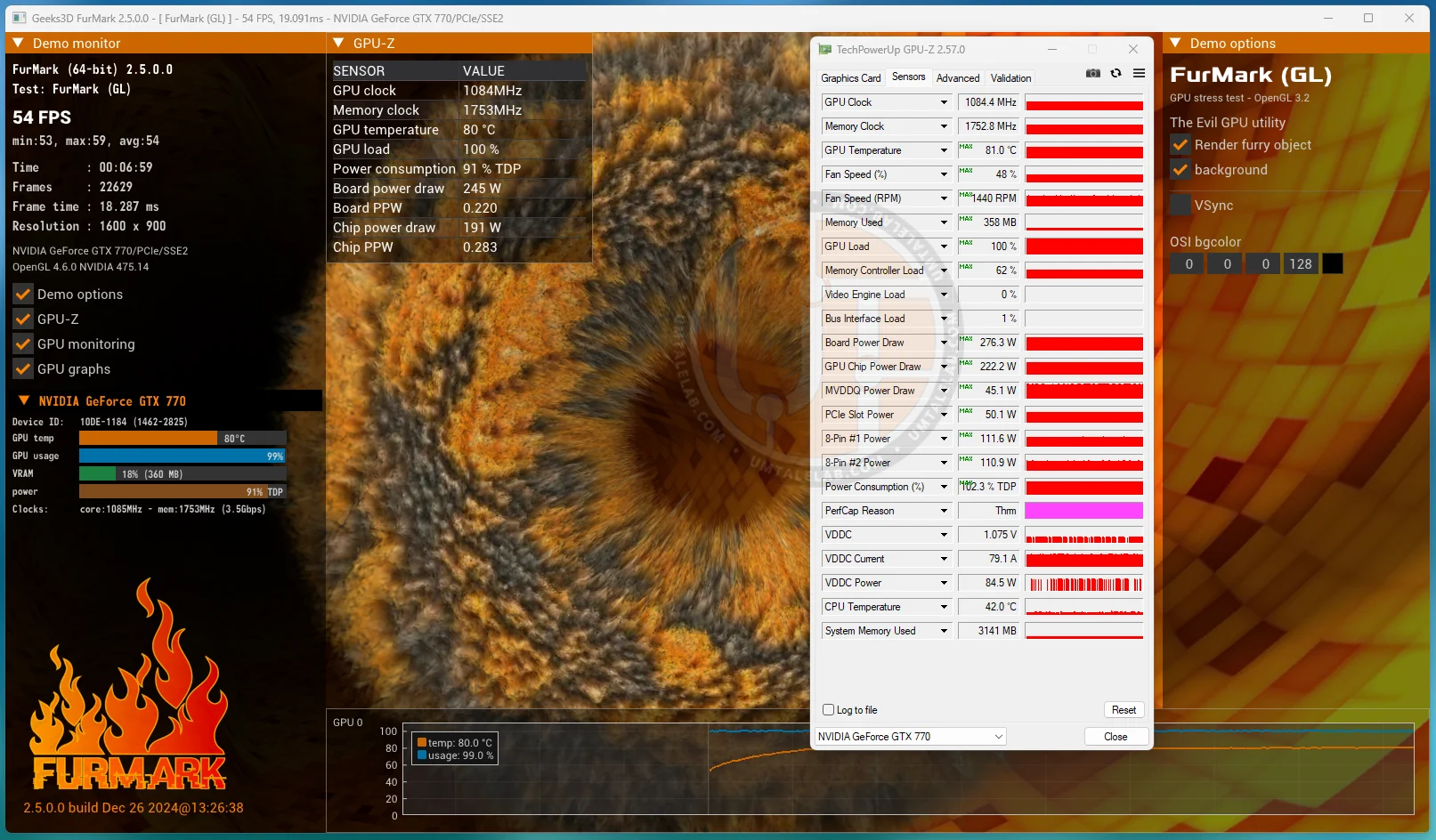
This cooling system design, combined with a less-than-energy-efficient GPU, doesn't exactly make the MSI GTX 770 Gaming OC a cool-running card. With automatic fan speeds, the GPU temperature in the FurMark stress test almost immediately hit 80 degrees Celsius, triggering throttling with a corresponding drop in voltage and frequencies.
 ⤢ ВІДКРИТИ
Whoa, 276W peak power consumption... Nowadays, this kind of power draw isn't surprising even for budget GPUs, but in 2013, only top-tier accelerators like the GTX 780 and R9 290 could boast such gluttony.
Still, the card can't be called noisy by any means. Even at 80 degrees Celsius on the GPU, it was practically inaudible. However, the heat it put out was so intense that you could feel the thermal pressure from a meter away from the test bench.
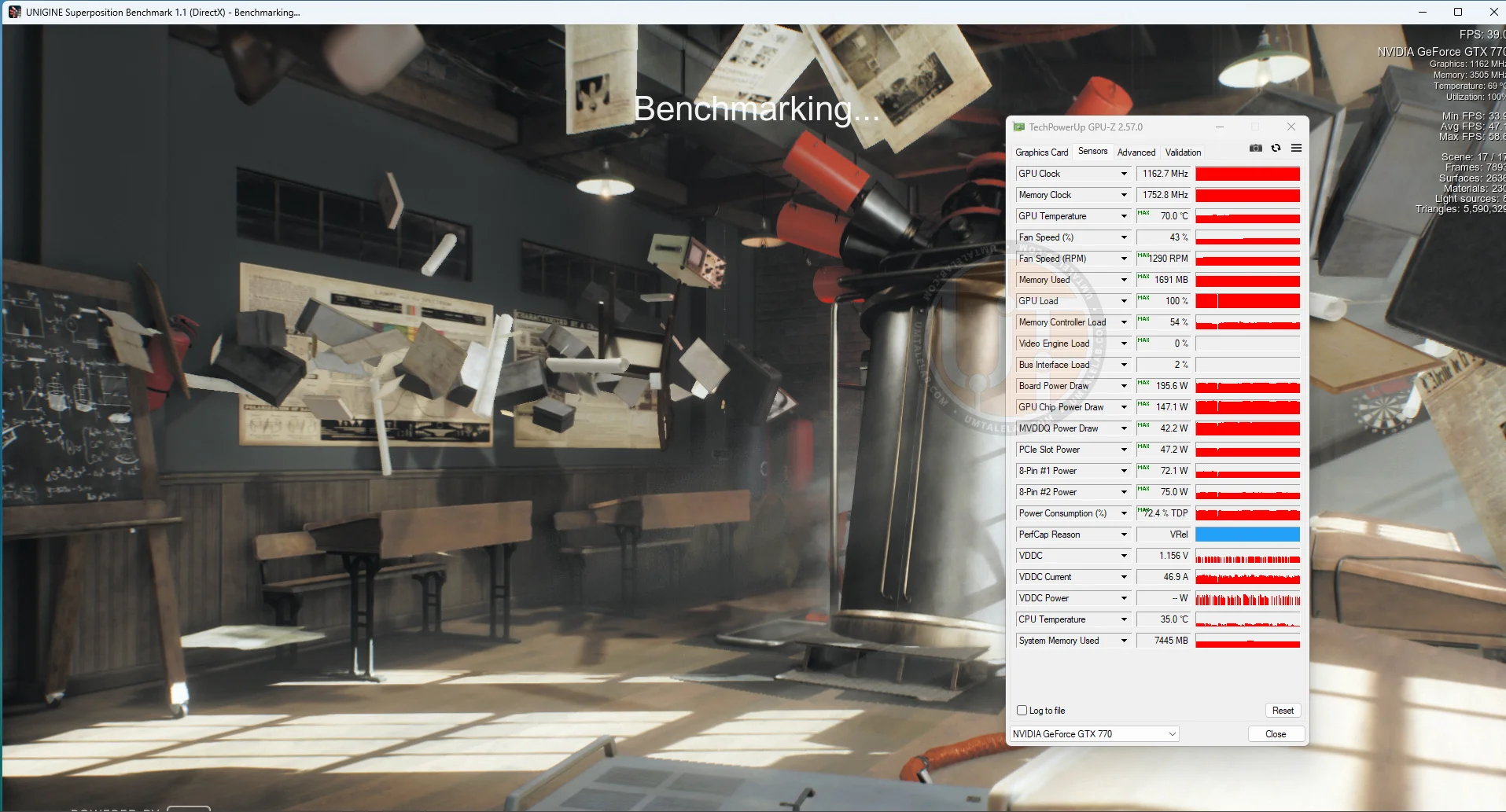
But FurMark is an unrealistic load for a graphics card. Let's see what MSI's proprietary cooling system can do under a more representative load, specifically Superposition:
 ⤢ ВІДКРИТИ
And here, things look much better. Power consumption dropped to ~190W, and the temperature fell to 70 degrees Celsius. No throttling was observed.
GPU and memory
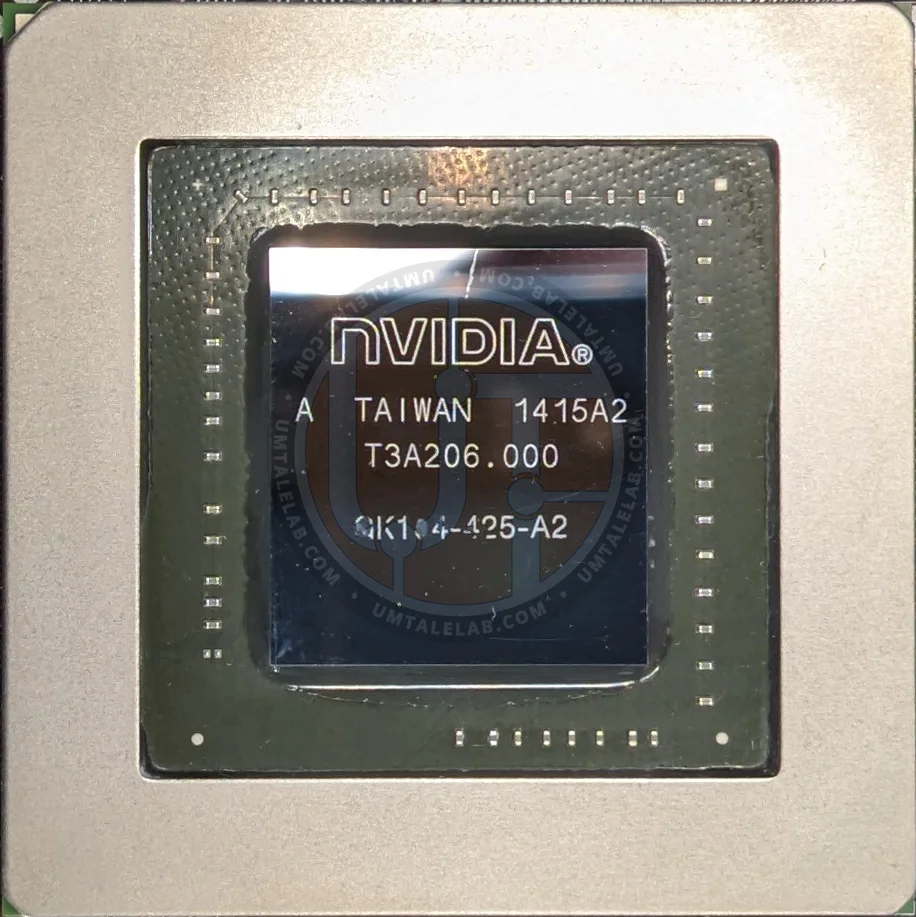
Over its many years of use and subsequent servicing, the GPU's markings have worn down somewhat. Still, it's easy enough to make out the familiar full GK104 chip, specifically the 425-A2 revision:
 ⤢ ВІДКРИТИ
The last digit of the marking tells us we're looking at the maximum GK104 GPU configuration, operating with 1536 streaming processors (CUDA cores), 128 texture units, and 32 ROPs.
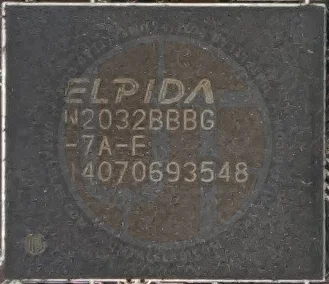
For video memory, MSI opted for the not-particularly popular or fast ELPIDA GDDR5 W2032BBBG -7A-F:
 ⤢ ВІДКРИТИ
Each of these chips boasts 256 MB of memory. With eight chips, that adds up to a total of 2048 MB. The recommended actual clock speed for these memory 'banks' is 1750 MHz, translating to an effective 7000 MHz.
PCB analysis
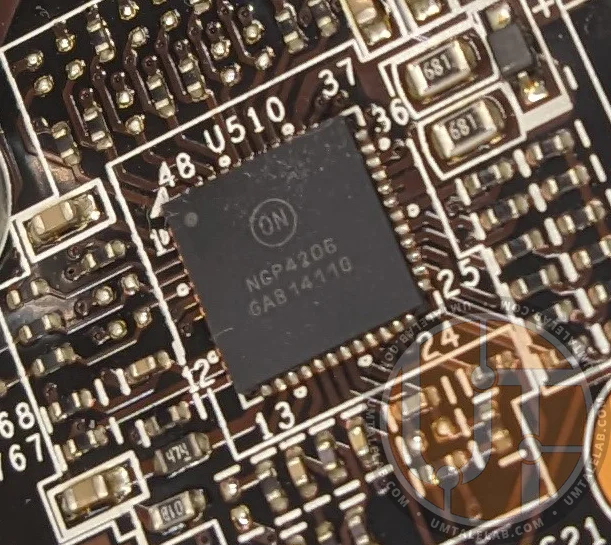
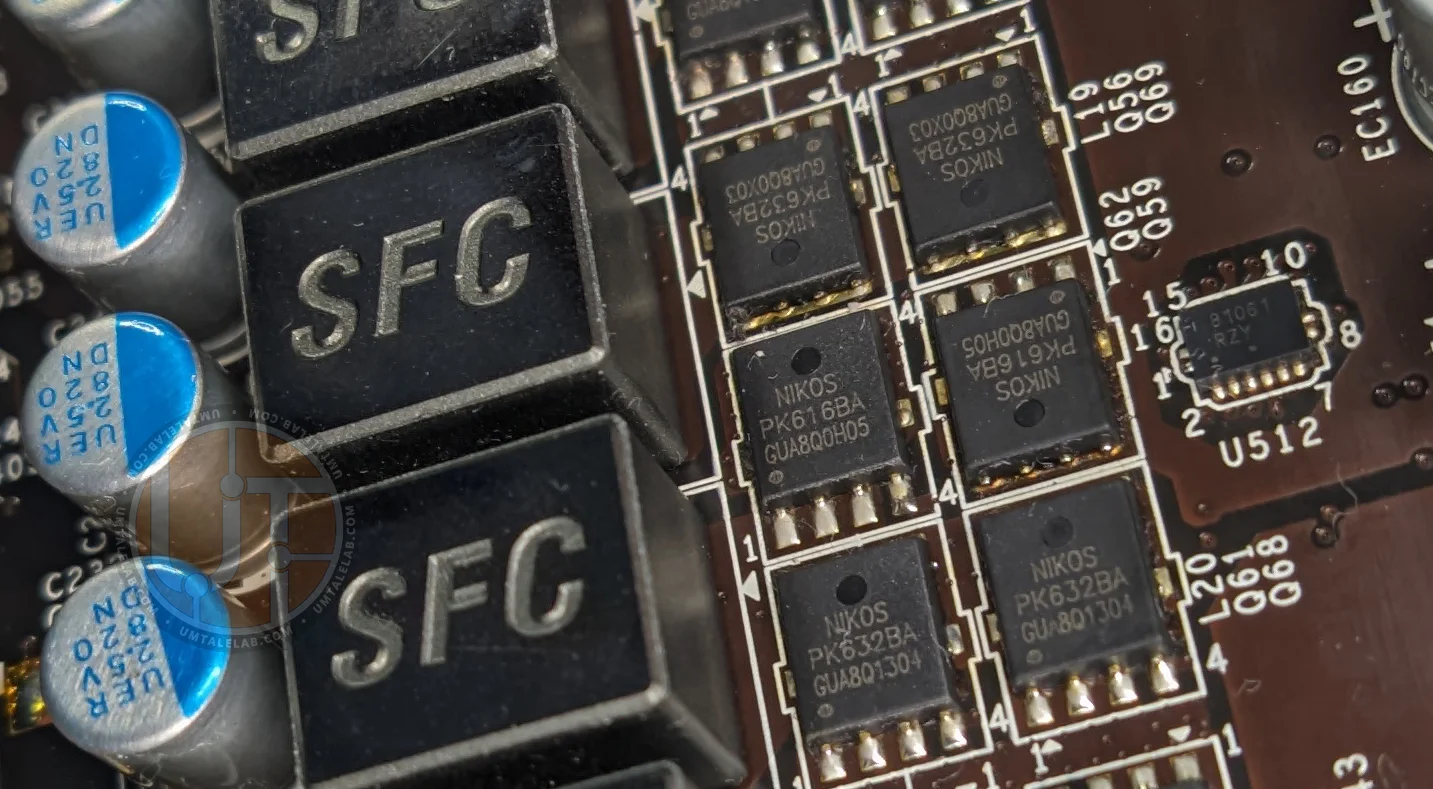
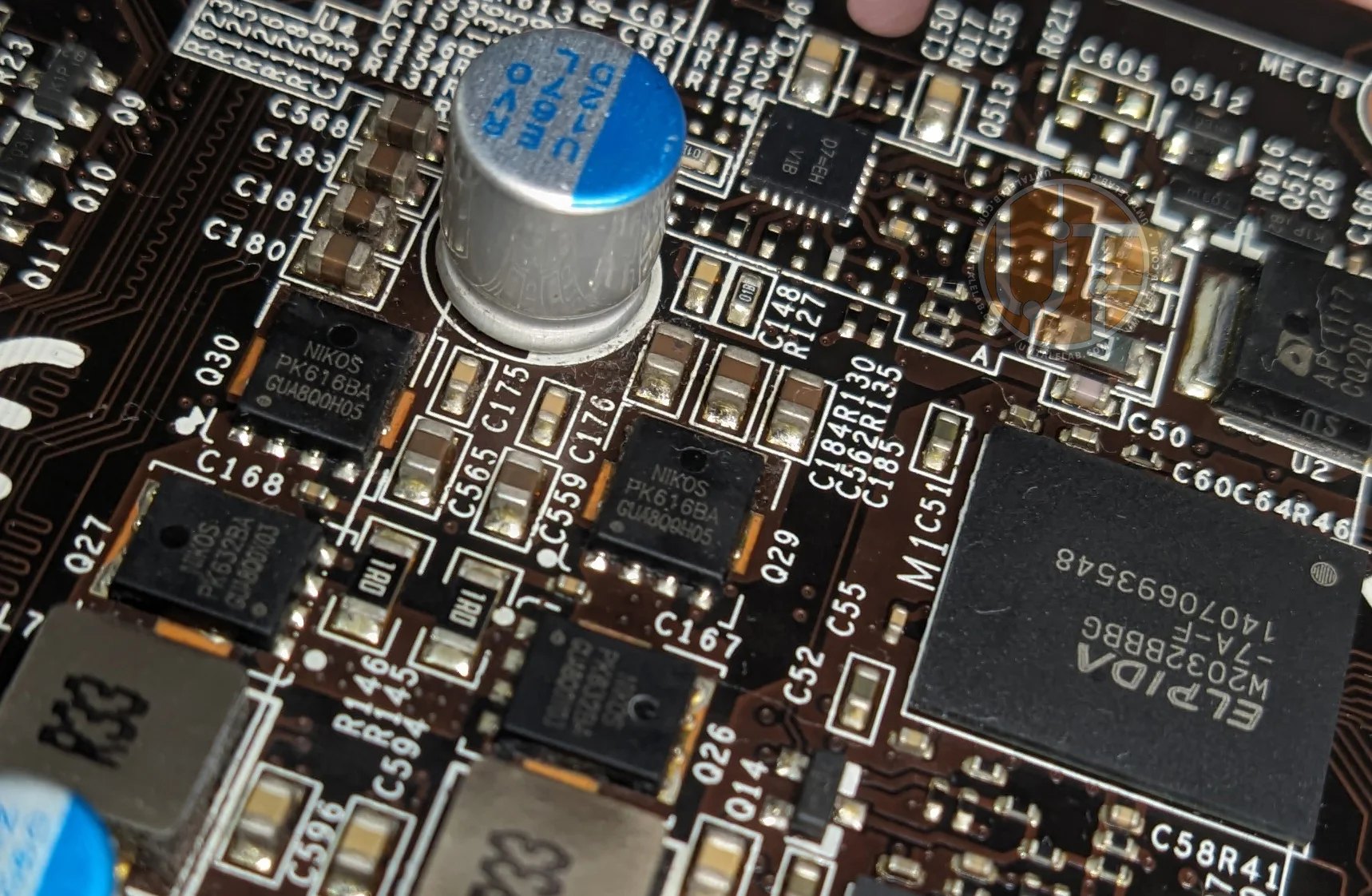
The GPU's power delivery system appears to be either 3-phase or 6-phase. It's tough to say for certain, though, since we couldn't find any information on the 81061 RZY drivers.
It's entirely possible that a single driver controls two phases, especially given that only three are soldered, yet there are six physical phases. Furthermore, the NCP4206 PWM controller, which manages the entire power subsystem, is a six-phase unit according to its datasheet.
If you have any more precise information regarding the MSI GTX 770 Gaming OC's power delivery, particularly about those 81061 RZY drivers, please share it in the comments below.
Regardless, the board uses two types of MOSFETs: 50-amp PK616BA and 78-amp PK632BA. This is quite robust, even factoring in the graphics card's hefty power draw.
Two phases, equipped with the same PK616BA and PK632BA transistors we've already seen, handle the video memory's power.
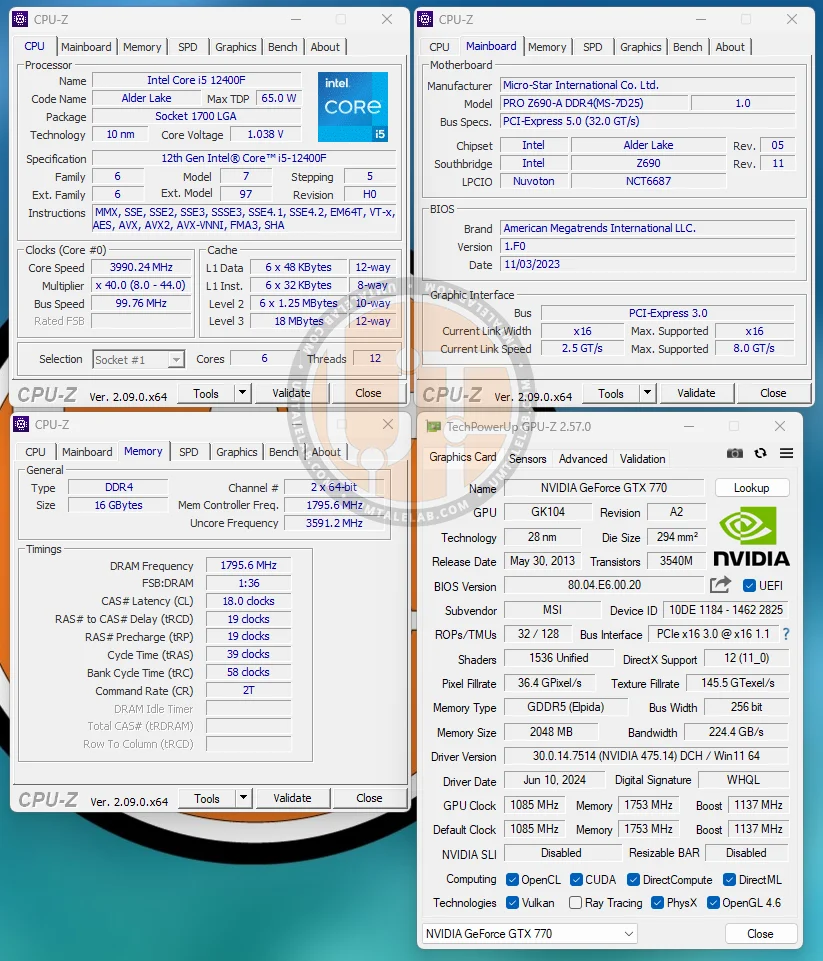
Test bench:
 ⤢ ВІДКРИТИ
CPU— Core i5-12400F;
Graphics Card— MSI GTX 770 Gaming OC;
Motherboard — MSI PRO Z690-A DDR4 (MS-7D25);
RAM — 2x 8 GB Corsair Vengeance RGB PRO (CMW16GX4M2C3600C18), 16 GB total (Micron E-Die chips);
SSD — KINGSTON SUV400S37120G 120.0 GB (Windows 11), SAMSUNG 870 EVO 1 TB (Games);
Power Supply — Chieftec GPS-1250C.
Software
Operating System:Windows 11 x64 with the latest updates as of February 2025;
Graphics Card Drivers:NVIDIA GeForce 475.14 WHQL (the last driver to support Kepler-based graphics cards (GTX 600/700));
Additional Software for FPS Measurement:MSI Afterburner 4.6.7;
Games:testing was conducted on current game versions as of February 2025;
Test results
Before we dive into our performance findings for the GTX 770, it's crucial to remember that the Kepler architecture can't utilize AMD FSR beyond its first version. This means you won't get a higher quality image or even be able to activate FSR in some games at all. Consequently, for certain titles, we're stuck with a resolution of 720p — quite low by today's standards. Keep this limitation in mind.
Multiplayer, session, and esports titles
Given the venerable age of this graphics card, I believe it's best to start our testing with games that are relatively light on graphics. However, even with that approach, some fairly popular recent multiplayer titles simply won't launch on the GTX 770. Marvel Rivals is a prime example: it demands full DirectX 12 support, a feature our 'old timer' unfortunately lacks. You can expect most games built on Unreal Engine 5 to behave similarly.
Call of Duty: Warzone
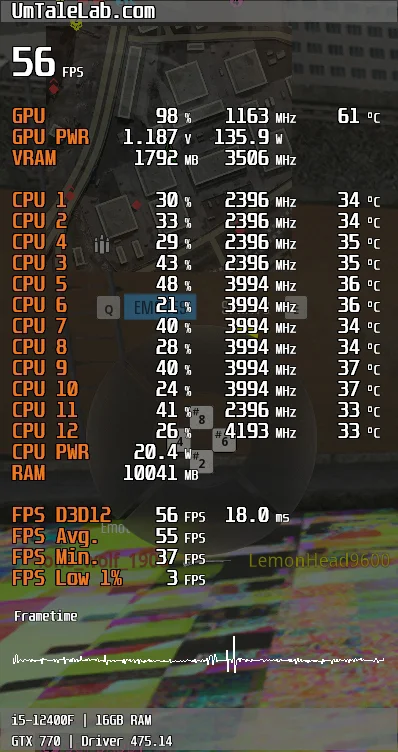
Minimum graphics preset, 1080p, FSR 1.0 - Balanced.
 ⤢ ВІДКРИТИ
The popular battle royale, Call of Duty: Warzone, is completely unplayable on the GTX 770. Not only does the game constantly stutter due to an acute VRAM shortage, but the terrain is also plagued with graphical artifacts, appearing as multicolored textures – likely a result of broken shaders.
Here are a few full screenshots so you can judge the image quality:
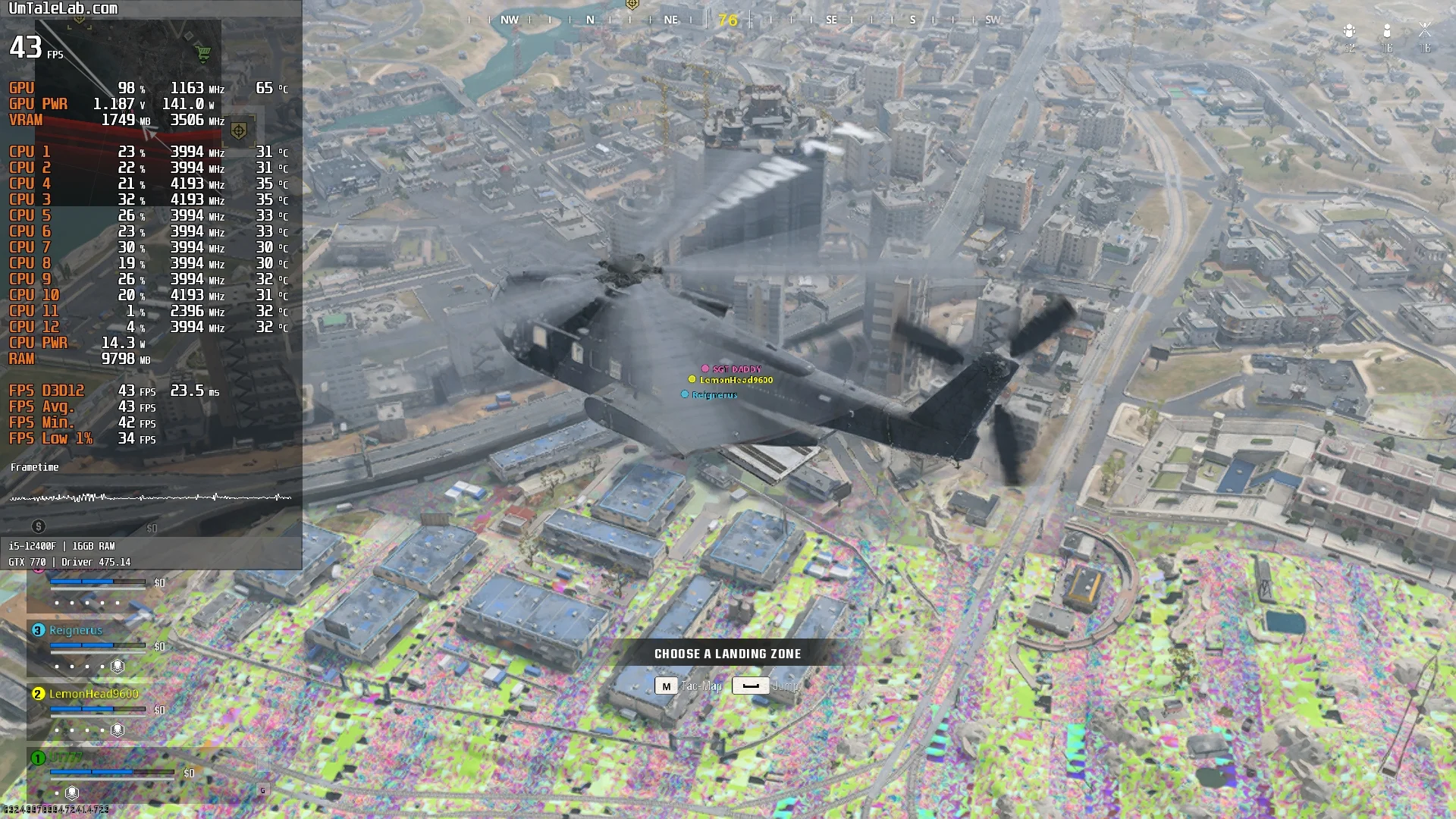
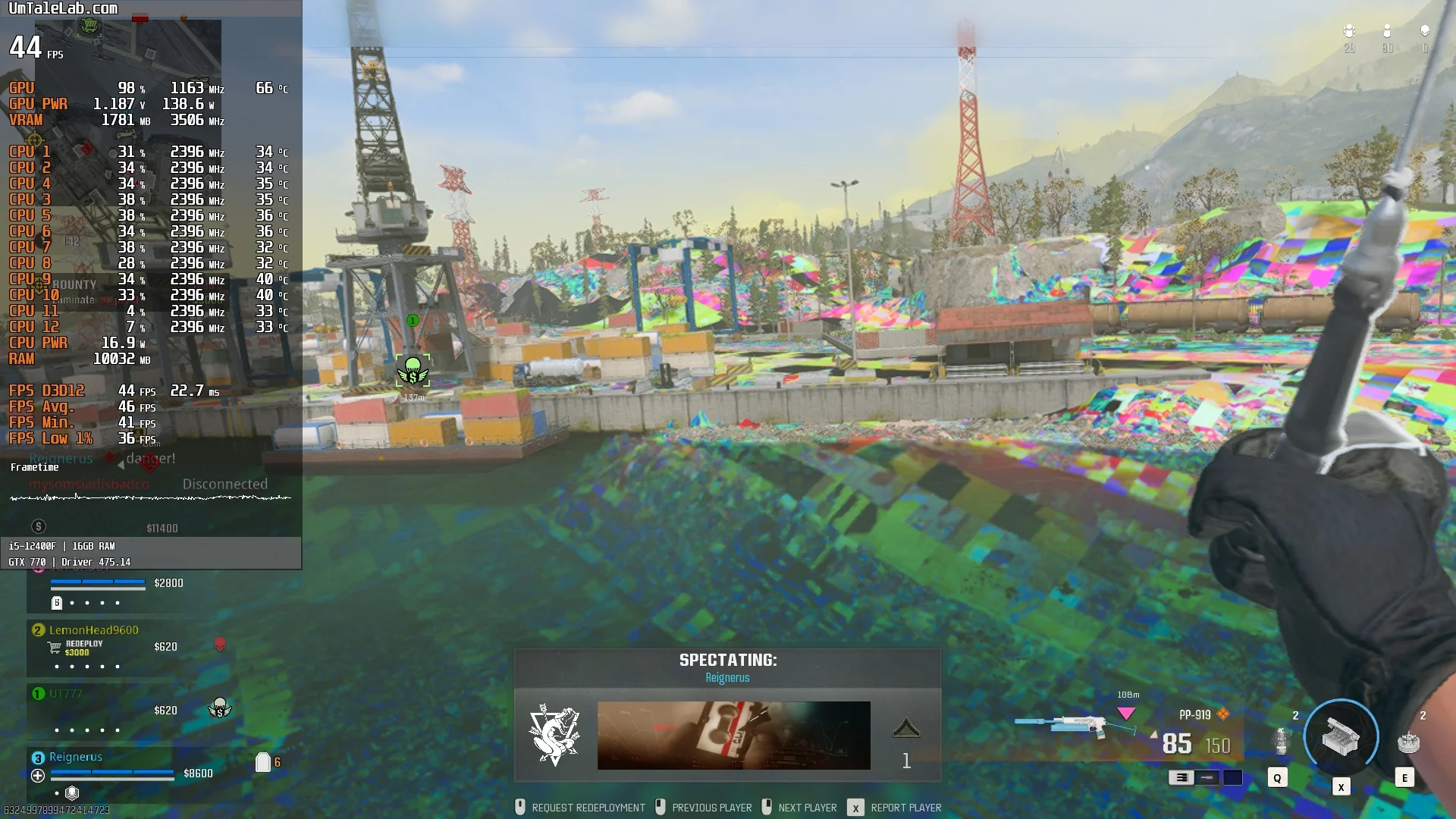
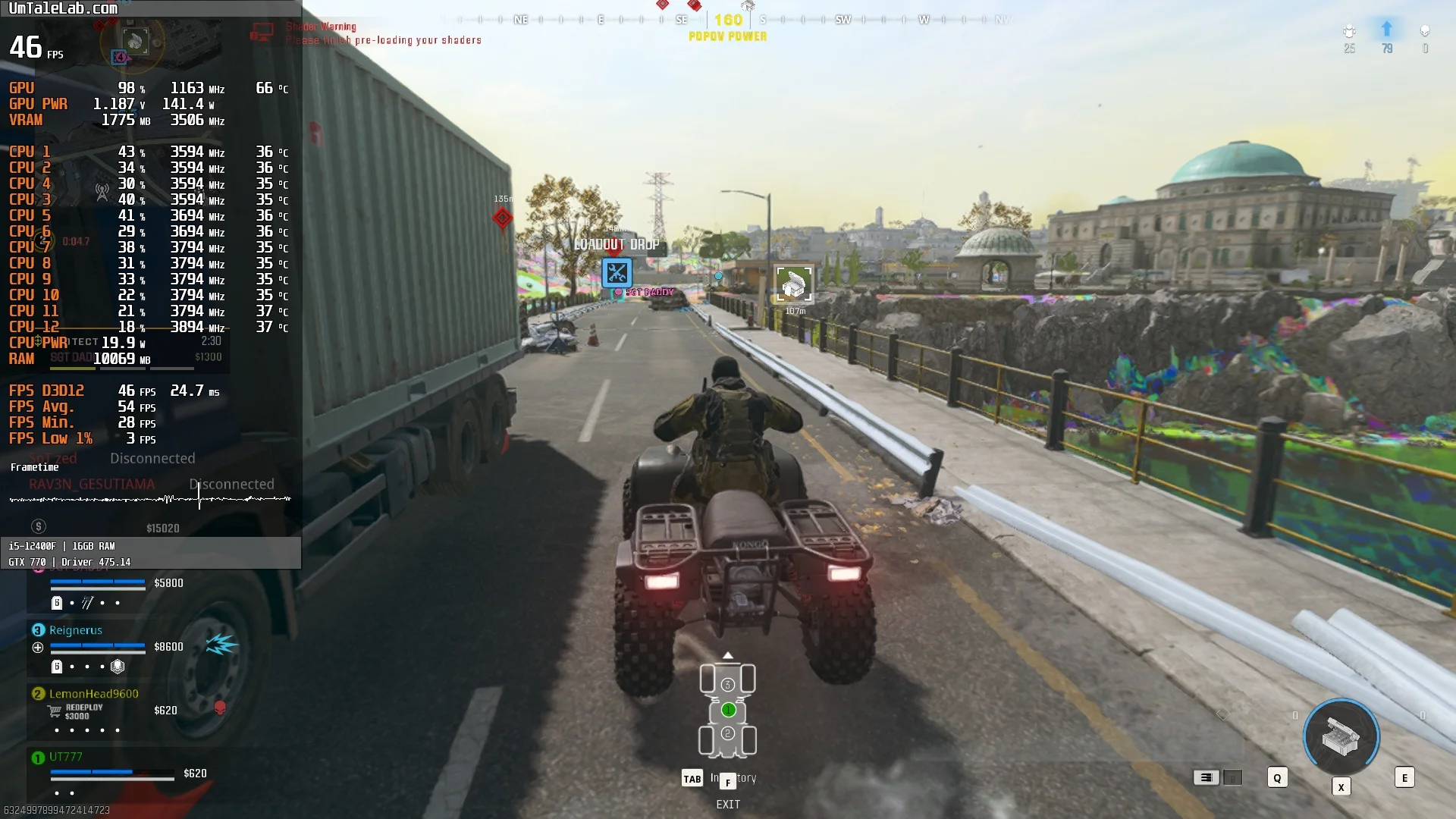
I've played over five matches, and the freezes, along with broken shaders, are still present. So, the classic advice to "wait" 10-20 minutes for the game to cache its data won't help here.
Counter-Strike 2
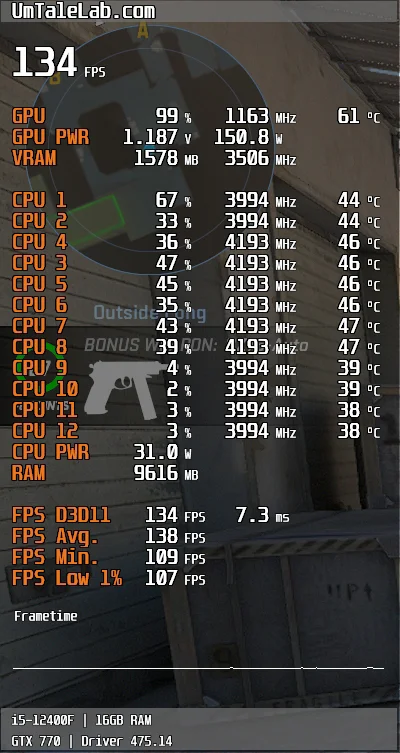
Medium graphics preset, 1080p, MSAA - 2X. Tested on Dust 2.
 ⤢ ВІДКРИТИ
Quite unexpectedly, the GTX 770 handles the rather demanding Counter-Strike 2 admirably! On medium settings, the game delivers around 130 frames per second, which is a very respectable result.
Dota 2
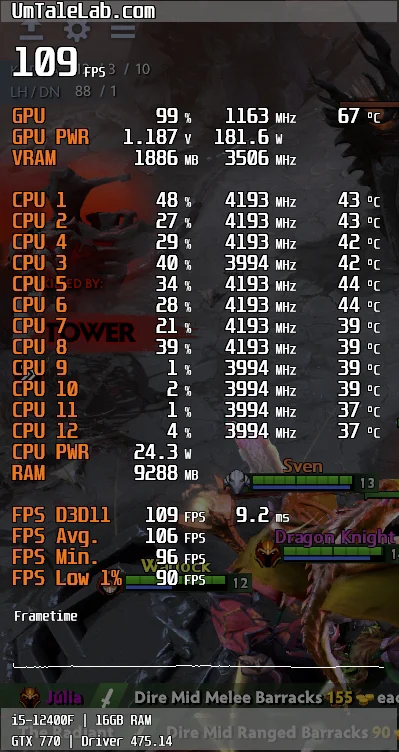
Maximum graphics preset, 1080p.
 ⤢ ВІДКРИТИ
Dota 2 performs even better: the GTX 770 effortlessly delivers a stable 100+ FPS on maximum graphics settings!
PlayerUnknown's Battlegrounds
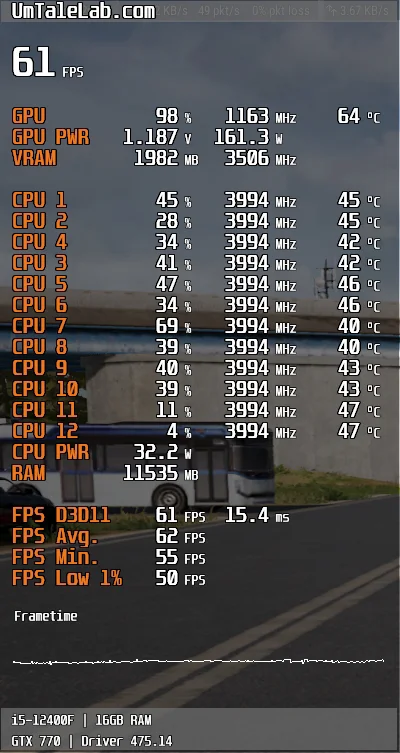
Medium graphics preset, 1080p.
 ⤢ ВІДКРИТИ
Another classic battle royale, PUBG, also runs quite well on the aging graphics card. On average, you can get just over 60 FPS, with lows not dropping below 50 frames. However, microstutters due to insufficient VRAM are extremely rare. 2GB in 2025 is a laughably small amount of VRAM.
World of Tanks
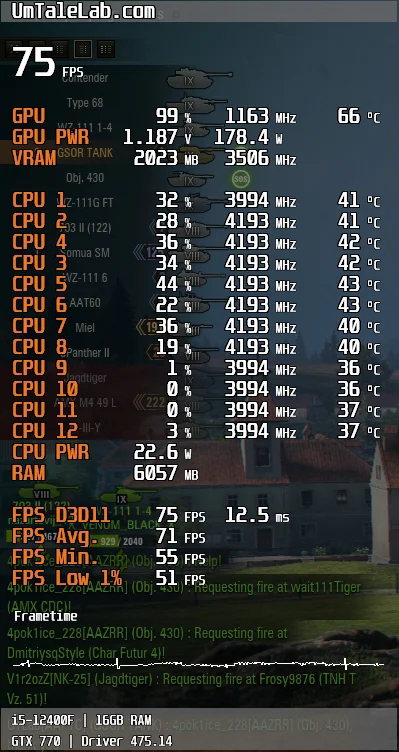
Maximum graphics preset, HD client, HD textures, 1080p. Replay on the "Outpost" map.
 ⤢ ВІДКРИТИ
Bounces, "hits," shells falling to the ground, ricochets, and all the other delights of World of Tanks can be observed at ~70 frames per second—on maximum graphics quality settings, no less! Wargaming has done an excellent job optimizing their project.
To summarize multiplayer games, it's safe to say that the GeForce GTX 770 can still handle them at an acceptable level. Certainly not all of them (like Call of Duty: Warzone), but the most popular titles run quite tolerably, and some are even playable on maximum graphics quality settings.
Single-player games
Unfortunately, the GTX 770 fares miserably with current single-player story games. Titles like Hogwarts Legacy, Dragon's Dogma II, Alan Wake, Starfield, S.T.A.L.K.E.R. 2: Heart of Chornobyl, and Elden Ring simply refused to launch on our aging card, citing a lack of DirectX 12 support. And don't even get us started on Indiana Jones and the Great Circle, which outright demands physical ray tracing execution units, something the GTX 770 never knew existed.
Given all the above, you can imagine how limited our game test suite turned out to be.
Baldur's Gate III
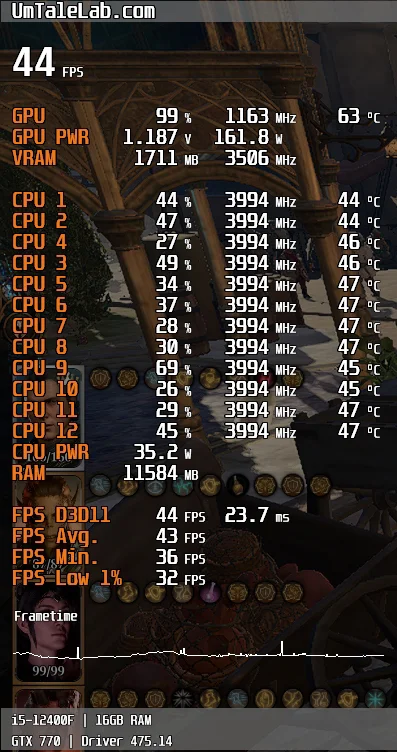
Minimum graphics preset, DirectX 11, 1080p, FSR 1.0 - Ultra Quality. Testing was conducted in the city of "Baldur's Gate."
 ⤢ ВІДКРИТИ
The GeForce GTX 770 shows quite acceptable frame rates in one of the game's most demanding locations. Considering the title's nature, 40 frames per second is more than enough to experience the project, and perhaps even complete it.
Cyberpunk 2077 [patch 2.21]
Minimum graphics preset, 720p. Testing was conducted in the benchmark, as well as on the ring road near Arasaka Tower.
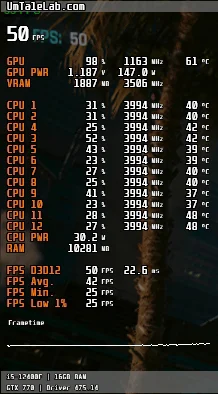
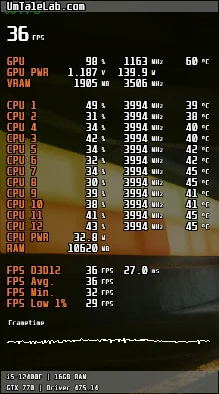
As the screenshots above show, the benchmark doesn't quite reflect the game's actual state. While freely roaming the city, the average FPS is significantly lower, but the minimum is actually higher.
Overall, it's not impossible to play, especially considering Cyberpunk 2077's technical state on last-gen consoles. However, the 720p resolution somewhat spoils the experience. It's a shame that CD Projekt Red removed FSR 1.0 support.
The Witcher 3 Next-Gen Update [patch 4.04]
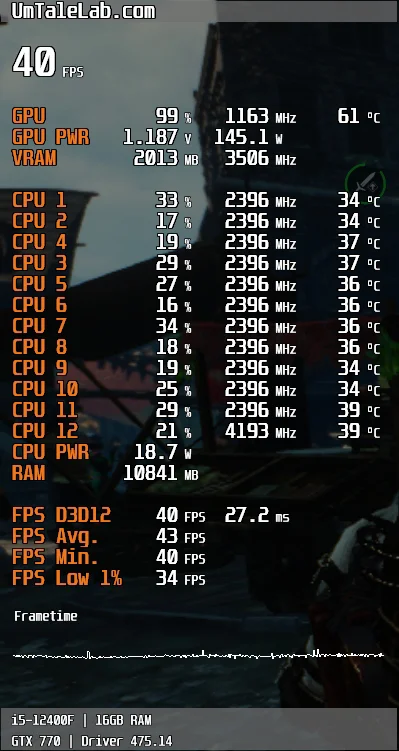
Minimum graphics preset, DirectX 12, dynamic 1080p resolution, FXAA. Run through the city of Novigrad.
 ⤢ ВІДКРИТИ
The current version of The Witcher 3 is only playable at dynamic resolution. Our testing, however, was conducted in Novigrad, which is one of the game's most demanding locations.
It's difficult to draw firm conclusions from single-player games, especially given the paltry number tested. Still, as you've seen, a few projects are indeed playable.
Overclocking
While not by much, the MSI GTX 770 Gaming OC is factory overclocked. Considering it's essentially a GTX 680 that's been overclocked twice—first by NVIDIA, then by the vendor—there's little reason to expect much additional overclocking potential.
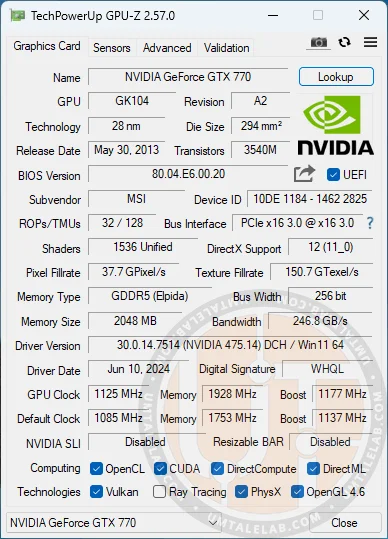
Sure enough, even with a 10mV voltage bump, we only managed a meager 40 MHz increase on the GPU and 180 MHz on the memory (effective frequency moving from 7000 MHz to 7712 MHz).
 ⤢ ВІДКРИТИ
That's not much. The GPU's overclocking headroom is clear, but the memory was a real letdown. Typically, when a vendor uses Samsung or Hynix memory chips, we can expect to hit 2000-2150 MHz. Here, however, we have Elpida memory modules, which often have significantly lower overclocking potential compared to rivals.
Still, let's see how much performance the overclocked graphics card actually gained.
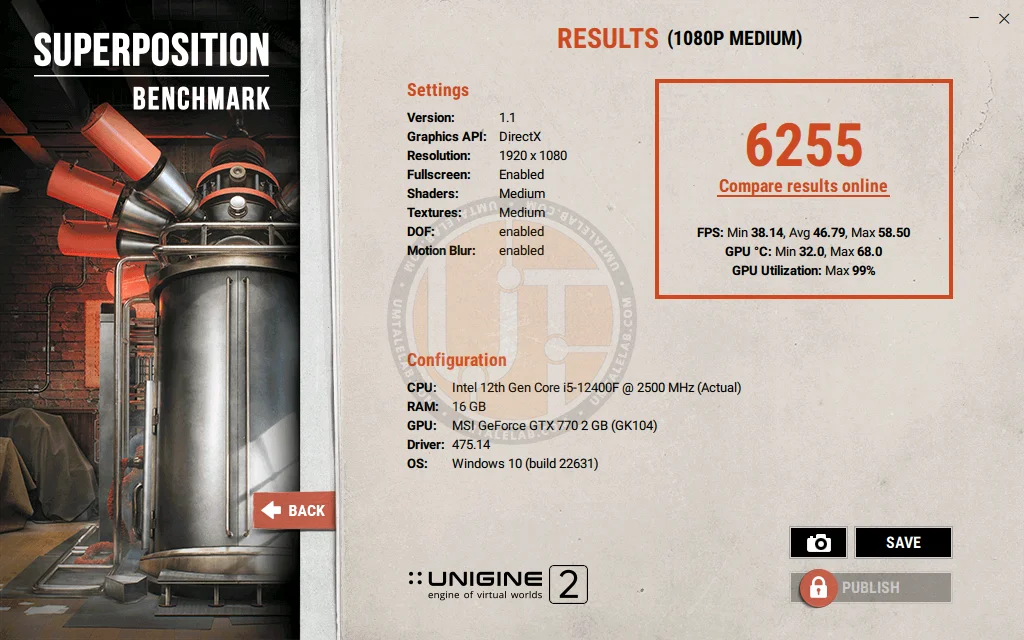
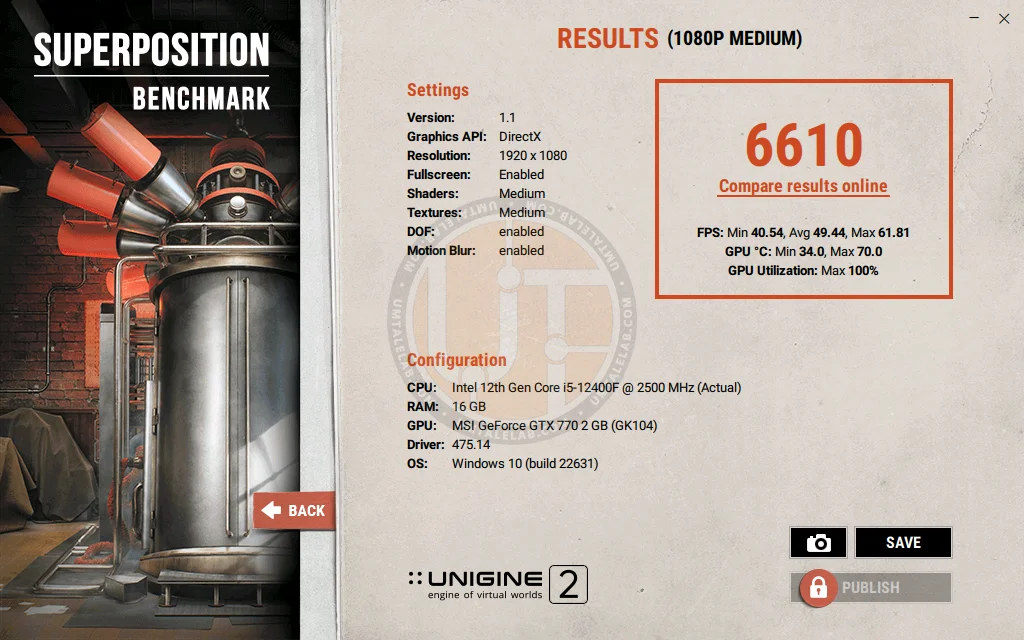
The performance gain was just over 5%, which means the juice simply isn't worth the squeeze.
Conclusion
As of February 2025, the Kepler graphics architecture is effectively dead. Its cards are only suitable for basic multiplayer games or as a temporary stopgap until you can upgrade to a truly current adapter.