BLOGS · HARDWARE BLOGS
PUBLISHED
READING10 min
Benchmarking the ATi (AMD) Radeon HD 5870 GV-R587OC-1GD in modern multiplayer games
Can AMD's top 2009 graphics card, the Radeon HD 5870, still deliver playable performance in modern multiplayer games 11 years on?
Back in 2009, the ATi Radeon HD 5870 was an incredibly successful and, by all accounts, remarkably well-received product. Consider this: it was the first graphics card to bring DirectX 11 support to the desktop segment, a cutting-edge API at the time. It also nearly doubled the performance of AMD's (then ATi's) previous flagship, the Radeon HD 4870. And as it turned out, the Radeon HD 5870 drew moderate power compared to its direct competitor, the GeForce GTX 480, securing its bright future in countless gamers' rigs.
However, almost 11 years have passed since the Radeon HD 5870's release. Such a respectable age usually turns even formerly top-tier hardware into useless junk, destined for the shelf of fond memories. Right now, finding an HD 5870-level graphics card listed in even the minimum, let alone recommended, requirements for most modern games is quite difficult. This indirectly suggests that the "old girl" probably can't handle anything anymore. But is that truly the case?
Recently, a Gigabyte-made Radeon HD 5870 graphics card returned to our test lab. I decided to test whether this top-tier 2009 product could deliver acceptable performance in modern multiplayer games.
The graphics card
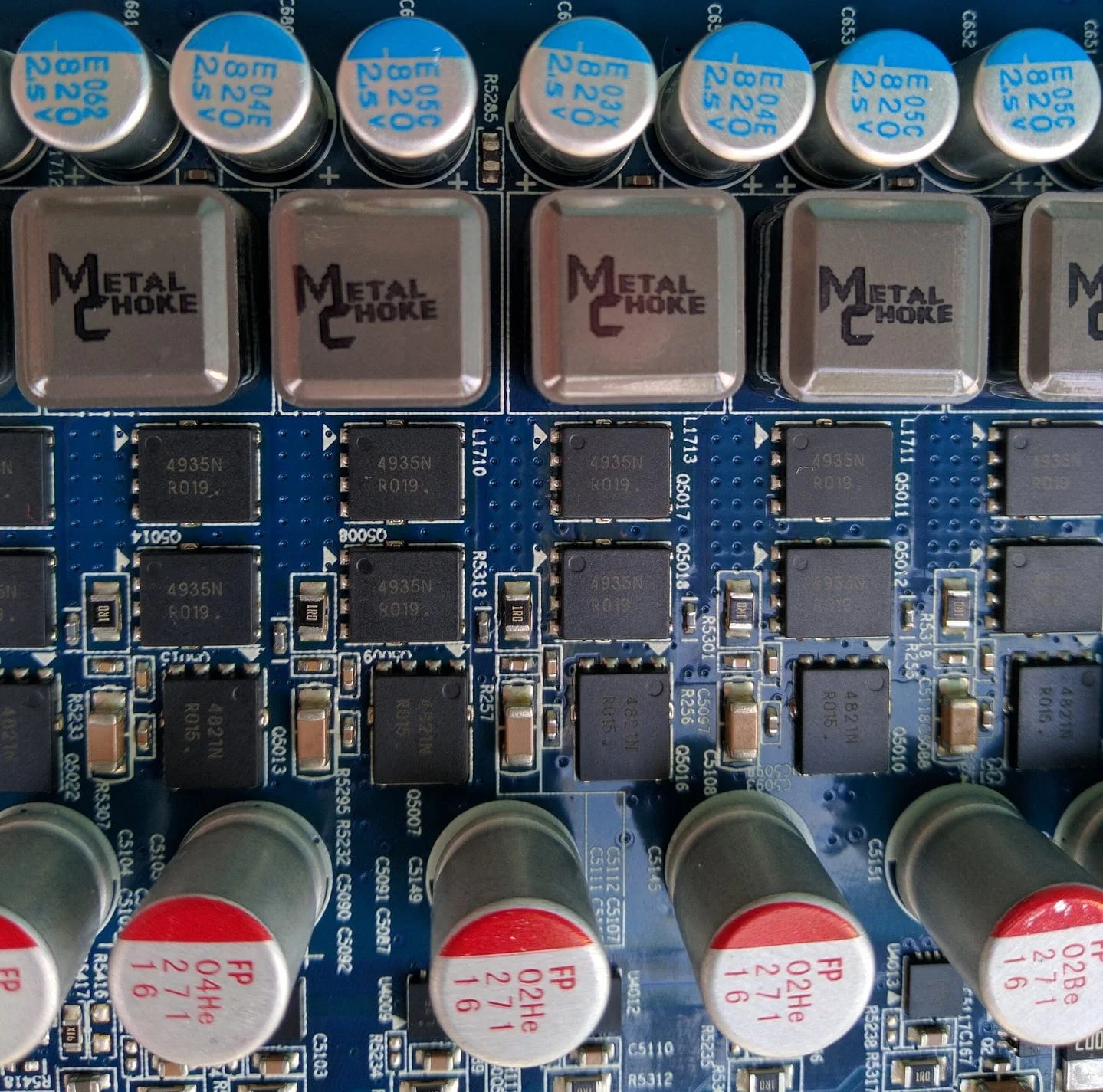
Here's a look at the GV-R587OC-1GD's PCB:
The GV-R587OC-1GD features a rather decent power delivery subsystem for the GPU and VRAM. It's capable of delivering around 250 watts, which is more than enough for the 188-watt HD 5870.
 ⤢ ВІДКРИТИ
The GPU power delivery circuit uses 4935N R019 and 4821N R015 series transistors, similar to those found in Gigabyte's more "power-hungry" Radeon HD 7950 and HD 7970 graphics cards. Additionally, the GV-R587OC-1GD features Metal Choke ferrite core inductors (R30 and R80) and high-quality NEC/TOKIN 0E907 film capacitors.
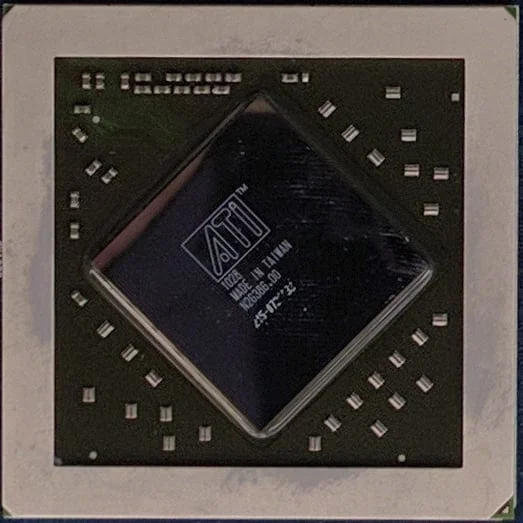
Detailed photo of the Cypress XT graphics processor:
 ⤢ ВІДКРИТИ
Photo of the cooling system:
As you can see from the images above, the GV-R587OC-1GD's cooling system no longer resembles its original appearance. Furthermore, its physical condition also leaves much to be desired: the stock fans failed within a year or two of purchase, and then its previous owner decided to get rid of the original shroud (don't ask why). As a result, only the heatsink remained, onto which I had to install a 120mm fan.
Gigabyte Radeon HD5870 (GV-R587OC-1GD) specifications:
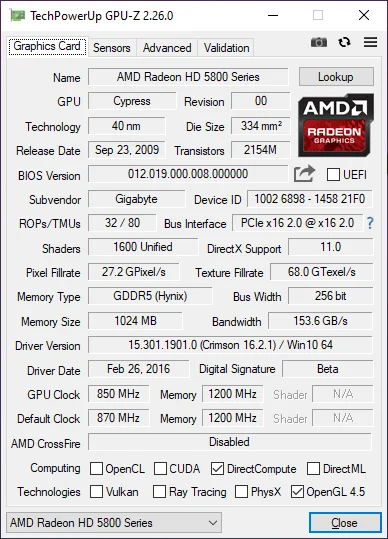
The Radeon HD5870 sample featured in this article, specifically the GV-R587OC-1GD model, was originally designed to run at 870MHz for the GPU and 4800MHz for the GDDR5 VRAM. However, this particular sample (and many others, as online reports confirm cards with unstable operation at Gigabyte's factory-overclocked frequencies) cannot consistently operate at its stock frequency with a voltage of 1.163 volts. Our card's stable operating frequency ended up being 850MHz for the core and 4800MHz for the memory, which is, in fact, the nominal frequency for reference Radeon HD5870 cards. So, we didn't lose any performance.
 ⤢ ВІДКРИТИ
The Cypress XT (RV870) chip boasts 1600 shader processors, 80 texture units, and 32 ROPs. This 40nm GPU connects to 1GB of GDDR5 VRAM via a 256-bit bus, with the memory operating at an effective frequency of 4800MHz.
The main drawbacks of this graphics card are its mere 1GB of VRAM and lack of DirectX 12 API support. The latter limitation, however, is purely due to AMD's decision regarding the HD 5000-series lineup.
CPU
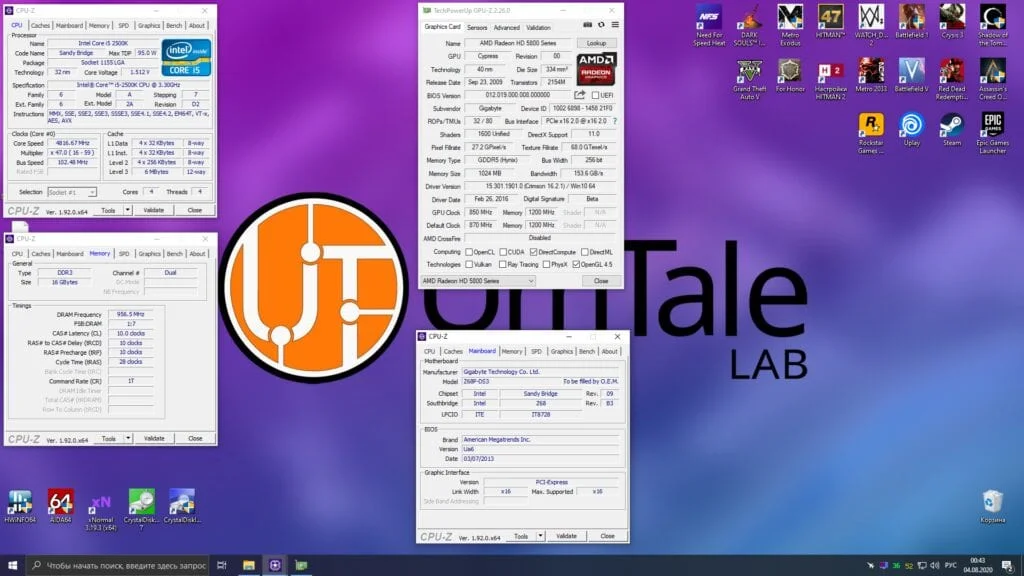
The heart of our test bench was an Intel Core i5-2500K CPU, overclocked to 4816MHz. It was paired with HyperX Genesis Na’Vi Edition RAM, which, unfortunately, couldn't reach its achievable 2133MHz on this platform, so I had to settle for 1913MHz with 10-10-10-28 timings:
Why was the Core i5-2500K chosen as the CPU, and not, for example, the Xeon X5660, Xeon E5-2630L v3, or Xeon E5-2643 also available in our test lab? It's quite simple: for the selected games, the Core i5-2500K overclocked to 4800MHz proved to be more advantageous, so we decided to use it. Had the test suite included titles like Shadow of the Tomb Raider or Battlefield V, the choice would obviously have fallen on multi-core chips like the Xeon X5660 or Xeon E5-2630L.
 ⤢ ВІДКРИТИ
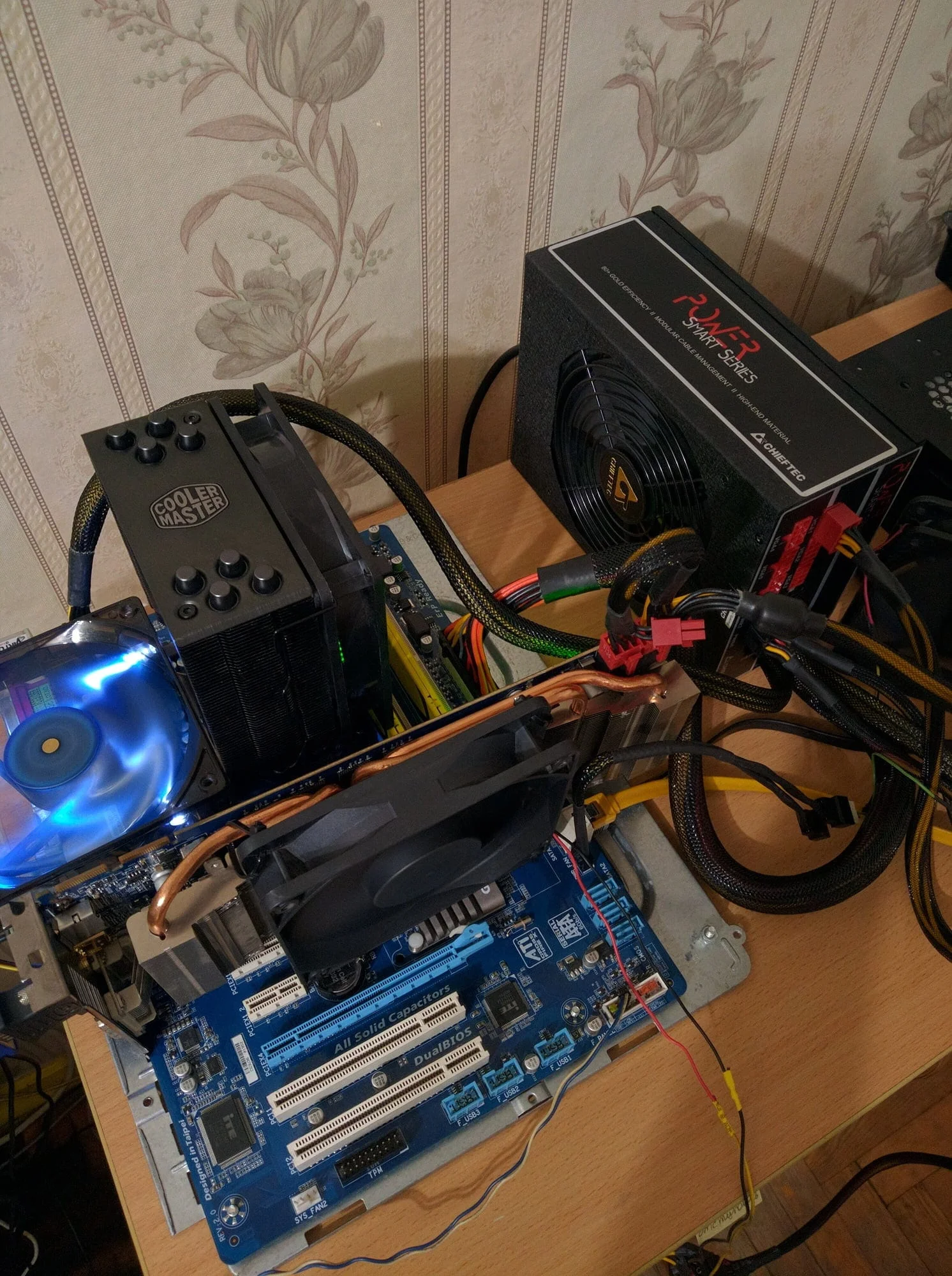
Test bench
 ⤢ ВІДКРИТИ
CPU — Intel Core i5-2500K@4816MHz
Motherboard - Gigabyte GA-Z68P-DS3 (rev. 2.0)
CPU cooler — Cooler Master Hyper 212 EVO
RAM - 2x 8GB HyperX Genesis Na’Vi Edition (KHX16C9C2K2/8), 16GB total @ 1913MHz
Graphics card — Gigabyte Radeon HD5870 1GB GDDR5 850/4800MHz (GV-R587OC-1GD)
Storage — KINGSTON 120GB SA400S37120G (Windows 10, Software) and Seagate 2TB ST2000DM008-2FR102 (Games)
PSU — Chieftec GPS-1250C 1250W
Operating system — Windows 10 with latest updates as of July 2020
Core i5-2500K overclocking settings:
BCLK — 102.5MHz
CPU Multiplier — 47
CPU PLL — 1.8
CPU vCore — 1.471v
QPI/Vtt Voltage — 1.25v
DRAM Clock — 1913MHz
DRAM Timing — 10-10-10-28 1T
DRAM Voltage — 1.71v (RAM starts to noticeably heat up at this voltage, so be extremely careful if you set your memory above 1.7 volts)
Games
Tests were conducted in the following games:
Counter-Strike: Global Offensive (FPS Benchmark v1.01 from the Steam Workshop)
Destiny 2 (Gambit mode, "Deep Six" map)
Fortnite (Free play, average of 5 results)
For Honor (Benchmark)
Grand Theft Auto 5 (Benchmark)
Watch_Dogs 2 (Free play, average of 5 results)
World of Tanks (Industrial Zone map, Standard Battle)
At the time of writing, each game was updated to its current version (early August 2020).
Performance measurements were conducted at 1280x720 and 1920x1080 resolutions with minimum graphics quality settings (except for World of Tanks, where parameters like "landscape quality" and "draw distance" play a crucial role). The only exception was the activation of virtually "free" FXAA anti-aliasing (or its equivalent) in all titles. Playing a game at 1280x720 without anti-aliasing is simply painful to look at, and no sane person would play that way.
To avoid cluttering the article with excessive screenshots, I'll only provide the custom World of Tanks settings:
Since the Radeon HD 5870 lacks hardware acceleration for video capture, we initially decided to record using OBS with a software encoder (in other words, on the CPU). This, however, caused a colossal drop in CPU performance in all games during recording. Therefore, much to my regret, we decided to forego a video report.
Of course, I considered installing an NVIDIA card into the second PCI-e slot to use it as a hardware video capture module. However, due to potential driver conflicts (AMD hasn't updated drivers for the HD 5870 in about 4-6 years), I didn't dare attempt this trick. Perhaps if there's enough interest, I'll look into it in the future.
Beyond that quirk of this benchmark session, I encountered another minor obstacle: for reasons known only to Valve, the MSI Afterburner overlay stopped working in the latest version of Counter-Strike: Global Offensive. Consequently, in CS:GO, as well as in Destiny 2, frame rate display relied on Steam's built-in FPS monitoring tools. This ultimately prevents 100% accurate data for average and minimum FPS calculations.
Let's move directly to the results.
Table of test results:
Game | 1% Low FPS(rare events) | Minimum FPS | Average FPS |
Counter-Strike: Global Offensive - 720p | - | 49 | 173 |
Counter-Strike: Global Offensive - 1080p | - | 23 | 106 |
Destiny 2 - 720p | - | 40 | 56 |
Destiny 2 - 1080p | - | 31 | 40 |
Fortnite - 720p | 48 | 63 | 90 |
Fortnite - 1080p | 29 | 47 | 61 |
For Honor - 720p | 43 | 44 | 62 |
For Honor - 1080p | 26 | 28 | 43 |
Grand Theft Auto 5 - 720p | 47 | 59 | 78 |
Grand Theft Auto 5 - 1080p | 45 | 53 | 64 |
Watch_Dogs 2 - 720p | 26 | 34 | 45 |
Watch_Dogs 2 - 1080p | 22 | 29 | 35 |
World of Tanks - 720p | 58 | 61 | 104 |
World of Tanks - 1080p | 43 | 45 | 67 |
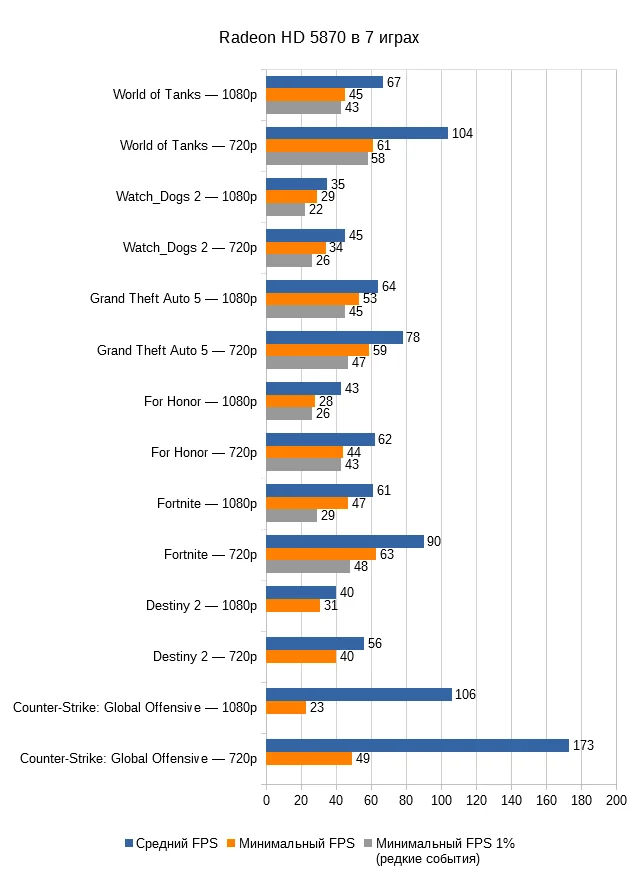
Overall graph of test results:
 ⤢ ВІДКРИТИ
Just look at these results! At 1280x720 resolution, the Radeon HD 5870 conquered every single game tested! Damn, even the demanding Watch_Dogs 2 is playable, with frame rates at a respectable level. I'd specifically highlight the acceptable FPS in Destiny 2 and the excellent numbers in World of Tanks.
However, when moving to the currently standard 1920x1080 resolution, the old card's performance drops significantly. Now, only three games remain truly playable: Counter-Strike: Global Offensive, Grand Theft Auto 5, and World of Tanks.
It's not that the 1080p results shocked me. Frankly, I was pleasantly surprised even by the 720p figures. After all, the tested card only has 1GB of VRAM, which in 2020 and with Windows 10, is catastrophically low even for confident web browsing and running messengers like Telegram or Discord simultaneously.
Conclusion
This is truly astonishing! You can indeed play modern and relatively modern multiplayer games on a graphics card released way back in 2009! What's more, depending on the game, the tested card can provide adequate FPS even at 1080p resolution! The Radeon HD 5870 is truly an incredible graphics adapter. After such an interesting exploration of an AMD card, I'd really like to get my hands on an NVIDIA card from the same era, specifically the GeForce GTX 480. However, finding a "living" example of that GPU is a quest few will complete (thanks to the insane heat of the GeForce GTX 480 and frequent GPU failures).
Now, it's probably worth mentioning some games that didn't make it into this test for various reasons: "single-player project," "absolutely unplayable," or "complete failure to launch."
Metro Exodus: Playing the masterpiece "Metro Exodus" from Ukrainian studio 4A Games is absolutely impossible. Frame rates hover between 4 and 13 FPS, accompanied by constant, irritating freezes and stutters. Most likely, such low frame rates are due to the card's insufficient VRAM. However, without an HD 5870 with 2GB of VRAM on hand, I can't confirm this 100%.
Battlefield 1: Even at 720p, the game runs inconsistently; on some maps, frame rates drop below 25 FPS. For an online shooter, this effectively equates to "unplayable." Frequent freezes also occur due to insufficient VRAM.
Battlefield V I couldn't even launch on the Radeon HD 5870.
If you're interested in more research of this kind, let me know in the comments, and I'll write similar articles about a couple more old graphics cards.