BLOGS · HARDWARE BLOGS
PUBLISHED
READING16 min
Surviving at the bottom: Can the GeForce GTX 470 (GV-N470SO-13I) still cut it in 2021?
Surviving at the bottom: We test the GeForce GTX 470 (GV-N470SO-13I) in 2021's demanding games. See if this ancient GPU can still perform and discover its quirks.
After our performance review of the AMD Radeon HD 5870, some readers suggested we test its direct competitor, the NVIDIA GeForce GTX 470, or even the GTX 480. Especially since, during the crypto mining boom and gaming GPU shortage, gamers often had to make do with whatever they could find. NVIDIA's 400-series cards perfectly fit that 'whatever' category.
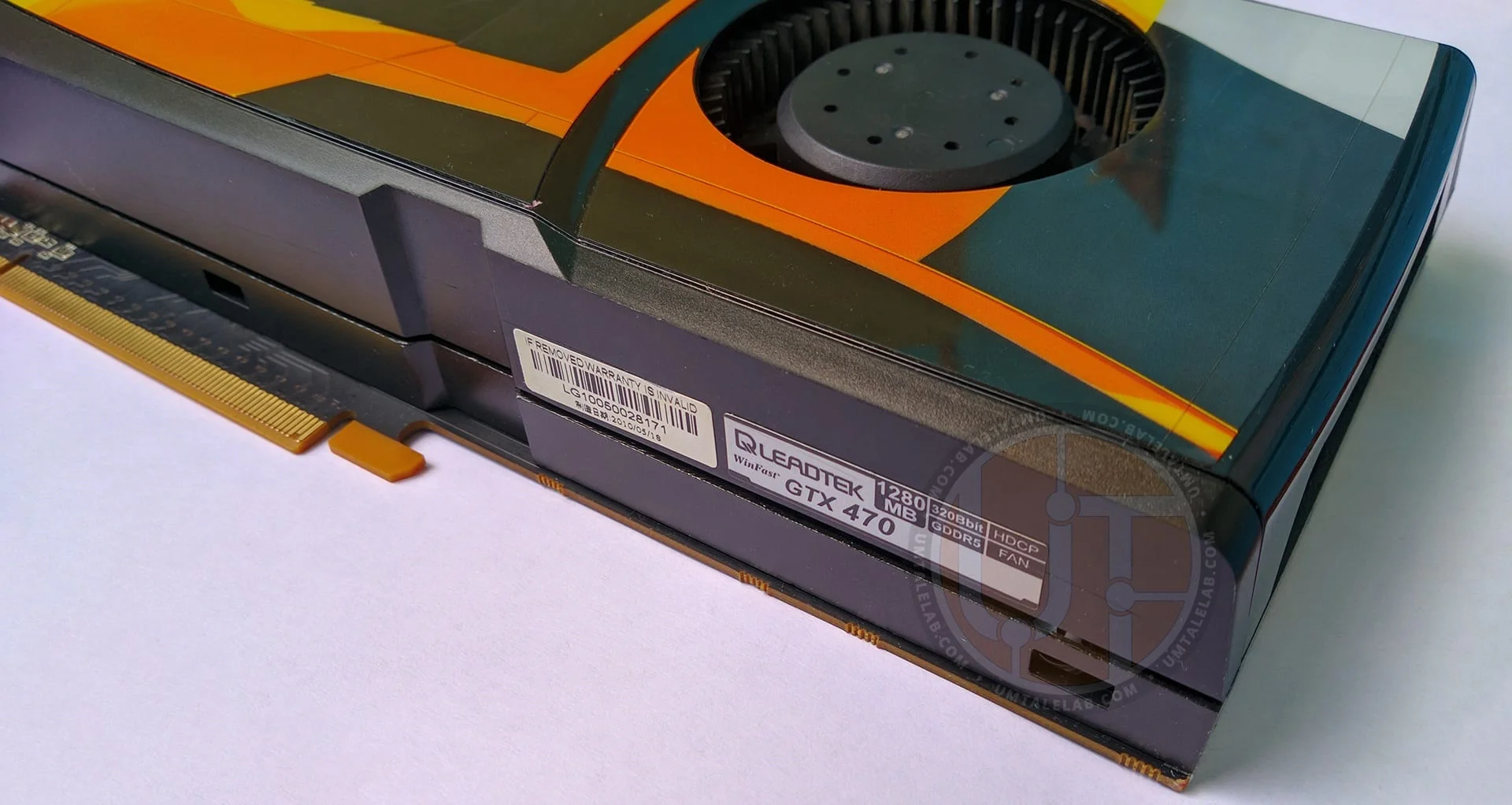
Unfortunately, finding the aforementioned graphics cards in working condition proved to be quite a challenging task. For example, the photo below shows one of our dead specimens, which ultimately wasn't destined to be featured in this blog.
 ⤢ ВІДКРИТИ
We acquired a Leadtek GTX 470 from the secondhand market, plagued by a common 400-series issue: the GPU die detaching from its substrate. This problem isn't fixable with a simple reflow or, even less, a useless reball. It requires a GPU replacement, and as you might guess, new GF100 chips simply don't exist anymore. So, this reference GTX 470 from Leadtek was shelved in our lab.
Nevertheless, we didn't give up. A year after our Radeon HD 5870 article, we finally acquired a working GeForce GTX 470 for our collection — and one of the best examples of its generation, at that! But let's take things one step at a time.
In this article, you can expect a test of the GTX 470 across 14 games, along with its overclocking potential. A second part, comparing the GeForce GTX 470 with the Radeon HD 5870, will follow sometime later (its release will depend on your engagement).
Graphics Card
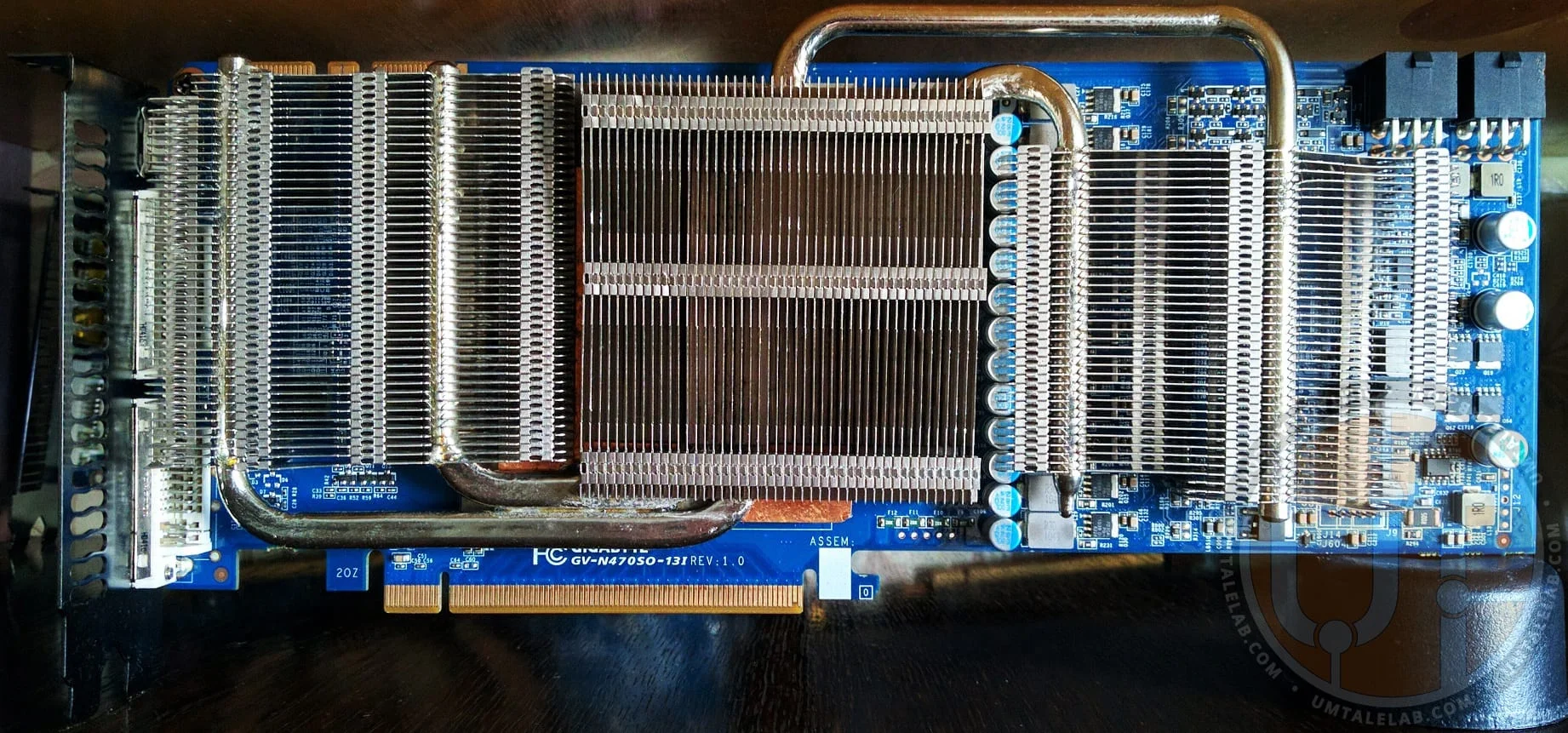
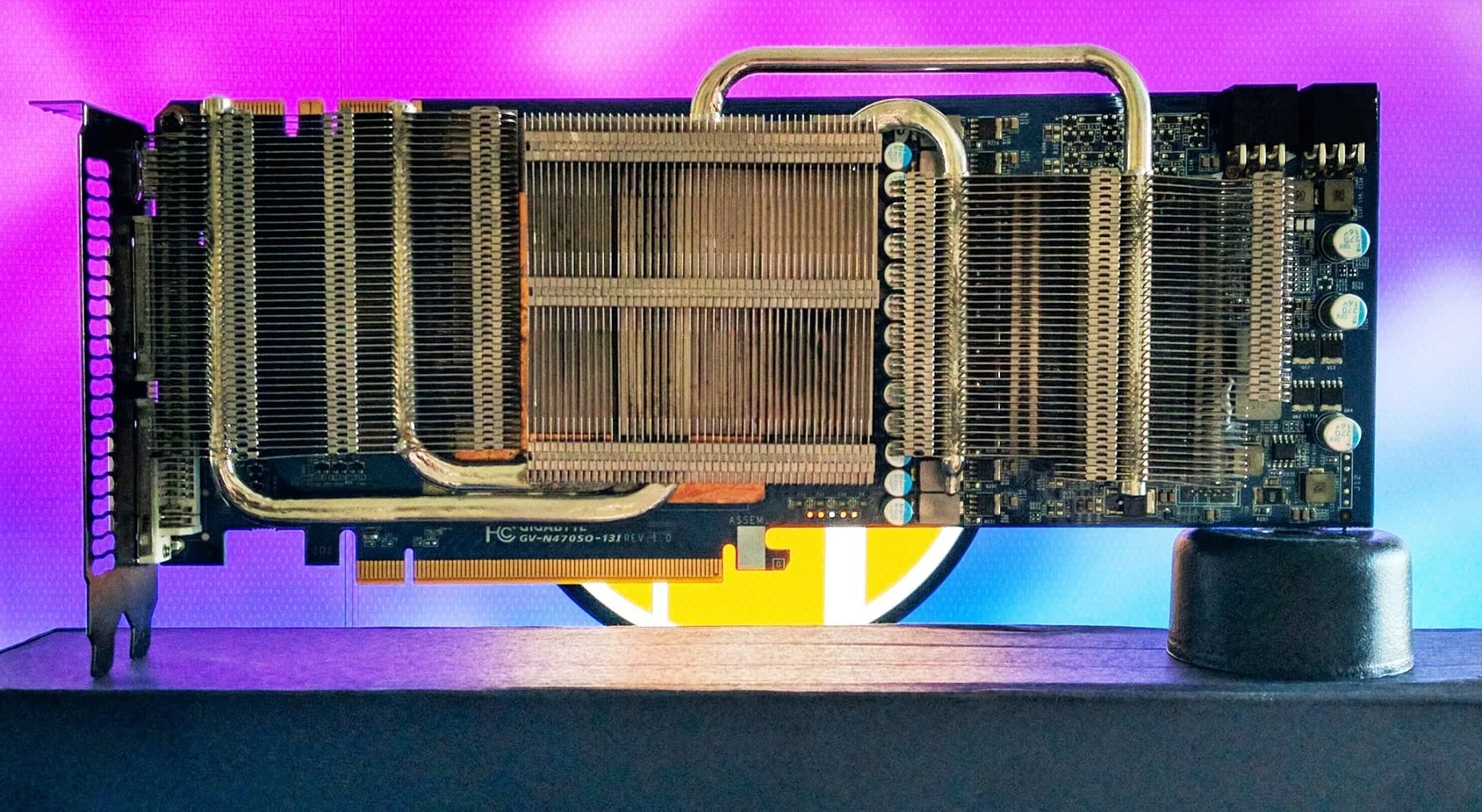
As I mentioned earlier, we finally got our hands on a working and rather impressive sample of the NVIDIA GeForce GTX 470: Gigabyte's GV-N470SO-13I. However, as you've probably noticed from the image below, it didn't arrive entirely intact:
 ⤢ ВІДКРИТИ
Unfortunately, after 11 years, the card's original fans had failed, so the seller listed this model without them. However, that's nothing to worry about. A couple of 120mm fans easily resolve this minor inconvenience.
The GV-N470SO-13I boasts a fairly massive cooling system: a three-section heatsink is pierced by four heat pipes. But don't let that fool you: first-gen Fermi chips run incredibly hot, so this kind of cooling is more a vital necessity than an 'overkill' design from the manufacturer.
Board and Power System
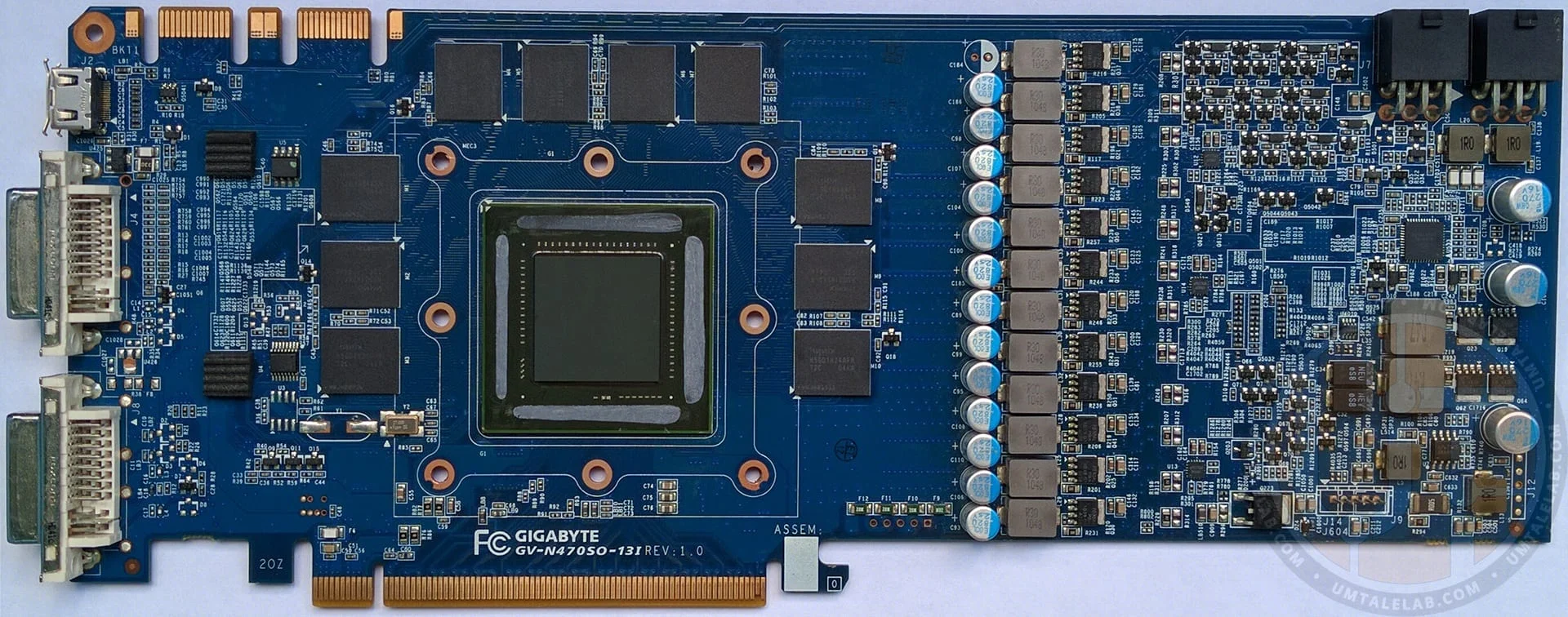
Photo of the GV-N470SO-13I Rev 1.0 PCB:
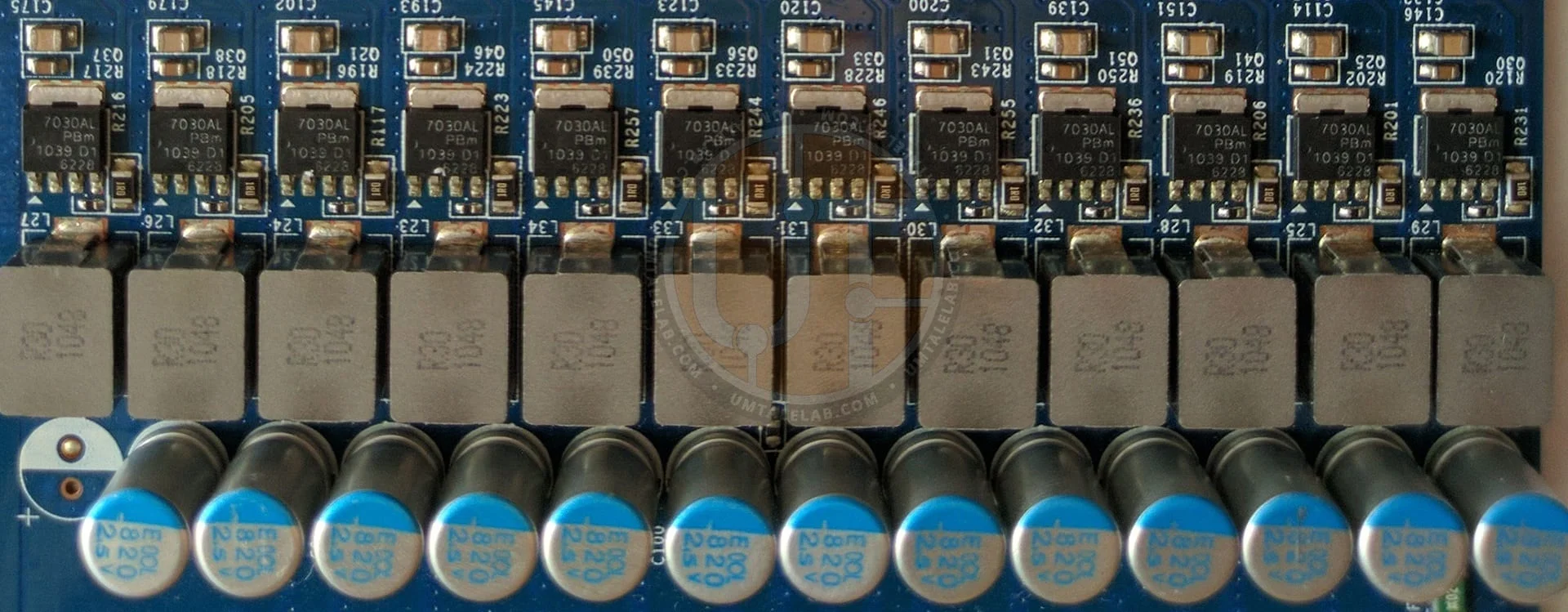
The GV-N470SO-13I features an extremely robust power subsystem for the GPU and video memory. It can deliver over 280W, which should be more than enough for the 215W GTX 470.
 ⤢ ВІДКРИТИ
 ⤢ ВІДКРИТИ
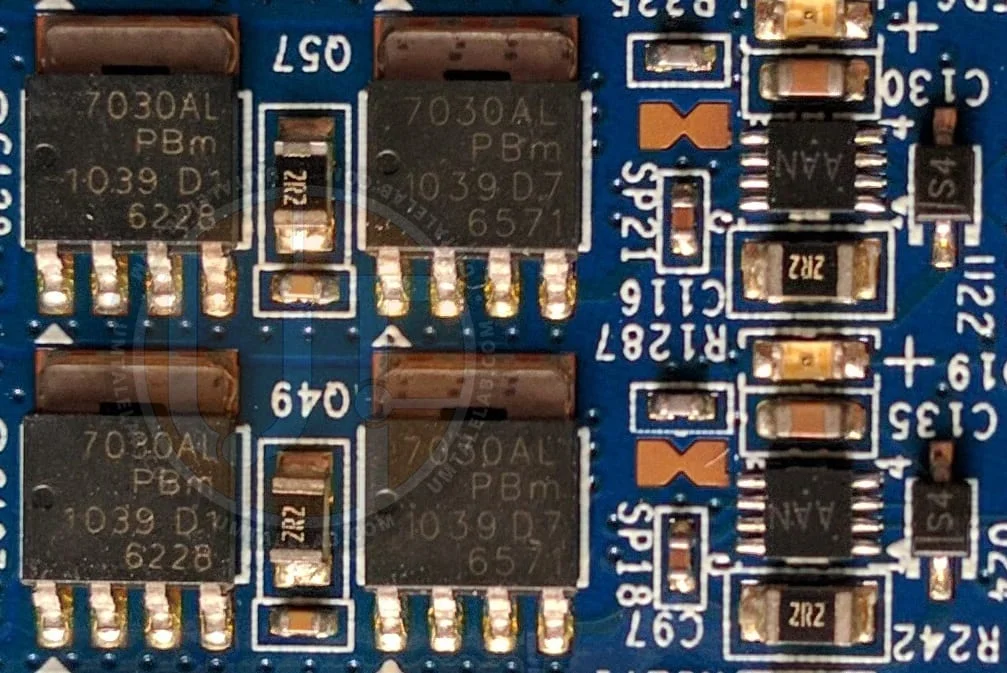
The GPU power circuit employs 36 7030AL PBm 1039 D1 and 7030AL PBm 1039 D7 series MOSFETs, located on both sides of the PCB. Virtually identical MOSFETs are actually used in more power-hungry GeForce GTX 570 and GTX 580 cards from Gigabyte's lineup.
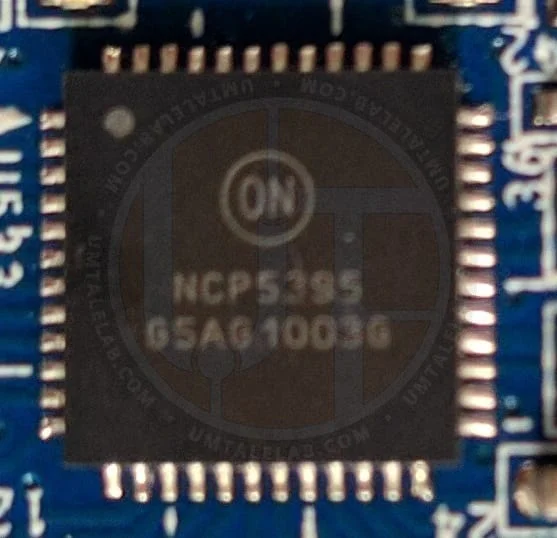
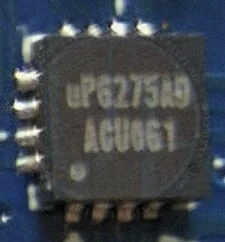
Four PWM controllers are used for GPU voltage conversion: one powerful six-phase NCP5395 from ON Semiconductor and three dual-phase uP6275AD chips. This makes the GV-N470SO one of the most reliable and well-engineered NVIDIA 400-series cards.
 ⤢ ВІДКРИТИ
 ⤢ ВІДКРИТИ
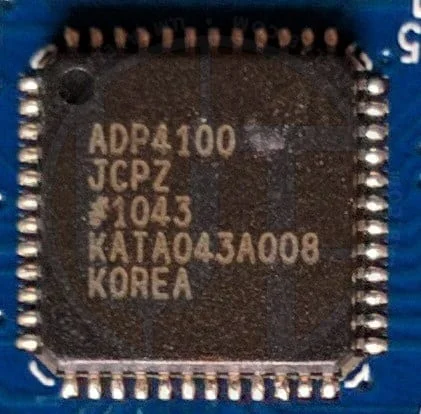
Video memory power is handled by a four-phase ON Semiconductor ADP4100 converter. However, it's worth noting that Gigabyte engineers only implemented two of the theoretically four phases in practice. Nevertheless, this is more than sufficient for the relatively lower-clocked GDDR5 memory on the GTX 470.
 ⤢ ВІДКРИТИ
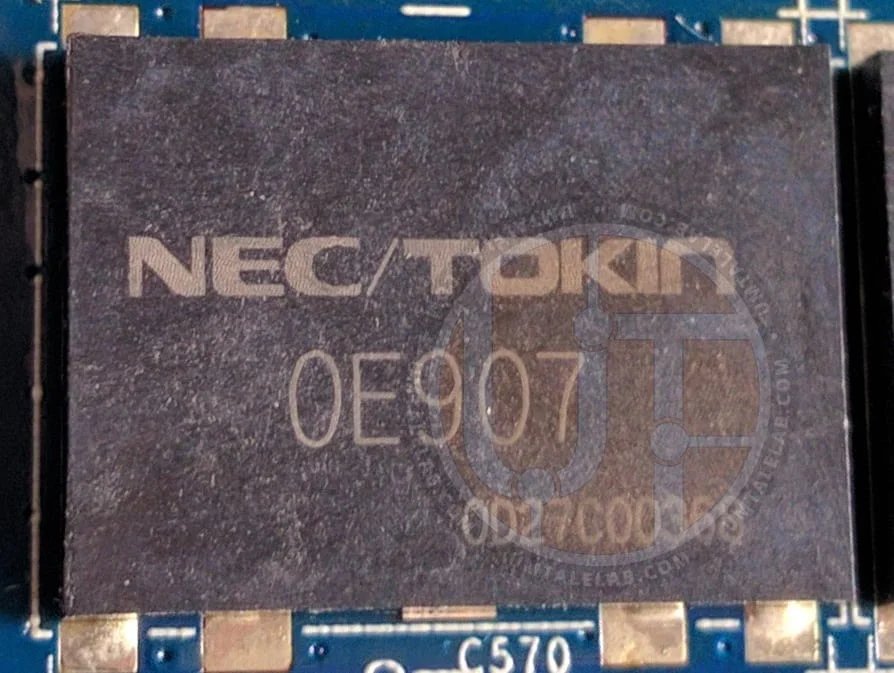
The GPU power subsystem also features Gigabyte's preferred NEC/TOKIN 0E907 film capacitors.
 ⤢ ВІДКРИТИ
Incidentally, the exact same capacitors were installed on the GV-R587OC-1GD graphics card we previously tested.
Graphics Processor and Memory
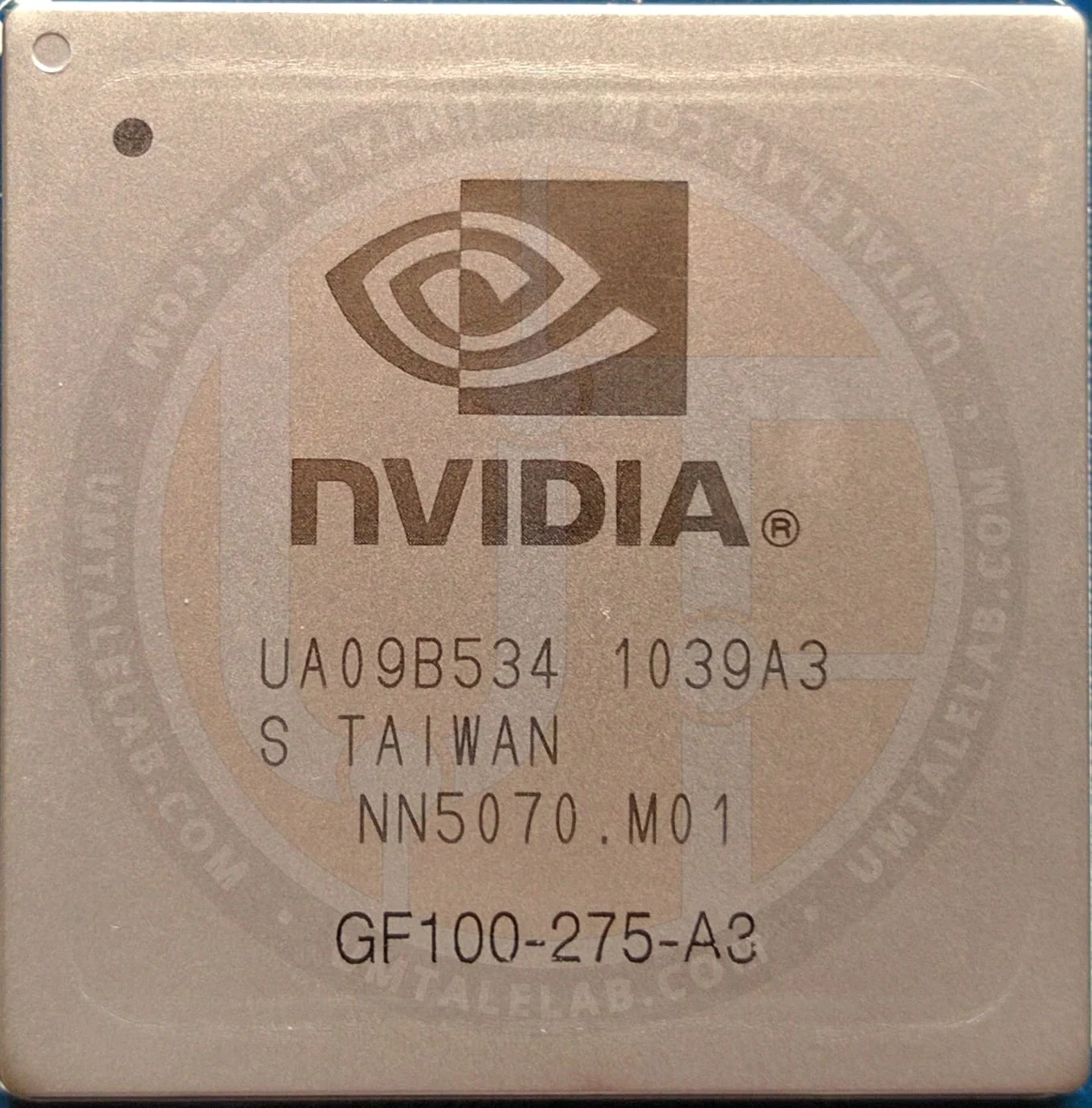
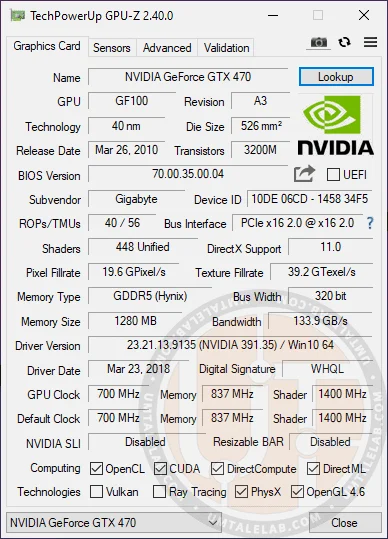
The GTX 470 features a cut-down version of the 40nm GF100 chip, configured with 40 ROPs, 56 texture units, and 448 stream processors.
Specifically, our sample is the GF100-275-A3 GPU:
 ⤢ ВІДКРИТИ
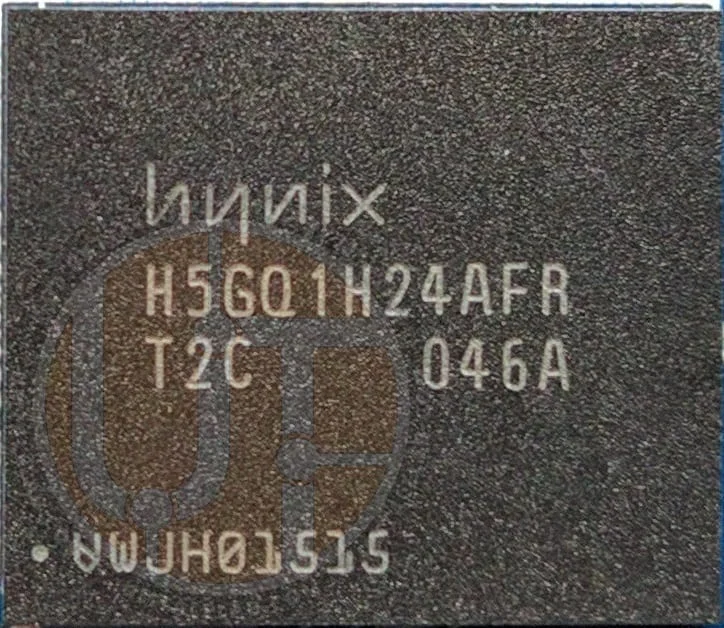
The GF100-275-A3 chip is accompanied by 1280MB of GDDR5 video memory with a 320-bit interface, made up of ten 1-gigabit (128-megabyte) Hynix memory chips marked H5GQ1H24AFR-T2C 046A.
 ⤢ ВІДКРИТИ
Although the nominal frequency of these chips is 5000MHz, the GDDR5 voltage is deliberately lowered due to the high power consumption of Fermi graphics cards. This results in a significantly lower actual clock speed for the memory chips. For the GTX 470, it's only 3348MHz.
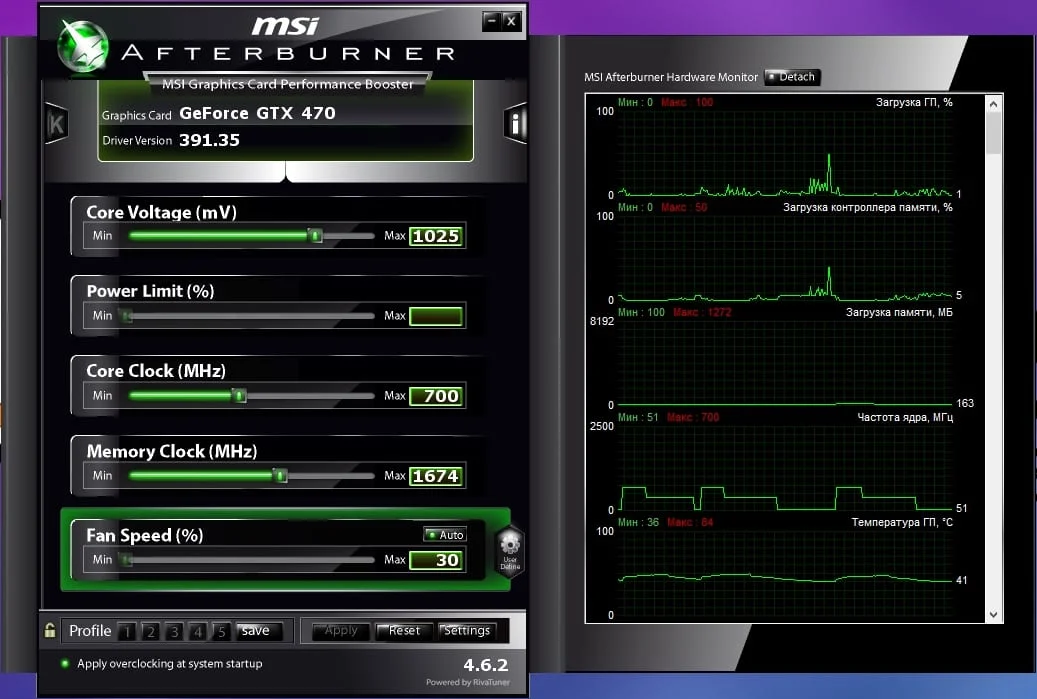
NVIDIA's factory specifications state that the GeForce GTX 470 should operate at 607/1215MHz for the GPU (core/shader domain) at 0.950 volts and 3348MHz for the GDDR5 video memory. However, the GV-N470SO-13I sample featured in this article is factory-overclocked by Gigabyte. It runs at slightly higher frequencies: GPU at 700/1400MHz with 1.025 volts, and GDDR5 video memory at 3348MHz.
 ⤢ ВІДКРИТИ
 ⤢ ВІДКРИТИ
The GPU-Z utility confirms all the aforementioned specifications, adding information about the GTX 470's support for technologies like OpenCL, Vulkan, OpenGL 4.6, and DirectX 11. While DirectX 12 isn't officially supported, the GTX 470 does indirectly support some of its features.
Testing specifics
After 11 years of use, the thermal paste under the GTX 470's GF100 GPU heat spreader had turned to dust, failing to perform its duties and causing the GPU temperature to reach 100 degrees Celsius. We decided to delid the GPU and replace the dried-up thermal interface material.
Thanks to a scalpel, a heat gun, and a plastic card for removing the old sealant, this operation doesn't take much time.
 ⤢ ВІДКРИТИ
However, recommending this procedure to anyone is quite difficult due to the potential risk of rendering the GPU inoperable. For chips like the GF100, though, replacing the thermal paste under the heat spreader is practically the only way to ensure adequate performance in 2021. The temperature difference between a delidded and stock GPU is a significant 24 degrees Celsius.
If you do decide to proceed with the aforementioned operation, remember that you perform all actions with your equipment at your own risk!
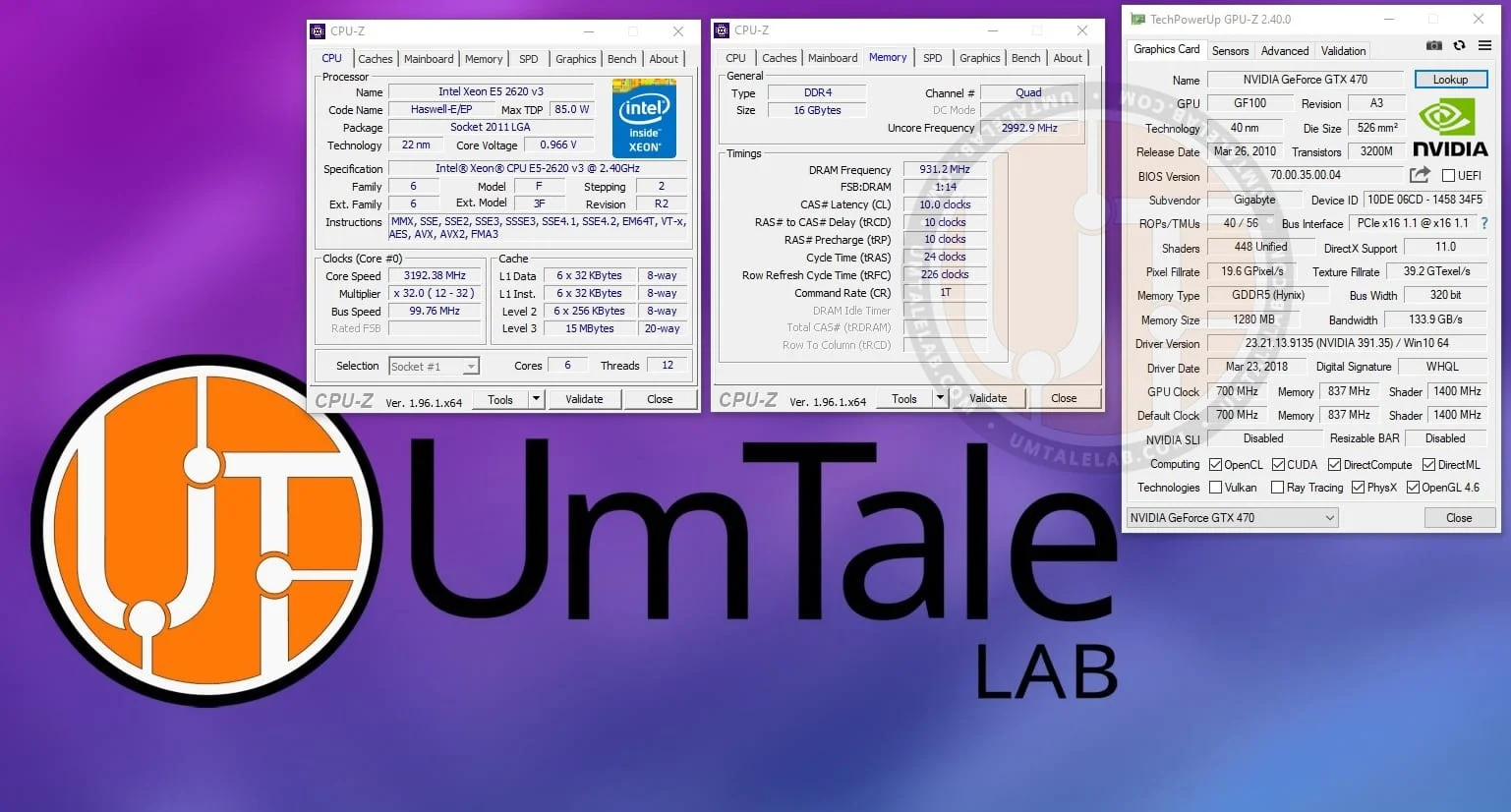
Test bench:
Processor — Xeon E5-2620 v3@3200MHz (unlocked Turbo Boost frequency);
Graphics card — GIGABYTE GV-N470SO-13I;
Motherboard — Kllisre X99-D8 (AD12) with modified BIOS for unlocked full Turbo Boost frequency;
RAM — G.SKILL DDR4@1866MHz, four F4-2400C15S-4GNT 4GB modules, totaling 16GB (latencies 10-10-10-24);
SSD — KINGSTON 120GB SA400S37120G;
HDD — Seagate 2TB ST2000DM008-2FR102;
Power supply unit — Chieftec GPS-1250C.
 ⤢ ВІДКРИТИ
GeForce GTX 470 testing in 14 games:
Assassin’s Creed Odyssey
 ⤢ ВІДКРИТИ
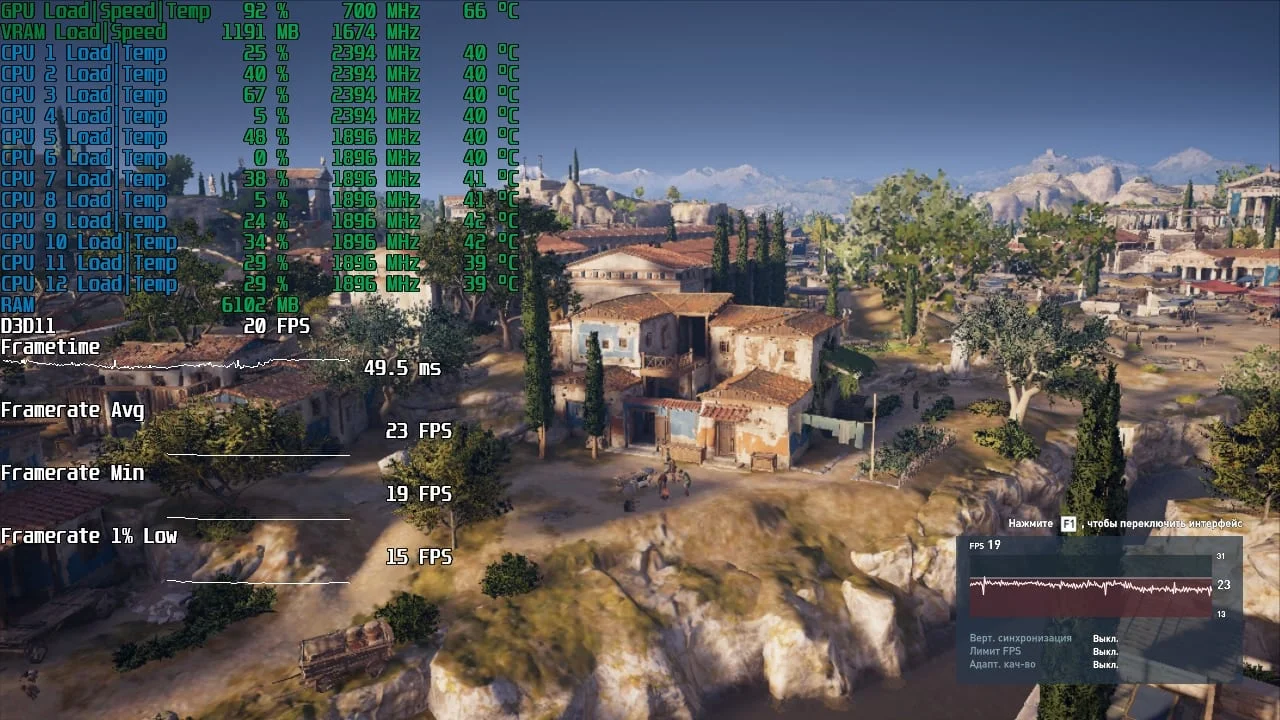
Minimum graphics settings, 1280x720 resolution.
 ⤢ ВІДКРИТИ
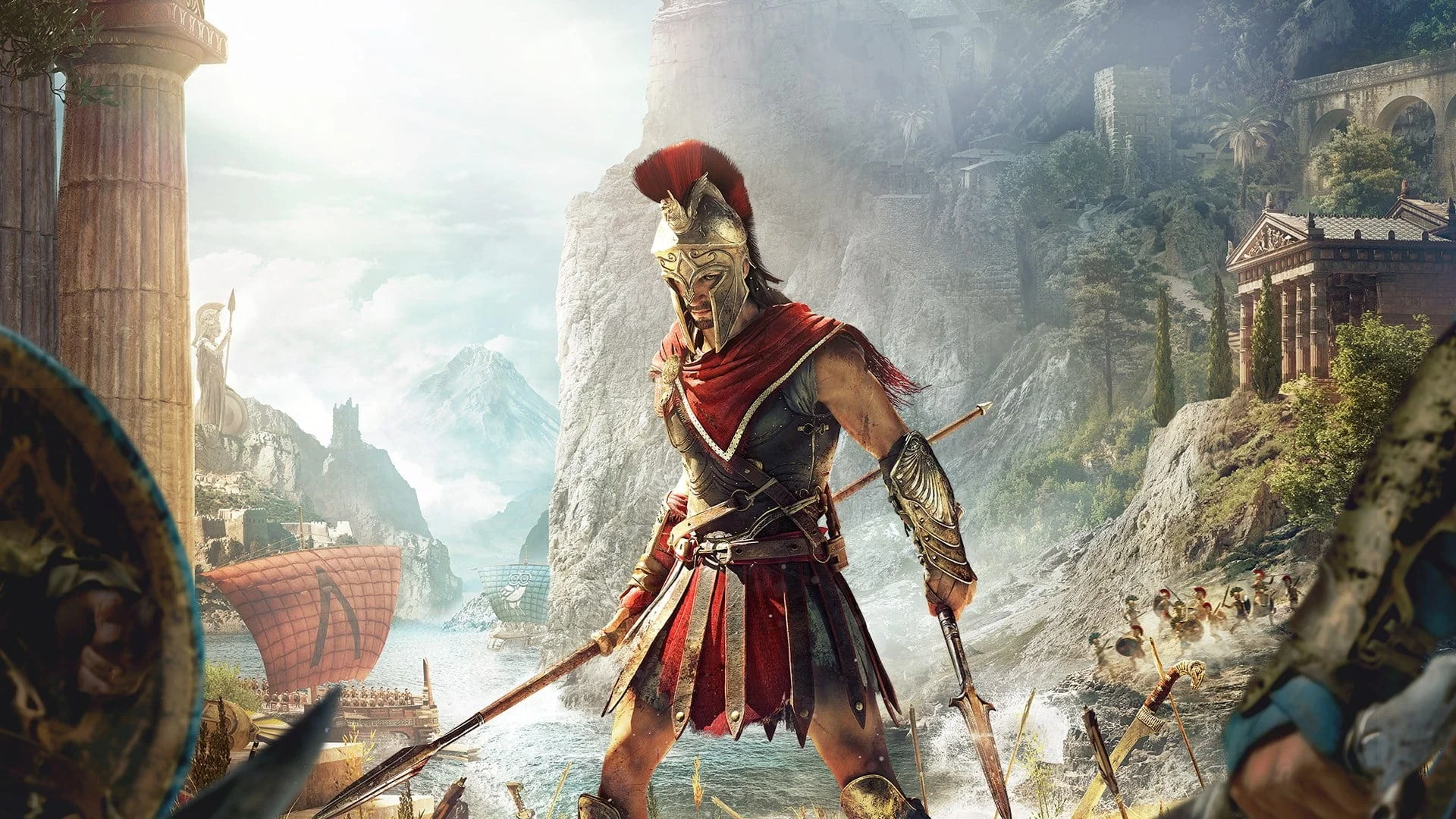
Unfortunately, we couldn't launch the latest Assassin's Creed Valhalla on the GTX 470; the game requires full DirectX 12 API support. However, the previous installment, Assassin's Creed Odyssey, launched easily on this aging graphics card. Still, we couldn't achieve acceptable FPS, regardless of the settings.
On average, the game delivered 23 frames per second, with occasional dips to 15 FPS. These disappointing figures are completely unsuitable for comfortable stealth-action gameplay.
Control
 ⤢ ВІДКРИТИ
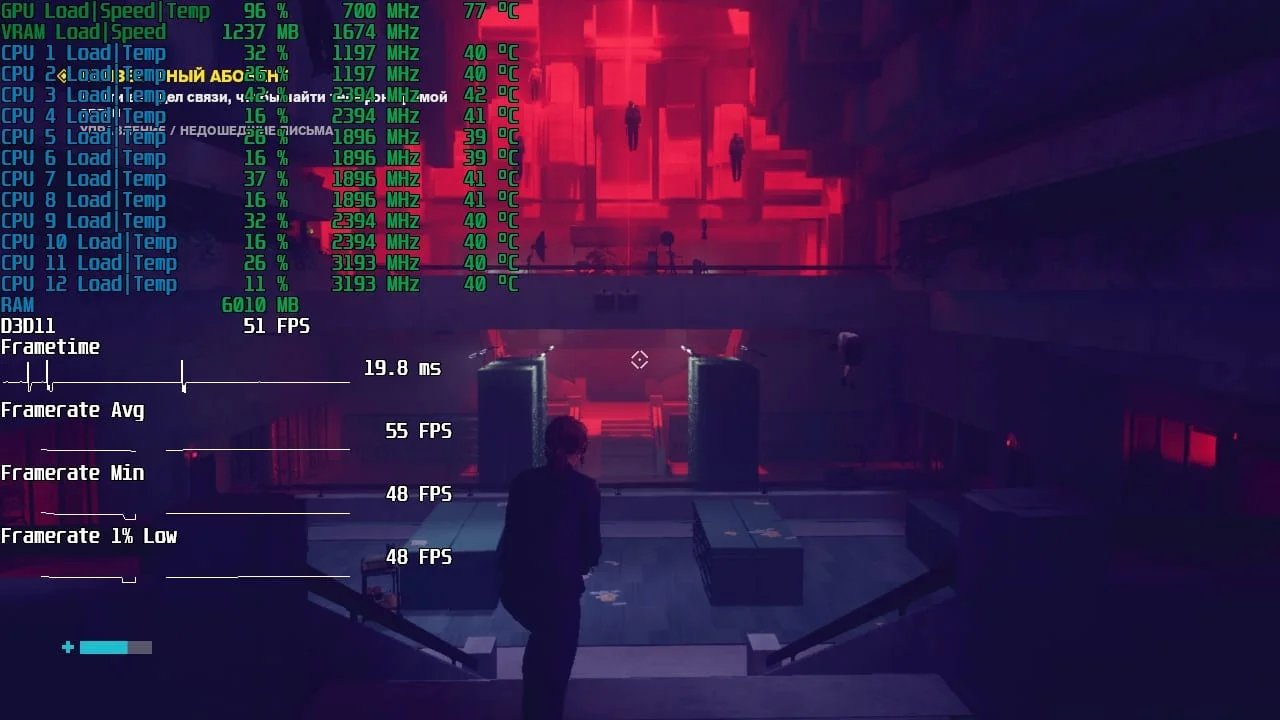
Minimum graphics settings, 1280x720 resolution.
 ⤢ ВІДКРИТИ
Control, on the other hand, was a pleasant surprise. Sam Lake's creation runs quite decently. Minor stutters appear occasionally, but that's not surprising given the card only has 1280MB of VRAM. If you can overlook that, a GTX 470 owner can expect an average of around 50 relatively stable FPS.
Counter-Strike: Global Offensive
 ⤢ ВІДКРИТИ
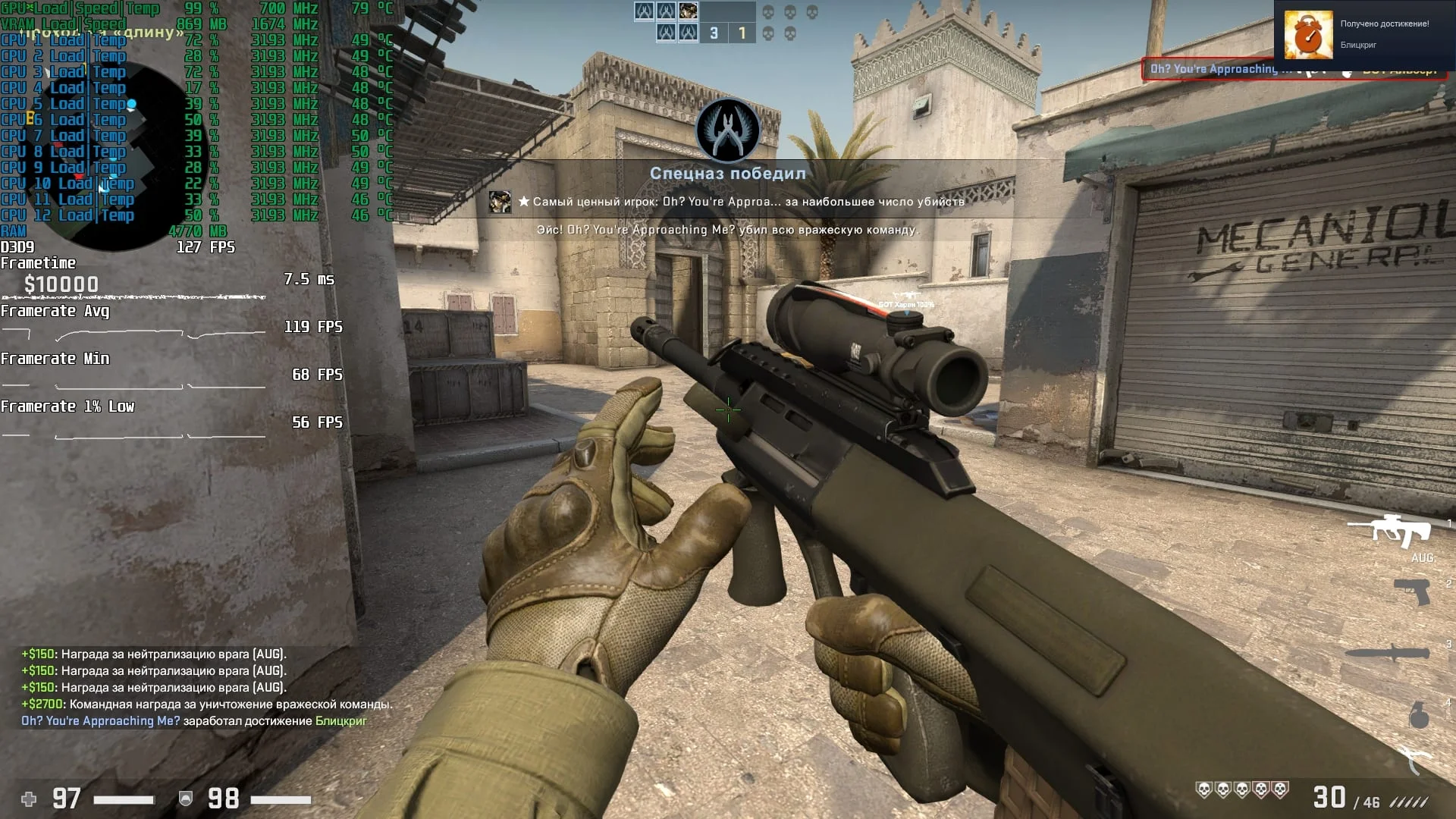
Medium settings, 1920x1080 resolution, MSAA x2 anti-aliasing.
 ⤢ ВІДКРИТИ
The GTX 470 absolutely crushes the multiplayer shooter Counter-Strike: Global Offensive. We didn't even have to lower the graphics settings to the minimum! The game consistently delivers an average of 120 frames per second at 1080p.
Days Gone
 ⤢ ВІДКРИТИ
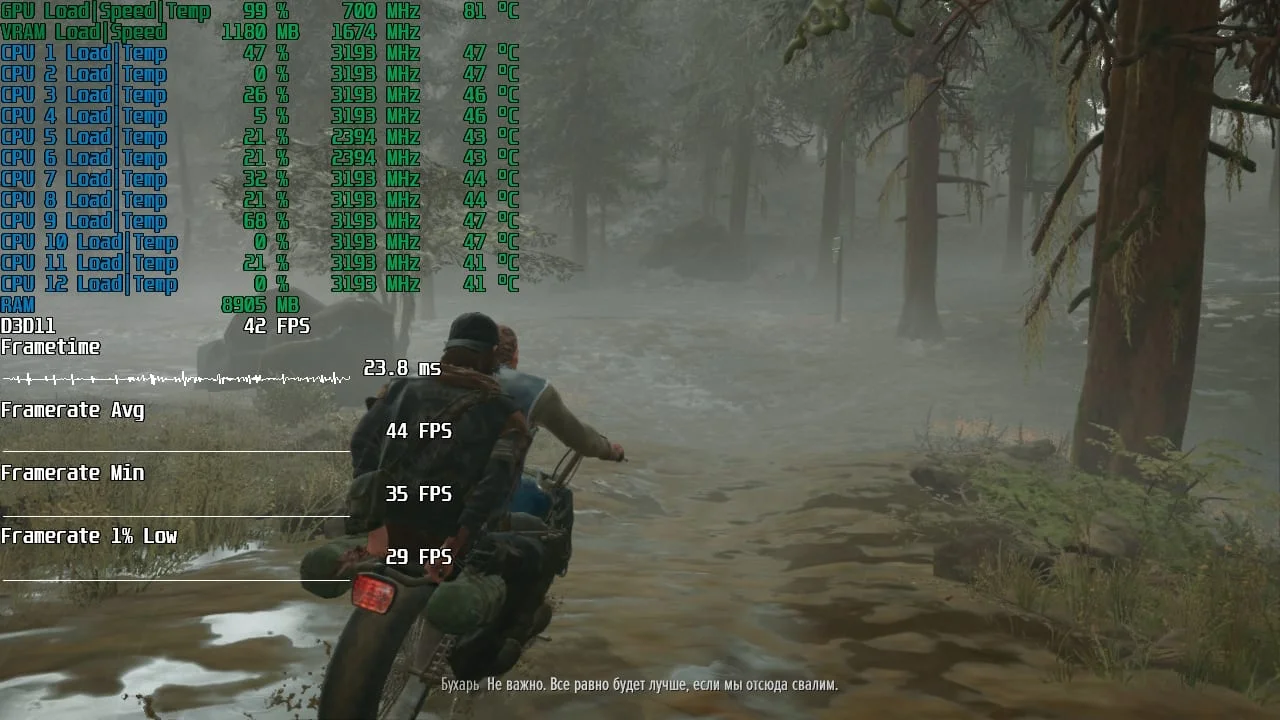
Minimum graphics settings, 1280x720 resolution.
 ⤢ ВІДКРИТИ
Now we get to the more recent title, Days Gone. To our surprise, the GeForce GTX 470 not only launched this game but also delivered a remarkably confident frame rate of 44 FPS. What's more, even rare and very rare frame drops never dipped below 29 FPS! This is truly a solid result for a graphics adapter that is 11 years older than the tested game (referring to Days Gone's PC release)!
Days Gone certainly isn't going to win any beauty contests on minimum settings. But it runs, and if you're determined to play through it, you won't face any significant difficulties.
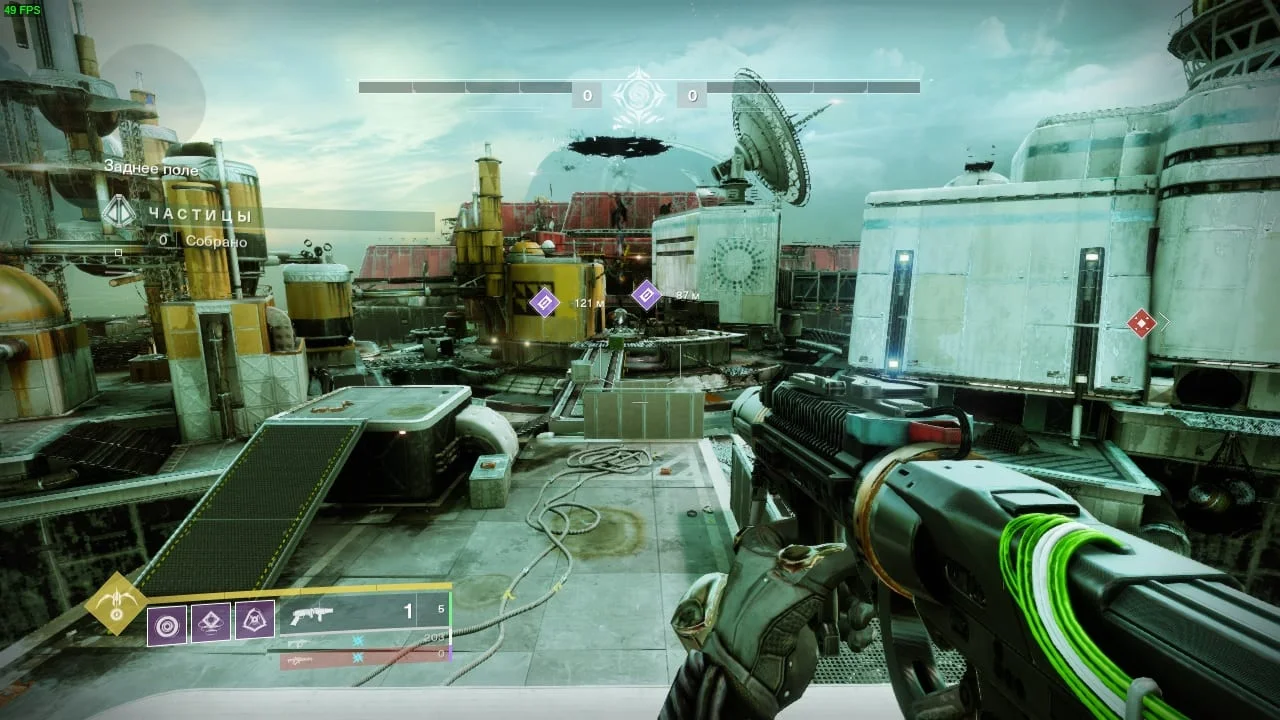
Destiny 2: Beyond Light
 ⤢ ВІДКРИТИ
Minimum graphics settings, 1280x720 resolution.
 ⤢ ВІДКРИТИ
Destiny 2 is an MMOFPS, making it incredibly difficult to predict all player behavior scenarios. However, in most situations, the GTX 470 can deliver an average of around 54 frames, with rare drops to 39 FPS. To be frank, some sections (PVP and certain raids) aren't entirely playable, but the card will at least let you get acquainted with the game.
Far Cry 5
 ⤢ ВІДКРИТИ
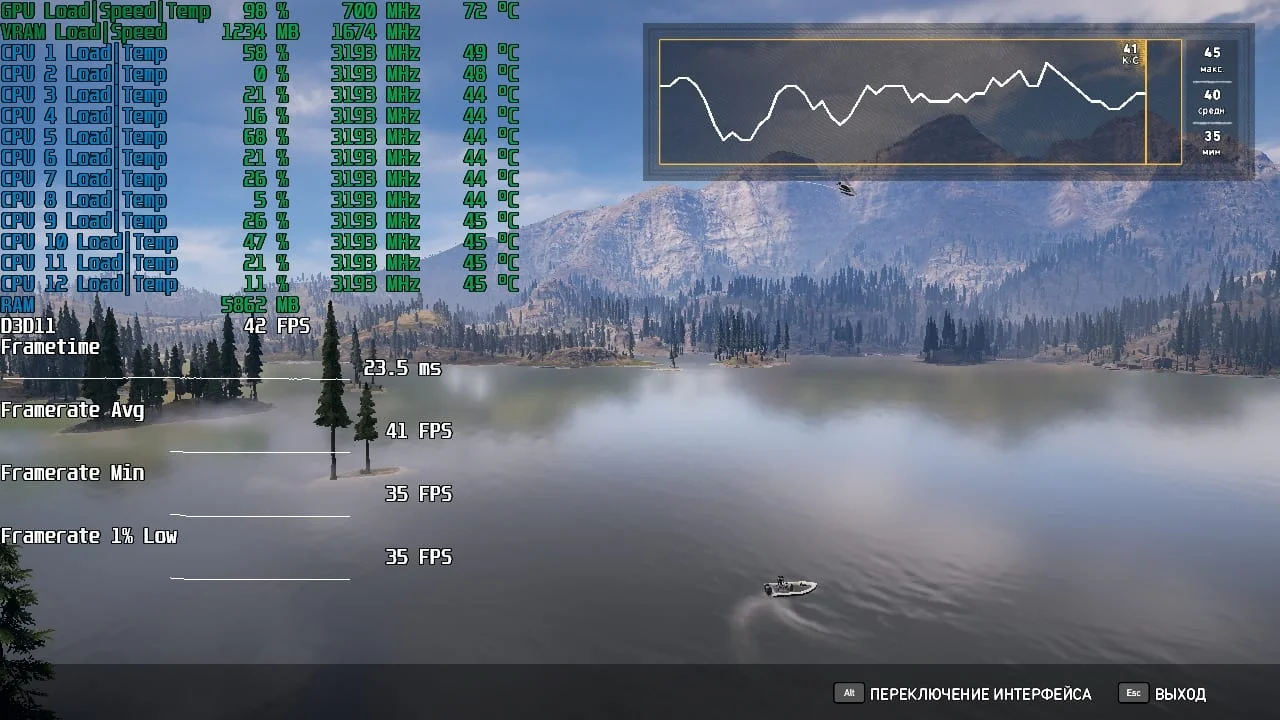
Minimum graphics settings, 1280x720 resolution.
 ⤢ ВІДКРИТИ
As someone who's played Far Cry 5 extensively, I'll be direct: you can play it on a GTX 470, but don't expect a comfortable gameplay experience, at least not at base clock speeds. The game averages 41 FPS, with rare drops to 35 FPS. You can certainly complete the game with this framerate, but some missions will undoubtedly cause an incredible headache.
The only remaining 'downgrade' option for graphics is to reduce the internal render resolution (assuming the external resolution is already 1280x720). However, in practice, this turns the image into a blurry mess, making it extremely difficult to aim.
Far Cry New Dawn
 ⤢ ВІДКРИТИ
Minimum graphics settings, 1280x720 resolution.
 ⤢ ВІДКРИТИ
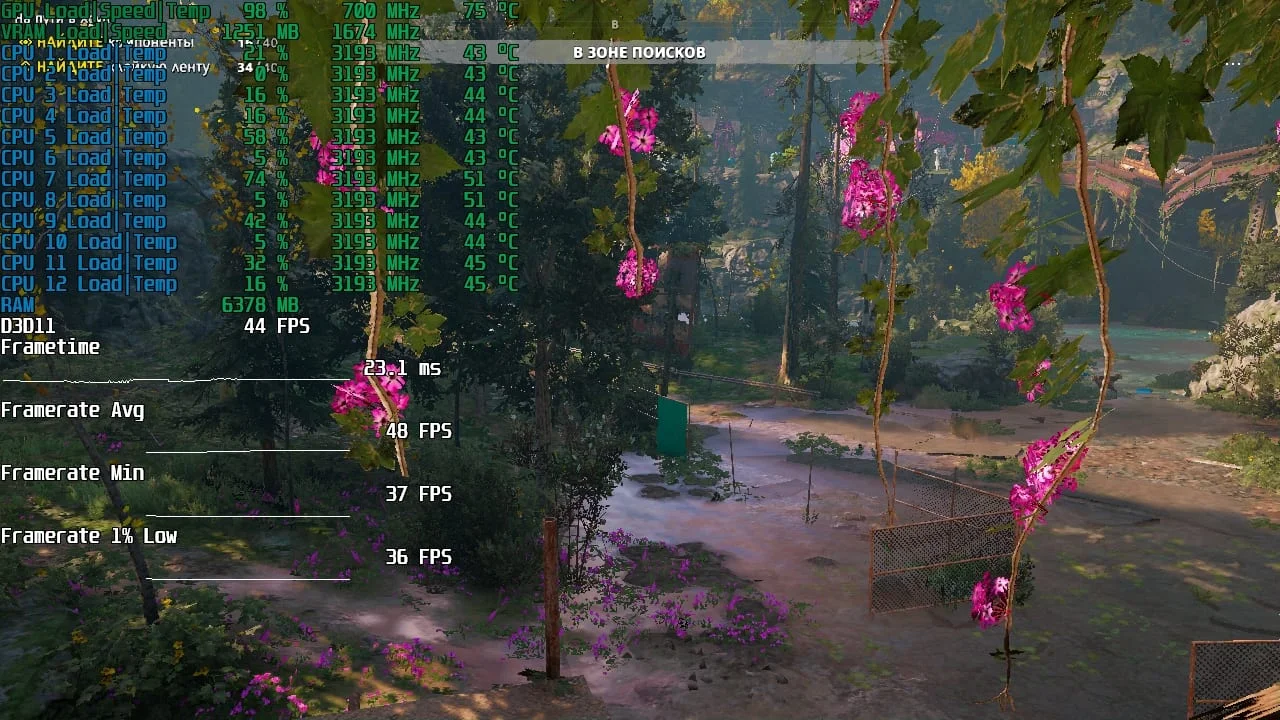
Far Cry New Dawn, the direct sequel to Far Cry 5, runs slightly better on the GTX 470 but still crashes in random areas of the map. It's likely that VRAM capacity is critically important for this sequel.
Mafia: Definitive Edition
 ⤢ ВІДКРИТИ
Minimum graphics settings, 1280x720 resolution.
 ⤢ ВІДКРИТИ
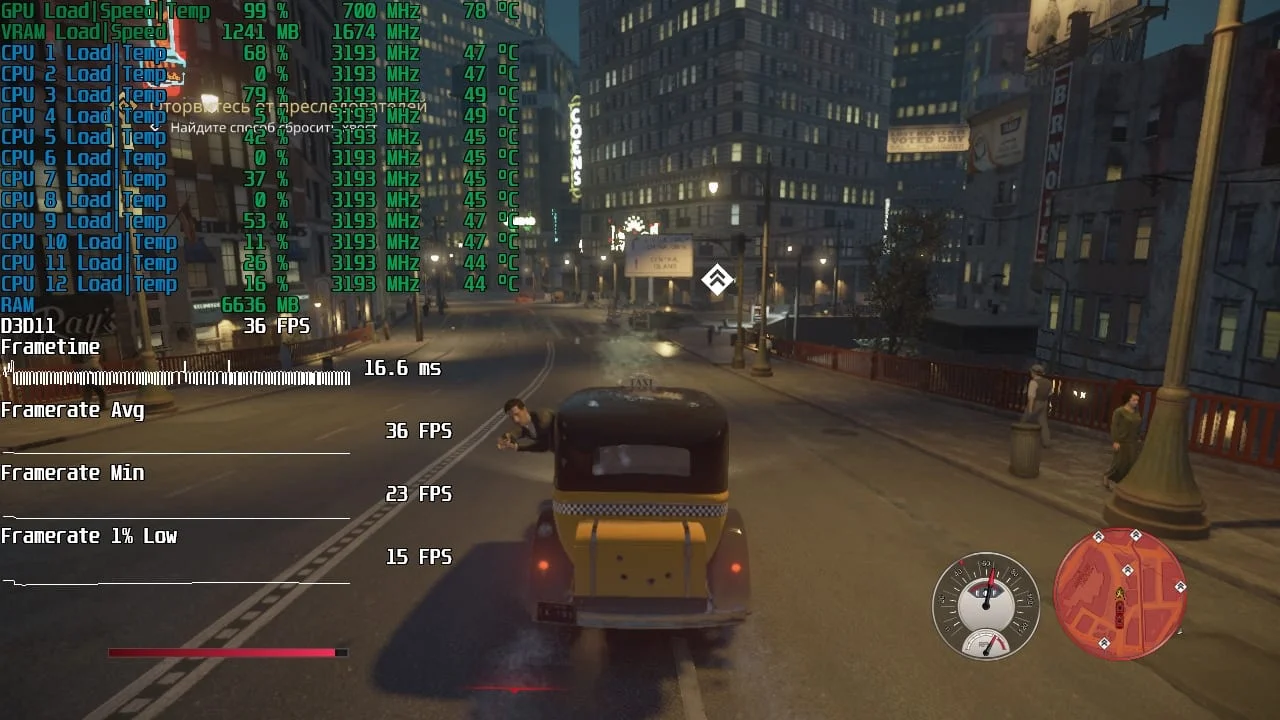
Mafia: Definitive Edition is a single-player game, so it's tough to gauge if 36 FPS is a good figure here. Subjectively, controlling vehicles feels relatively difficult at this frame rate. What's more, the game suffers from frequent freezes, clearly visible in the very rare events metric on the MSI Afterburner graph.
Still, the GTX 470 deserves credit: some last-gen console games don't even manage this FPS.
eFootball PES 2021
 ⤢ ВІДКРИТИ
Minimum settings, 1920x1080 resolution, 80% render resolution.
 ⤢ ВІДКРИТИ
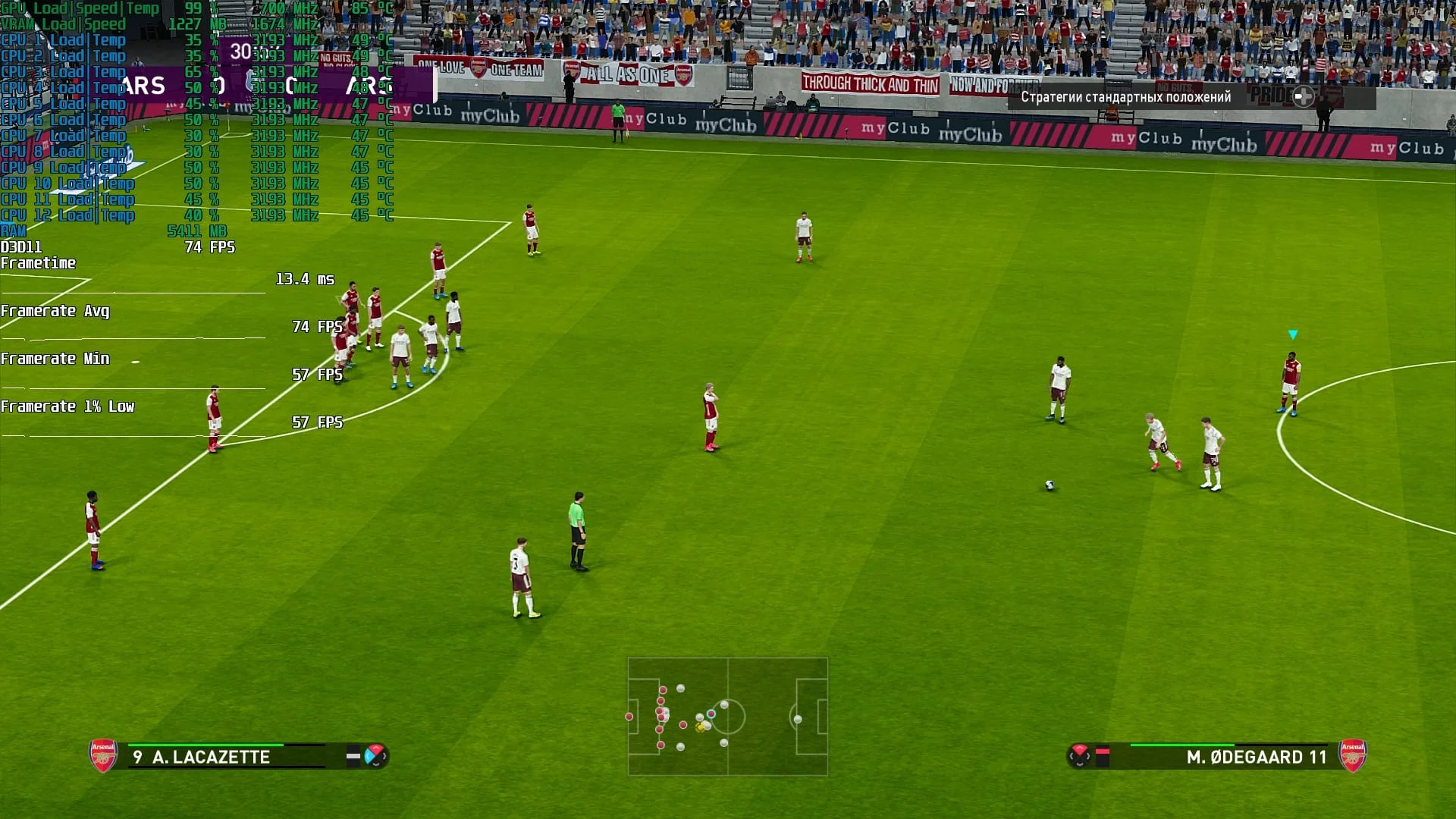
With some caveats, the eFootball PES 2021 football simulator managed to run stably at 1920x1080 (though the actual rendering resolution was closer to 1600x900). The game performs well, completely free of freezes, even when switching camera views to players, goals, the ball, or replays. On average, the GTX 470 delivers 74 frames per second, with the rare events metric never dipping below 57 FPS. An excellent result!
Red Dead Redemption 2
 ⤢ ВІДКРИТИ
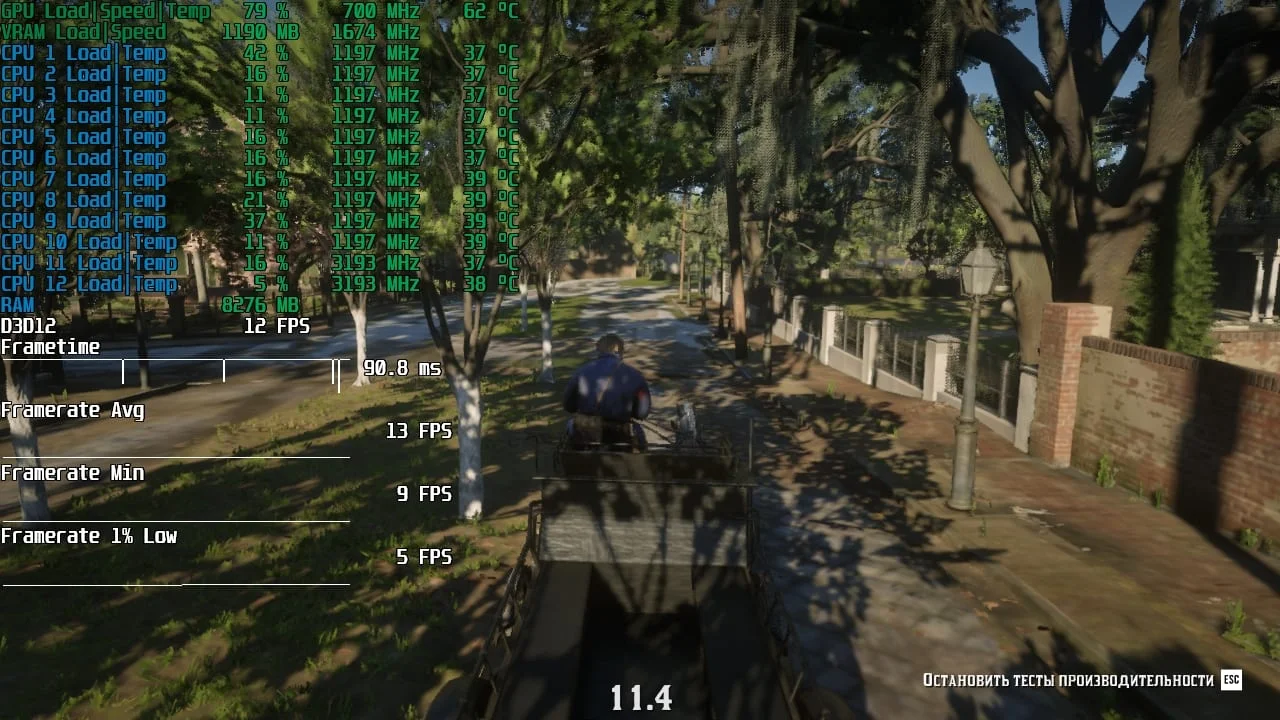
Minimum settings, 1280x720 resolution.
 ⤢ ВІДКРИТИ
The situation in Red Dead Redemption 2, however, is simply catastrophic. While the game did launch, 13 frames per second is nowhere near enough to comfortably enjoy the expanses of the Wild West.
Tom Clancy’s The Division 2
 ⤢ ВІДКРИТИ
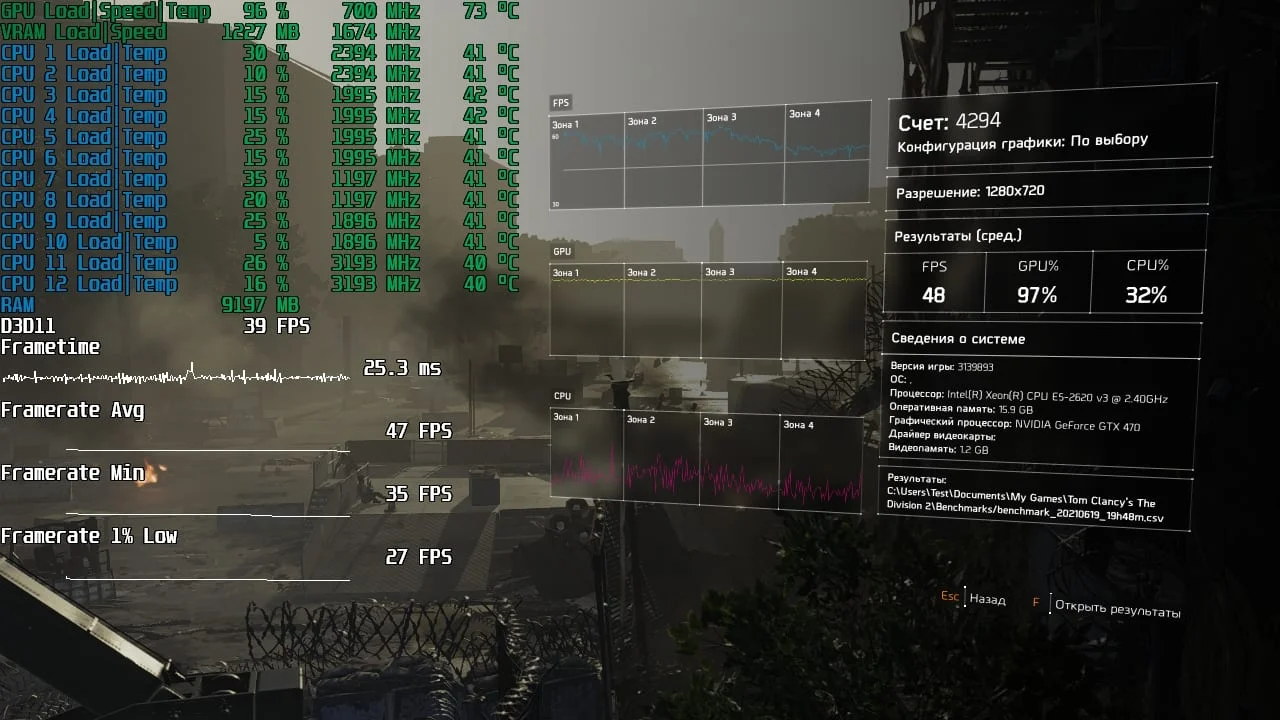
Minimum settings, 1280x720 resolution.
 ⤢ ВІДКРИТИ
Conversely, The Division 2 runs quite tolerably. We used the game's built-in benchmark for testing, and since we know its performance is slightly lower than in the open world, it's safe to say the GTX 470 is perfectly adequate for Ubisoft's shooter.
Watch_Dogs 2
 ⤢ ВІДКРИТИ
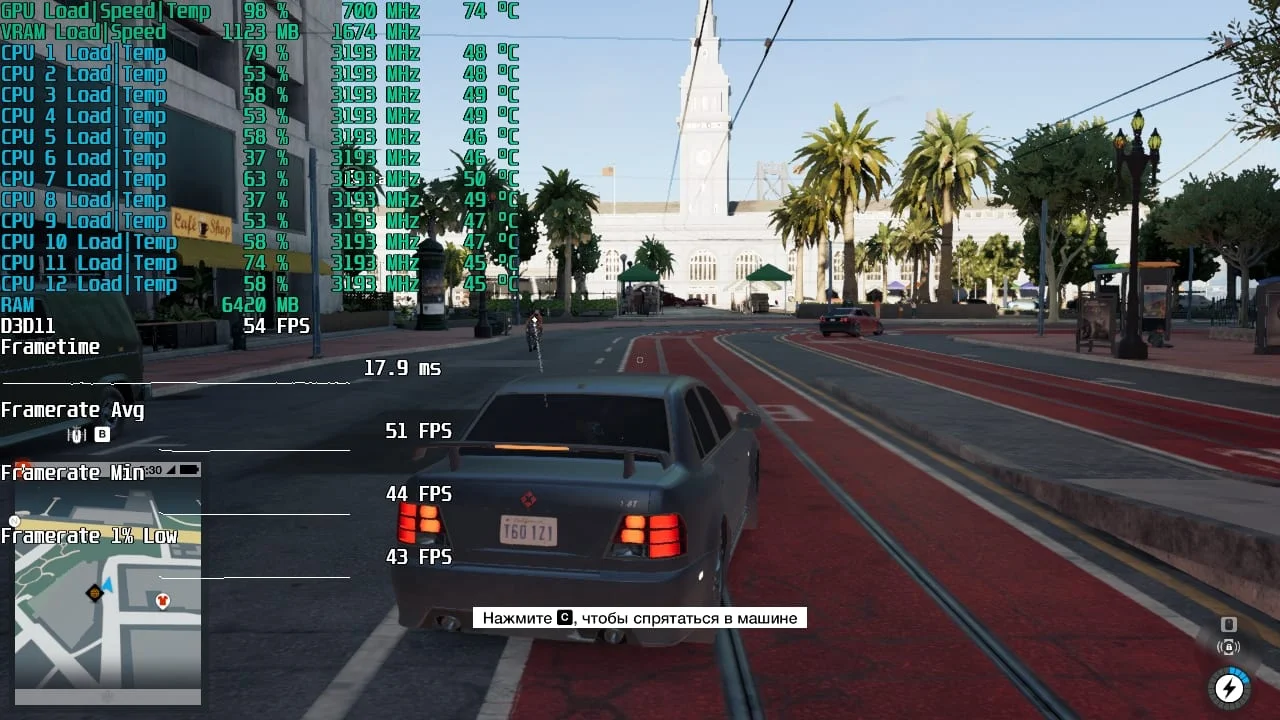
Minimum settings, 1280x720 resolution.
 ⤢ ВІДКРИТИ
Another Ubisoft creation, and another small victory for the venerable GTX 470. Watch_Dogs 2 is entirely playable, averaging 51 FPS with rare events staying at 43 FPS.
The Witcher 3: Wild Hunt
 ⤢ ВІДКРИТИ
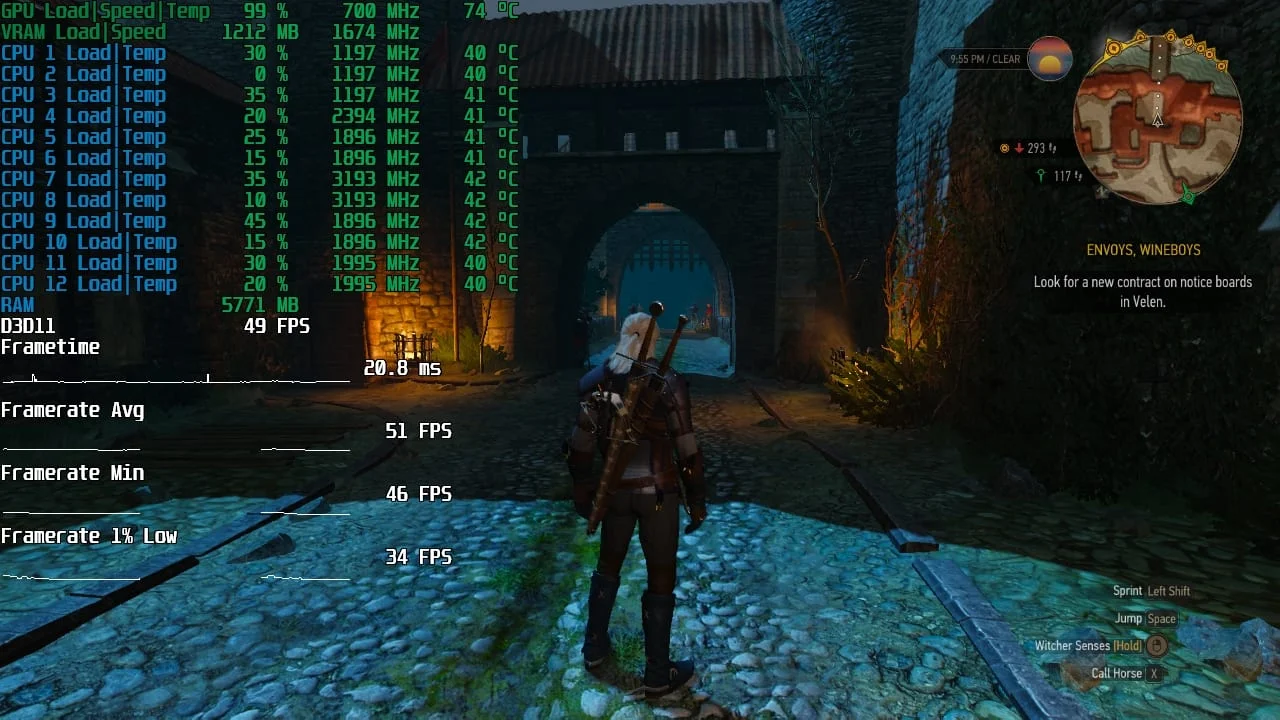
Minimum settings, 1280x720 resolution.
 ⤢ ВІДКРИТИ
The Witcher 3 presents a roughly similar situation. CD Projekt Red's developers did an excellent job optimizing their title, as the GTX 470 can render an average of 51 frames, with very rare events not dipping below 34 FPS. A great result for an action-RPG!
World of Tanks
 ⤢ ВІДКРИТИ
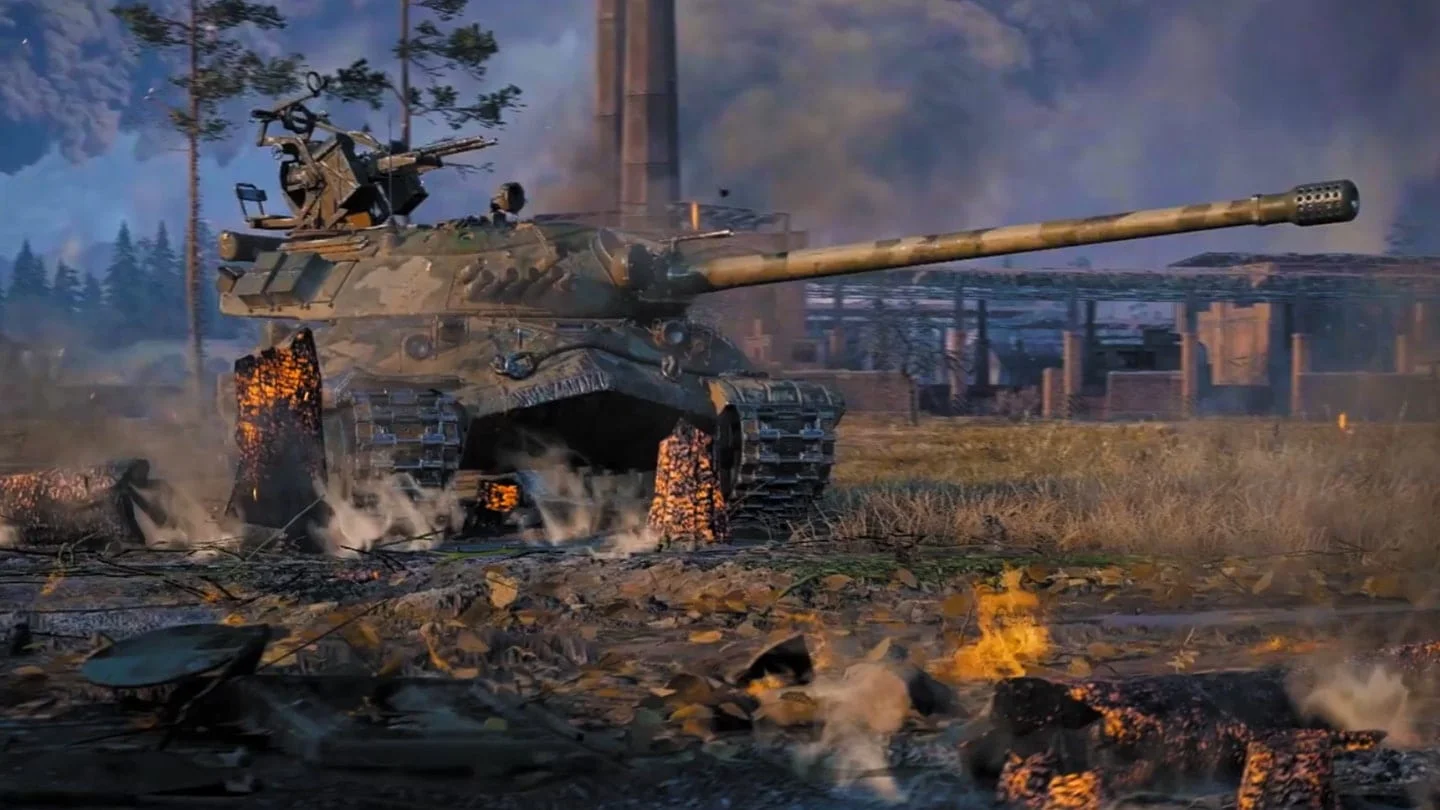
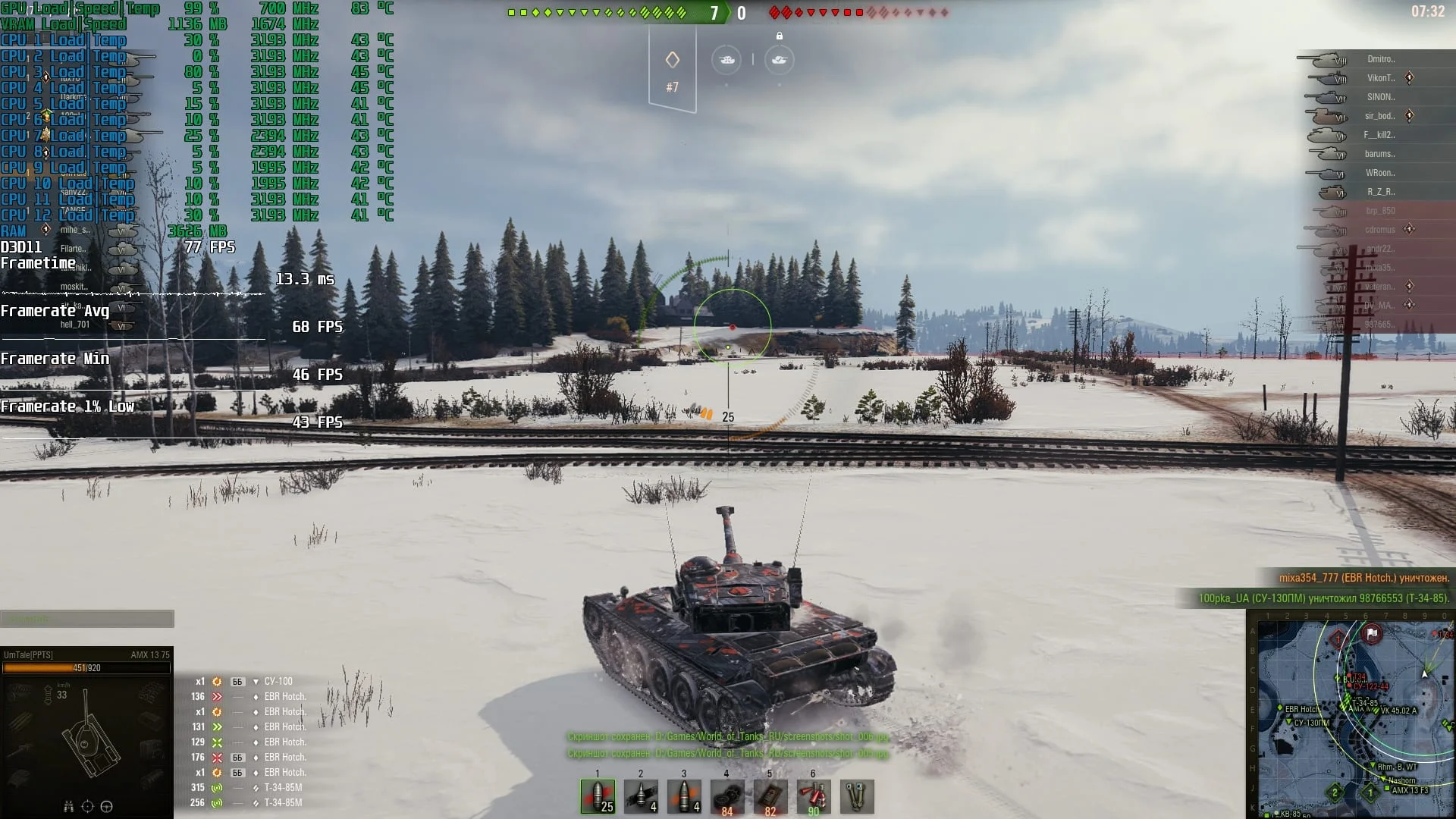
For the benchmark, we used a pre-prepared replay on the "Erlenberg" map in "Assault" mode. We used medium graphics settings and a resolution of 1920x1080.
 ⤢ ВІДКРИТИ
Even in 2021, with all the improvements to the Big World engine, "Tanks" runs great on an old graphics card like the GeForce GTX 470. That's astonishing! To say Wargaming has done an excellent job optimizing its most popular product would be an understatement.
The GTX 470 delivers a solid 68 frames per second on average, with 1% low framerates not dropping below 43 FPS.
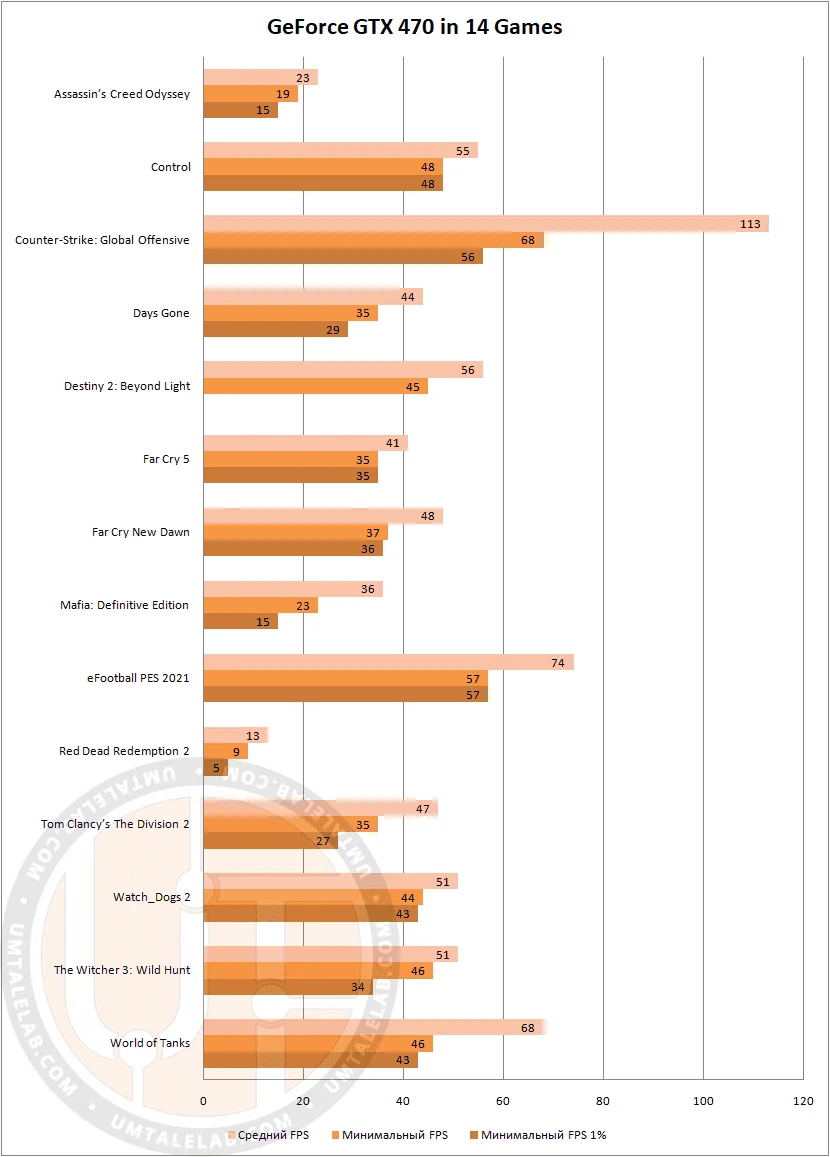
Below is a summary chart showing the GeForce GTX 470's performance across 14 games:
 ⤢ ВІДКРИТИ
The graphics card delivered acceptable framerates in 11 of the 14 selected games. In some titles, like WoT, CS:GO, and PES2021, the frame counter even soared past the 'psychological' 60 FPS mark! This is an excellent result indeed. Just think about it: the GeForce GTX 470 is 11 years old, yet it can still offer its owner adequate performance!
 ⤢ ВІДКРИТИ
GeForce GTX 470 Overclocking
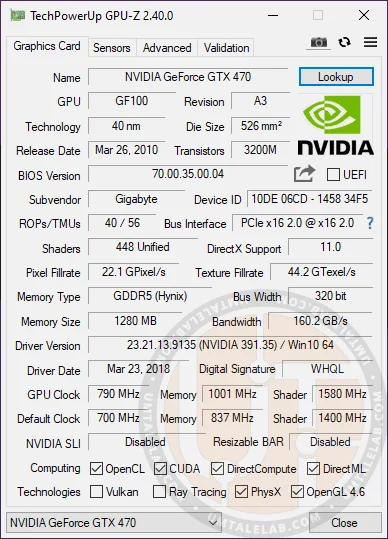
We managed to overclock our GV-N470SO-13I sample to 790/1580MHz (core/shader domain) for the GPU and a solid 4004MHz for the GDDR5 video memory:
 ⤢ ВІДКРИТИ
This is a very respectable result, one that most reference samples can only dream of. Furthermore, this particular sample allows for voltage increases up to 1.100 volts, which theoretically could enable 850/1700MHz. Unfortunately, even at the GV-N470SO-13I's stock voltage of 1.025 volts and the 790/1580MHz frequency, the GPU temperature occasionally exceeded 85 degrees. For an 11-year-old graphics card, these aren't the most favorable conditions. Therefore, we decided to limit the overclock to 790/1580MHz without any voltage adjustments.
Let's see how much the GeForce GTX 470's performance improved after such a successful overclock.
GeForce GTX 470: Stock vs. Overclocked
Far Cry 5
⤢ ВІДКРИТИGeForce GTX 470 | Average FPS | Minimum FPS | 1% Low FPS |
Stock Frequencies | 41 | 35 | 35 |
Overclocked | 46 | 39 | 39 |
In Far Cry 5, the overclock delivered a performance boost of about 12%. That's not bad, especially considering that 46 frames per second is a generally playable FPS for a single-player shooter.
Tom Clancy’s The Division 2
⤢ ВІДКРИТИGeForce GTX 470 | Average FPS | Minimum FPS | 1% Low FPS |
Stock Frequencies | 47 | 35 | 27 |
Overclocked | 51 | 36 | 30 |
Around 8%. Not much. However, in Tom Clancy’s The Division 2, the limited video memory of the GTX 470 is clearly the main bottleneck. Consequently, any overclocking won't deliver the expected performance boost.
The Witcher 3: Wild Hunt
⤢ ВІДКРИТИGeForce GTX 470 | Average FPS | Minimum FPS | 1% Lows |
Stock clocks | 51 | 46 | 34 |
Overclock | 56 | 51 | 39 |
In The Witcher 3: Wild Hunt, overclocking yielded a 10% performance increase, which is a respectable boost to the overall FPS.
World of Tanks
⤢ ВІДКРИТИGeForce GTX 470 | Average FPS | Minimum FPS | 1% Lows |
Stock clocks | 68 | 46 | 43 |
Overclock | 78 | 53 | 50 |
World of Tanks showed the most significant response to the graphics card's overclocking, with a substantial 15% increase in frame rate.
Conclusion
The GeForce GTX 470 was a pleasant surprise. Even 11 years after its release, it still holds up in some aspects. If it weren't for its insane power consumption and heat generation (which you might've noticed in the screenshots from the tests above), it could have been recommended as a stopgap during mining booms. However, due to these aforementioned issues and characteristics, the GTX 470 (and consequently its older sibling, the GTX 480) remains a very poor choice for purchase.
Ultimately, we've only provided food for thought; it's up to you to decide if the game is worth the candle.
Thanks for reading, and stay tuned for more!
If you found this material useful and would like to see more articles like this on our site, please consider supporting us on Patreon! Our primary fundraising goal is to expand our hardware inventory and enhance testing quality. This includes replacing HDDs with larger SSDs, acquiring a capture card to minimize the impact of ShadowPlay gameplay recording on final benchmark results, and similar improvements. Additionally, we'd like to extend a special thank you to our existing patrons! Your continued support is incredibly important to us!