TESTS · CPU · AMD
PUBLISHED
READING4 min
Overclocking and testing the AMD Athlon II X2 220 processor (Regor, 45nm, 2800MHz)
A review, overclocking, and testing of the AMD Athlon II X2 220 (Regor). A comparison with the Intel Celeron G530 showed the Celeron G530 to be a better value.
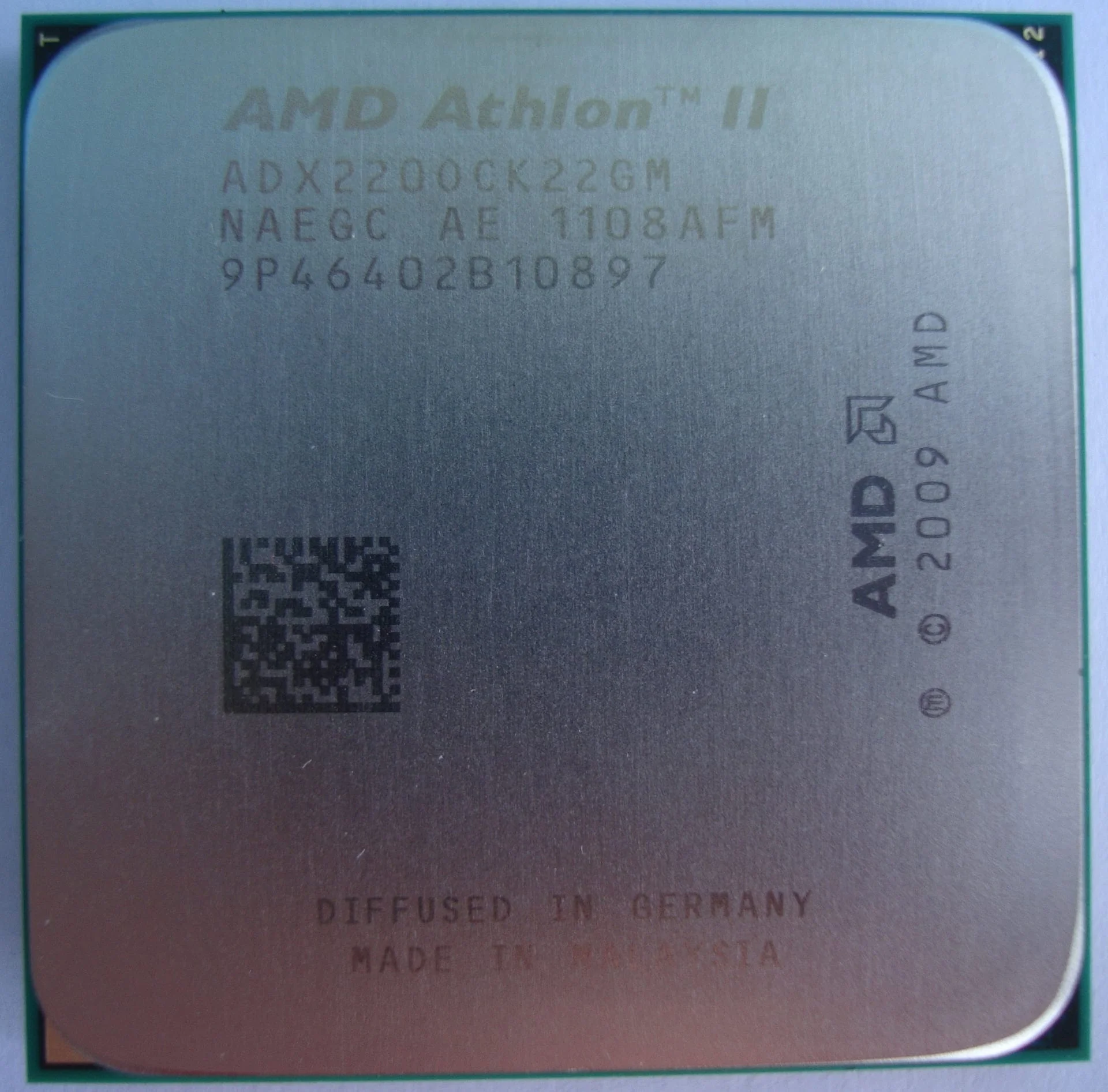
The Athlon II X2 220 is a typical example of the Regor core: it's based on the K10.5 microarchitecture and manufactured using a 45nm process. But there are some caveats. The X2 220 and X2 215 chips have half the L2 cache. Unlike their predecessors, which boast a full megabyte of L2 cache per core, these chips only have 512KB per core.
 ⤢ ВІДКРИТИ
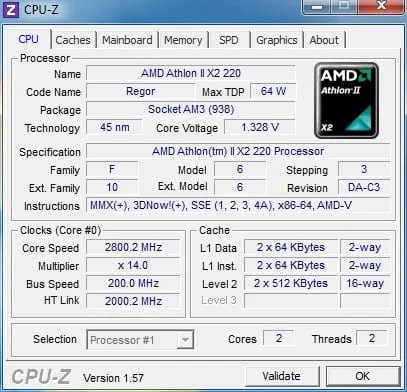
The chip's nominal frequency is 2800MHz, achieved by multiplying the 200MHz bus by a 14x multiplier. The core voltage is 1.32V, and the HyperTransport bus frequency is 2000MHz. It's a C3 CPU revision, which hints at excellent overclocking potential. Furthermore, the processor consumes up to 65 watts of power, which is quite low by modern standards.
 ⤢ ВІДКРИТИ
Test setup
AM3 motherboard - ASUS M4A785TD-V EVO
LGA1155 motherboard - ASUS P8P61 M-LX2
CPUs - Athlon II X2 220 (C3), Celeron G530 (D2)
CPU cooler - Cooler Master Hyper TX3
RAM - 2x2GB DDR3 Corsair XMS3 PC12600 (9-9-9-34)
Graphics card - AMD Radeon HD4670 (800/2000MHz) (overclock)
Graphics card - Sapphire Radeon HD5770 Vapor X (960/5300MHz) (tests)
PSU - Cooler Master 500W
Hard drive — Samsung HD161HJ 160GB
Software
Windows 7 x64 SP1
CPU-Z 1.57
CineBench 11.5 x64
3D Mark 2006 v1.2.0 (CPU test only)
3D Mark Vantage v1.1.1 (CPU test only)
WinRar 4.0
x264 HD Benchmark 4.0
FRAPS v3.1.0/build11052
Overclocking
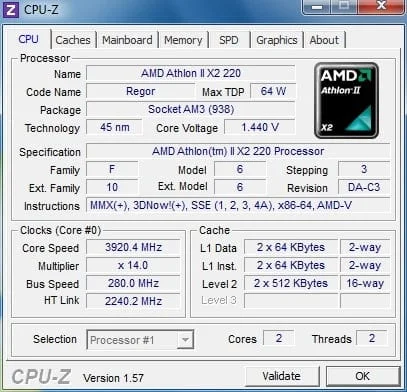
Let's dive straight into overclocking. Since the processor is based on the 45nm Regor C3 core, I easily managed to get both cores stable at 3920MHz:
 ⤢ ВІДКРИТИ
This only required increasing the core voltage to 1.44V, dropping the HT bus multiplier to 8, and still raising its voltage by 0.1V. RAM frequency was 1680MHz. The memory controller speed was a relatively low 2240MHz (ideally, it should be pushed to 2400-2600MHz). With these settings, the processor successfully completed a 45-minute LinX test.
I consider this level of testing a good indicator of stability. Honestly, you don't need much more. In this state, the processor successfully rendered a ten-hour scene in 3Ds Max 2010.
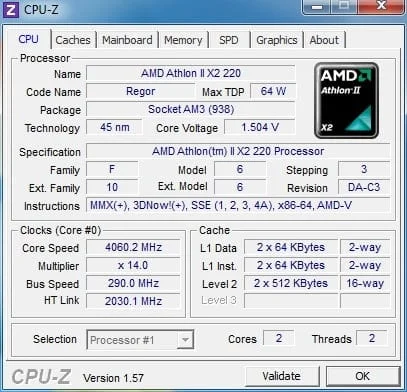
Alright, let's move on to maximum overclocking, where stability isn't the primary concern. These are purely screenshot-worthy results. By increasing the voltage to 1.5V, I managed to boot the processor at 4060MHz, though as I mentioned, it wasn't stable:
 ⤢ ВІДКРИТИ
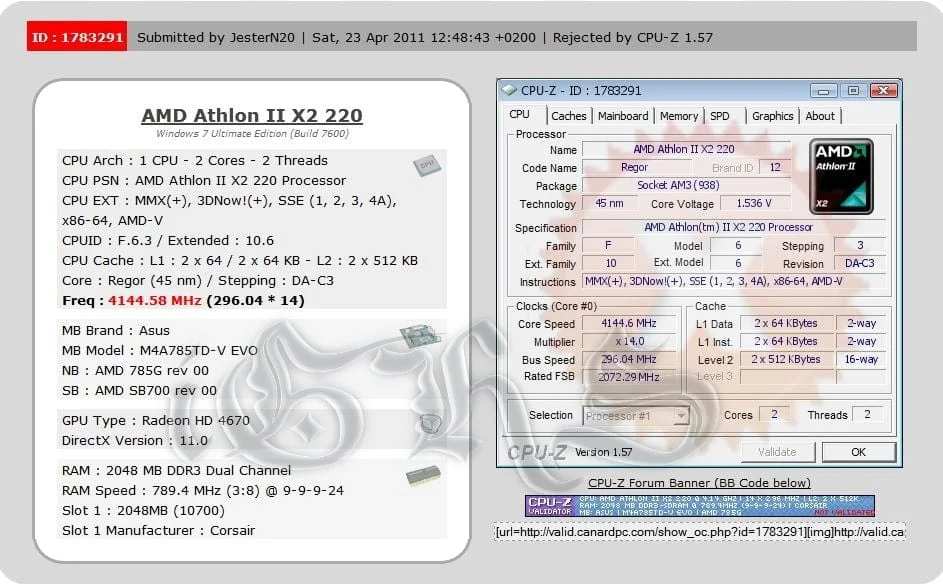
After breaking the 4GHz barrier, the processor became less responsive to voltage increases, both for the cores and the memory controller. Despite this, I was able to push its frequency to 4144MHz, which is a respectable result for the Regor core, especially on air cooling:
 ⤢ ВІДКРИТИ
Benchmarking
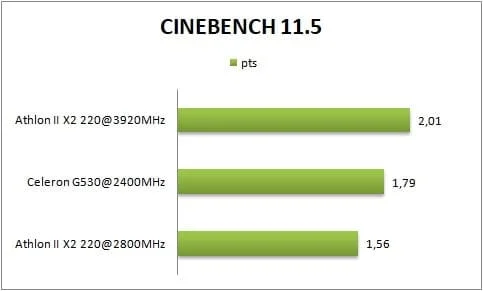
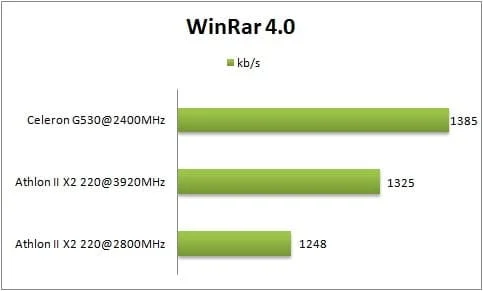
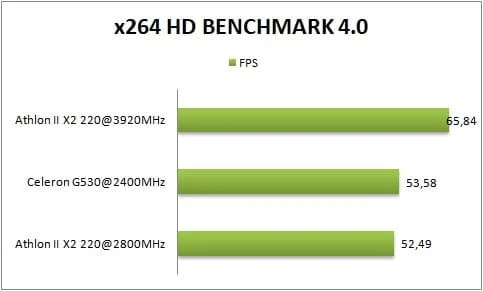
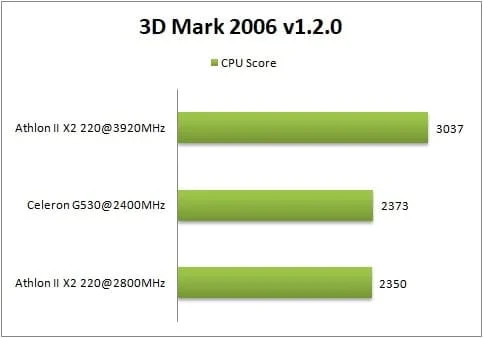
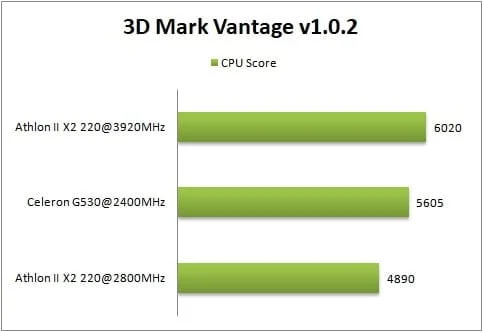
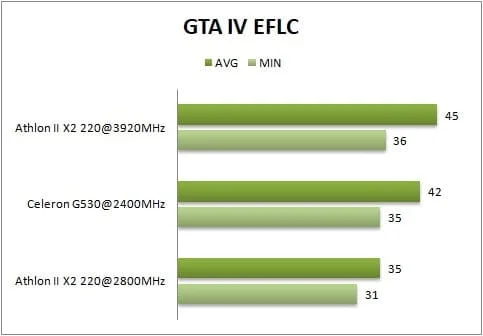
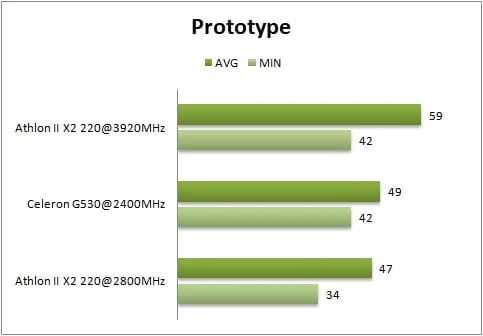
With overclocking covered, it's time to move on to performance testing. In this article, the Athlon II X2 220 will face off against the junior dual-core representative of the Sandy Bridge generation: the Intel Celeron G530.
Applications
 ⤢ ВІДКРИТИ
 ⤢ ВІДКРИТИ
 ⤢ ВІДКРИТИ
Gaming and synthetic benchmarks
 ⤢ ВІДКРИТИ
 ⤢ ВІДКРИТИ
Games:
In-game graphics settings:
GTA IV v1.0.0.7:
Built-in benchmark
Resolution - 1280x1024
Textures – high
Reflection resolution – high
Water quality – very high
Shadow quality – high
Filtering quality – x16
View distance – 100
Detail depth – 100
Vehicle density – 100
Depth of field – on/on
Vertical sync – off/off
Prototype:
Fraps
Resolution - 1280x1024
Textures - high
Shadows - high
Anti-aliasing - 0x
 ⤢ ВІДКРИТИ
 ⤢ ВІДКРИТИ
Conclusion
So, what's the takeaway here? In its stock configuration, the Athlon II X2 220 lost to the more modern Celeron G530. The AMD chip clawed back some ground with an overclock, but it was a stretch, especially considering the frequency differences. Given that the Athlon II requires a fairly robust motherboard and a decent cooler for overclocking, it struggles to compete with its rival. While the Celeron G530 can't be overclocked due to its architectural design, it already delivers excellent per-megahertz performance. Depending on the retailer, the price difference between these CPUs is only about five dollars. The same applies to budget motherboards for both platforms. So, which to choose: Athlon II X2 220 or Celeron G530? The choice is yours, but I lean towards the cooler and reasonably powerful Celeron G530 (plus, the platform offers better upgrade potential — a Core i7-2600K will always be more appealing than a Phenom II X6 1090T).