BLOGS · OVERCLOCKING
PUBLISHED
READING3 min
Overclocking the Intel Celeron D 346 (90nm, Prescott, 3066MHz)
Overclocking the Intel Celeron D 346 (90nm). We hit 4596MHz on air cooling, limited by temperature. A cheap chip for experiments.
In this post, I'll discuss overclocking one of the more interesting CPU cores based on the NetBurst architecture. But as the title implies, it's probably not what many of you might be expecting. The Celeron D 347 (64nm/Cedar Mill) overclocking blog is still in the works, so this article features a different chip. Here, I'll try to squeeze every last megahertz out of a Celeron D 346. Today isn't about stability; it's about pushing limits and capturing those 'screens of death' – specifically, the frequencies this CPU can hit on air cooling. If it dies in the process, so be it. These chips are dirt cheap right now, costing only about $1-2. Losing that kind of money won't exactly break the bank.
Test bench:
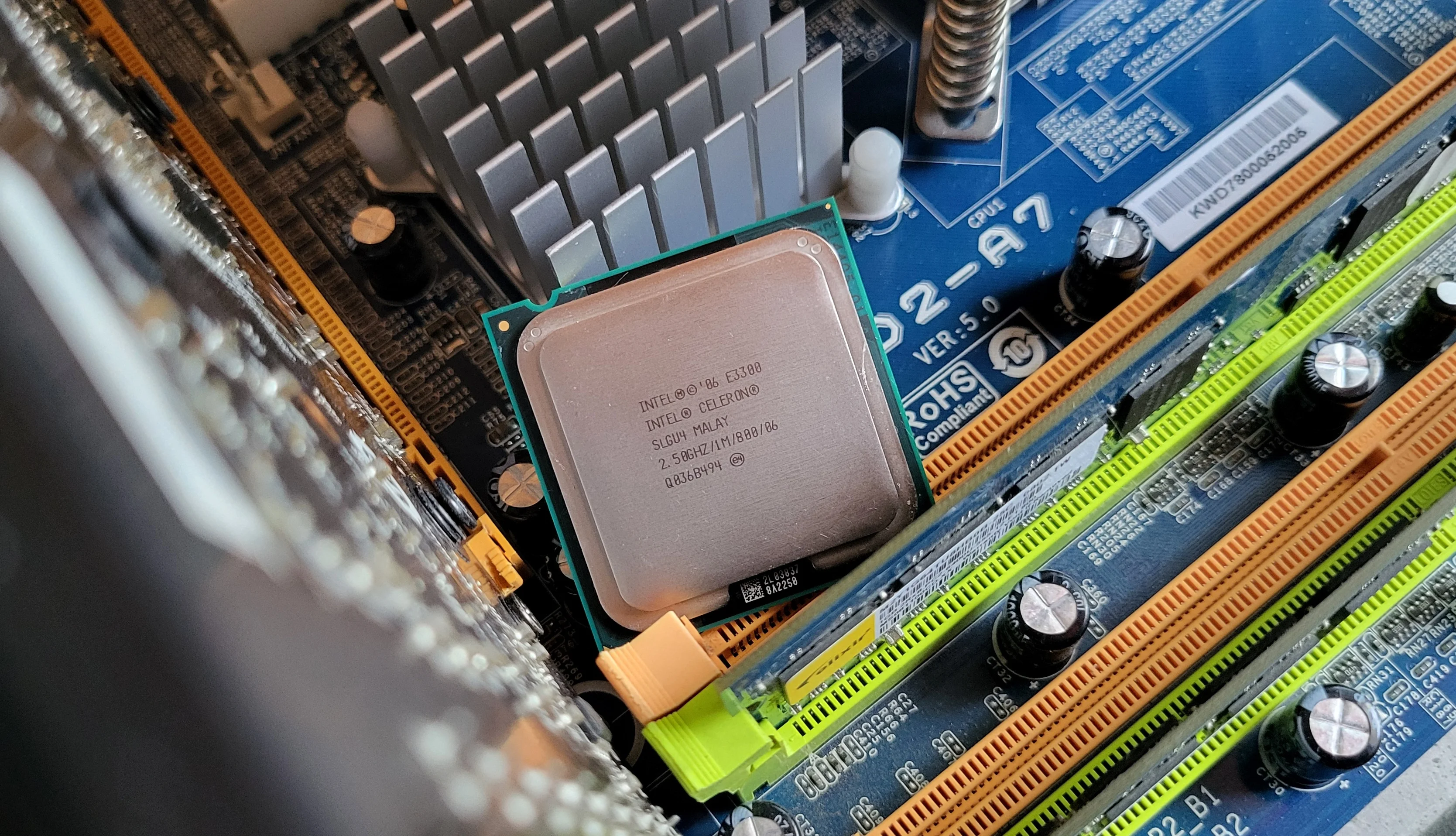
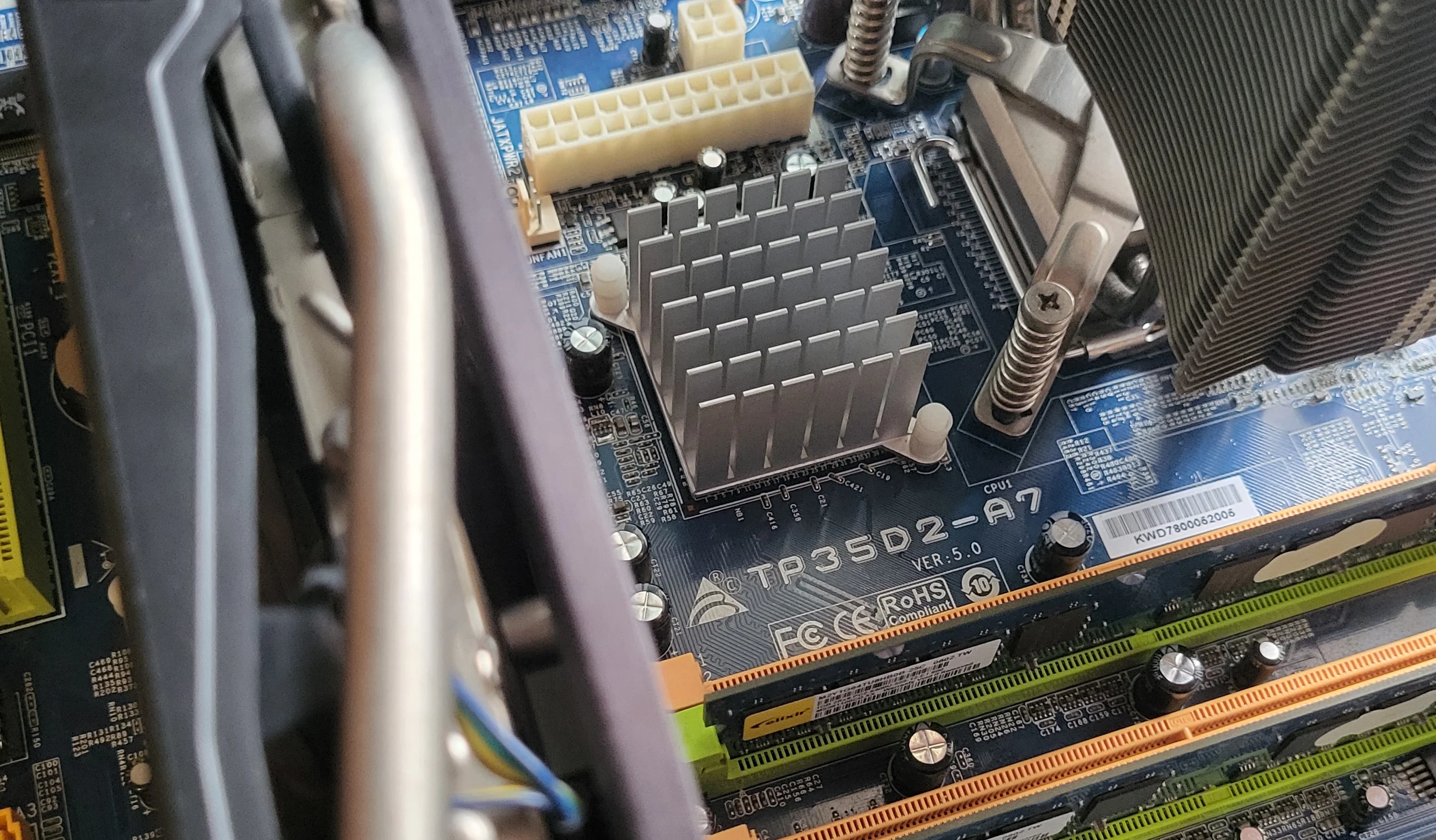
Motherboard – Biostar P35D2A7
CPU – Celeron D 346 (90nm/Prescott/G1/3066MHz)
Cooling – Cooler Master Hyper TX3
RAM – 1GB DDR2 PQI PC6400 (5-5-5-24)
Graphics card – Radeon X600 (Essentially a placeholder, its performance is irrelevant. But a less power-hungry one would be better)
Hard drive – Samsung HD161HJ 160GB
PSU – Cooler Master 460W
Overall, the test motherboard isn't ideal for serious overclocking of this CPU family. However, we don't have any P965 or X48 chipset boards in the lab, and it's unlikely we'll get any soon.
The CPU
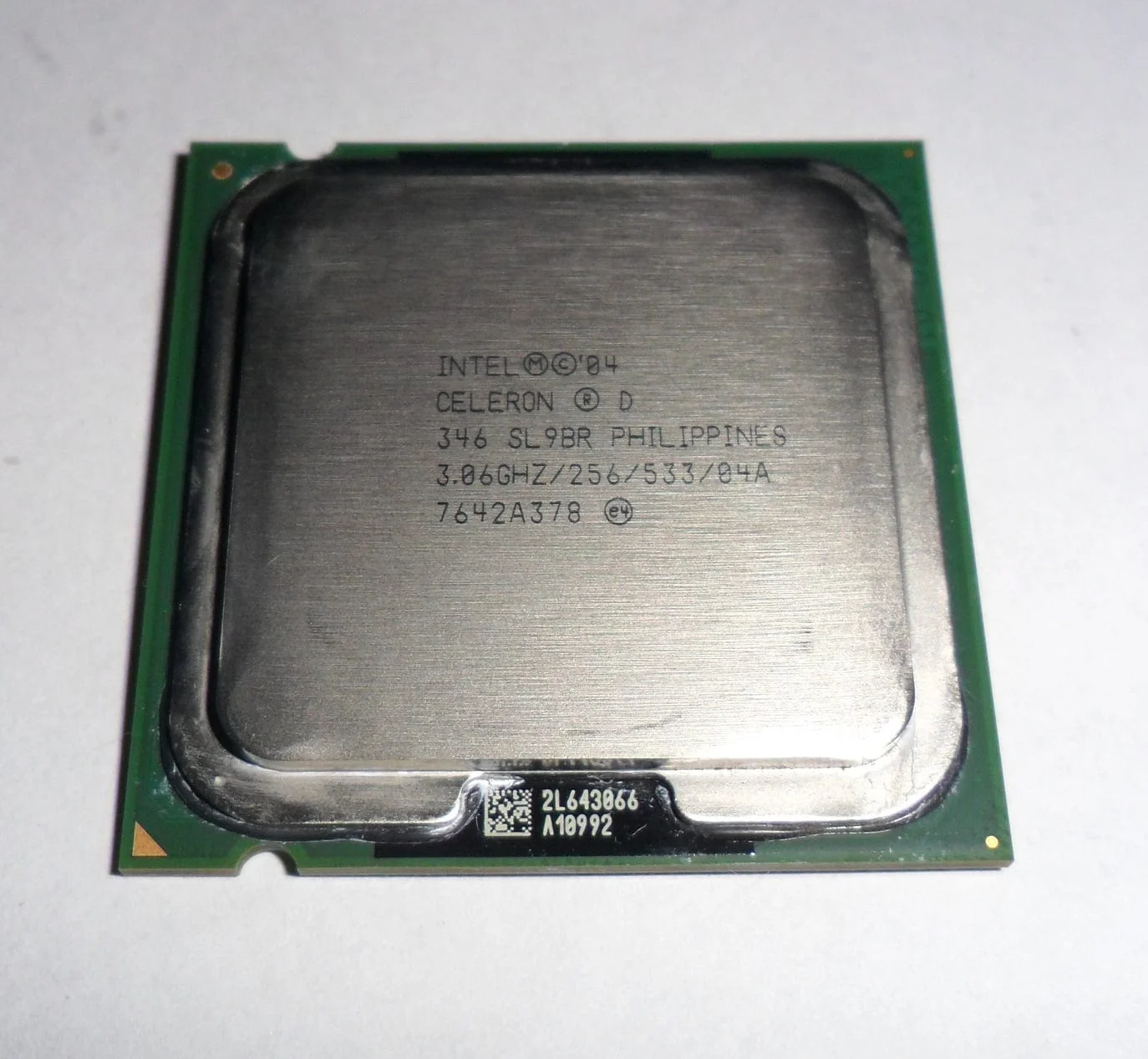
Let's take a look at today's sacrificial lamb:
 ⤢ ВІДКРИТИ
A typical Prescott core, 90nm process, 256KB L2 cache. It's a G1 stepping, generally considered the best for the 90nm core. Manufactured in the Philippines. Honestly, CPUs from there have never particularly impressed me, so let's see what this one can do.
 ⤢ ВІДКРИТИ
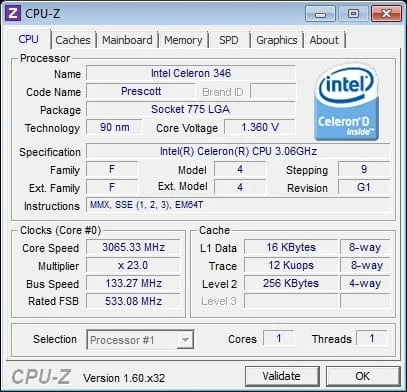
The chip's stock frequency is 3066MHz, achieved with a 23x multiplier on a 133MHz bus. The nominal voltage is 1.360V.
Overclocking
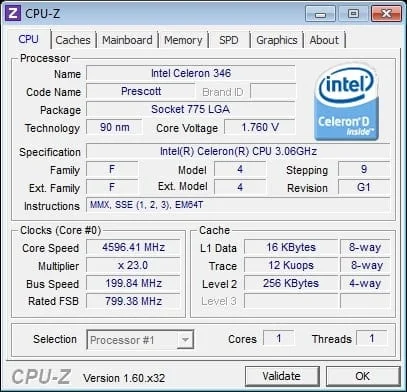
No need to dance around it; I decided to cut straight to the chase and aim for the same frequency achieved with the Celeron D 326. However, I slightly miscalculated and actually pushed it a bit further. At 1.760V, I hit 4596MHz, which is 36MHz higher than its little brother:
 ⤢ ВІДКРИТИ
BIOS settings for 4596MHz overclock:
FSB: 200MHz
FSB voltage – 1.25V
Core voltage – 1.760V (in BIOS)
RAM frequency – 533MHz (5-5-5-24)
RAM voltage – 2.1V
PCI-e bus – 100MHz
EX-bit – disable
Temperatures climbed to 84 degrees, but as I said, no backing down! What next, you ask? Pretty much nothing. The processor stopped responding to further voltage increases. 1.8V yielded no improvement, and 1.9V was the same story.
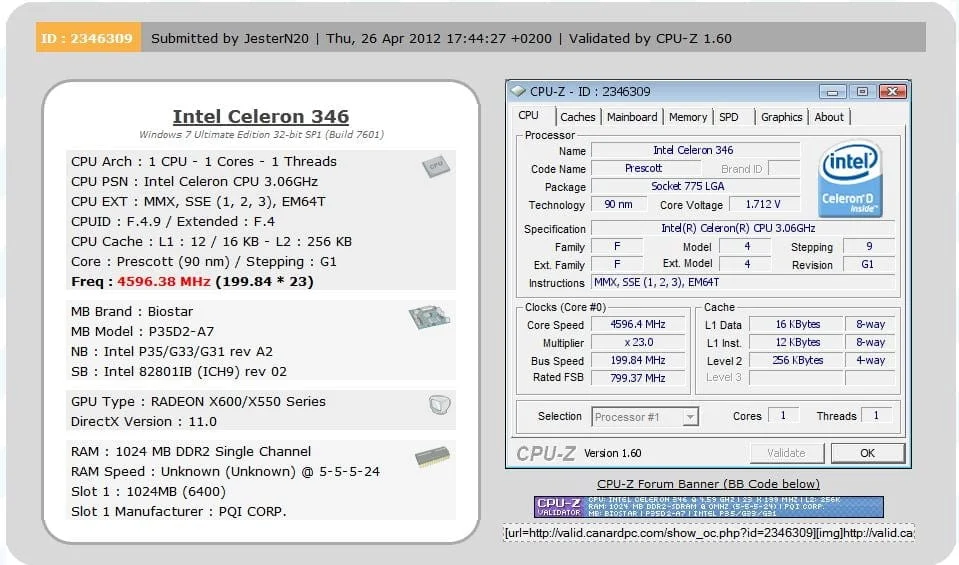
Clearly, CPU temperature was the limiting factor here. Without extreme cooling, my specific chip won't go past 4600MHz. However, my chip isn't exactly a golden sample; the voltage required to hit 4600MHz was simply too high. So, your mileage may vary, and you might have better luck. All I can say is: experiment. Fortunately, Celeron D chips and their motherboards are dirt cheap. Finally, here's a screenshot validating the result in the CPU-Z database:
 ⤢ ВІДКРИТИ
P.S. I appreciated the feedback on the last blog post. Rejoice! Full overclocking details! =)!