BLOGS · OVERCLOCKING
PUBLISHED
READING3 min
Intel Celeron D 336 (90nm, Prescott, 2800 MHz) overclocking: A true Prescott dud
This article explores overclocking the Intel Celeron D 336 (Prescott) processor. The author discovered an extremely poor sample with low overclocking potential, leading to disappointment.
If you've been into overclocking for a while, you've probably heard of a "bad CPU sample." It's simple: a bad CPU sample is a chip that falls well below average (naturally, on the worse side), not just with unimpressive overclocking, but with truly awful potential, high stock voltage, and a tendency to run hot. Today, I'm continuing my journey through NetBurst-based processors. The test subject I got has the same Prescott core as the Celeron D 346, but its overclocking potential left me somewhat baffled. In my entire overclocking career, I've never seen such a defective NetBurst sample.
Test bench
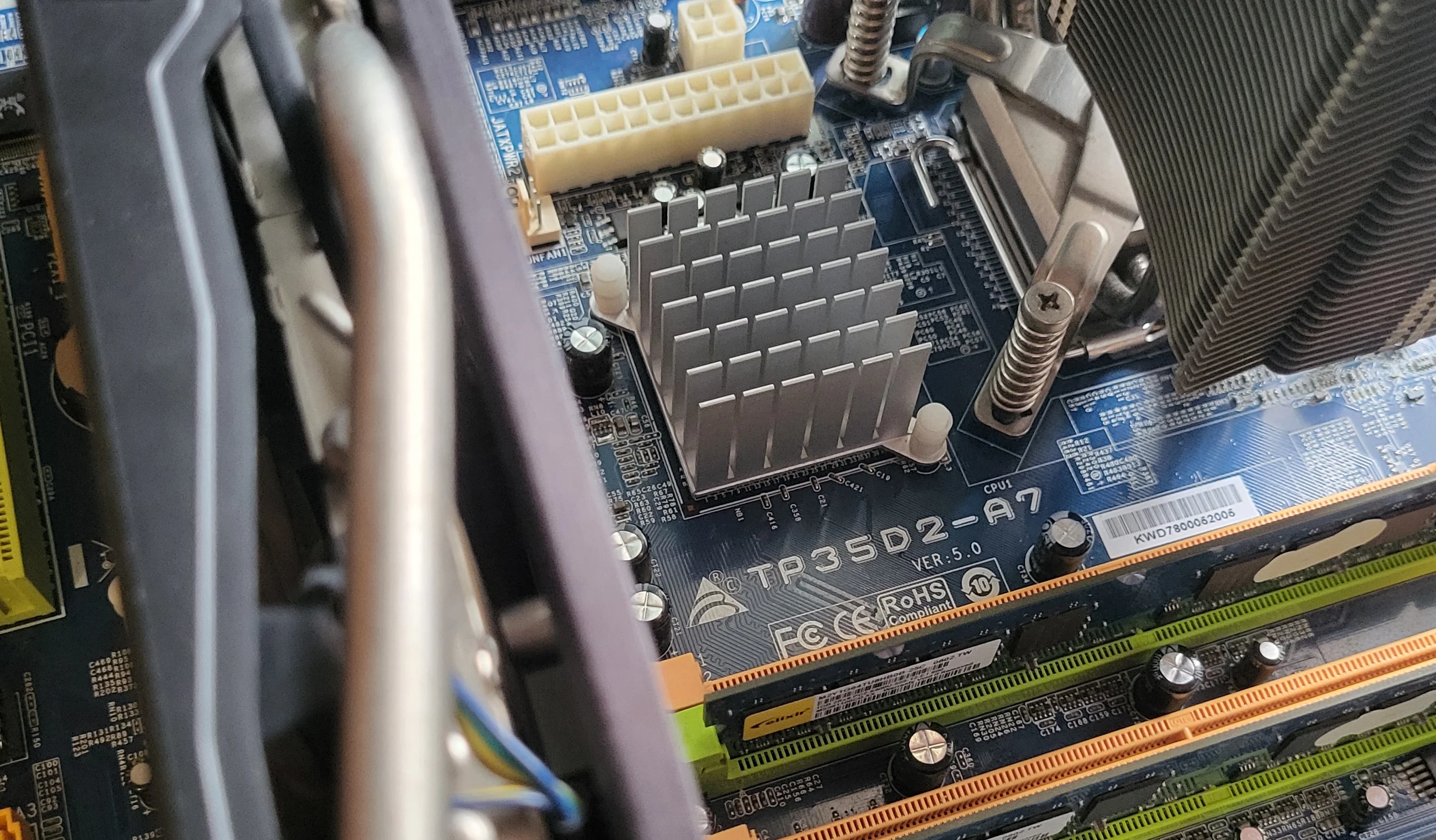
Motherboard - Biostar P35D2A7
CPU - Celeron D 336 (G1)
Cooler - Cooler Master Hyper TX3
RAM - Originally 1GB DDR2 PQI PC6400 (5-5-5-24), but after some "fiddling," it was replaced with a 512MB Elixir PC6400 (5-5-5-16) stick.
Graphics card - Radeon X600 (450/450MHz)
PSU - Cooler Master 460W
Hard drive - Samsung HD161HJ 160GB
The processor
 ⤢ ВІДКРИТИ
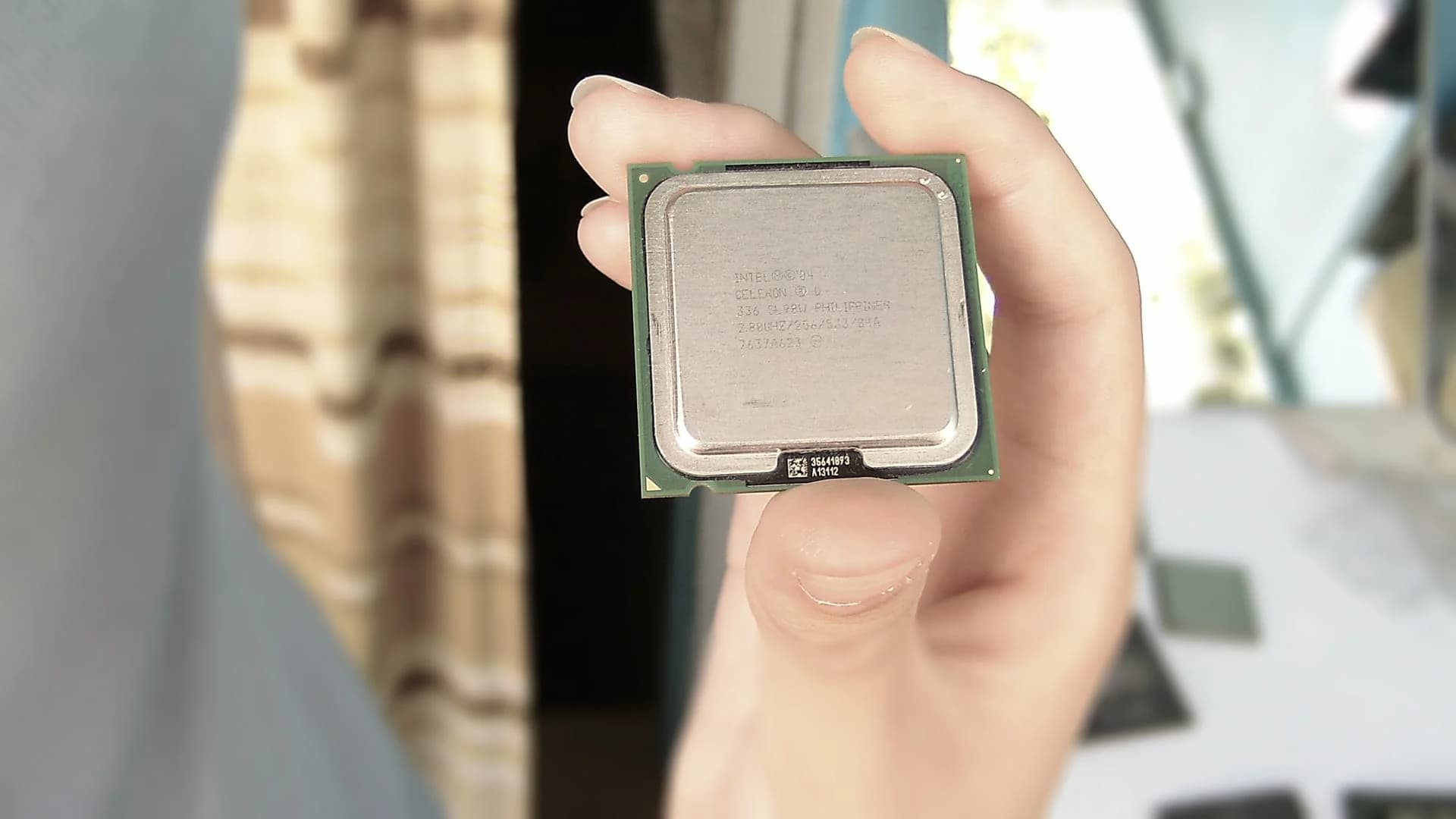
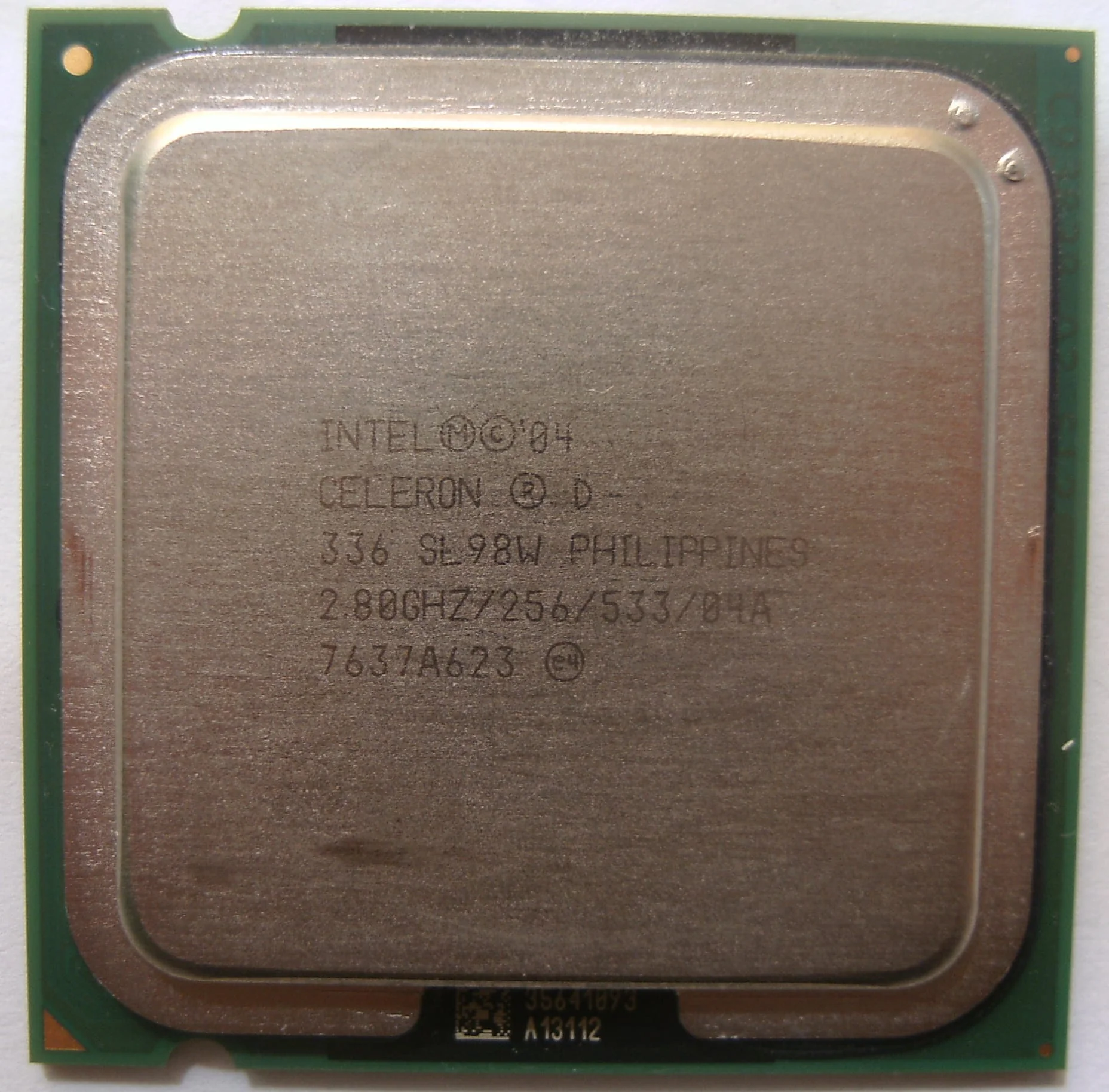
Our test sample's marking is SL98W. This is a typical stripped-down Prescott core: the chip is manufactured on a 90nm process, features a modest 256KB of L2 cache, and operates at 2800MHz. Our sample has a G1 stepping and was manufactured in the Philippines.
 ⤢ ВІДКРИТИ
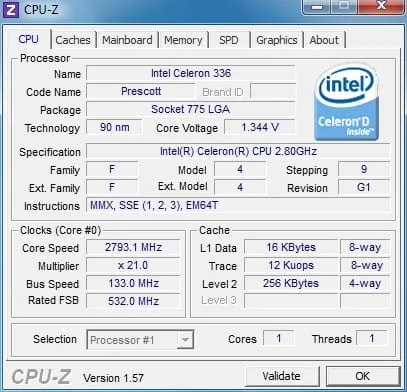
The CPU-Z utility provides a bit more info than just deciphering the chip's markings: The nominal clock speed is 2793MHz, achieved by multiplying the 133MHz bus by a 21x multiplier. The Celeron D 326 comes with 256KB of L2 cache, supports x64 instructions, and its stock core voltage is 1.344V.
Overclocking
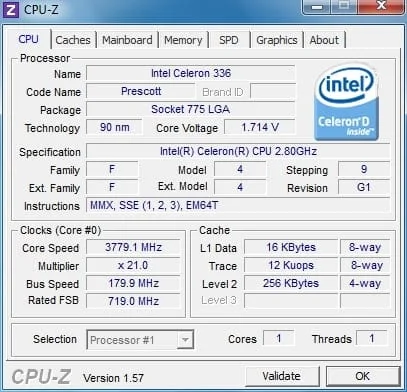
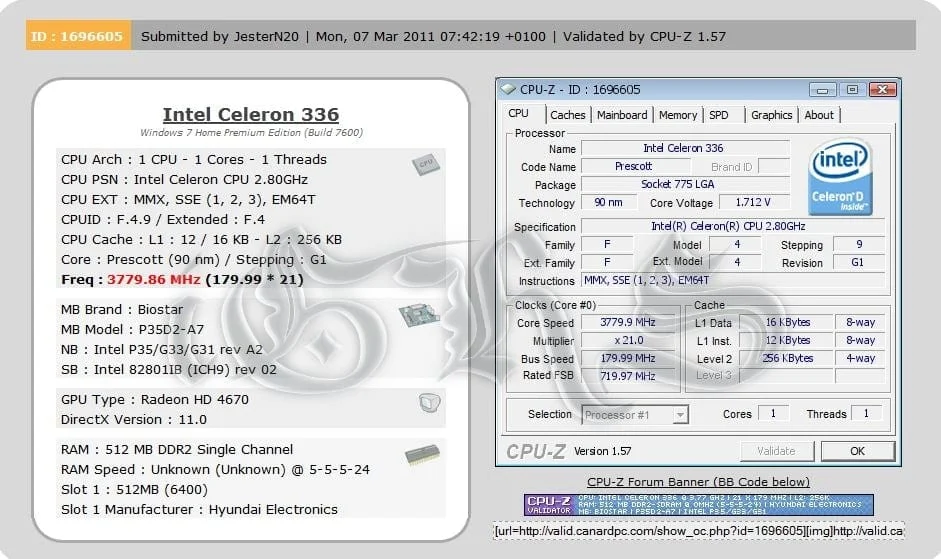
Well, if you recall, I managed to squeeze a screenshot frequency of 4740MHz from the Celeron D 346 processor at a voltage of 1.76 volts. Full stability was achieved at a more reasonable 1.56 volts and 4144MHz, which is a pretty average result on its own. However, the Celeron D 336 sample I received simply shocked me: at 1.71 volts, I could only hit a pathetic 3779MHz:
 ⤢ ВІДКРИТИ
Any attempts to increase RAM timings, further raise the voltage (up to 1.850 volts – don't do that!), swap out RAM, or reposition the cooler: All were in vain. My first thought was localized core overheating, but checking the sensor readings and seeing just 55 degrees completely baffled me. After all, that very same Celeron D 346 could boot and respond to commands at temperatures around 80-90 degrees, even at 4740MHz!
A Prescott 90nm processor that couldn't break 4GHz?!
Besides muttering "what the hell is this?" and a profound sense of bewilderment, I couldn't articulate anything.
 ⤢ ВІДКРИТИ
Conclusion
As it turns out, not all Intel Celeron D 336 G1 stepping processors are equally good – that's a fact. Yes, I ended up with a truly awful sample. But it's worth remembering that not all Celeron D 336 chips are bad. My particular specimen is most likely just one rotten apple in the bunch.