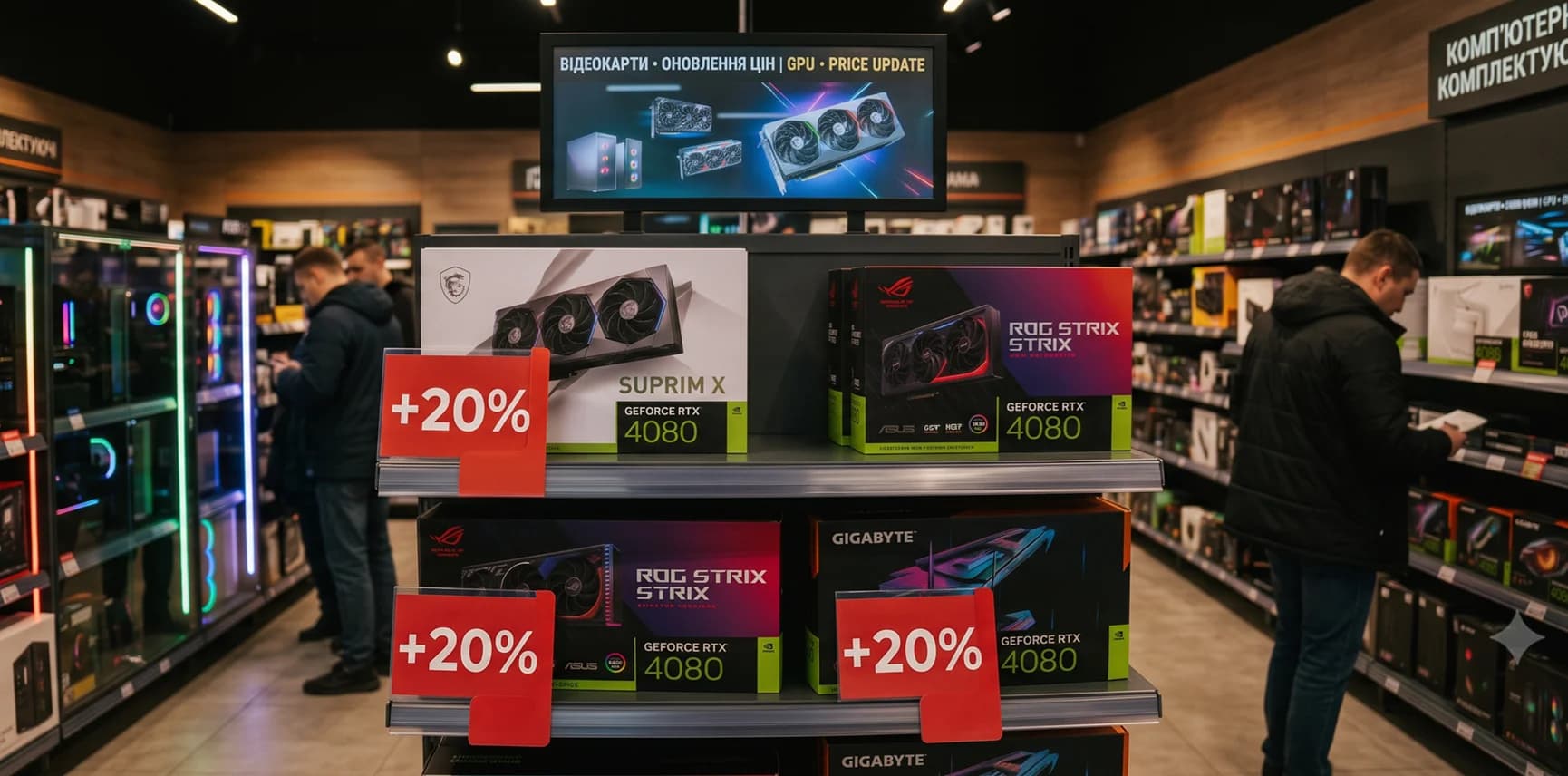
The graphics card market is currently experiencing another price correction, a situation we've previously covered. This is driven by a deep, and for now, seemingly irreversible DRAM supply crisis. Today, new reports from MSI confirm price increases of over 20% on their graphics products.
This wave of price hikes isn't limited to a single tier; it's sweeping across all segments. From top-tier RTX 50-series models — where a hypothetical RTX 5080 could jump over $300 — to the more mature RTX 30-series and even Radeon RX 7000 cards. This strongly suggests these aren't temporary bumps but a long-term trend impacting the entire component market.
The price adjustments are inconsistent but entirely pervasive. Data indicates GPU costs are climbing across the board: from ultra-premium models like the RTX 5090 DV2, which could see an increase of over $650, to more budget-friendly options such as the RTX 3050, set to rise by about $55. This wide spectrum demonstrates that the price surge isn't just hitting high-end cards; it's impacting even the most accessible segments.
This isn't just a short-term problem; analysts are already warning of significant DRAM price surges — a 50% increase by Q3 2026, and then up to another 40% in 2027. These projections paint a picture of a market currently under immense pressure and in a feverish state.
The repercussions of this pricing policy are disastrous for both end-users and PC builders. The combined effect of elevated memory prices (DDR5) and, now, increased GPU costs is leading to a sharp decline in PC shipment volumes.
Consequently, motherboard manufacturers, for example, are already preparing to raise prices on their finished products, as sales for these components have plummeted.
These escalating prices are effectively pushing mainstream consumers out of the market, compelling PC builders to either postpone purchases or abandon upgrades altogether. In essence, NVIDIA and AMD, alongside their partners (MSI, Gigabyte, ASUS), are converting scarcity into direct financial gain, all at the expense of making technology inaccessible to a broad user base.