TESTS · CPU · INTEL
PUBLISHED
READING9 min
Intel Core 2 Duo E7400: Review, benchmarks, and overclocking
A review and benchmarks of the Intel Core 2 Duo E7400. This CPU is overpriced but offers good overclocking potential. Not recommended for purchase except for enthusiasts.
In my previous review of the Core 2 Duo E8400 processor, I briefly touched upon a sensitive topic: the significantly inflated prices of certain (virtually all) Intel CPUs.
And to my great regret, today's review subject, the Core 2 Duo E7400, is yet another such "stone" – massively overpriced and utterly useless in terms of price-to-performance.
The Core 2 Duo E7400's price tag (around $90-$100) might deter even a die-hard Intel fan (no, it won't, people bought and continue to buy them in large quantities). For a similar amount, you could pick up CPUs like the AMD Phenom II X3 or Athlon II X3. Or, if money's really tight, you'd be better off with a first-gen Phenom X3 (yes, you read that right). At $50-$70 – and used Phenom X3s cost even less – those are superior chips for relatively modern games and applications. So what's wrong with the E7400? Well, for starters, it's dual-core. But still, what *is* the Core 2 Duo E7400? A useless remnant of the E8xxx lineup, or a surprisingly spry alternative to aging flagships like the E6xxx? Hard to say.
Compared to the E8xxx series, it's notably "cut down." The L2 cache is half the size, 3MB versus 6MB (a significant loss for CPUs without L3 cache, especially when coupled with slow DDR2). You have to admit, that's a pretty substantial drawback, particularly for gaming. But during testing, I realized things aren't quite so simple. Let me explain why.
The processor
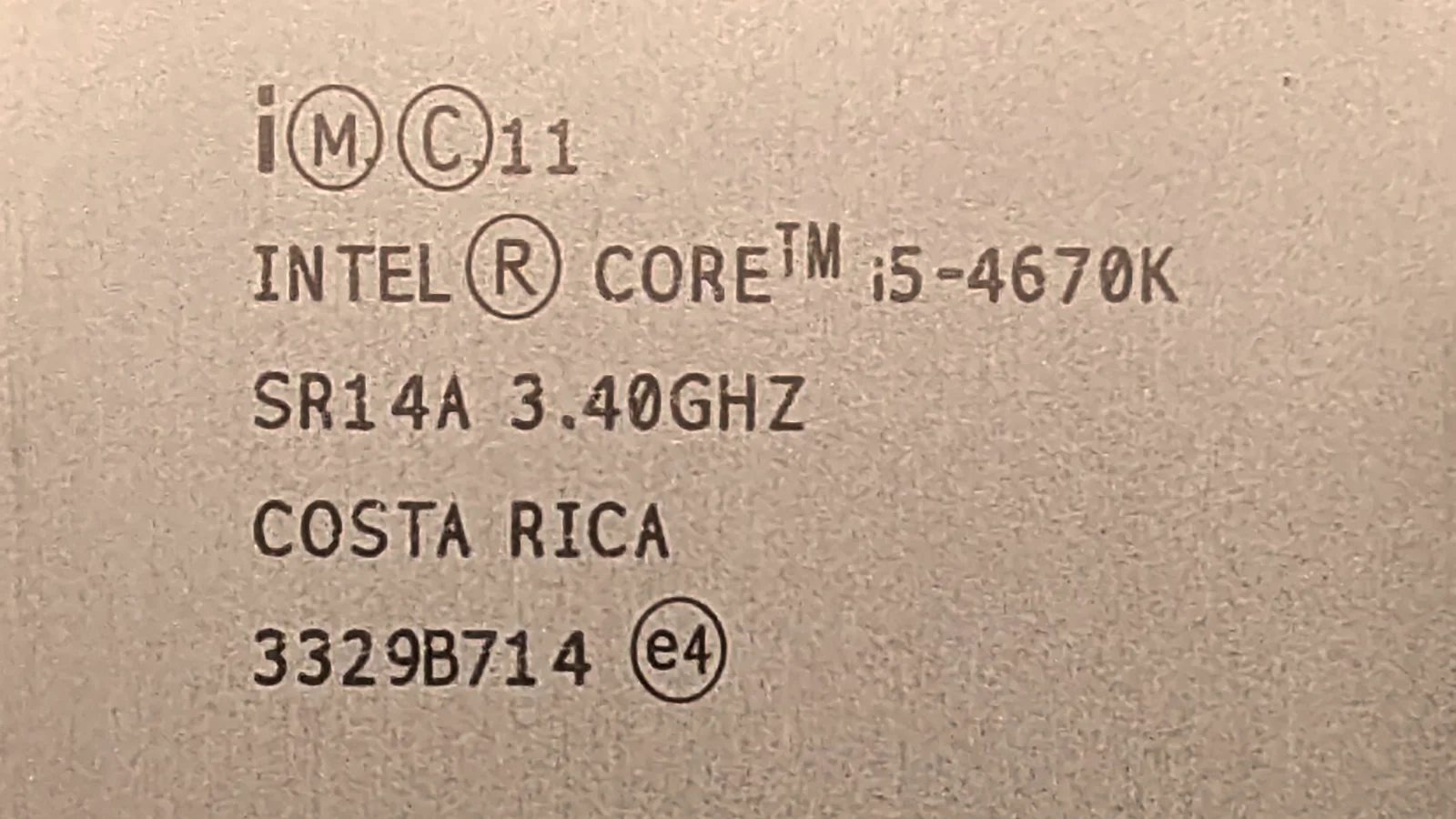
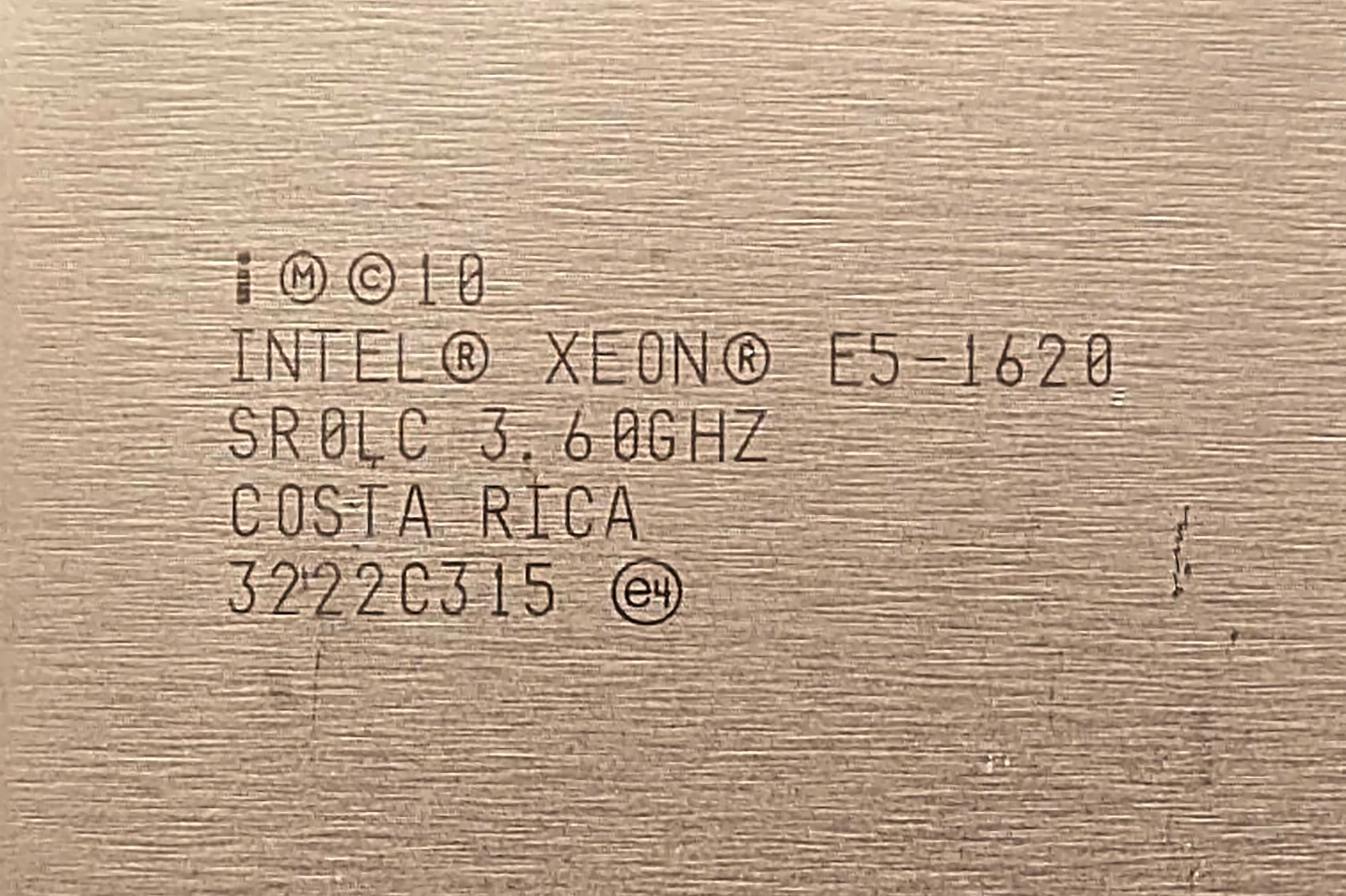
The unit that landed in our lab:
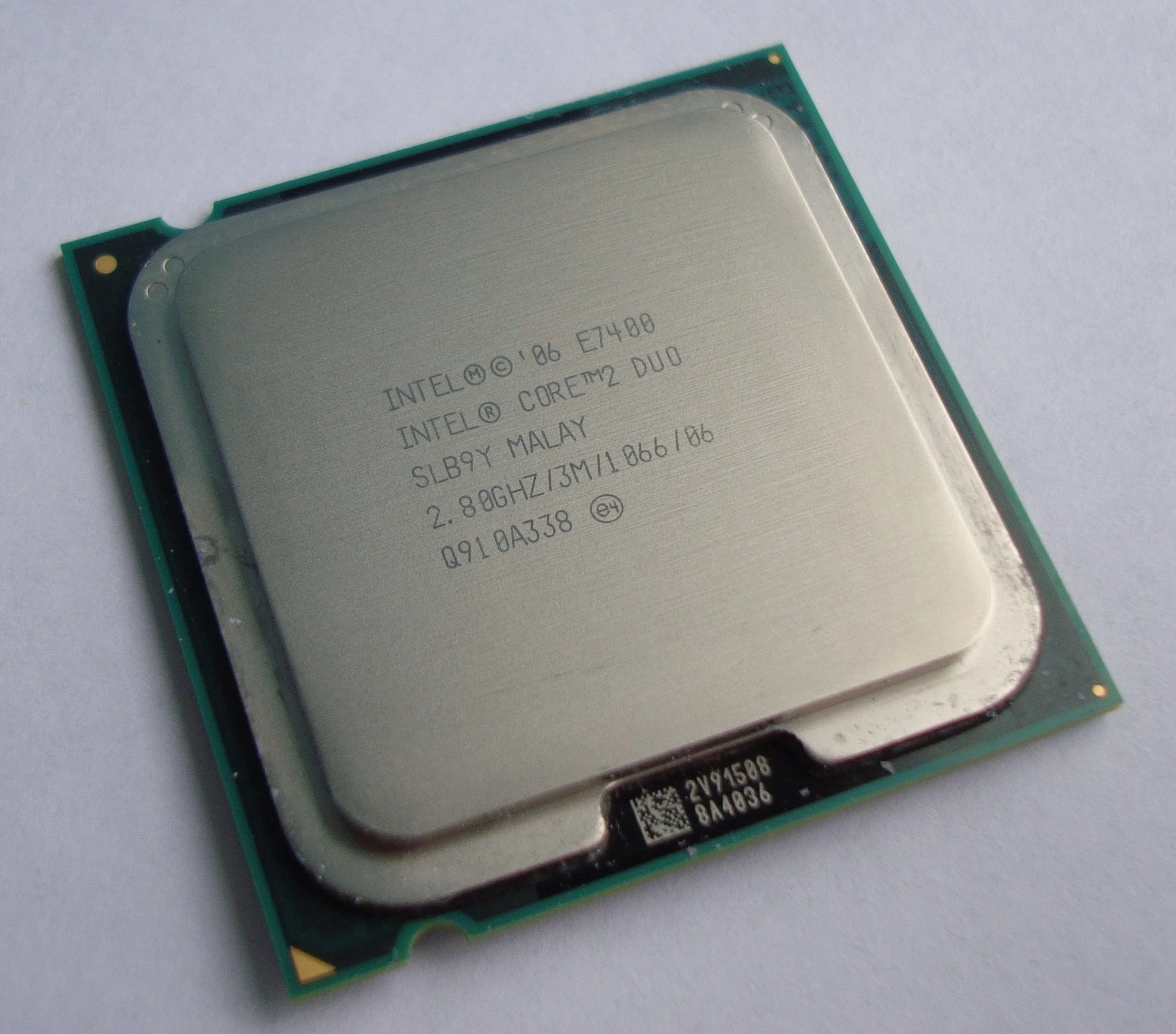 ⤢ ВІДКРИТИ
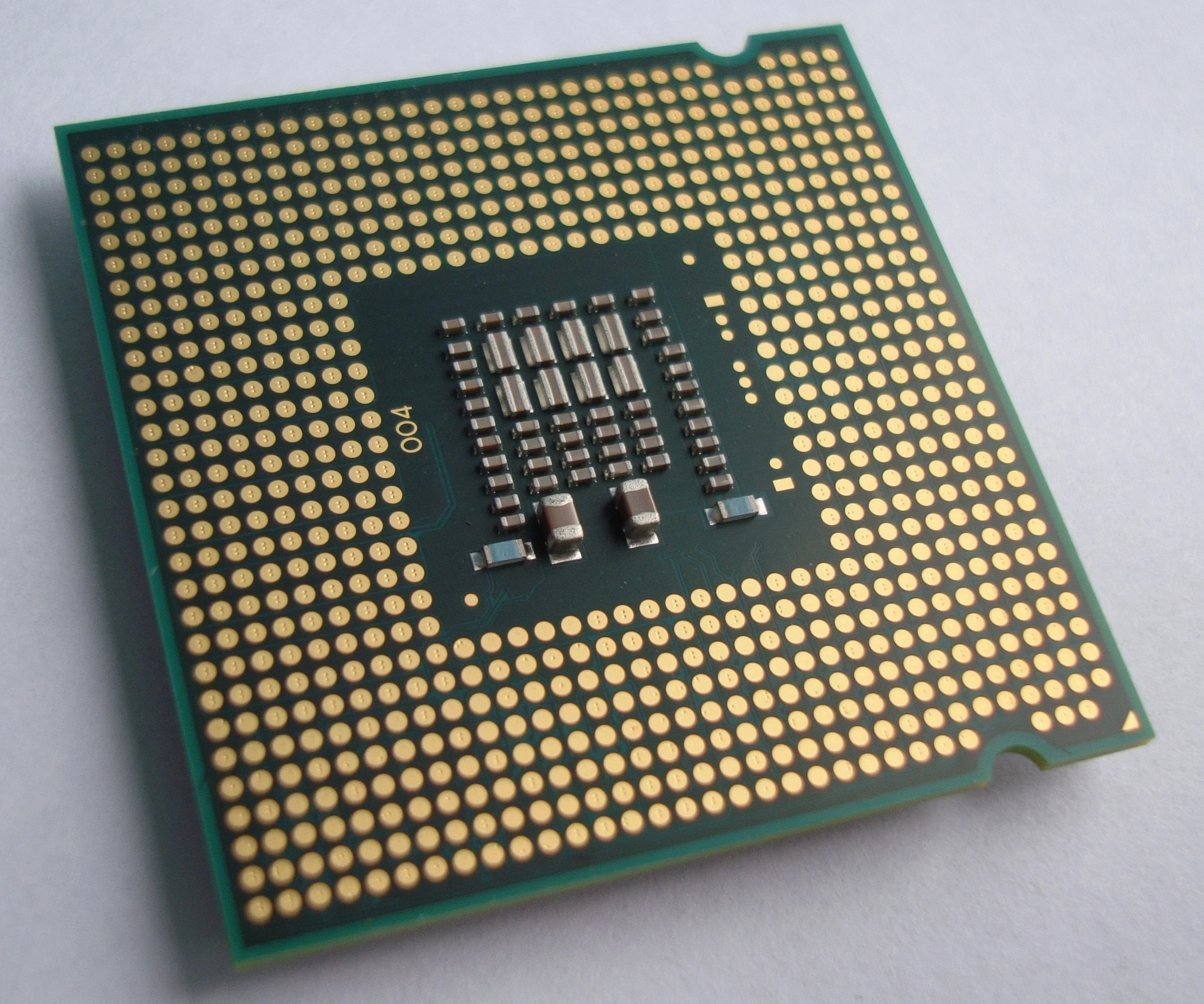 ⤢ ВІДКРИТИ
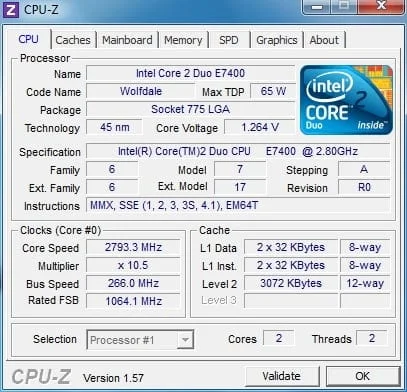
And its data according to the CPU-Z utility:
 ⤢ ВІДКРИТИ
The Core 2 Duo E7400 processor is built on the first-generation Core architecture. Its semiconductor core, codenamed Wolfdale, uses a 45nm manufacturing process and features a 3MB L2 cache shared by both cores. This CPU runs at 2800MHz, achieved by multiplying a 266MHz bus by a 10.5 multiplier. The E7400 has a 65W TDP and a nominal supply voltage of 1.264V.
 ⤢ ВІДКРИТИ
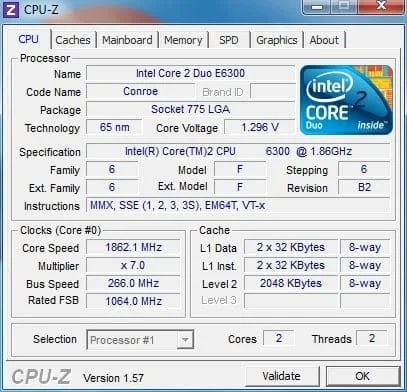
Its competitor is the Core 2 Duo E6300, one of the most popular processors based on the 65nm Conroe core. A major downside of this CPU is its very low multiplier; achieving over 3GHz requires a robust motherboard. The processor has 2MB of L2 cache, operates at 1866MHz (266x7) with a 1.300V voltage, and has a 1066MHz bus speed. It's a B2 core revision with a typical TDP of 65W.
 ⤢ ВІДКРИТИ
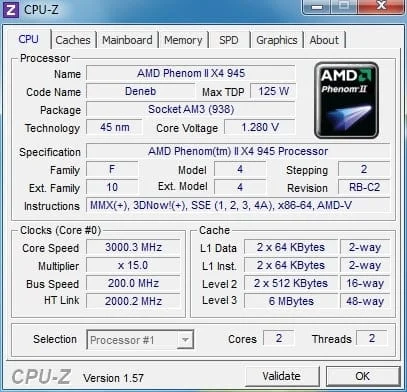
Representing AMD, if you will, is the Phenom II X4 945. Since we didn't have a Phenom II X2 in the lab, we disabled two cores on the available Phenom II X4 945 via the motherboard BIOS, effortlessly creating the desired processor.
As you may have noticed, the "Cores" field shows "2," confirming the successful disabling of two out of four cores. This processor is based on the 45nm Deneb C2 revision core (may old and new gods finally grant us C3!), featuring 512KB of L2 cache per core and a shared 6MB L3 cache. The chip's nominal frequency is 3000MHz (200x15), and the HT bus and CPU NB/L3 frequencies are 2000MHz. Its typical TDP is 95W (for two cores).
 ⤢ ВІДКРИТИ
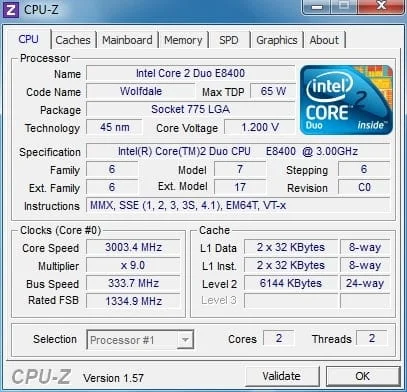
Finally, our last contender for today's benchmarks: the Core 2 Duo E8400. This is a prime example of the 45nm Wolfdale core. It boasts a 6MB L2 cache and a nominal core voltage of 1.200V. Its stock frequency is 3GHz, derived by multiplying the 333MHz system bus by a 9x multiplier. Our sample is a C0 revision, which isn't ideal (yes, we don't have the best luck with revisions). Its typical TDP is 65W.
Test setup:
AM3 motherboard - ASUS M4A785TD-V EVO
LGA775 motherboard - Biostar P35D2A7
Processors - Core 2 Duo E7400, Core 2 Duo E8400, Core 2 Duo E6300, Phenom II X2 945 (two cores disabled)
AM3 CPU cooler - Cooler Master Susurro (RR-KCT-T9E1)
LGA775 CPU cooler - Zalman 7700cu
RAM - 1GB DDR2 Corsair PC6400 (5-5-5-16)
RAM - 2GB DDR3 Corsair XMS3 PC10700 (9-9-9-34)
Graphics card - Sapphire Radeon HD5770 (960/5300MHz)
PSU - FSP 500W
Hard drives - Samsung SP160GB
Software:
Windows 7 x64 SP1
CPU-Z 1.57
CineBench 9.5 x64
CineBench 11.0 x64
Light Work - Renderbench
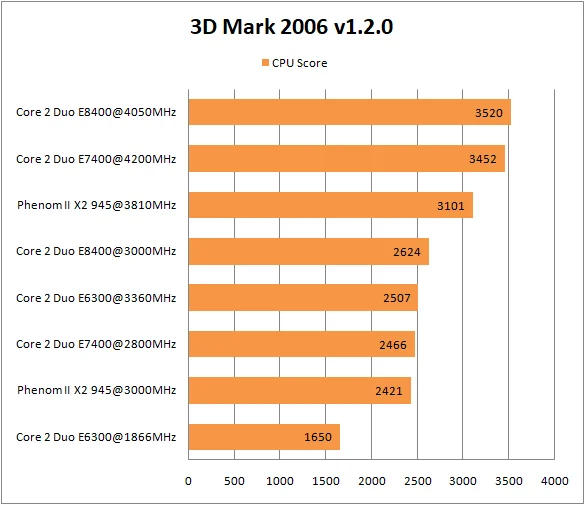
3D Mark 2006 v1.2.0 (CPU test only)
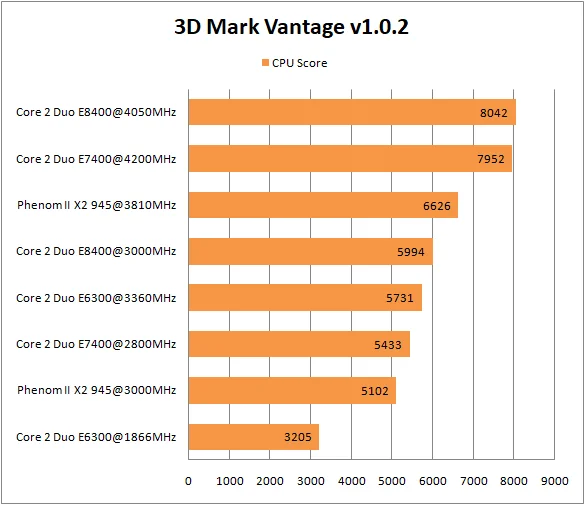
3D Mark Vantage v1.1.1 (CPU test only)
Hot CPU tester PRO
AMD Catalyst 11.5
wPrime v1.55
Fritz Chess Benchmark
x264 Benchmark v4.0
SuperPi 1.4
PiFast
FRAPS v3.1.0
In-game graphics settings:
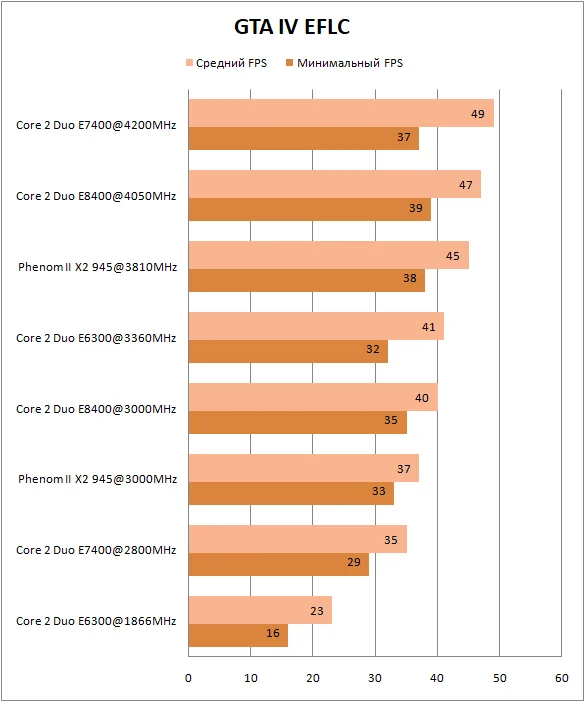
GTA IV:
Resolution - 1280x1024
Textures – high
Reflection resolution – high
Water quality – very high
Shadow quality – high
Filtering quality – x16
View distance – 100
Detail depth – 100
Vehicle density – 100
Depth of field – on/on
Vertical sync – off/off
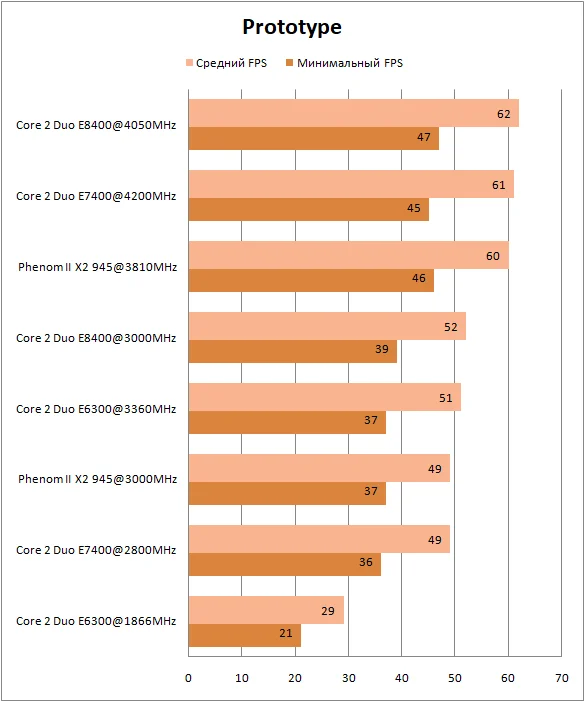
Prototype:
Resolution - 1280x1024
Textures - high
Shadows - high
Anti-aliasing - 0x
Overclocking Core 2 Duo E7400
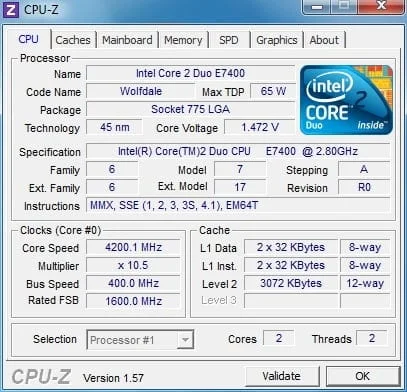
After the not-so-successful E8400 overclock, I wasn't expecting high frequencies from the E7400. But I was wrong again. After 15 minutes of "torture," I found a more-or-less stable sweet spot at 4200MHz with 1.475V, yet the processor couldn't pass a half-hour LinX test!
It could run the 3DMark CPU test for hours and passed OCCT, but consistently crashed in LinX. This was incredibly frustrating, as I couldn't for the life of me pinpoint the issue.
Attempts to raise the voltage to 1.5V were unsuccessful. I was about to roll back the system bus frequency to 390MHz when I noticed I hadn't changed some secondary RAM timings!
After correcting these annoying errors (if only I could fix the broken keyboard on the test bench), the processor successfully completed an hour-long LinX run at 4200MHz, which absolutely delighted me.
 ⤢ ВІДКРИТИ
The final processor frequency was 4200MHz, with RAM running at 1200MHz (which, you'll agree, is quite decent for DDR2) at 6-6-6-18 timings.
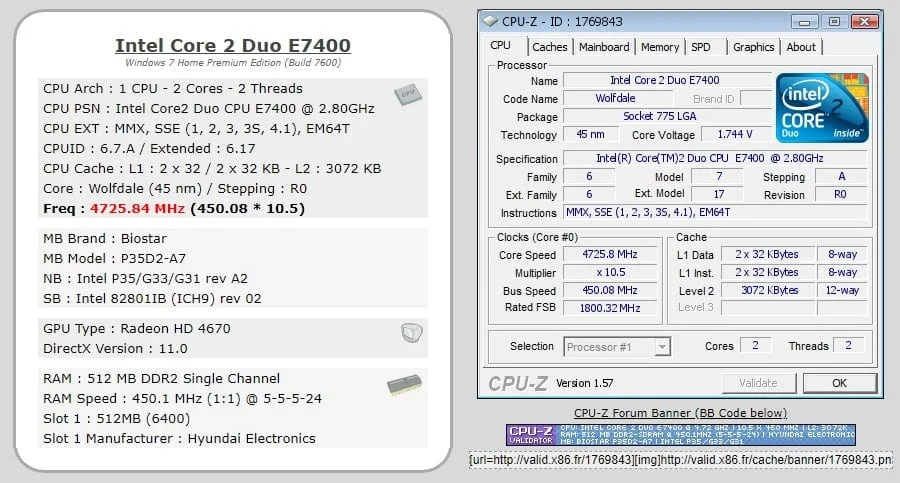
Now for a bit of subjectivity. The E7400 proved to be an incredibly pleasant processor to overclock and remained cool in daily use. The fact that half the cache was disabled and it was an R0 stepping surprisingly delighted me. It delivered an impressive 4725MHz CPU frequency:
 ⤢ ВІДКРИТИ
Obviously, this is just a "screenshot" result, and nobody would use a processor at such a high voltage 24/7. However, in my humble opinion, 4725MHz on air is a pretty impressive achievement.
Overclocking the competitors
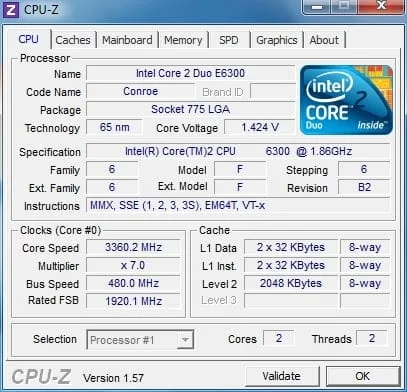
Let's move on to overclocking the other contenders. The Core 2 Duo E6300 is based on the older 65nm Conroe core. Its stable overclock is typically limited to 3600MHz, and in most cases, 3400MHz. For me, things turned out even worse:
 ⤢ ВІДКРИТИ
RAM frequency was 960MHz with 5-5-5-15 timings. The only benefit of such an overclock was the ability to compare it against the E8400 running at stock speeds. Though, perhaps I've just grown too accustomed to 45nm chips. After all, I did manage to boost the E6300's frequency by 80%!
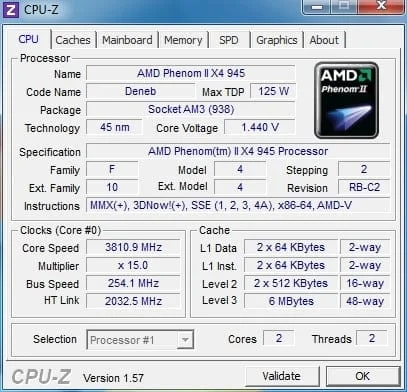
Overclocking the Phenom II X2 945 yielded no surprises. At 1.440V, we achieved stable operation at 3810MHz.
 ⤢ ВІДКРИТИ
The reason for such a low overclock is immediately evident from the CPU-Z screenshot: an old C2 revision. The memory controller and L3 cache operated at 2540MHz, and DDR3 at 1651MHz, with 9-9-9-24 timings.
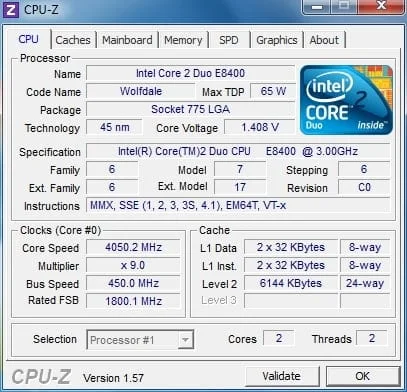
Now it's the E8400's turn. Knowing the excellent overclocking potential of the 45nm Wolfdale core, I set the FSB frequency to 450MHz without increasing voltage, which should have given me 4050MHz. The OS booted, but the first LinX run caused a reboot. Raising the voltage to 1.350V allowed it to pass a 20-minute test, but then came the same reboot. Only at 1.408V did the processor complete an hour in LinX without issues.
 ⤢ ВІДКРИТИ
With overclocking covered, it's time to move on to processor performance.
Rendering
 ⤢ ВІДКРИТИ
 ⤢ ВІДКРИТИ
 ⤢ ВІДКРИТИ
Overall performance
 ⤢ ВІДКРИТИ
 ⤢ ВІДКРИТИ
Computation
 ⤢ ВІДКРИТИ
 ⤢ ВІДКРИТИ
 ⤢ ВІДКРИТИ
 ⤢ ВІДКРИТИ
Encoding
 ⤢ ВІДКРИТИ
Archiving
 ⤢ ВІДКРИТИ
Games: Synthetic benchmarks
 ⤢ ВІДКРИТИ
 ⤢ ВІДКРИТИ
Gaming
 ⤢ ВІДКРИТИ
 ⤢ ВІДКРИТИ
Conclusion
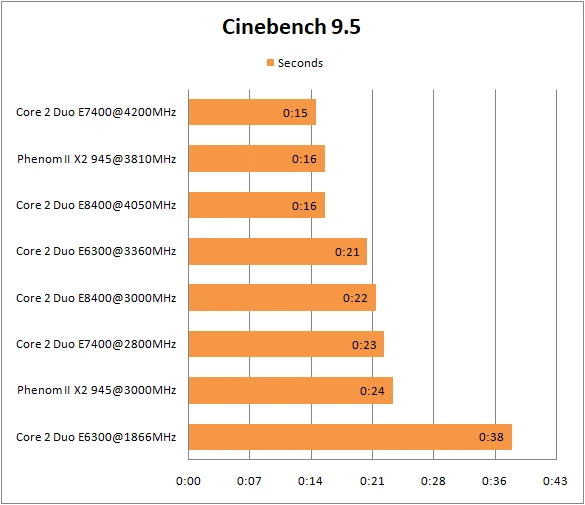
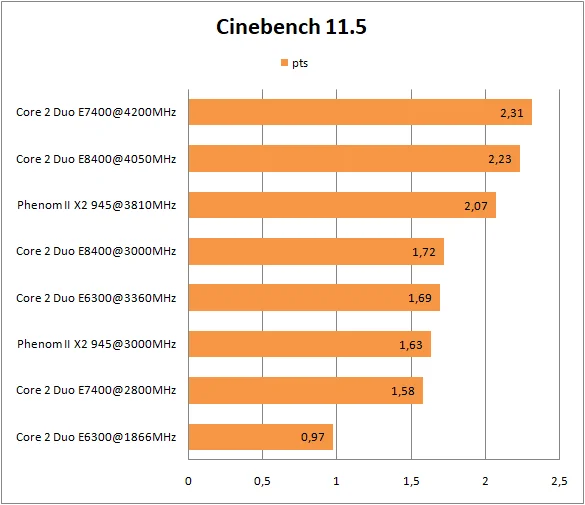
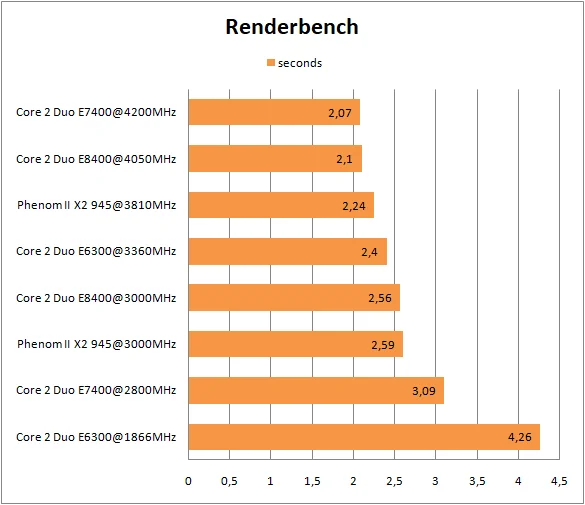
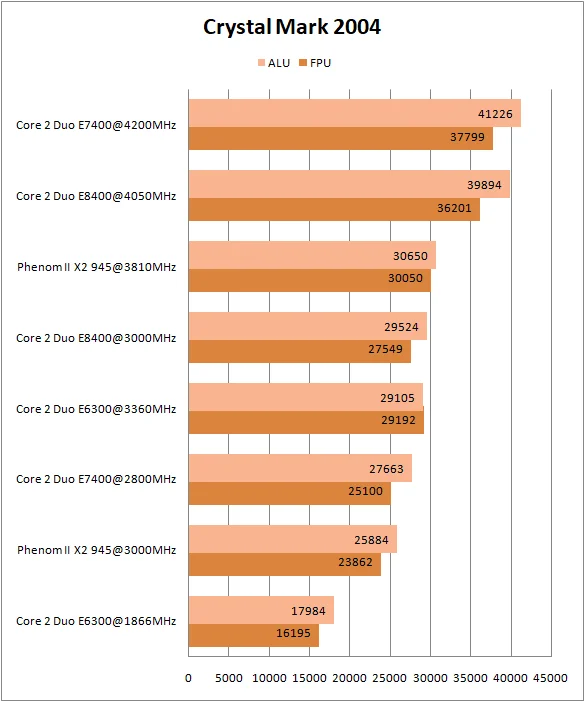
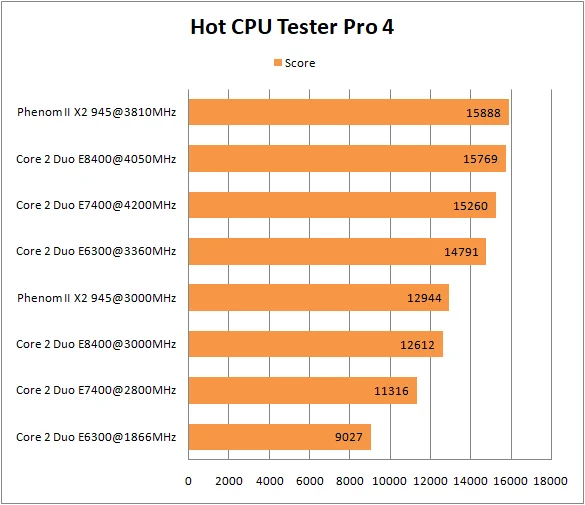
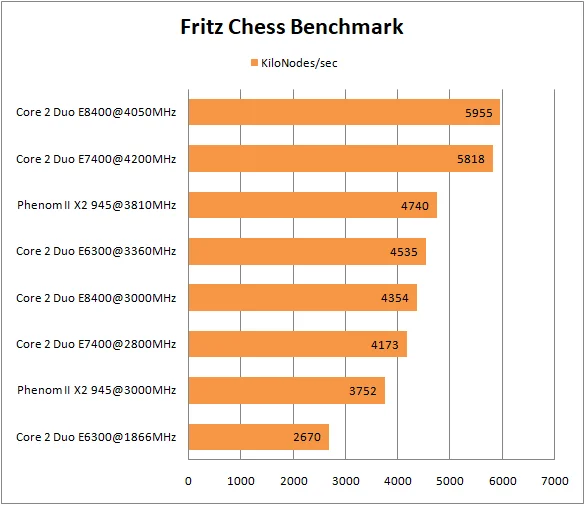
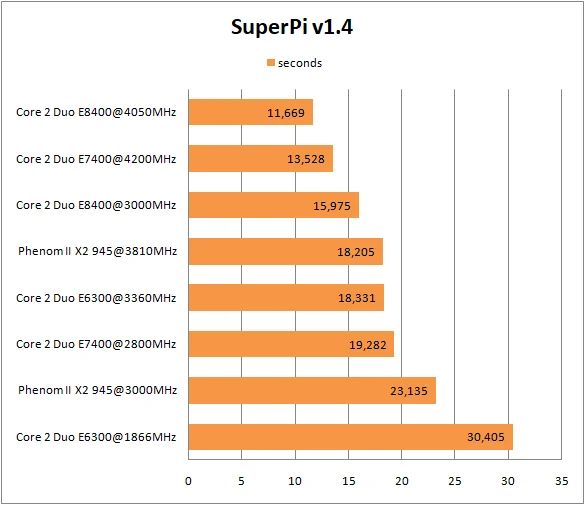
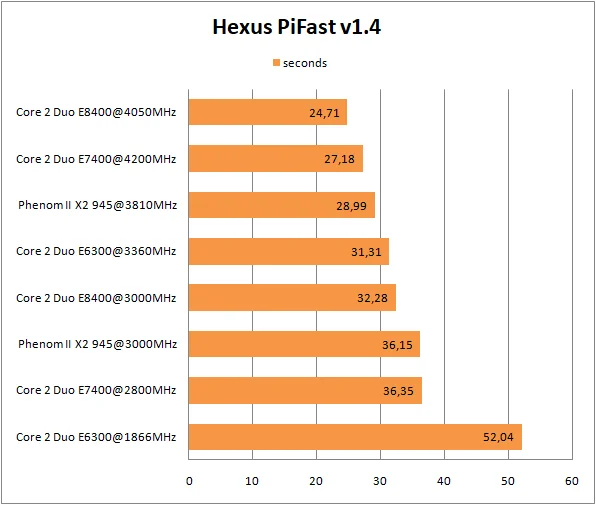
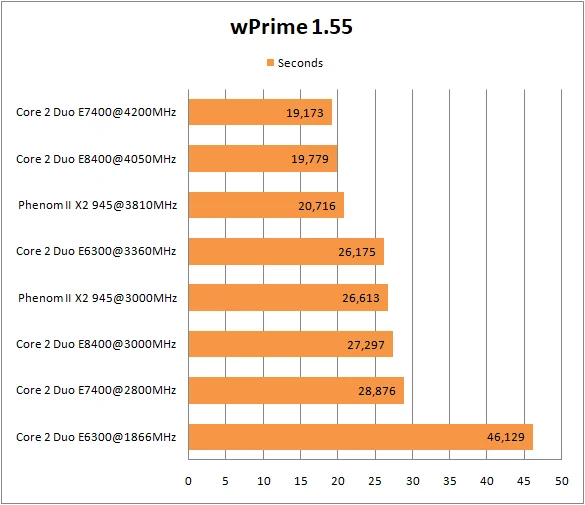
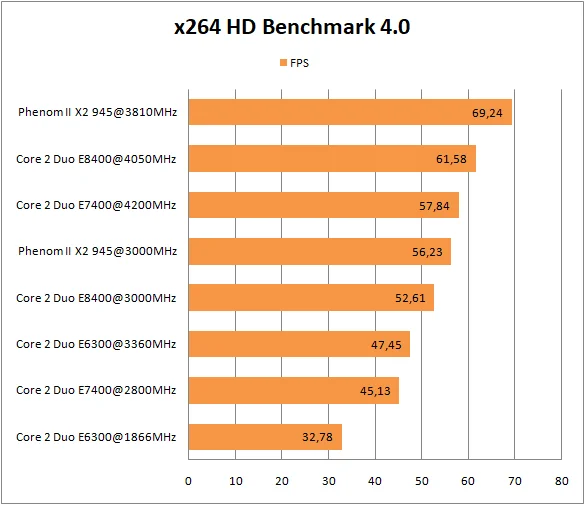
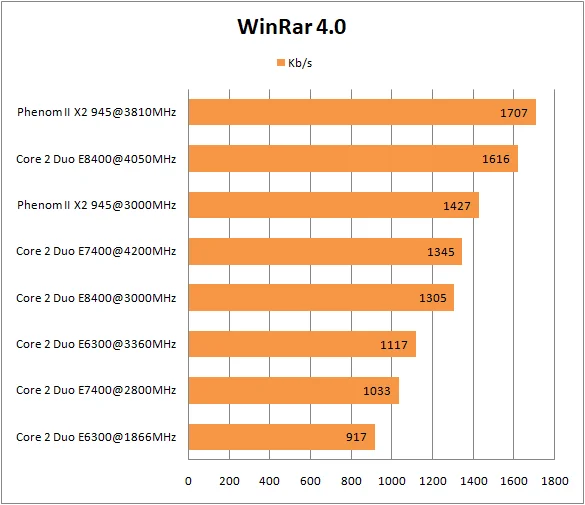
As the benchmarks show, the Core 2 Duo E7400 is a worthy opponent for both the Phenom II X2 and the E8400, though this mainly applies to overclocked scenarios, and even then, it's not a complete victory. The E8400, its older sibling, managed to outperform the E7400 (at 4200MHz) in 9 out of 16 tests, despite running at a lower frequency (4050MHz), losing in only 7.
When choosing a processor, you need to consider your specific needs. For example, the E8400 excelled in computation, while gaming showed relative parity. In rendering, cache size isn't a major factor; frequency dominates. After overclocking, the E7400's frequency was 150MHz higher, ultimately allowing it to pull ahead.
Overall, the Core 2 Duo E7400 left me with overwhelmingly positive impressions. Of course, my next words will contradict everything I've just said, but I hope you'll understand my reasoning.
I can't recommend the E7400 to anyone but dedicated overclockers or enthusiasts. Especially considering we're talking about it in 2011. Even now, it doesn't deliver acceptable results, and it's not hard to predict what the future holds. Plus, its price on the used market is still significantly higher than comparable Phenom II X2s and X3s.
I've given you some food for thought; on that note, I'll sign off.
Test bench components provided by: DENIM and MTPZP