PUBLISHED
READING2 min
Express overclocking Intel Celeron D 326 to 4560MHz (90nm, Prescott, 2533MHz)
We pushed the Intel Celeron D 326 processor, hitting a stable 4005MHz and an extreme 4560MHz. Here's a detailed look at our overclocking process and test setup.
The Intel Celeron D 326 is one of the blue giant's lower-end processors for the LGA 775 platform. This makes it an appealing choice for overclocking, as even if a "patient" CPU should perish, there are plenty more to take its place.
Processor
 ⤢ ВІДКРИТИ
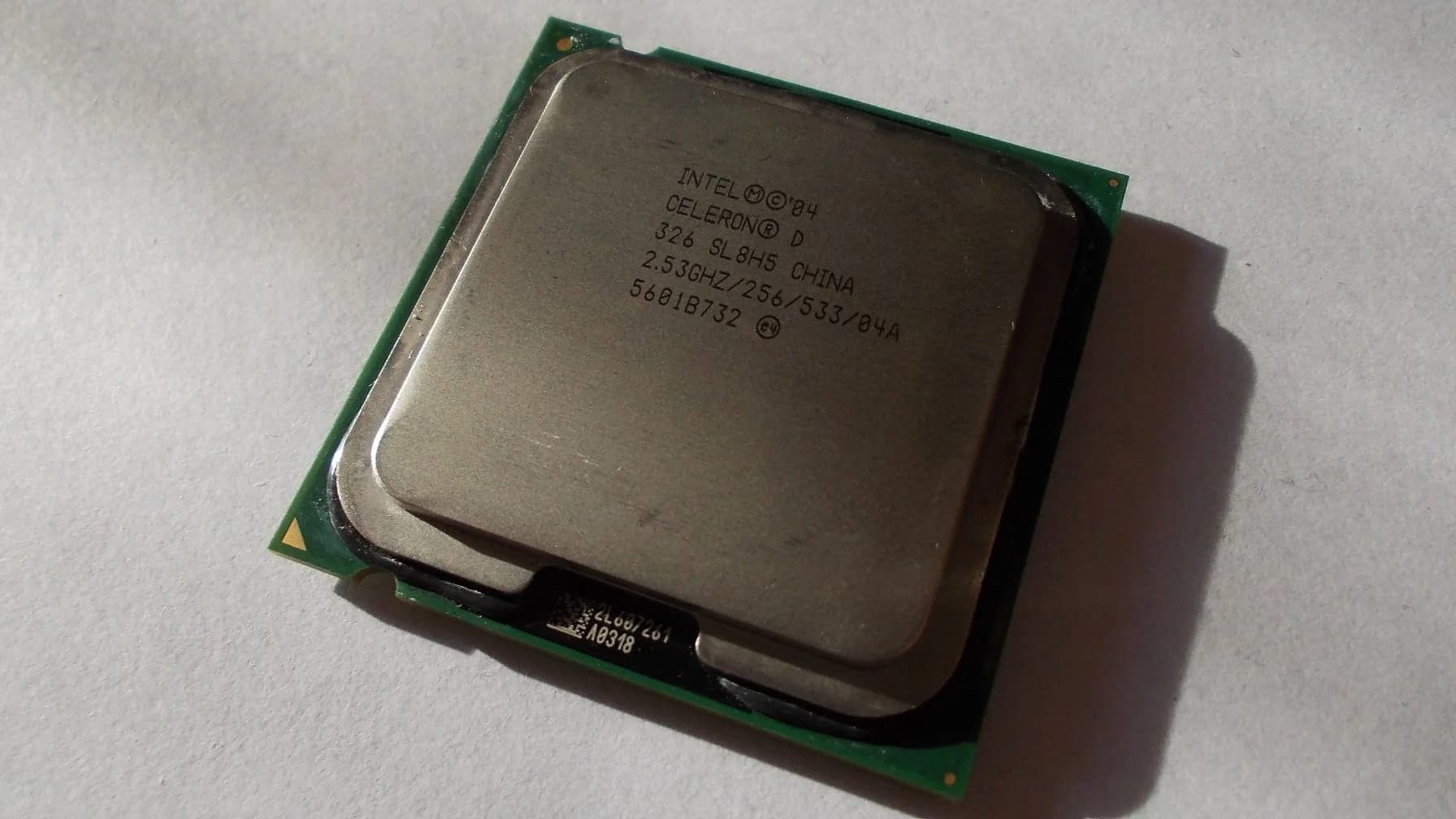
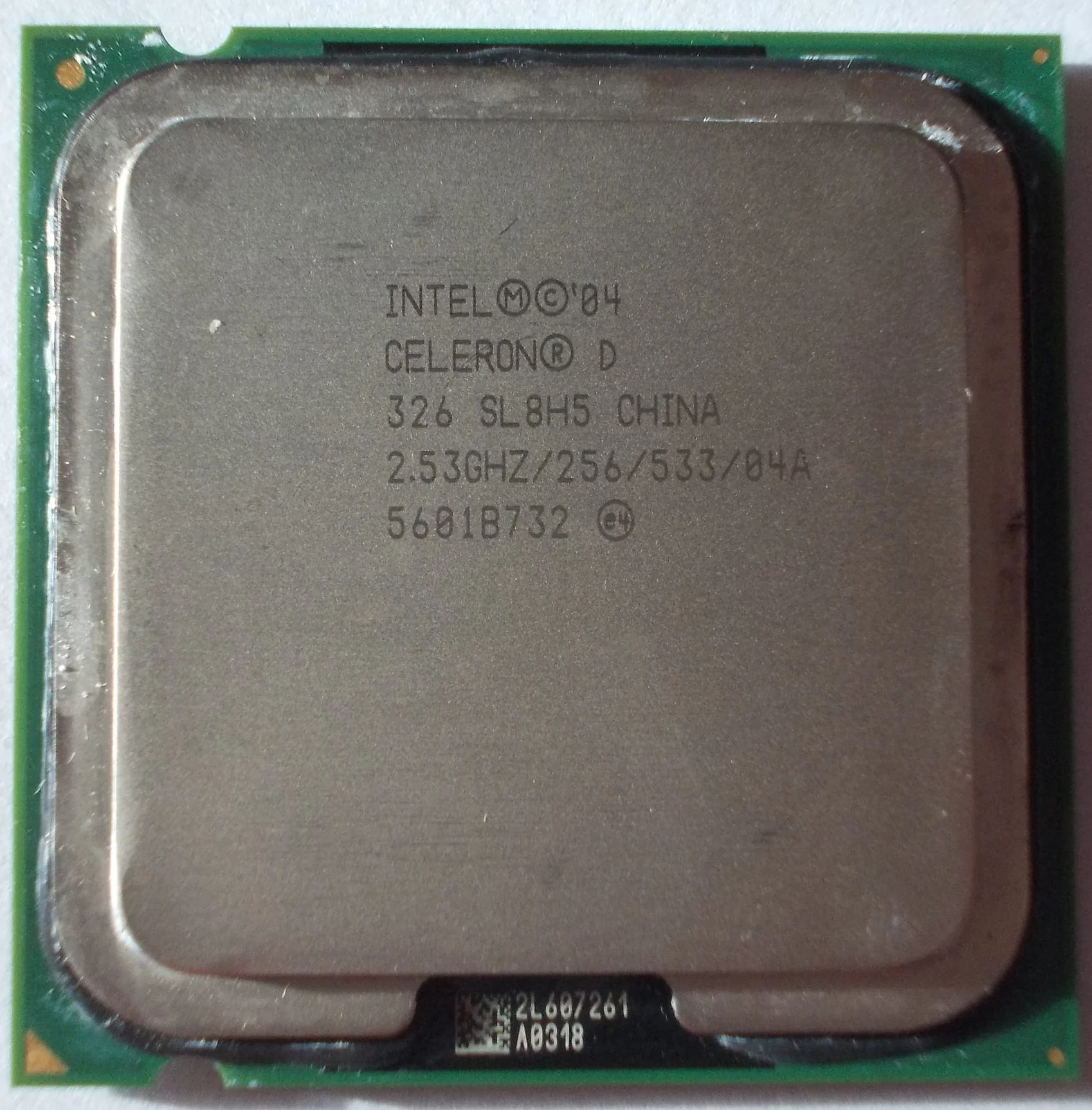
The test sample carries the marking SL8H5 and was manufactured in China. The Celeron D 326 features a base clock speed of 2530MHz, 256KB of L2 cache, and an 84W TDP.
 ⤢ ВІДКРИТИ
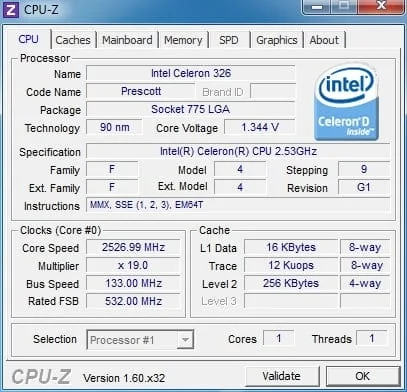
CPU-z confirms these specifications, adding details like a nominal voltage of 1.344 volts and a more precise operating frequency reading of 2526MHz.
Test setup
Motherboard - Biostar P35D2A7
Processor — Celeron D 326 (90nm/Prescott/G1/2533MHz)
Cooling - Cooler Master Hyper TX3
RAM — 1GB DDR2 PQI PC6400 (5-5-5-24)
Graphics card - Radeon X600
Hard drive - Samsung HD161HJ 160GB
PSU — Cooler Master 460W
Overclocking
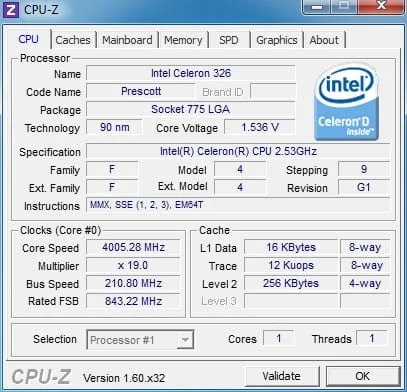
We managed to overclock the Celeron D 326 to a stable 4005MHz:
 ⤢ ВІДКРИТИ
This required raising the core voltage to 1.536 volts, increasing the FSB to 210MHz, bumping the FSB voltage to 1.32 volts, and dropping the RAM multiplier by one step.
Due to the modest 1GB of RAM installed in the system, stability testing was performed in Windows XP:
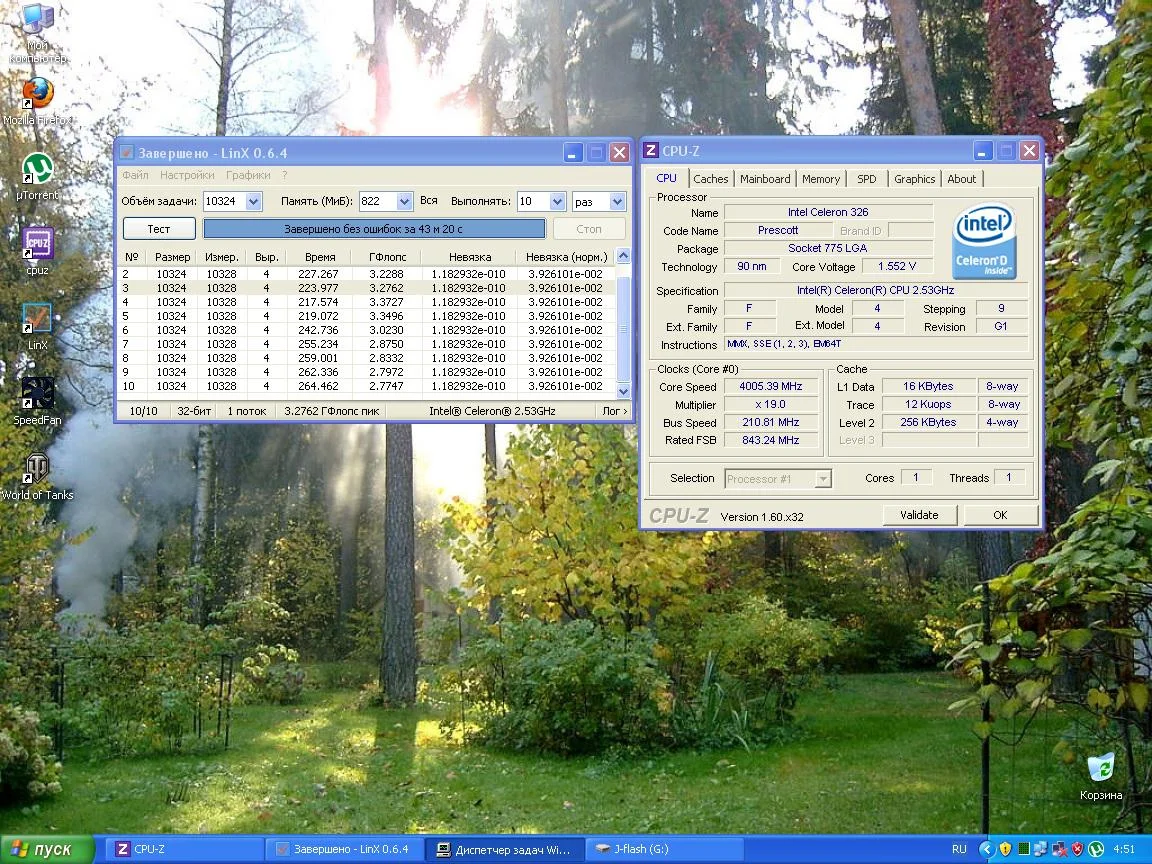 ⤢ ВІДКРИТИ
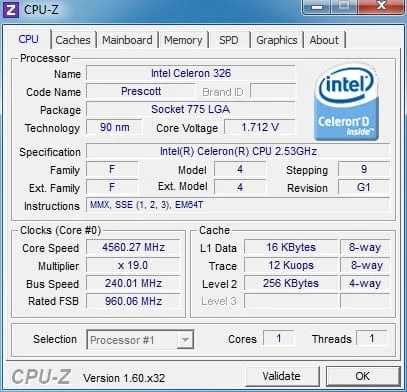
Additionally, we decided to perform a "screenshot overclock" for the HWBot overclocking database.
We set the chip's voltage to around 1.700 volts, the FSB to 240MHz, and its voltage to 1.350 volts, which resulted in a frequency of 4560MHz:
 ⤢ ВІДКРИТИ
Be careful: raising the core voltage above 1.600 volts can lead to CPU failure.