NEWS · HARDWARE
PUBLISHED
READING2 min
Early Ryzen 3600XT, 3800XT, and 3900XT overclocking results show significant frequency potential gains
AMD's new Ryzen XT (3600XT, 3800XT, 3900XT) processors demonstrate higher frequency potential, breaking the 6GHz barrier when overclocked and outperforming their predecessors by 200-300MHz.
Experienced overclockers have already gotten their hands on the new AMD Ryzen 3800XT and 3900XT chips. Early overclocking results for these refreshed CPUs show the XT versions of Ryzen 3800 and 3900 have roughly 100-200MHz higher frequency potential. This means AMD's latest silicon has managed to break the elusive 6GHz barrier.
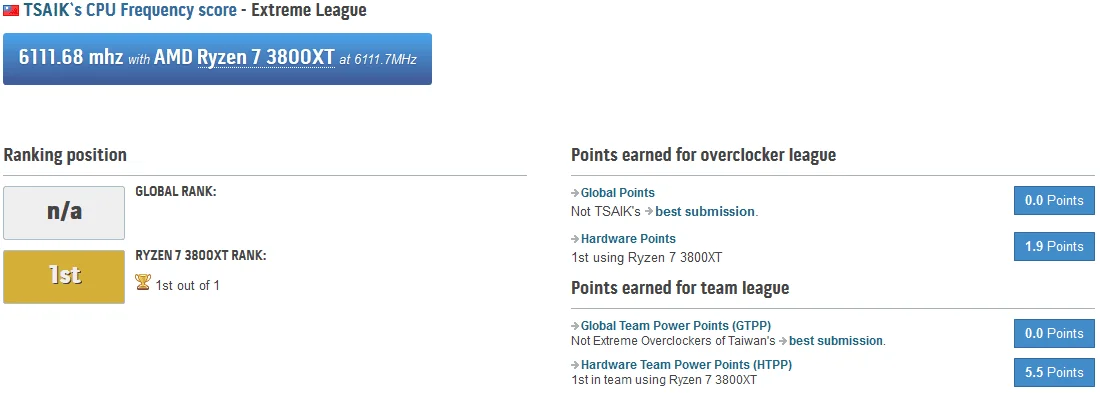
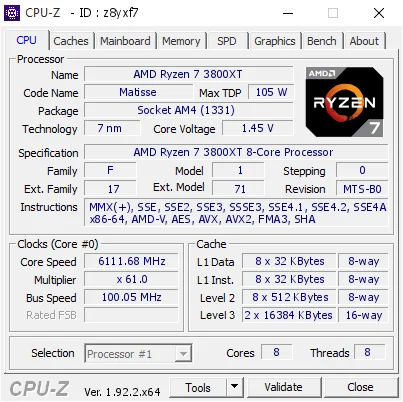
For instance, the highest recorded overclock for the Ryzen 7 3800X sits at 5923.62MHz. In contrast, the Ryzen 7 3800XT chip has already hit an impressive 6111.7MHz, a new record. Taiwanese enthusiast TSAIK achieved these figures just yesterday:
 ⤢ ВІДКРИТИ
 ⤢ ВІДКРИТИ
It's important to note these are just the initial overclocking benchmarks for the new CPUs, and they're bound to improve. As of this writing, XT chips aren't even widely available globally. We'll likely see records pushing past 6200MHz, or even 6300MHz, in the future. But let's look at the results from the 12-core variant:
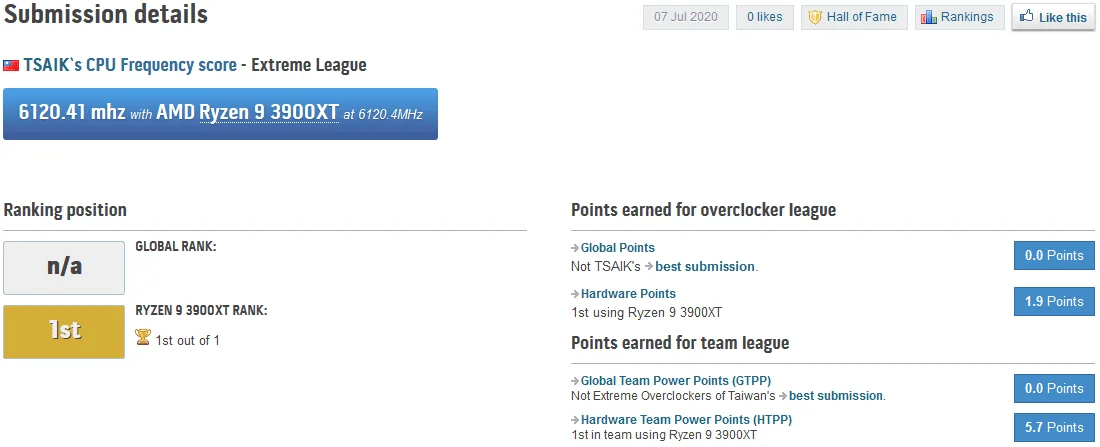
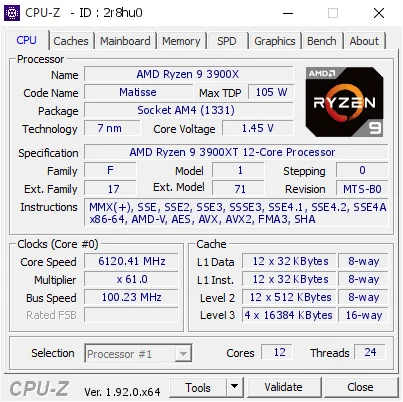
While the standard Ryzen 9 3900X currently caps out at 5948.61MHz, the new AMD Ryzen 9 3900XT, with the same overclocker TSAIK at the helm, managed an astonishing 6120.4MHz on its debut day:
 ⤢ ВІДКРИТИ
 ⤢ ВІДКРИТИ
Perhaps most surprisingly, the enthusiast achieved both records on an MSI MPG B550 Gaming Carbon WiFi motherboard, built on the B550 chipset – not exactly a top-tier enthusiast board.
But it's not all about extreme overclocking. On July 7, the team from the PRO Hi-Tech channel released a video discussing the frequency potential of the new Ryzen 3000XT chips.
YouTube
By loading, you allow content from YouTube (cookies may be set).
Their research indicates that the new Ryzen 3600XT, 3800XT, and 3900XT CPUs can be overclocked an average of 200-300MHz higher than their Ryzen 3600X, 3800X, and 3900X counterparts. The only caveat is that this higher clock speed doesn't significantly boost the new processors' overall performance. However, we think it's too early to draw definitive conclusions. We should wait for updated motherboard BIOS versions before re-running tests. It's not uncommon for motherboards to misconfigure certain parameters for newly released CPUs, thus artificially limiting their performance.