NEWS · HARDWARE
PUBLISHED
READING2 min
AMD Inception patch could slash performance by up to 50%
AMD has identified the Inception vulnerability. A patch could slash CPU performance by up to 50% in server workloads, though typical users are unlikely to notice.
AMD recently disclosed details about a vulnerability in its CPUs based on all Zen architecture versions. This affects popular Ryzen 1000, 2000, 4000, 5000, and 7000 chips, as well as Ryzen Threadripper workstation CPUs and EPYC server processors.
In a nutshell, Inception allows data theft by essentially "tricking" the processor. The chip "believes" it's executing the same function repeatedly, causing it to redirect that operation to the branch prediction unit. This simple trick gives attackers access to data stored in the CPU's memory.
Phoronix has published an extensive performance study on AMD's patch for the Inception vulnerability. The enthusiasts' testbed was built around a 64-core EPYC 7763 chip (Zen 3/DDR4). We highly recommend checking out the full article on this topic; for now, we'll quickly go over the main benchmarks and share some key takeaways.
First, let's look at the processor testing modes:
off - No Inception protection.
safe RET no microcode - Kernel-only mitigation for Family 19h processors (Zen 3 / Zen 3+ / Zen 4) without Inception mitigation.
safe RET - Default safe RET mode using the latest processor microcode (BIOS/UEFI firmware).
IBPB - An alternative IBPB-based protection approach.
Now, let's move on to the tests:
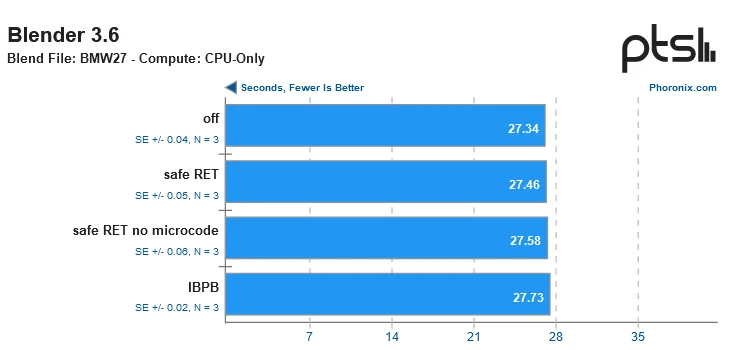

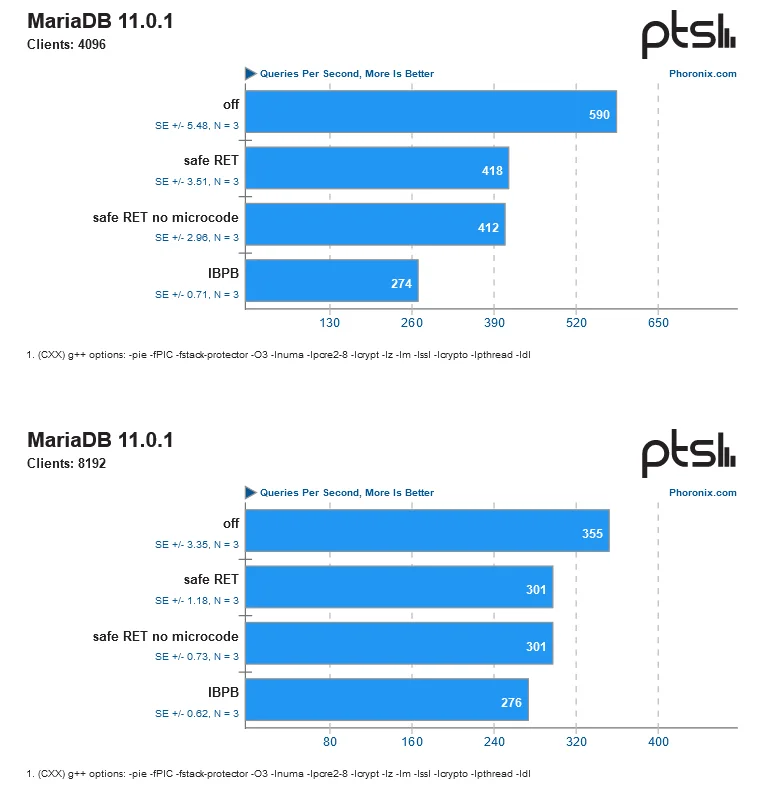
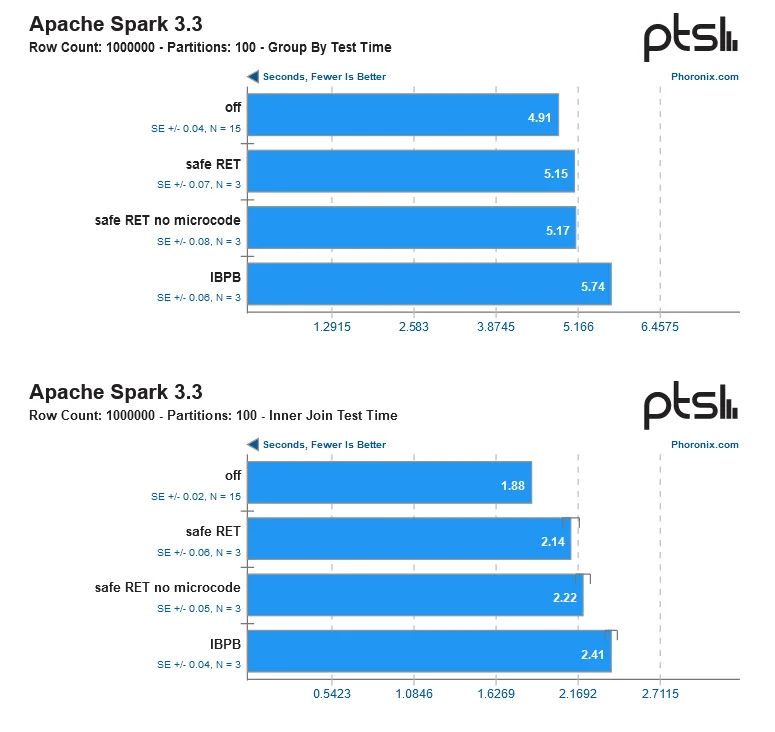
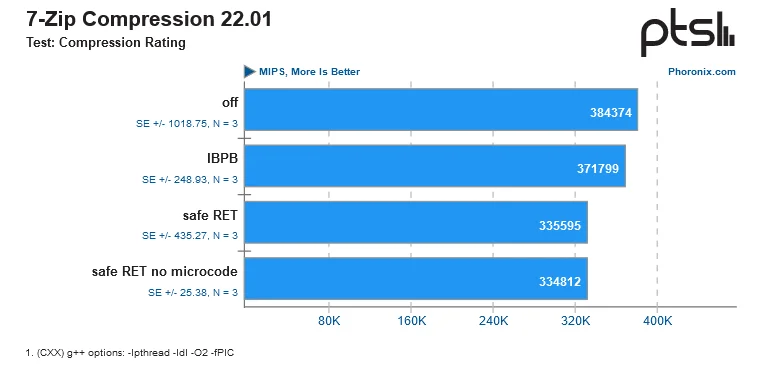
According to the study's findings, the primary performance penalty impacted the server and near-server segments (e.g., intensive database workloads). Meanwhile, typical users will either experience no CPU speed reduction at all (in games, rendering, or web browsing) or (as with 7-zip) lose about 10-15% performance.
In conclusion, if you're a typical user or a gamer, there's no need to take this information too seriously. Similar vulnerabilities exist in both Intel and AMD processors, and semiconductor giants regularly combat them.
Source:phoronix