TESTS · CPU · AMD
PUBLISHED
READING7 min
What can a single core do in 2010? Review, benchmarking, and overclocking the AMD Sempron 140
Exploring the AMD Sempron 140 (2010): single-core CPU performance, overclocking, and hidden core unlocking potential. The results were surprising!
A single core? Yes!
The era of single-core processors ended back in 2005 with the advent of CPUs like the AMD Athlon 64 X2 and Pentium D. However, CPU manufacturers weren't quick to retire them. In 2007, Intel was the first to make that move, releasing the rather decent budget Celeron 4xx series. AMD, conversely, decided to roll out an update for its Sempron processors alongside its new 45nm Phenom II generation. But there were some peculiarities: while the last 65nm Semprons were dual-core, the new Sempron 140 was a single-core chip. What might have driven AMD to this decision is unclear; producing dual-core 45nm processors was already quite cheap, so disabling one core would seem redundant. However, there was likely one benefit to such a maneuver: the Sempron 140 became the fastest single-core CPU in the world, only to be later surpassed by its sibling, the Sempron 145.
The processor
The Sempron 140 processor is built on the K10.5 architecture. Its semiconductor core, codenamed Sargas, uses a 45nm manufacturing process. It features 1024 KB of L2 cache per core but no L3 cache. Some motherboards based on AMD 710/750/810/850 series southbridges, as well as specific ASRock and ASUS boards, allow users to unlock a disabled core within the processor. However, don't get your hopes up too high; over 50% of these CPUs actually have defective cores. This processor operates at a frequency of 2700 MHz, has a 45 W thermal design power (TDP), and a nominal voltage of 1.350 V.
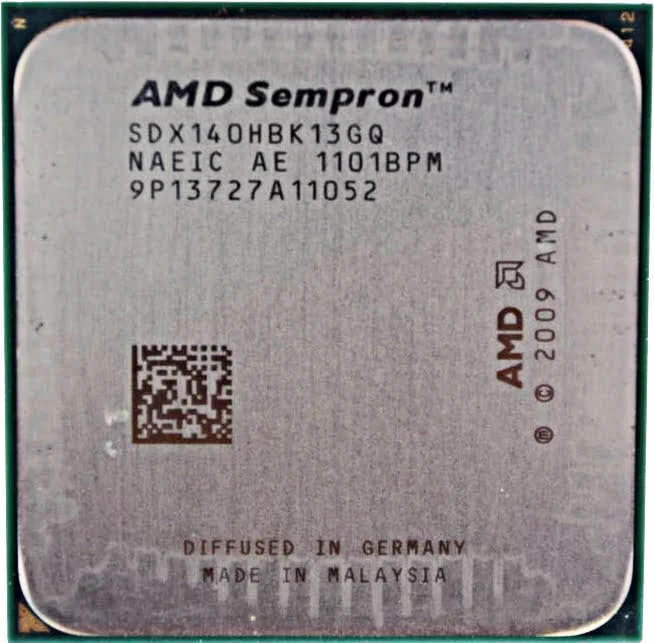
Let's take a look at the processor itself:
 ⤢ ВІДКРИТИ
The processor's marking doesn't reveal anything new, except for one detail: its core has a different name, Regor. This implies that we're looking at a dual-core Athlon II X2 CPU with one disabled core. The motherboard used in our test bench features an ACC function, which theoretically offers a chance to unlock hidden cores. Unfortunately, this particular sample remained a single-core Sempron 140.
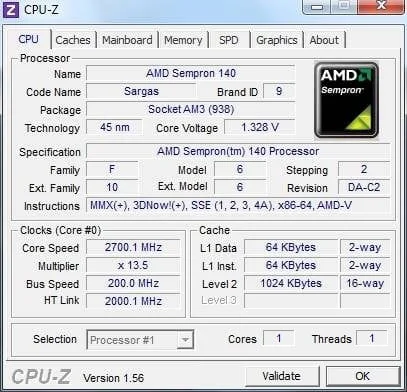
Let's look at the CPU-Z screenshot:
 ⤢ ВІДКРИТИ
The CPU's supply voltage is slightly lower than usual, which is a quirk of this particular motherboard and doesn't affect stability. If you encounter similar low voltage, there's no need to panic; you can always set it manually.
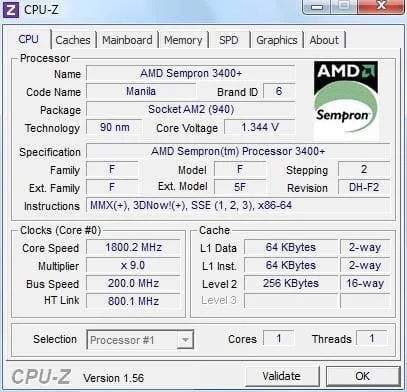
Now, let's talk about the competitor to today's test subject, specifically the Sempron 3400+. This familiar K8 architecture chip is based on the 90nm Manila core, a derivative of the Windsor core. It features 256 KB of L2 cache, a nominal voltage of 1.300 V, an operating frequency of 1800 MHz, and a maximum power consumption of 45 W.
 ⤢ ВІДКРИТИ
As you've noticed, the processor's voltage here is elevated, but that doesn't prevent you from manually setting it to 1.300 V.
Test bench and methodology
AM3 motherboard – ASUS M4A785TD-V EVO
AM2 motherboard – ASUS M2V
Processors – Sempron 3400+, Sempron 140
CPU cooling – Scythe Ninja B2 + SVEN SV0609CS11157 (1200 RPM)
DDRII RAM – PQI PC6400 (5-5-5-16)
DDRIII RAM – Hynix PC10600 (8-8-8-24)
Graphics card – ASUS GeForce 9800GT (760/1800/2100 MHz)
PSU – FSP400W
Hard drives – Samsung SP160GB
Software:
Windows 7 x86 (7600) with critical updates installed up to December 2010.
CPU-Z 1.56
S&M
CineBench 9.5 x64
CineBench 11.0 x64
Light Work – Renderbench
3D Mark Vantage v1.0.2 (CPU/PhysX test only – disabled)
Hot CPU tester PRO
NVIDIA ForceWare 260.99
wPrime v1.55
Fritz Chess Benchmark
FRAPS v3.1.0/build11052
GTA IV patch 1.0.7.0
Prototype
In-game graphics quality settings:
GTA4:
Resolution – 1280x1024
Textures – high
Reflection resolution – high
Water quality – very high
Shadow quality – high
Filtering quality – 16
View distance – 30
Detail distance – 100
Vehicle density – 100
Depth of field – on/on
Vertical sync – off/off
Prototype:
Resolution – 1280x1024
Textures – high
Shadows – high
Anti-aliasing – 4x
Overclocking
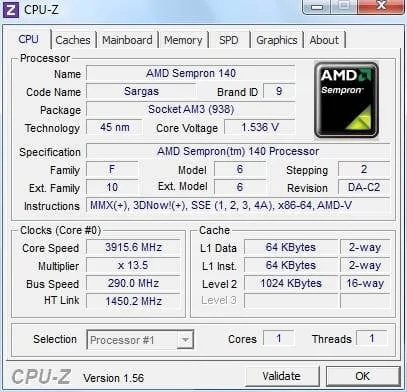
Overclocking the Sempron 140 left a remarkably positive impression. On the very first attempt to hit 4 GHz, the board cheerfully displayed POST and then rebooted. My desire to conquer that coveted benchmark for all AMD processors didn't wane, so I decided to increase the core voltage to 1.550 V, but even that failed to get me to a Windows boot. Abandoning that idea, I lowered the base clock from 300 MHz to 290 MHz, which allowed me to boot, but stability was still nowhere in sight:
 ⤢ ВІДКРИТИ
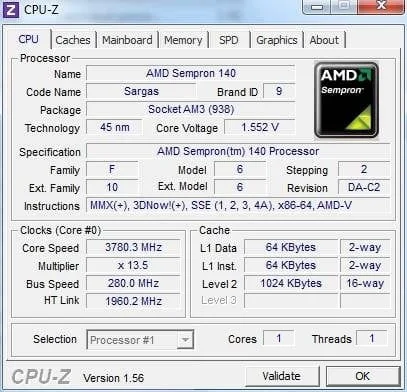
A stable 3780 MHz was achieved everywhere:
 ⤢ ВІДКРИТИ
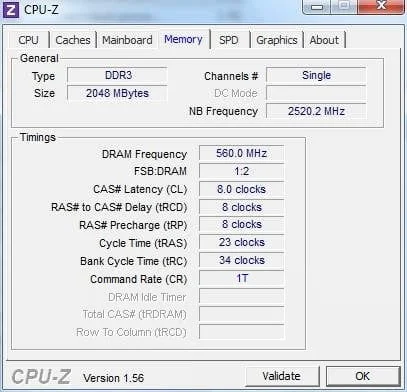
The system bus frequency was set to 280 MHz, core voltage was raised to 1.550 V, the CPU NB multiplier was reduced to 9x, and its voltage was increased to 1.200 V, resulting in a 2520 MHz frequency. Meanwhile, the RAM frequency was 1120 MHz with timings of 8-8-8-23 and CR-1T:
 ⤢ ВІДКРИТИ
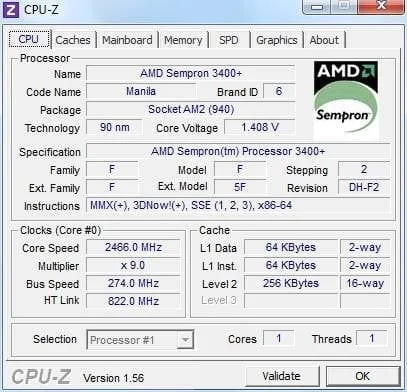
Overclocking the Sempron 3400+ hit a wall with the ASUS M2V motherboard. While I agree this board was never positioned for overclockers, nobody buys a "top-tier" motherboard for a Sempron. Thus, overclocking halted at a 274 MHz bus speed, yielding an effective frequency of 2466 MHz:
 ⤢ ВІДКРИТИ
Well, the Sempron 3400+'s overclocking results are certainly disappointing, but as tests showed, even 3000 MHz wouldn't have been enough to catch its opponent at stock speeds.
Benchmarks
 ⤢ ВІДКРИТИ
 ⤢ ВІДКРИТИ
 ⤢ ВІДКРИТИ
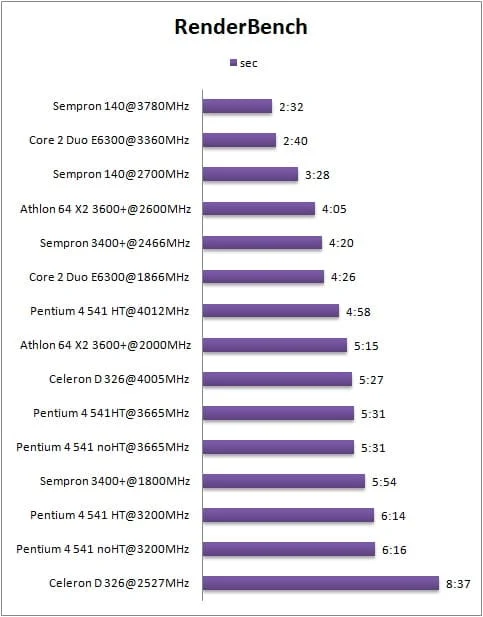
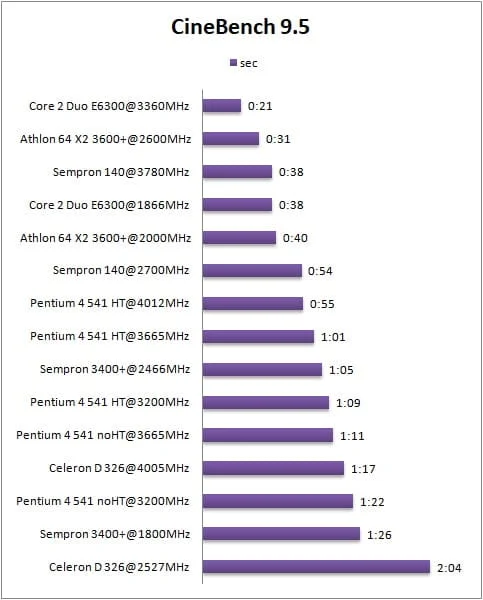
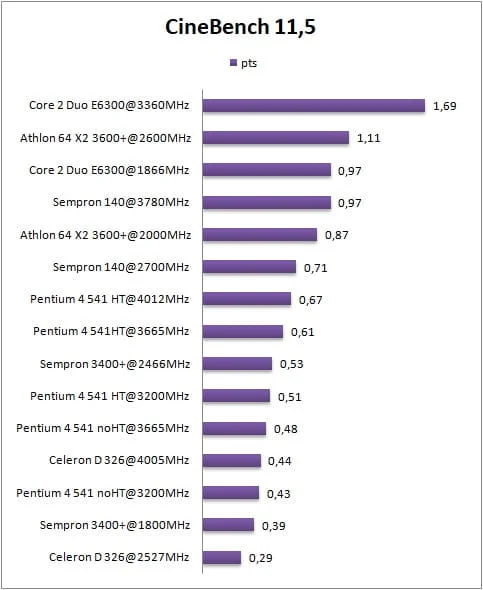
The improved architecture and increased cache size deliver a total advantage in rendering benchmarks. The Sempron 140 at 2700 MHz achieves results nearly double that of the Sempron 3400+!
 ⤢ ВІДКРИТИ
 ⤢ ВІДКРИТИ
 ⤢ ВІДКРИТИ
 ⤢ ВІДКРИТИ
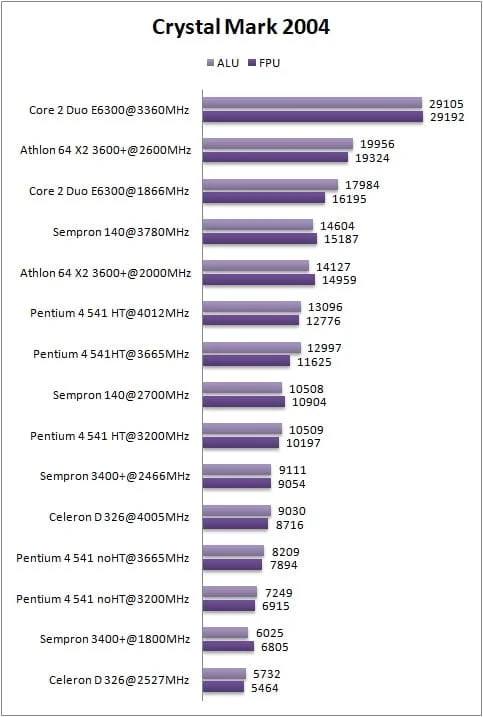
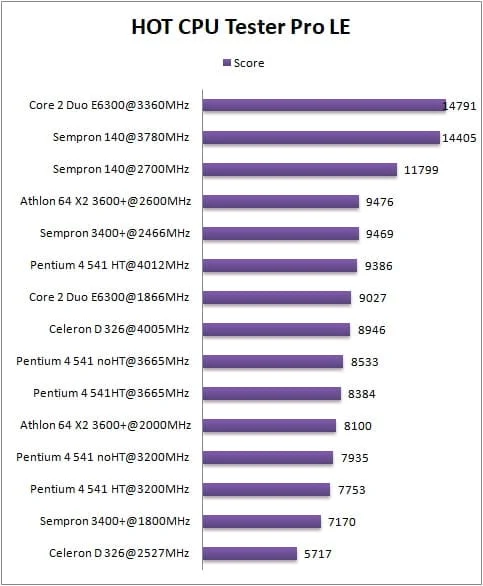
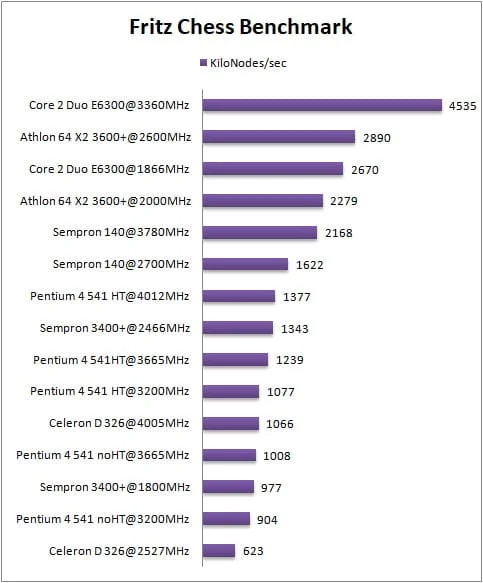
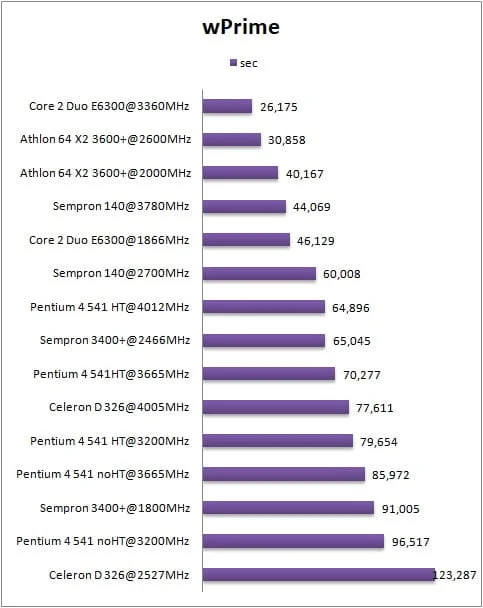
In synthetic benchmarks that heavily utilize the ALU, the results dip slightly, but the Sempron 140's advantage over the 3400+ at nominal frequencies still approaches 70%. Overclocking the Sempron 140 truly elevates it to another league.
 ⤢ ВІДКРИТИ
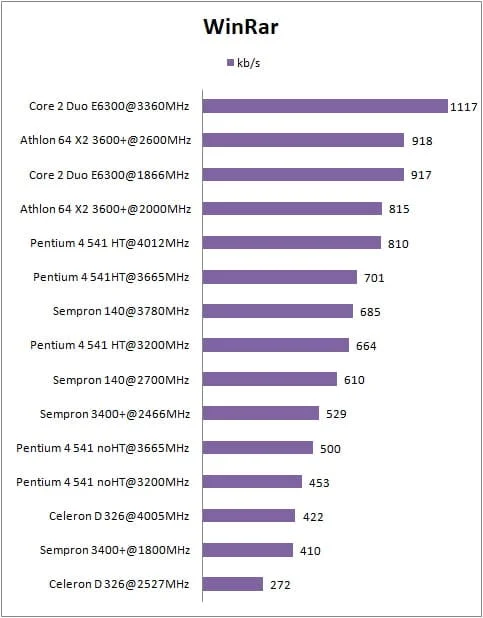
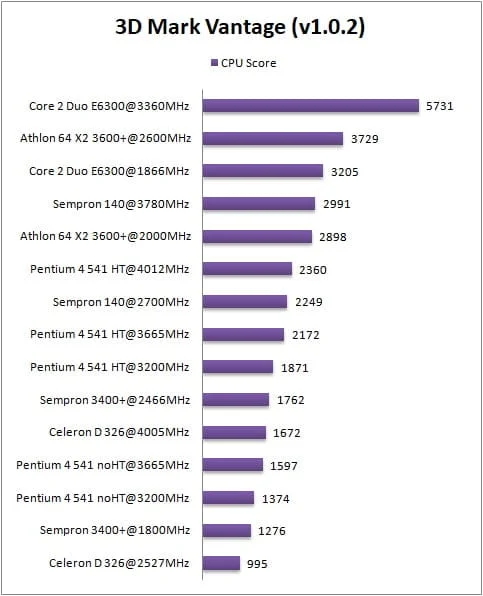
In the WinRAR archiver, the new chip's advantage reaches a mere 20%, and surprisingly, overclocking yielded virtually no gains for it, unlike the Sempron 3400+, which significantly benefits from an overclock. The semi-synthetic 3DMark Vantage gaming benchmark once again gives the Sempron 140 nearly a 90% lead over its opponent.
 ⤢ ВІДКРИТИ
 ⤢ ВІДКРИТИ
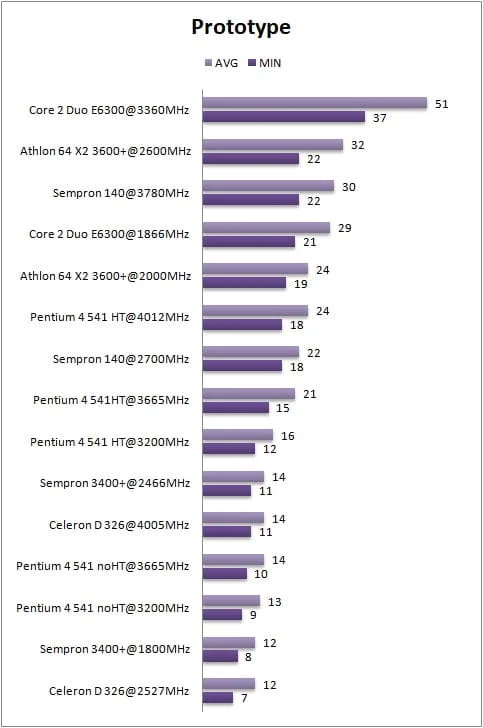
In the first game of our test, the Sempron 140 shows a 90% increase in framerate over its opponent at nominal frequencies, and a 60% advantage over the overclocked competitor! Overclocking to 3780 MHz brings the desirable 30 FPS average and a minimum of 22 FPS!
 ⤢ ВІДКРИТИ
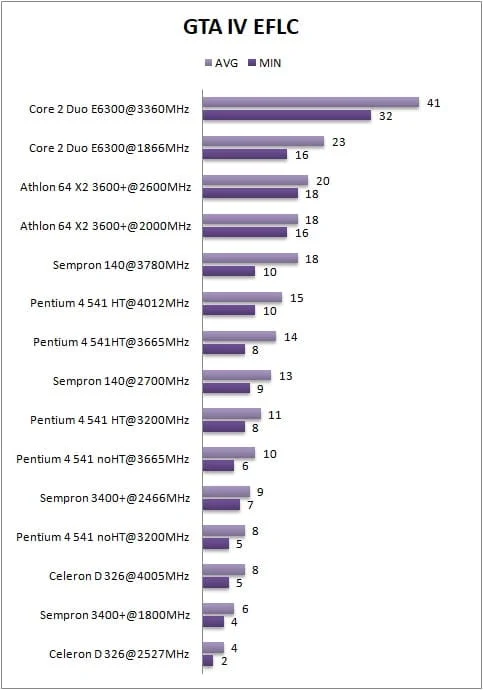
The framerate itself is, of course, unplayable, but just look at the lead! 110% at nominal frequency and around 90% when overclocked!
Summary
When I started testing this processor, I knew I was looking at the fastest desktop single-core CPU in the world. But I couldn't have imagined how far it would outpace previous-generation processors! Its rival, the Sempron 3400+, suffered a complete defeat, not due to its lower frequency, but likely because AMD failed to address certain issues before releasing Sempron chips based on the Manila core. If gaming performance isn't a top priority and you're concerned about electricity bills, this processor is for you. And don't forget the core it's truly based on: Regor. Unlocking cores is a bigger lottery than overclocking, but some still get lucky. At the time of writing, its BOX version costs $44, while the dual-core Athlon II X2 210e tray version is $57. Whether that second core is worth an extra $13 is entirely up to you.