TESTS · CPU · INTEL
PUBLISHED
READING6 min
Testing Xeon E5-2630: Sandy Bridge-EP in modern games and benchmarks
The Xeon E5-2630 (Sandy Bridge) processor gets tested in modern games and benchmarks. We found a significant lack of power and the absence of FMA3/AVX2, making many titles completely unplayable.
The first-generation E5-2630 processor was once a popular choice among budget-conscious enthusiasts and gamers, but that was a long time ago. Since then, the demands of modern games and applications have changed significantly.
In this article, we'll test what the Xeon E5-2630 processor is capable of in current games and benchmarks.
Processor
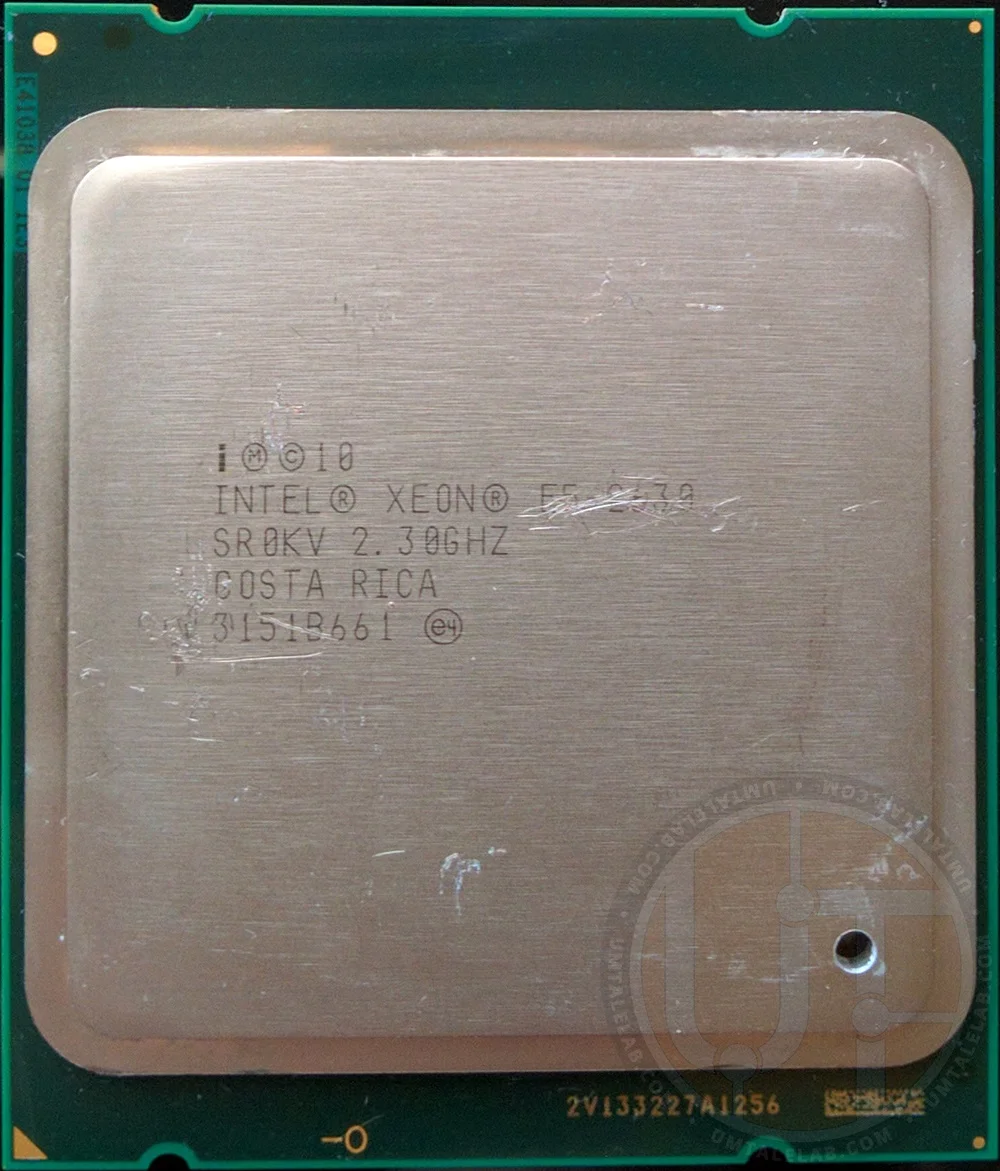
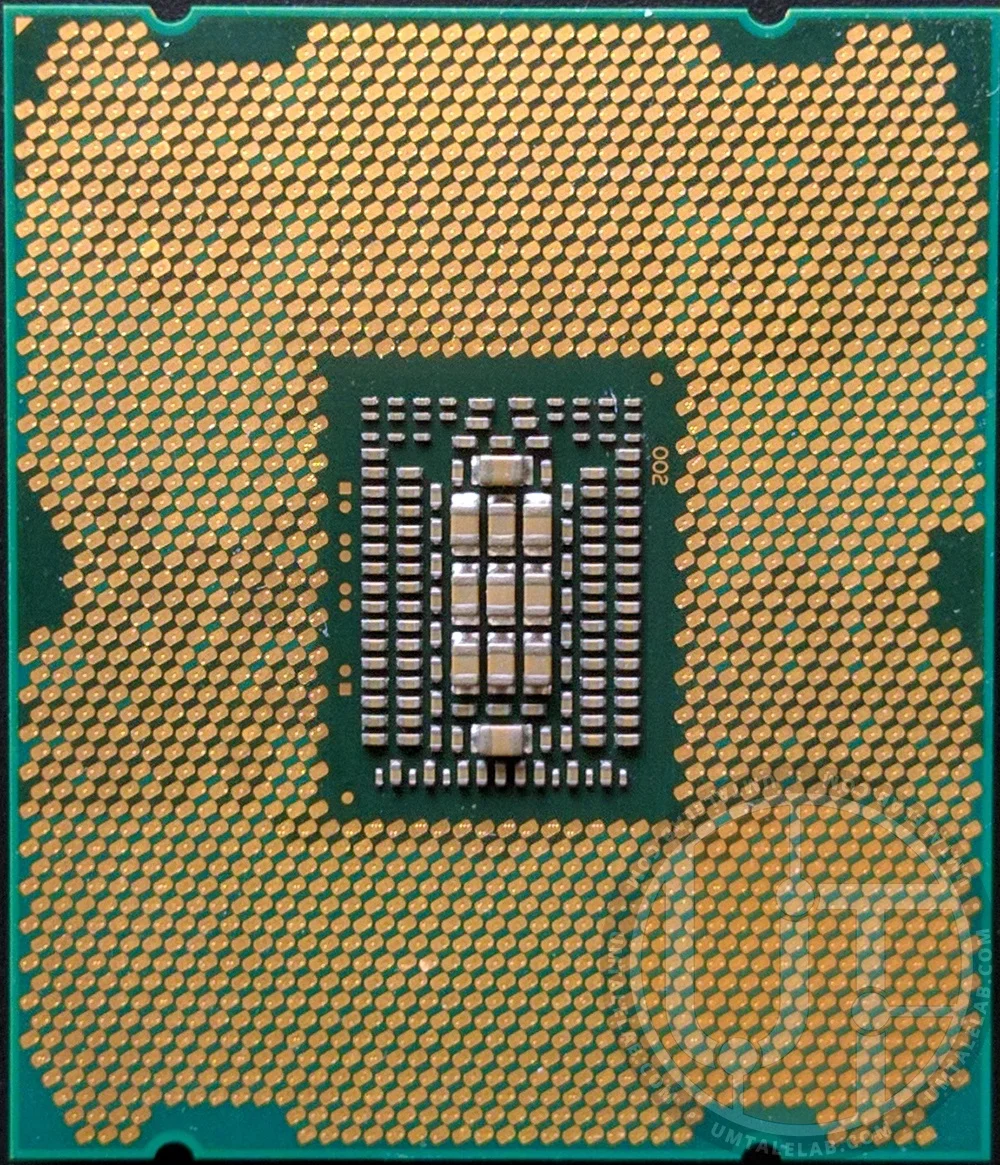
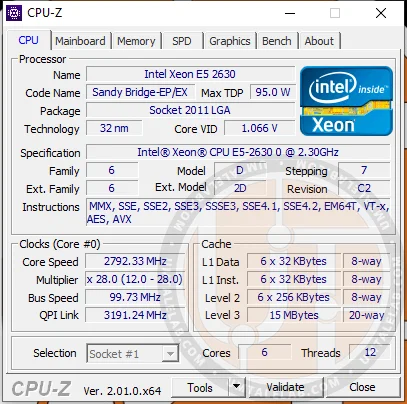
Our test sample is marked SR0KV. The chip's nominal frequency is 2300 MHz, and its TDP is set at 95 watts. That's a relatively modest figure, meaning almost any mid-range cooler with two to four heat pipes can handle this CPU's cooling.
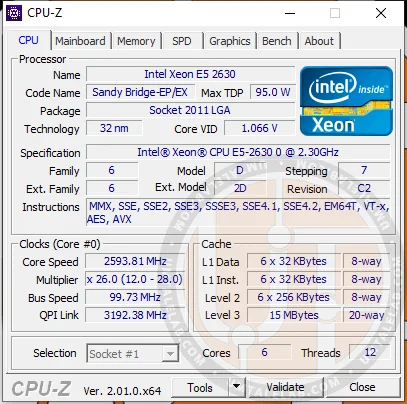
The E5-2630 processor is built on a 6-core, 32nm die based on the Intel Sandy Bridge architecture. The chip features 256 KB of L2 cache per core and a spacious 15 MB shared L3 cache. Designed for first-generation LGA 2011 motherboards, this CPU has a nominal frequency of 2300 MHz. However, Intel's Turbo Boost technology can significantly increase this: up to 2800 MHz for a single core and 2600 MHz across all 6 cores and 12 threads.
 ⤢ ВІДКРИТИ
The E5-2630's integrated memory controller speed is tied to the core frequency and matches it. The CPU supports quad-channel DDR3 RAM with an effective frequency of 1333 MHz.
Beyond these specifications, it's crucial to note that the 6-core Sandy Bridge lacks FMA3 and AVX2 instructions, which are essential in 2023. This omission could severely impact avid gamers, as it prevents some of this year's ray tracing-enabled titles from even launching.
Test bench and software
 ⤢ ВІДКРИТИ
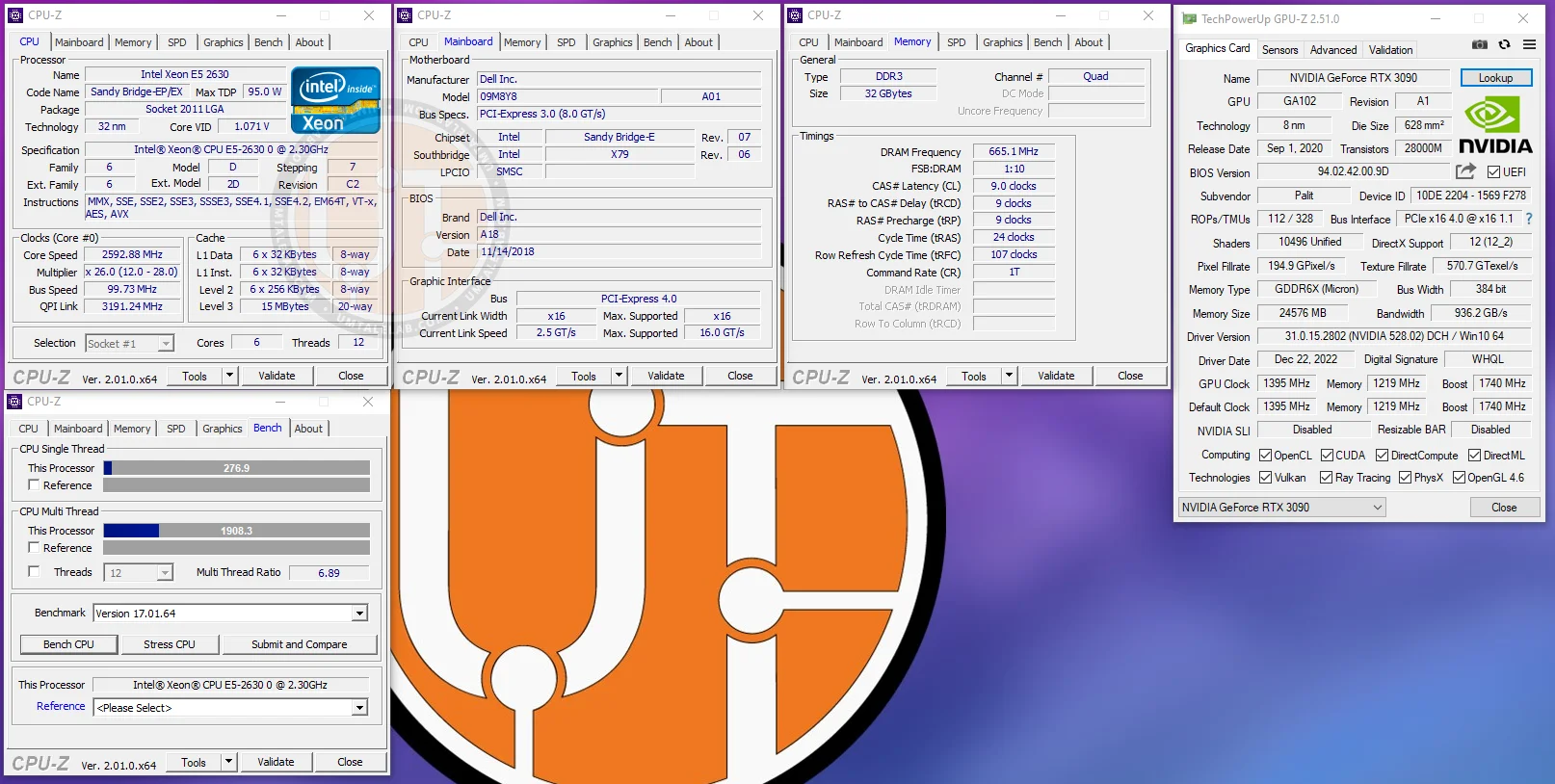
Test bench
Intel processors — Xeon E5-2630, Core i5-12400F, Xeon X5660, Xeon E5-2667, Xeon E5-2620 v3;
AMD processors — FX-8350;
CPU cooler — Cooler Master Hyper 212 Black Edition (RR-212S-20PK-R1);
RAM for LGA 1366 — 3x 8GB HyperX Genesis Na’Vi Edition (KHX16C9C2K2/8) for a total of 24GB;
RAM for LGA 1700 — 2x 8GB Corsair Vengeance RGB PRO (CMW16GX4M2C3600C18) for a total of 16GB;
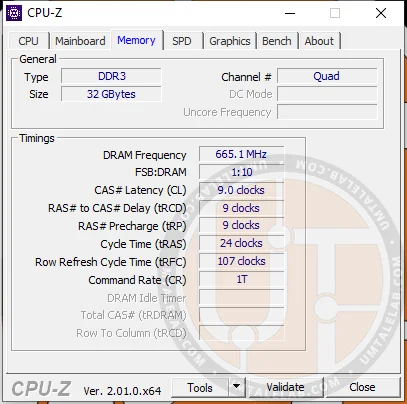
RAM for LGA 2011 — 4x 8GB Micron MT36JSF1G72PZ-1G4M1HF for a total of 32GB;
RAM for LGA 2011 v3 — 4x 4GB G.SKILL DDR4 F4-2400C15S-4GNT for a total of 16GB;
RAM for AM3+ — 2x 8GB HyperX Genesis Na’Vi Edition (KHX16C9C2K2/8) for a total of 16GB;
LGA 1366 motherboard — DELL T3500 (09KPNV);
LGA 1700 motherboard — MSI PRO Z690-A DDR4 (MS-7D25);
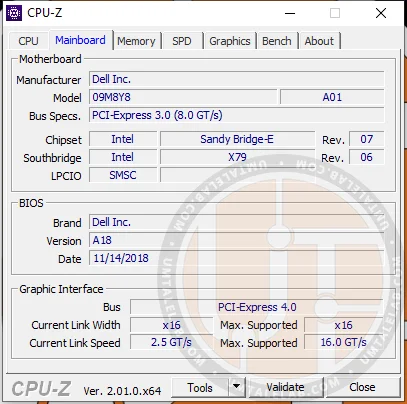
LGA 2011 motherboard — DELL T3610 (09M8Y8);
LGA 2011 v3 motherboard — Qiyida X99-H9 with modified BIOS from Huananzhi x99-8m-f (Turbo Boost unlocked, and timing control enabled);
AM3+ motherboard — ASUS M5A97 LE R2.0;
Graphics card — PALIT GAMEROCK GeForce RTX 3090 24GB (~1850/19000MHz, Power Limit 115%);
Solid-state drive — KINGSTON SUV400S37120G 120GB (Windows 10), KINGSTON SUV400S37240G 240GB + KINGSTON SUV400S37400G 400GB (Games);
Power supply — Chieftec GPS-1250C.
Software
Operating system: Windows 10 x64 with the latest updates as of January 2023;
Graphics card drivers: NVIDIA GeForce 528.02 WHQL;
Additional software for FPS measurement: MSI Afterburner 4.6.4;
Games: testing was conducted on the current game versions as of January 2023;
Game settings: testing was conducted at the highest possible graphics settings at 1080p resolution.
Tested CPU configurations
Intel processors:Core i5-12400F@4000MHz, Dual Channel DDR4@3600MHz (16-19-19-36)Xeon X5660@3066MHz, Triple-Channel DDR3@1333MHz (9-9-9-24);
Xeon E5-2630@2600MHz, Quad-Channel DDR3@1333MHz (9-9-9-24);
Xeon E5-2667@3200MHz, Quad-Channel DDR3@1333MHz (9-9-9-24);
Xeon E5-2620 v3@3200MHz, Quad-Channel DDR4@1866MHz (10-10-10-24);
AMD processors: FX-8350@4200MHz, CPU-NB@2200MHz, Dual-Channel DDR3@1866MHz (11-11-11-28);
FX-8350@4434MHz, CPU-NB@2608MHz, Dual-Channel DDR3@2086MHz (11-12-12-30, CPU Core voltage — 1.416v, CPU-NB voltage — 1.375v, DDR3 voltage — 1.660v).
You can find more detailed information on almost all the tested processors in our full articles, or by checking out the blogs section for smaller notes.
To recap our CPU testing methodology: each game was run five times, and the average frame rate from these five runs was recorded as the final result. All games were installed on an SSD.
Test results
Software
7-Zip
 ⤢ ВІДКРИТИ
Blender
 ⤢ ВІДКРИТИ
Blender Open Data Benchmark
 ⤢ ВІДКРИТИ
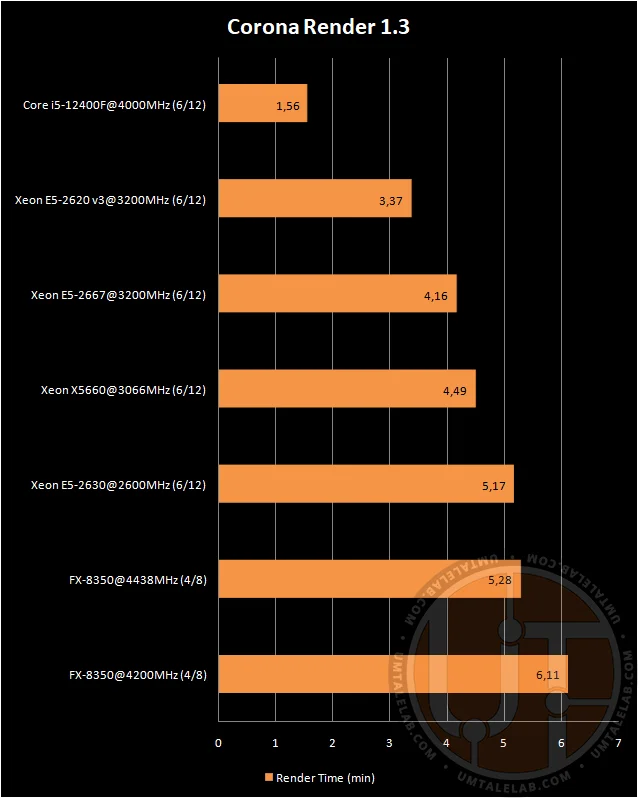
Corona Render Benchmark
 ⤢ ВІДКРИТИ
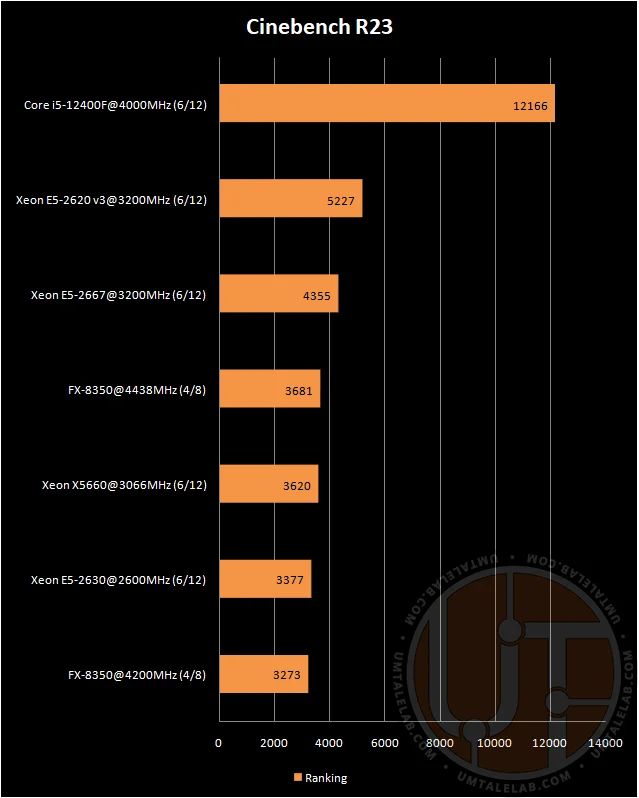
Cinebench R23
 ⤢ ВІДКРИТИ
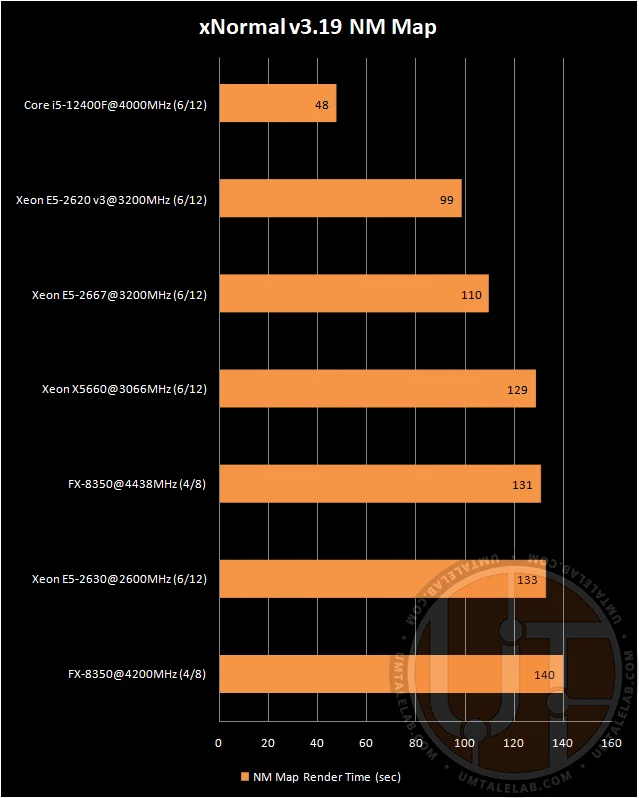
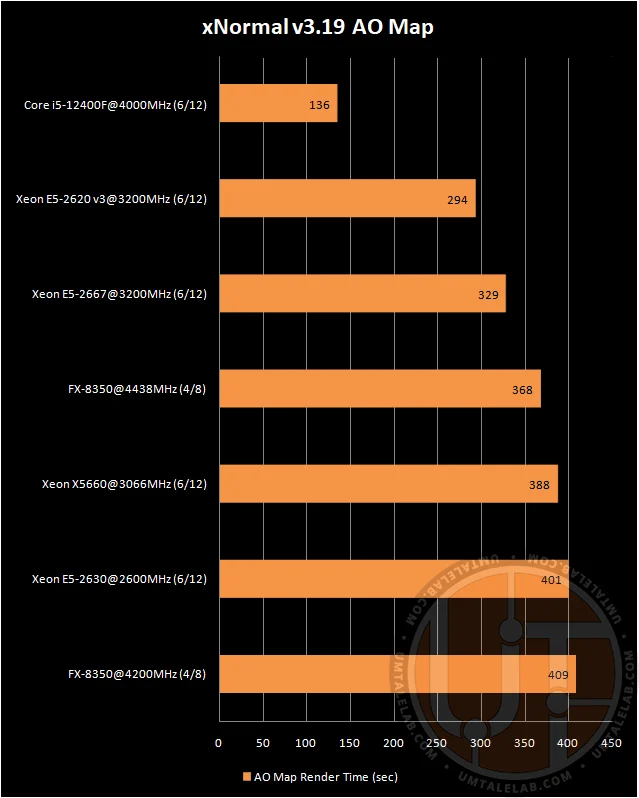
xNormal, AO & NM Map render
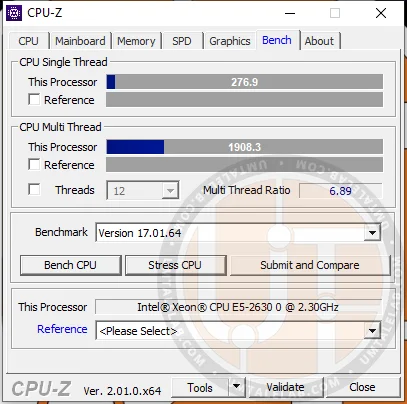
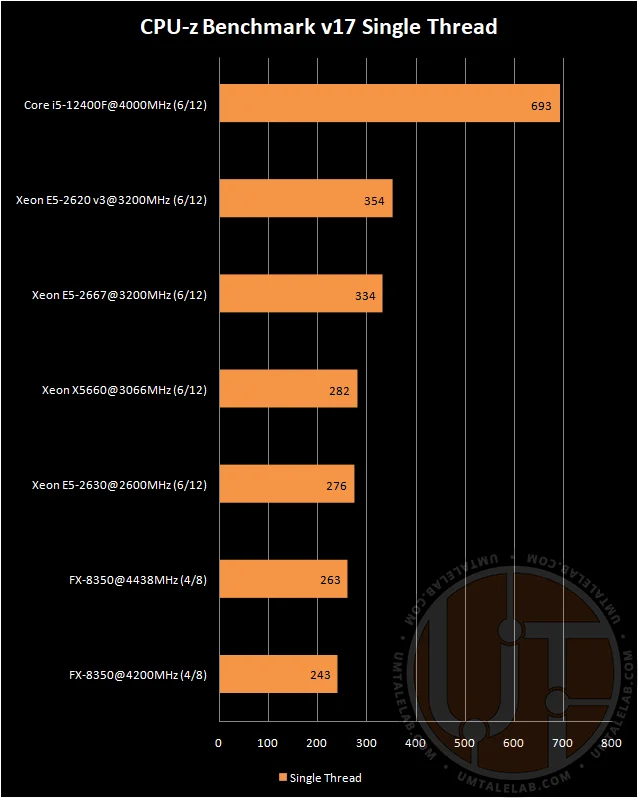
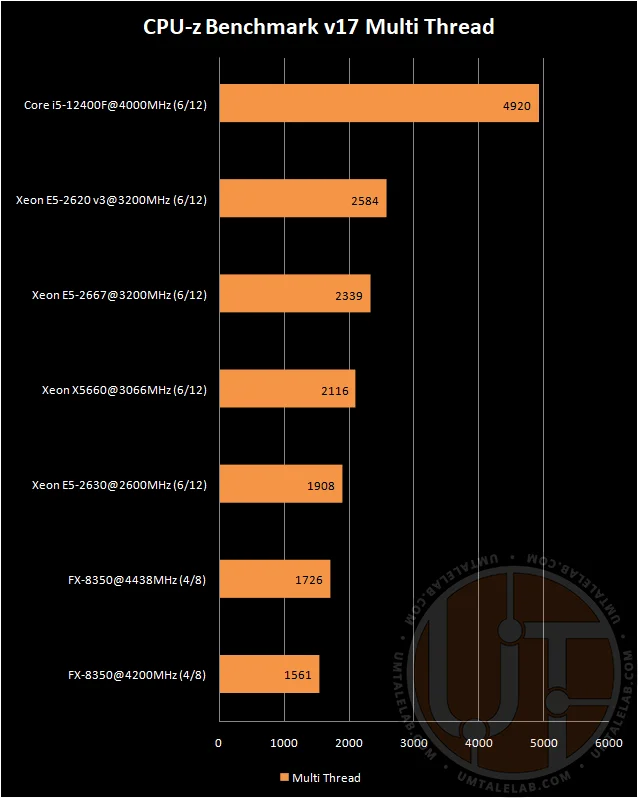
CPU-z Benchmark
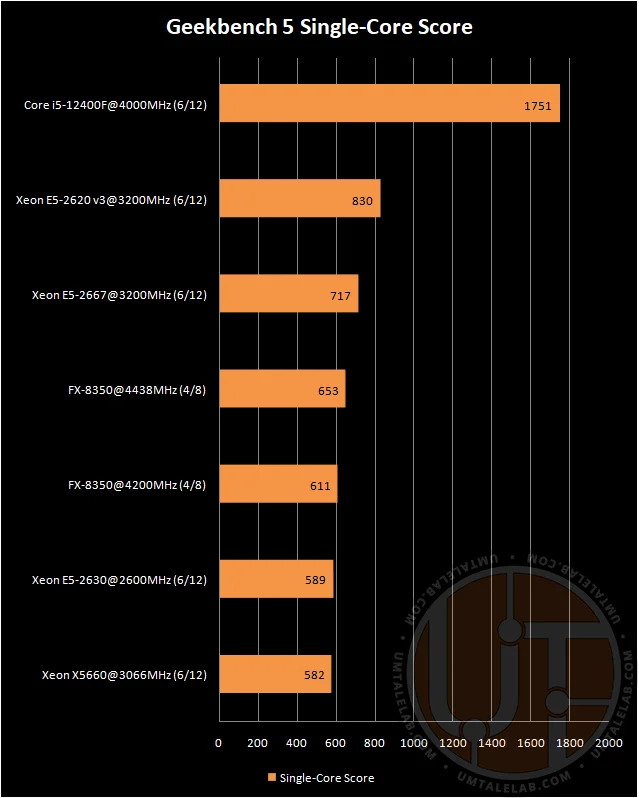
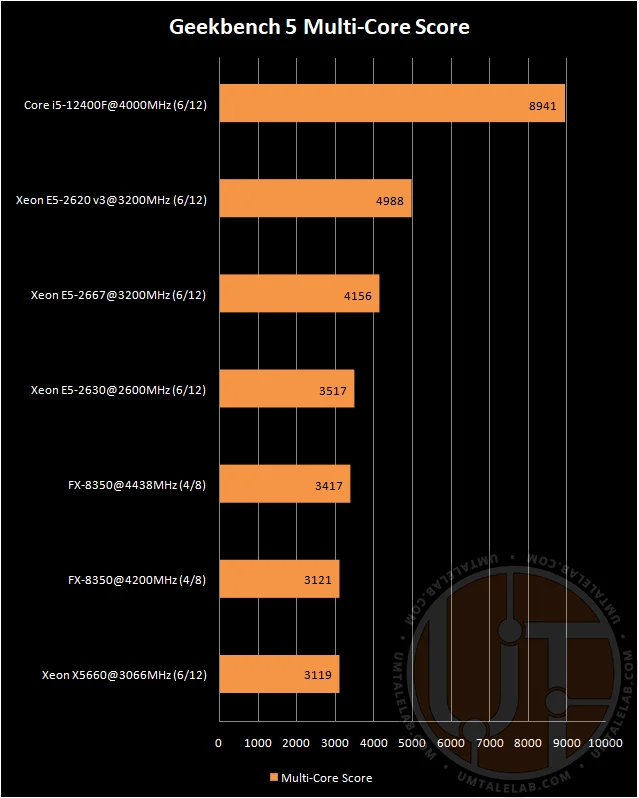
Geekbench 5
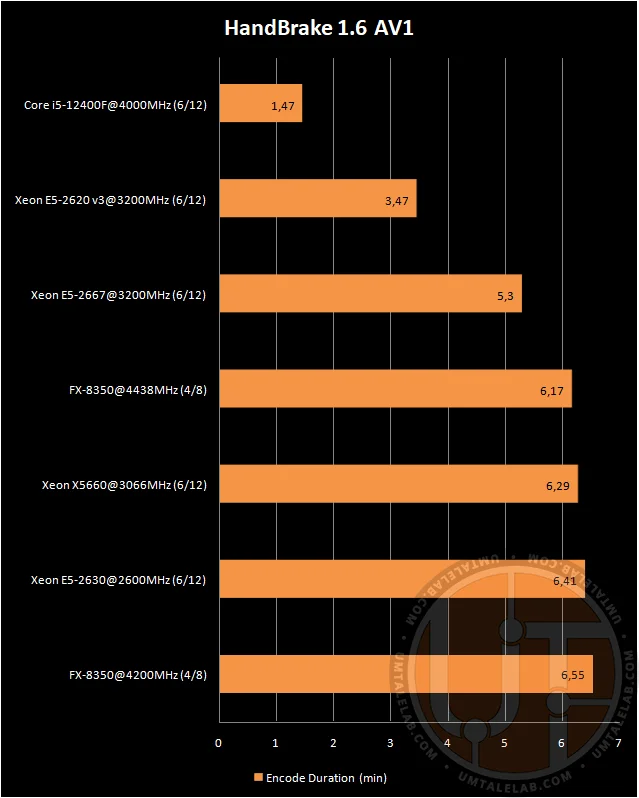
HandBrake, AV1, 2160p, 60FPS
 ⤢ ВІДКРИТИ
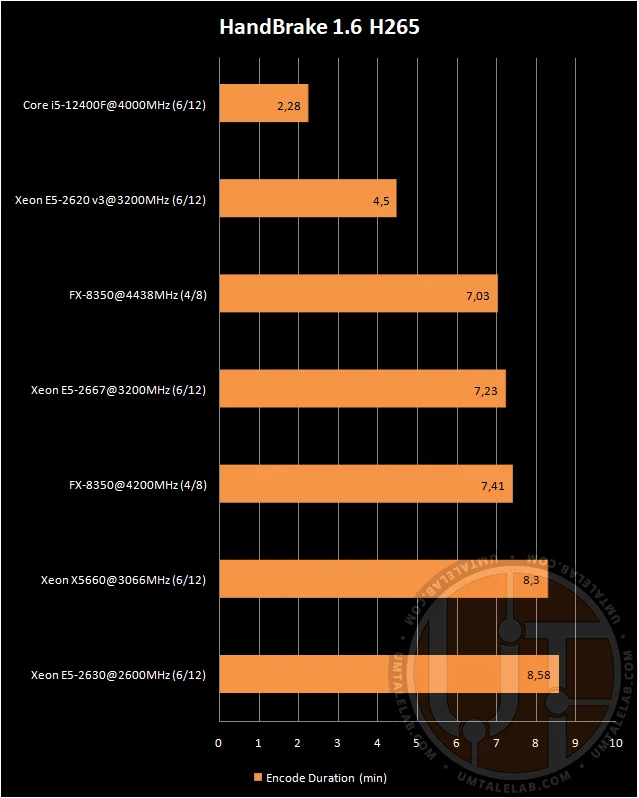
HandBrake, H265, 2160p, 60FPS
 ⤢ ВІДКРИТИ
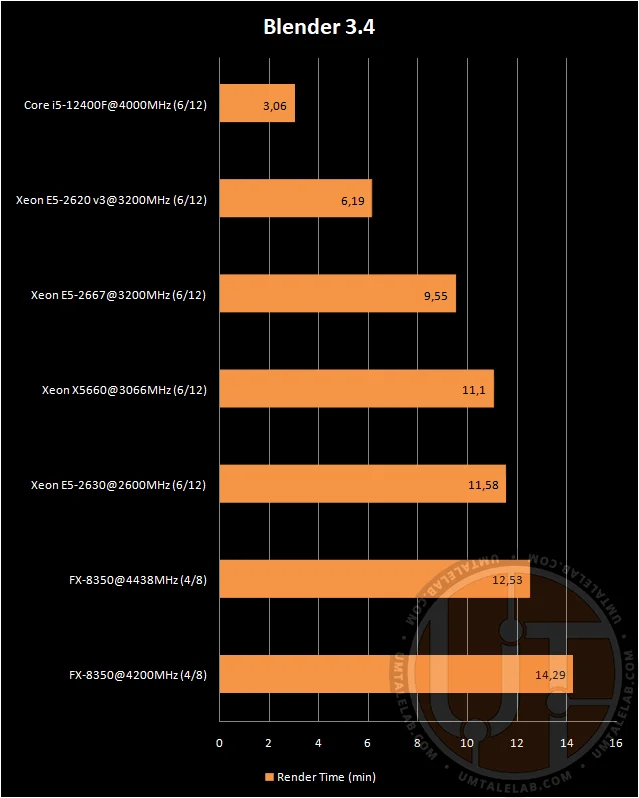
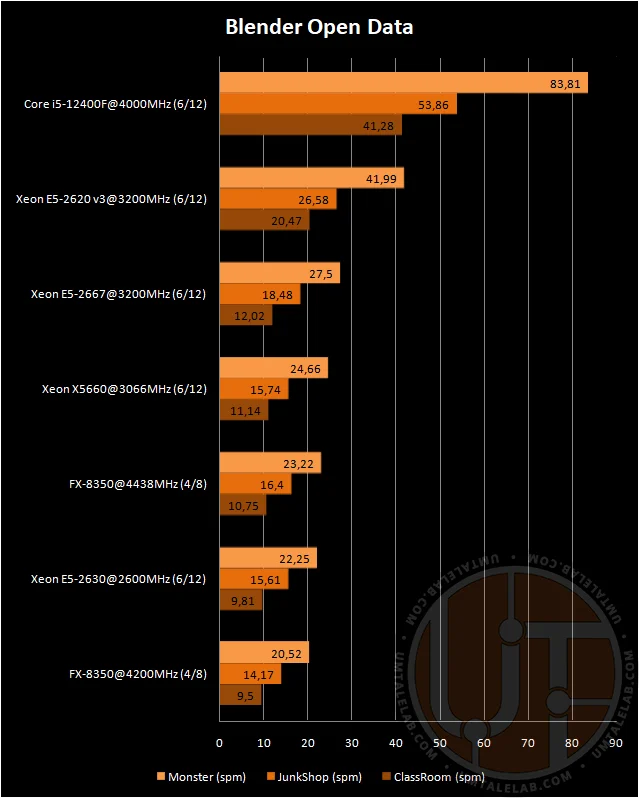
In current applications, the Xeon E5-2630's performance lands between a stock FX-8350 and a Xeon X5660. However, thanks to its 12 threads and AVX support, the E5-2630 can sometimes even surpass an overclocked FX-8350.
Games
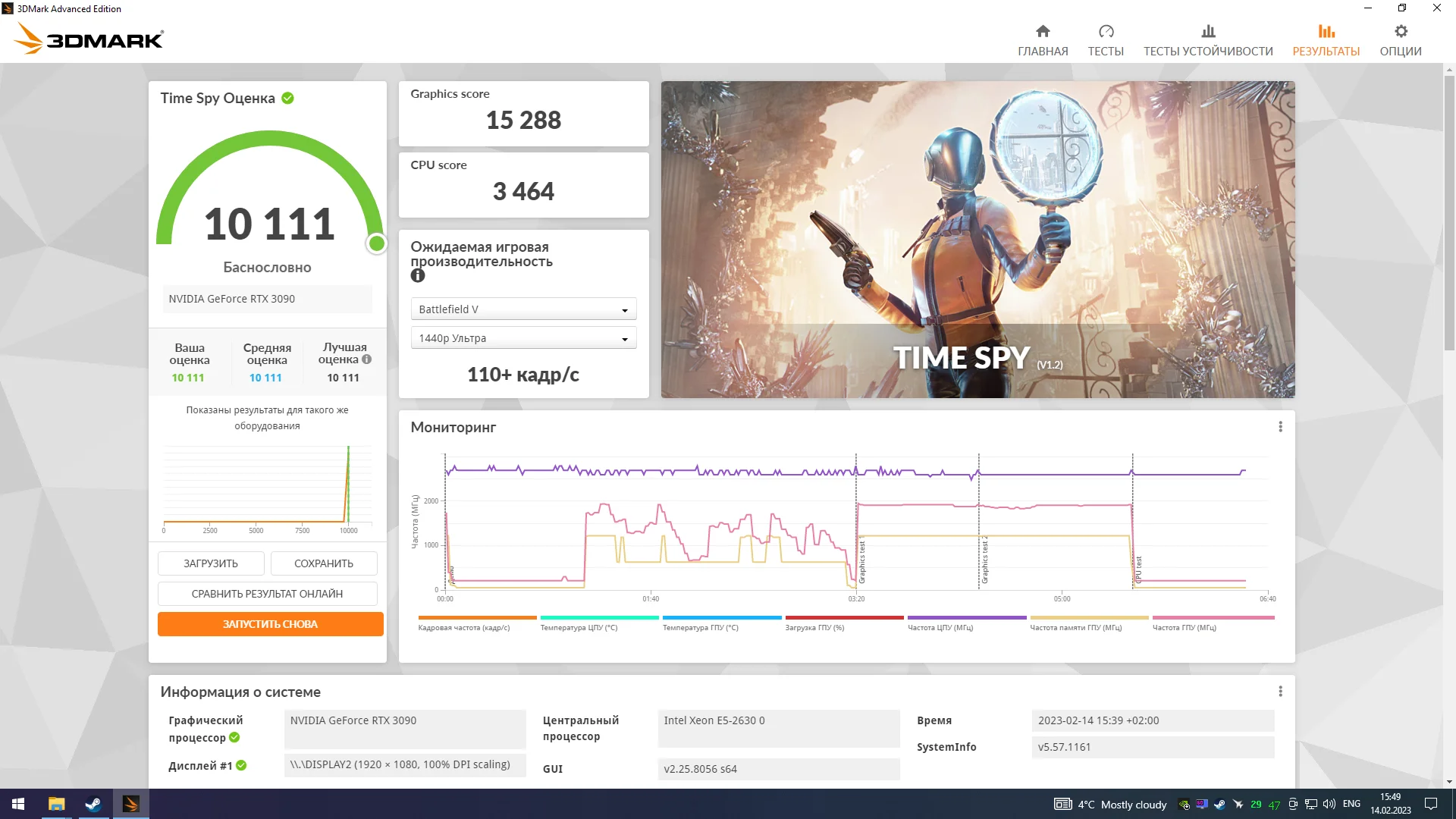
3DMark Time Spy
 ⤢ ВІДКРИТИ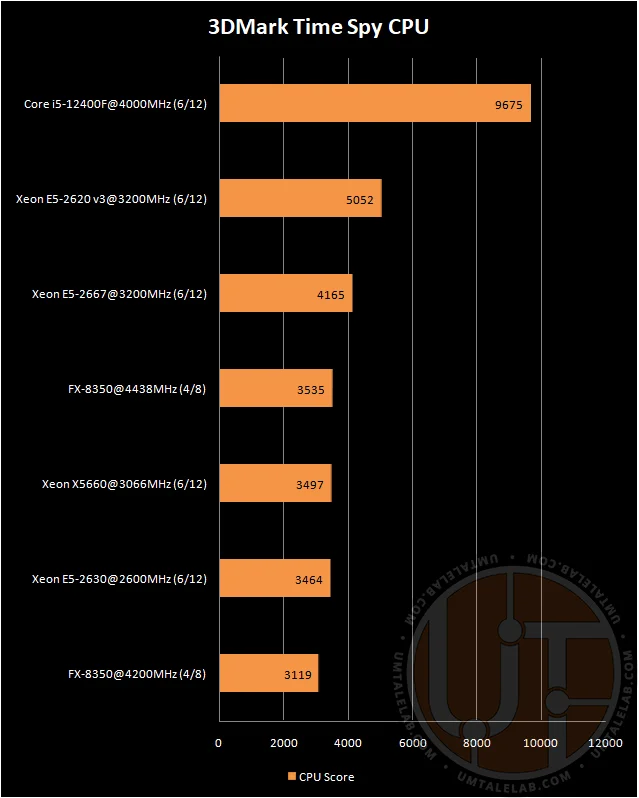
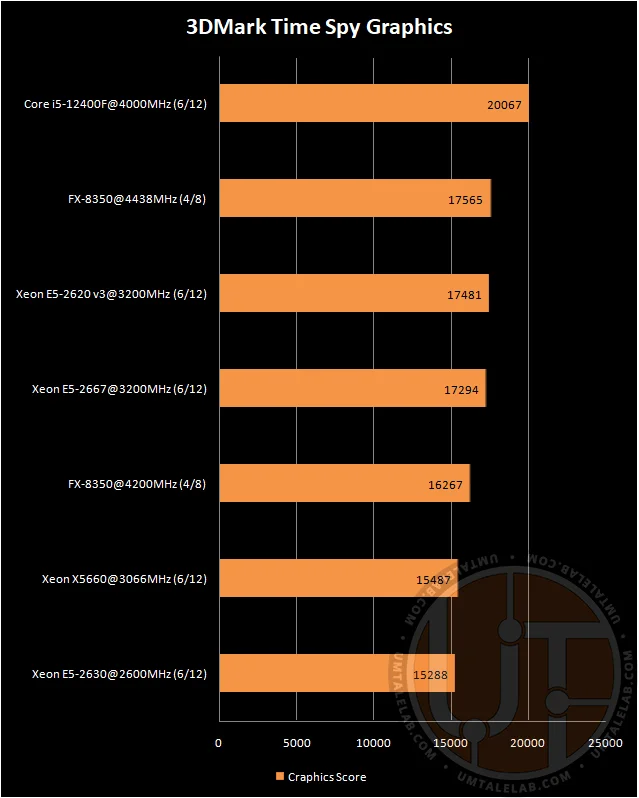
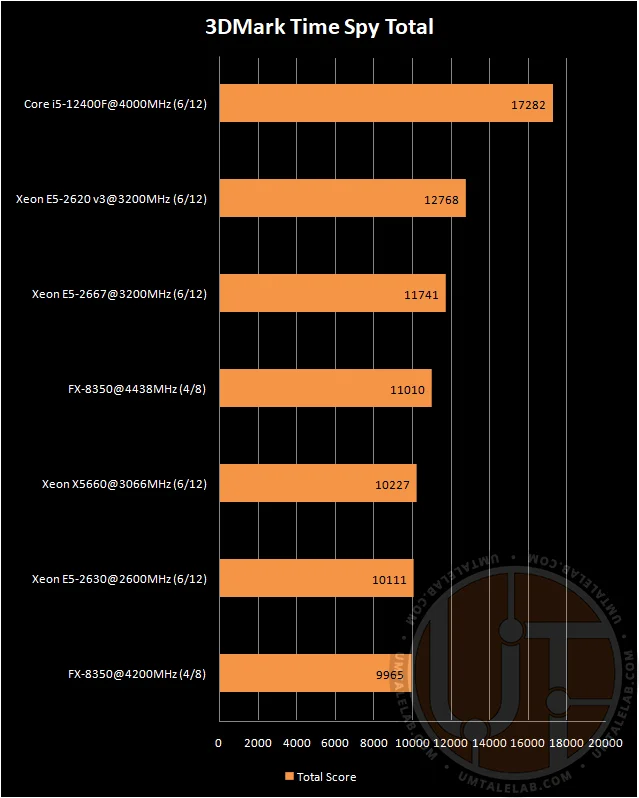
Assassins Creed Valhalla
 ⤢ ВІДКРИТИ
 ⤢ ВІДКРИТИ
Battlefield 2042
Ray Tracing – ON
 ⤢ ВІДКРИТИ
 ⤢ ВІДКРИТИ
Ray tracing – off
 ⤢ ВІДКРИТИ
 ⤢ ВІДКРИТИ
Cyberpunk 2077
Ray tracing – on
 ⤢ ВІДКРИТИ
 ⤢ ВІДКРИТИ
Ray tracing – off
 ⤢ ВІДКРИТИ
 ⤢ ВІДКРИТИ
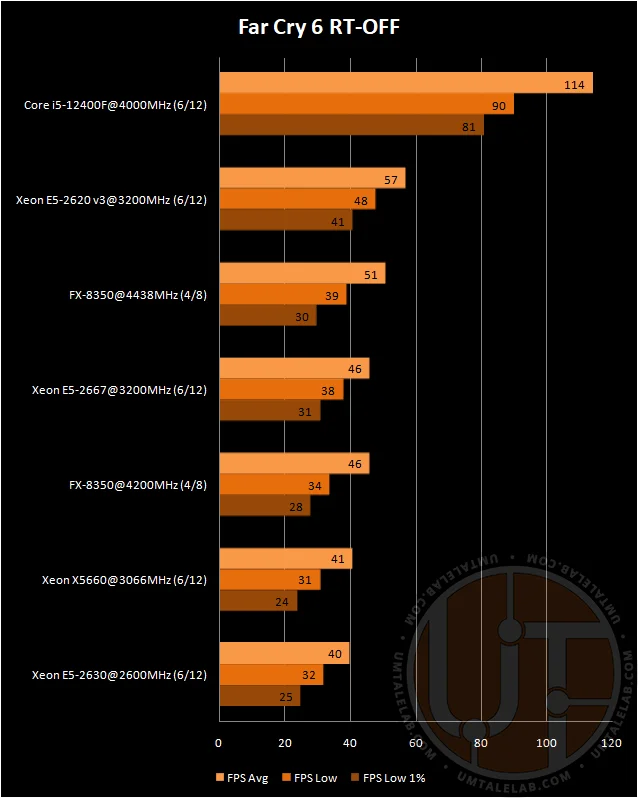
Far Cry 6
Ray tracing – on
 ⤢ ВІДКРИТИ
 ⤢ ВІДКРИТИ
Ray tracing – off
 ⤢ ВІДКРИТИ
 ⤢ ВІДКРИТИ
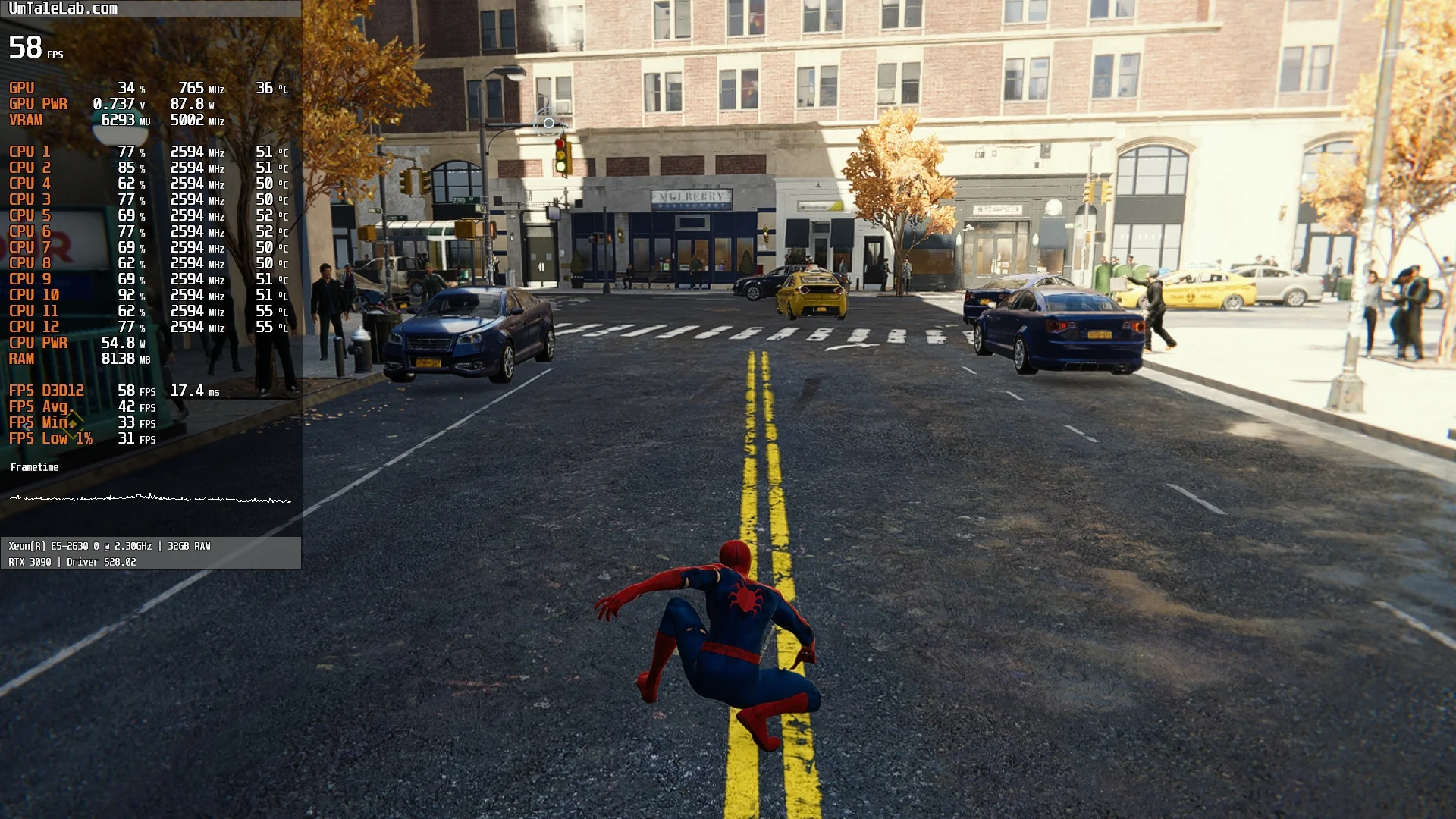
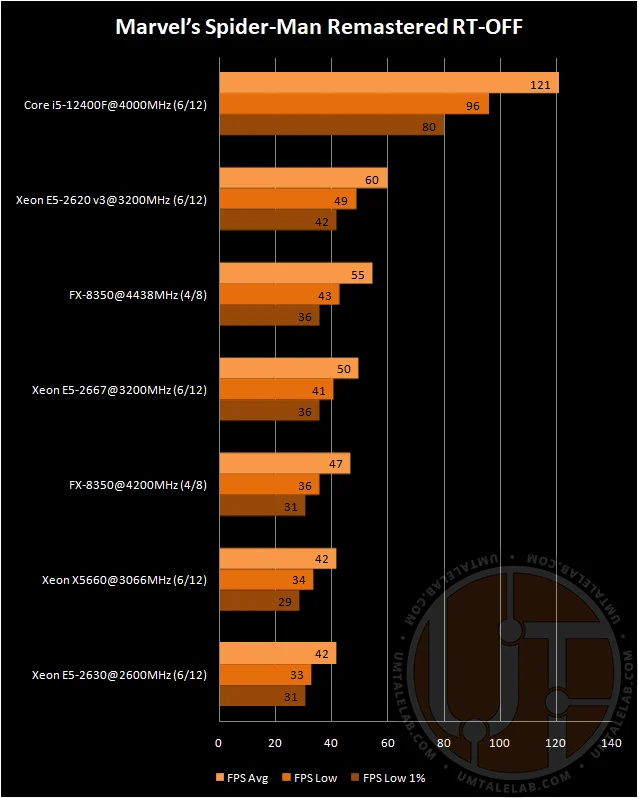
Marvel’s Spider-Man Remastered
Ray tracing – off
 ⤢ ВІДКРИТИ
 ⤢ ВІДКРИТИ
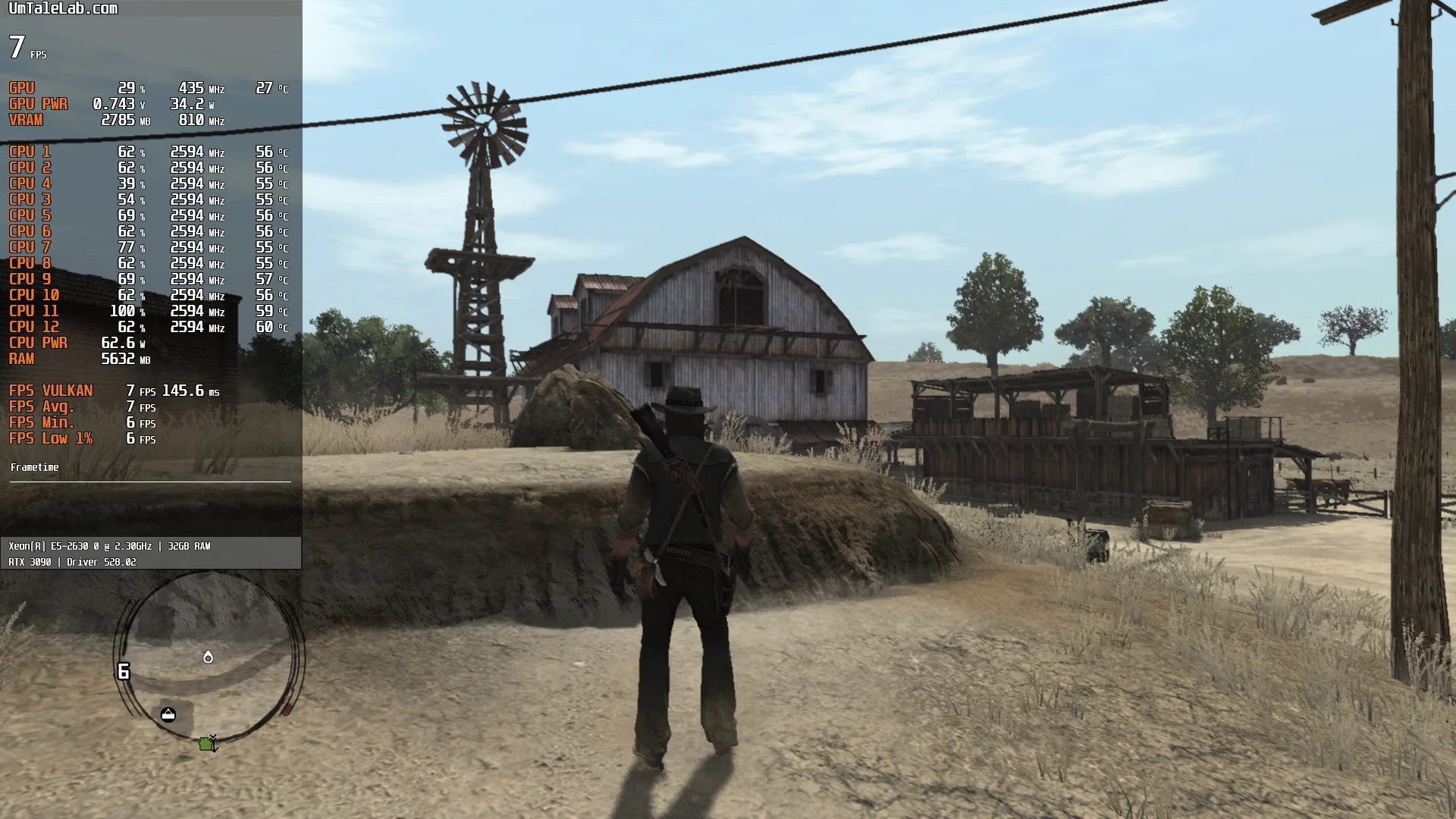
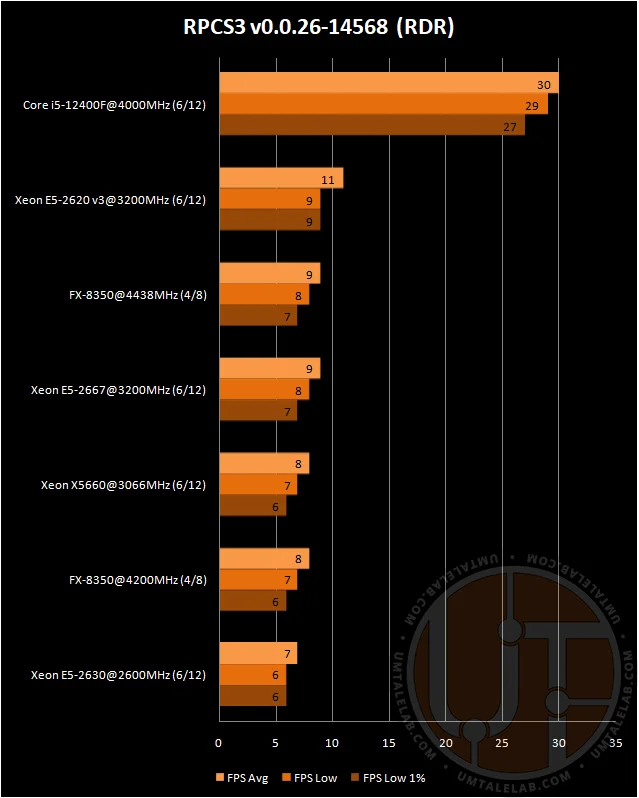
RPCS3 – PlayStation 3 emulator. Red Dead Redemption
 ⤢ ВІДКРИТИ
 ⤢ ВІДКРИТИ
Red Dead Redemption 2
 ⤢ ВІДКРИТИ
 ⤢ ВІДКРИТИ
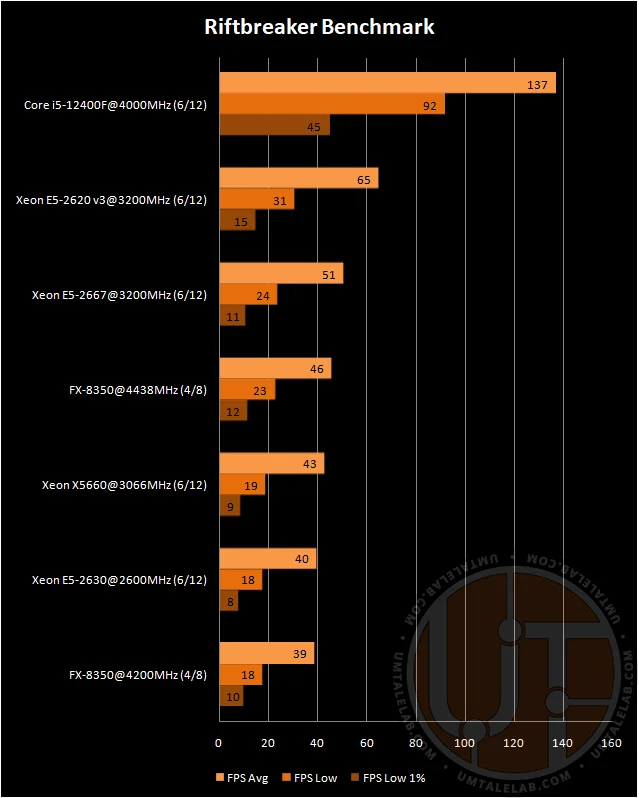
The Riftbreaker
 ⤢ ВІДКРИТИ
 ⤢ ВІДКРИТИ
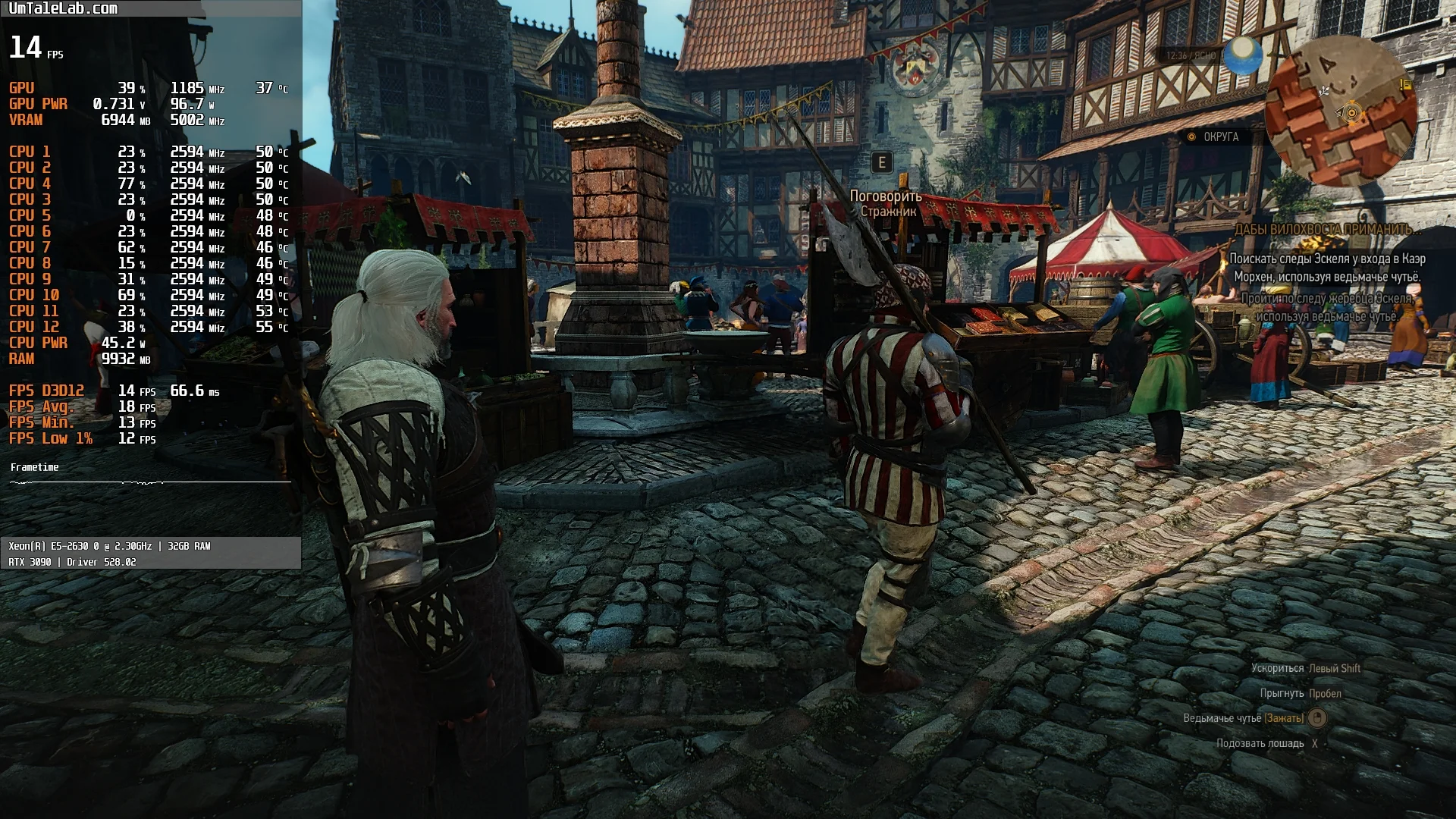
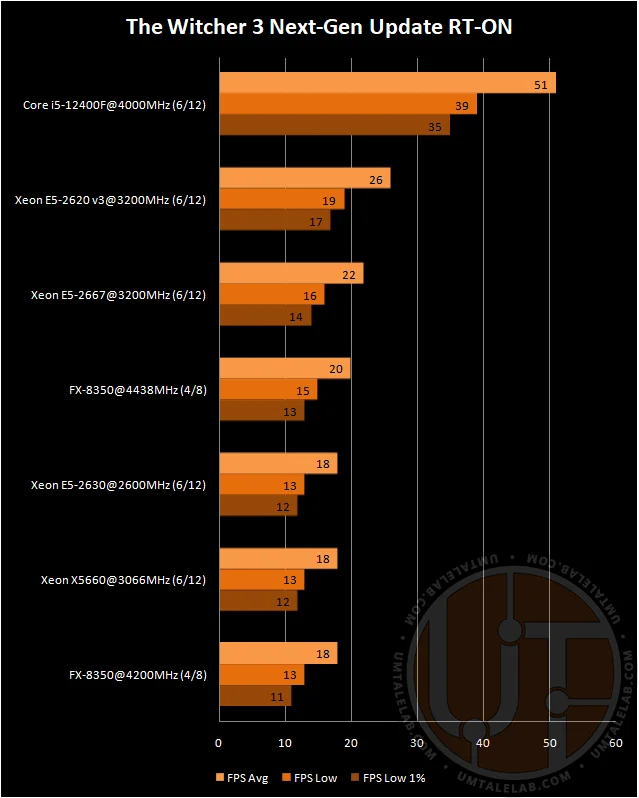
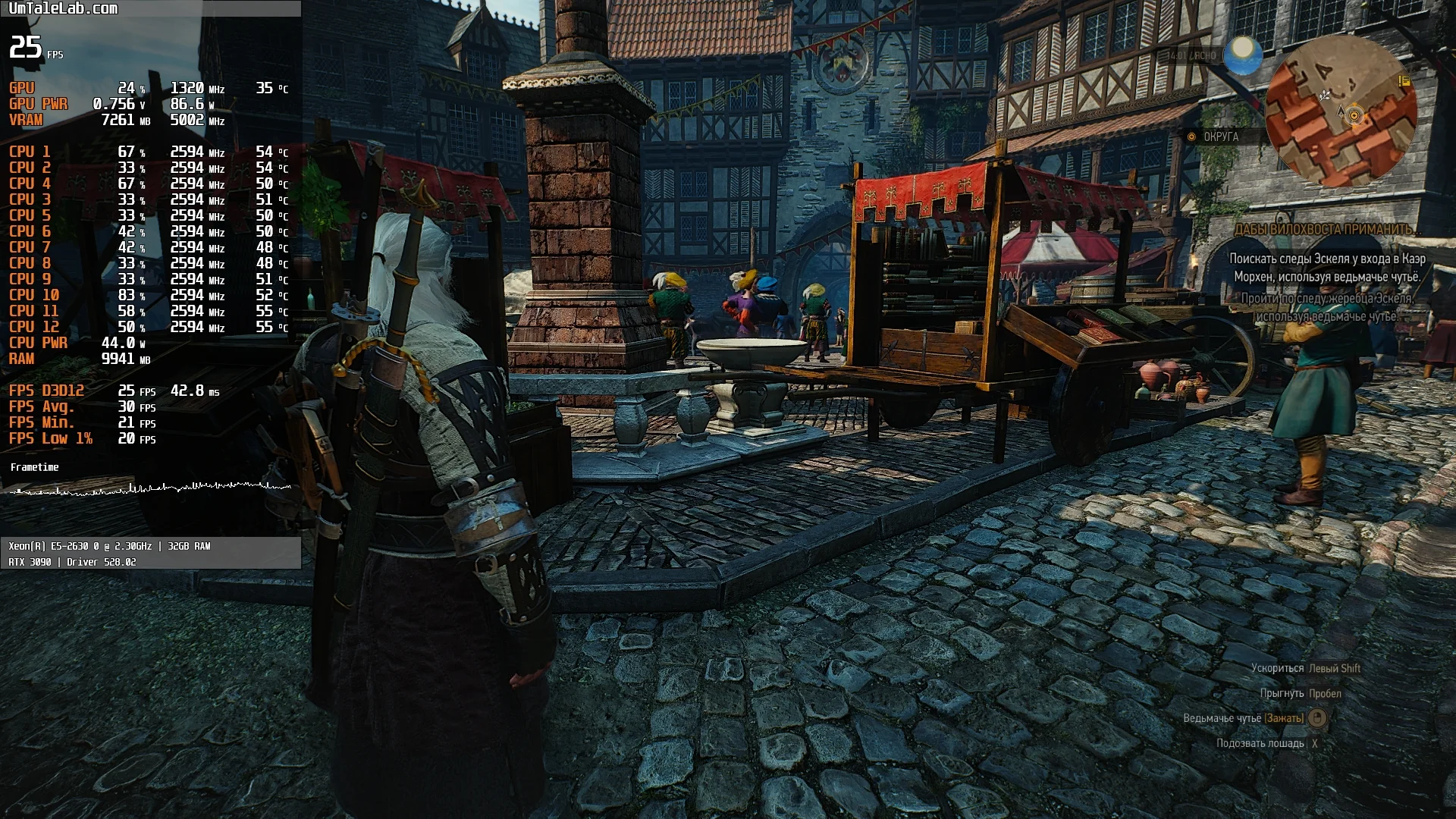
The Witcher 3 Next-Gen Update 4.01 + Hotfix (Complete Edition)
Ray Tracing – ON
 ⤢ ВІДКРИТИ
 ⤢ ВІДКРИТИ
Ray Tracing – OFF
 ⤢ ВІДКРИТИ
 ⤢ ВІДКРИТИ
Watch Dogs Legion
Ray Tracing – ON
 ⤢ ВІДКРИТИ
 ⤢ ВІДКРИТИ
Ray Tracing – OFF
 ⤢ ВІДКРИТИ
 ⤢ ВІДКРИТИ
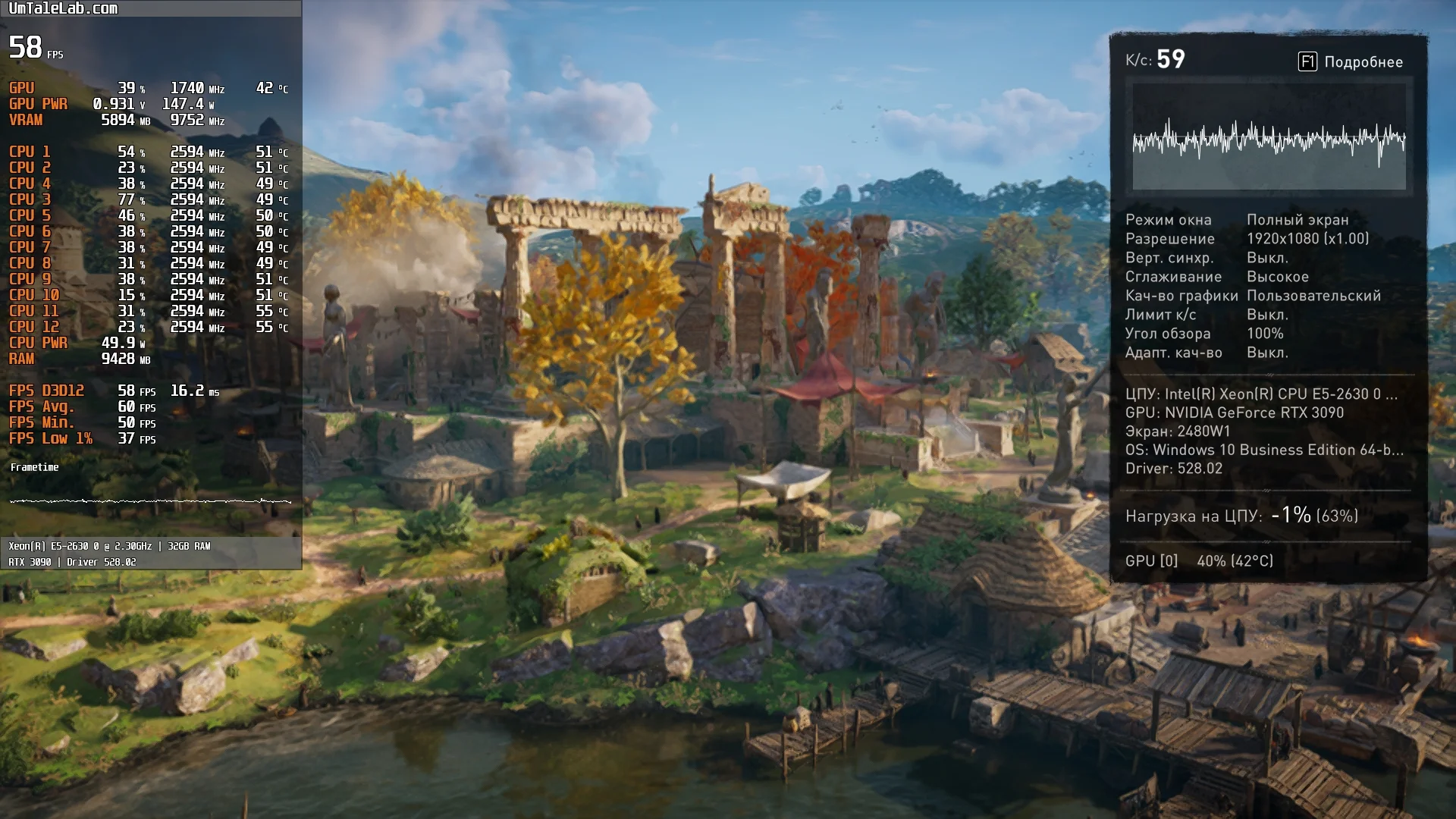
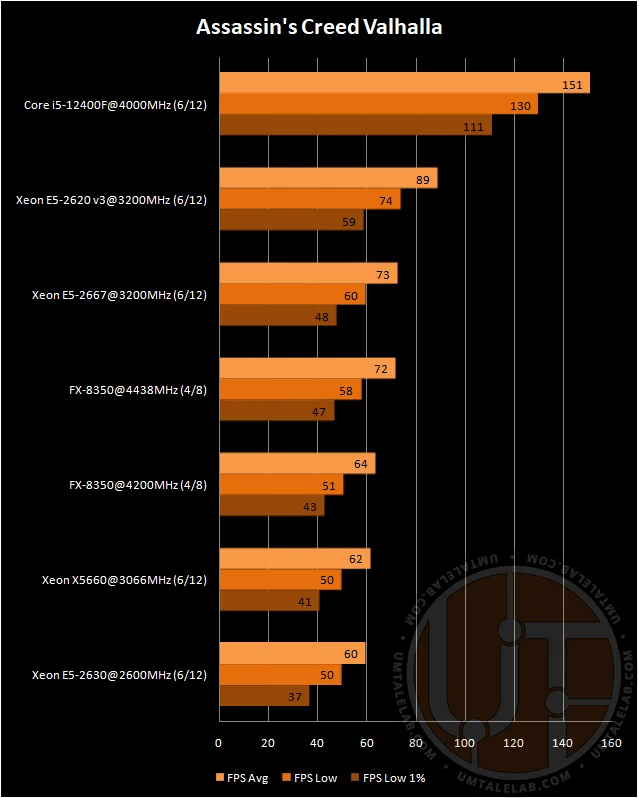
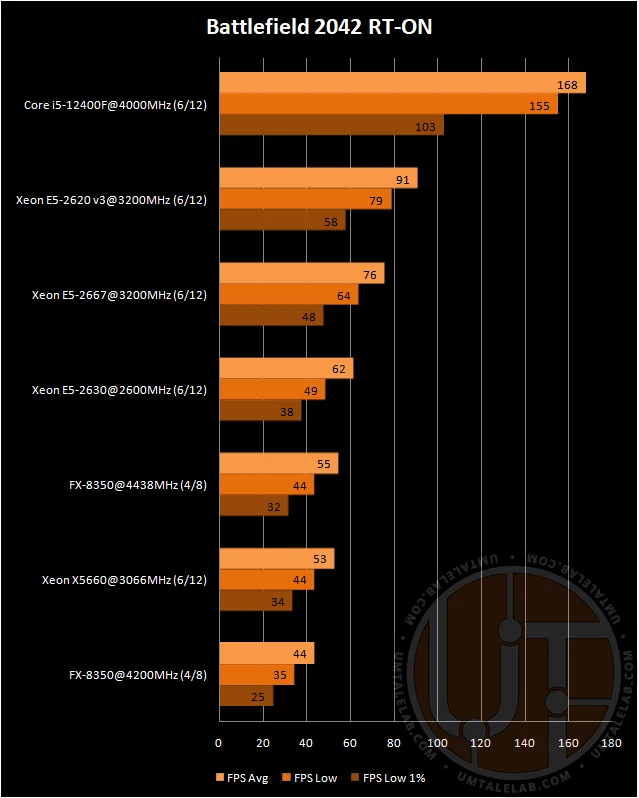
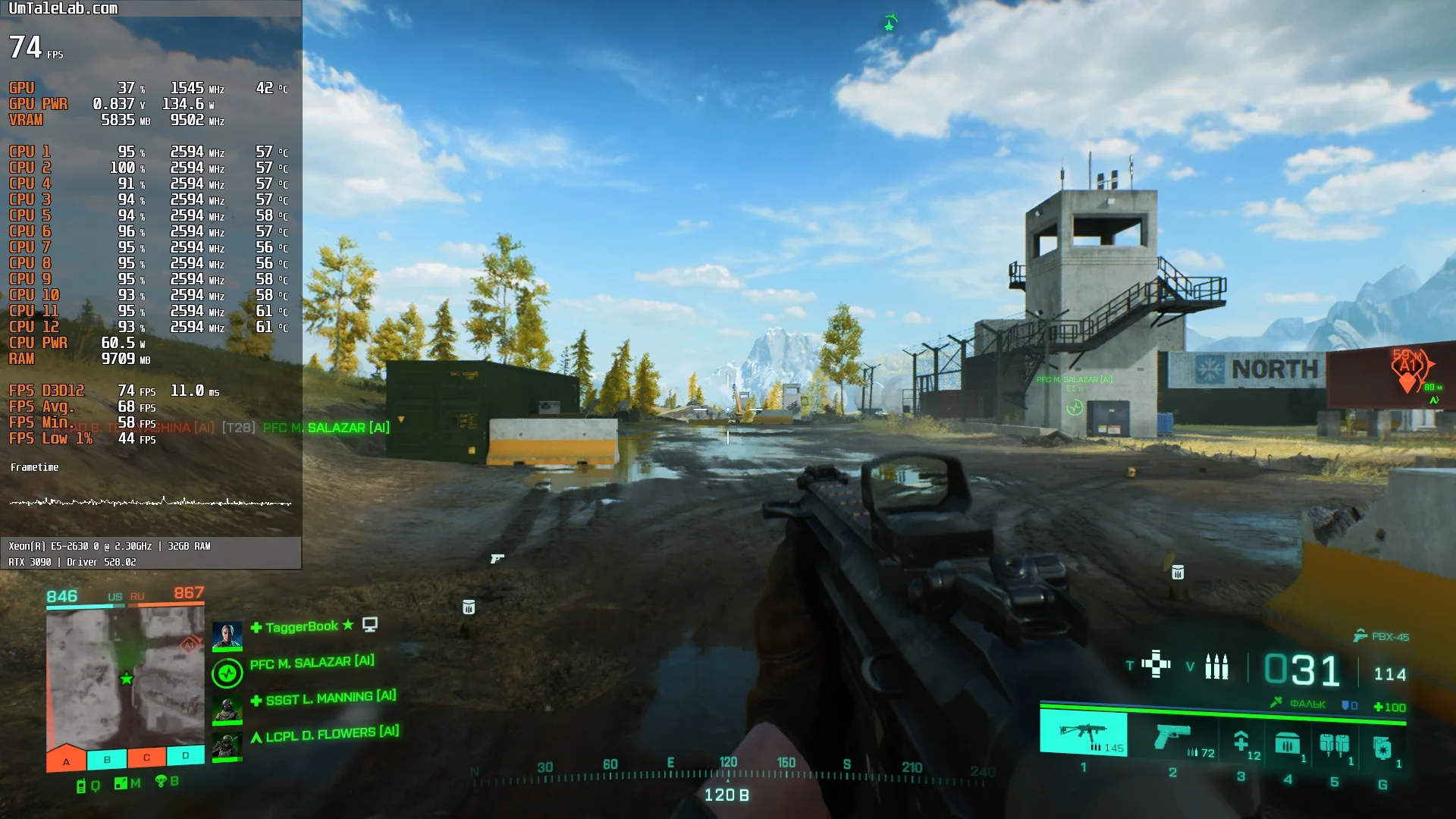
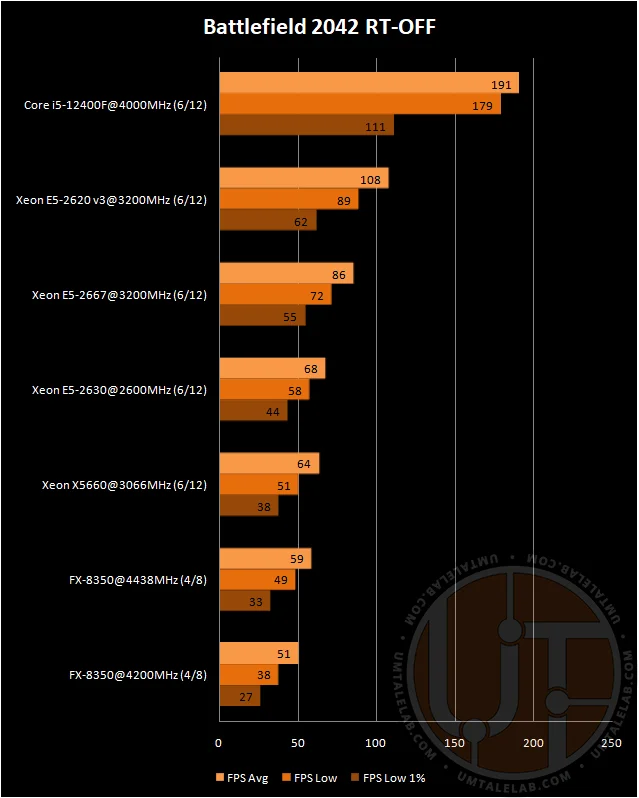
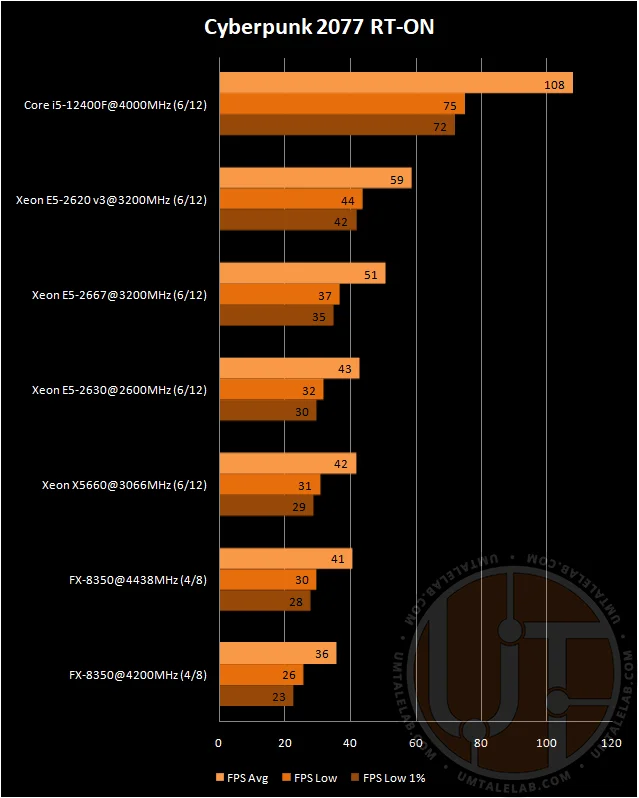
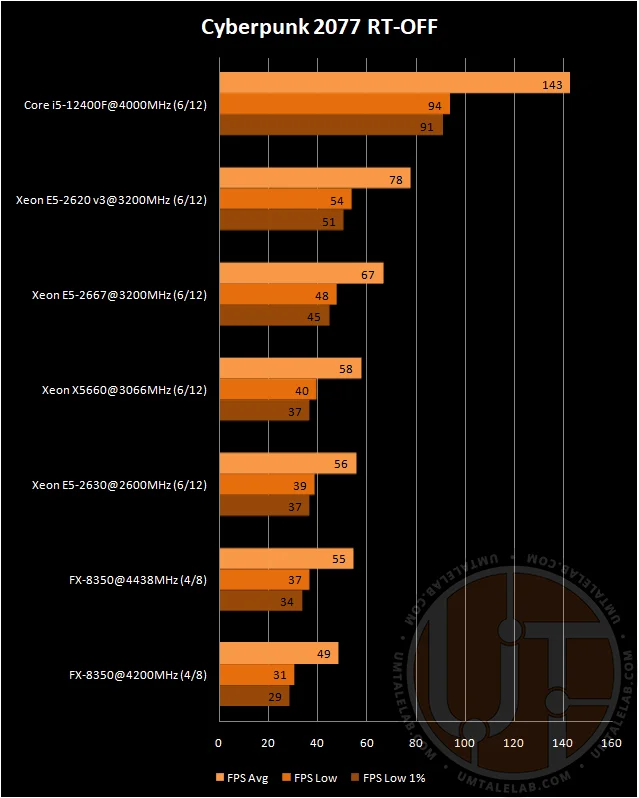
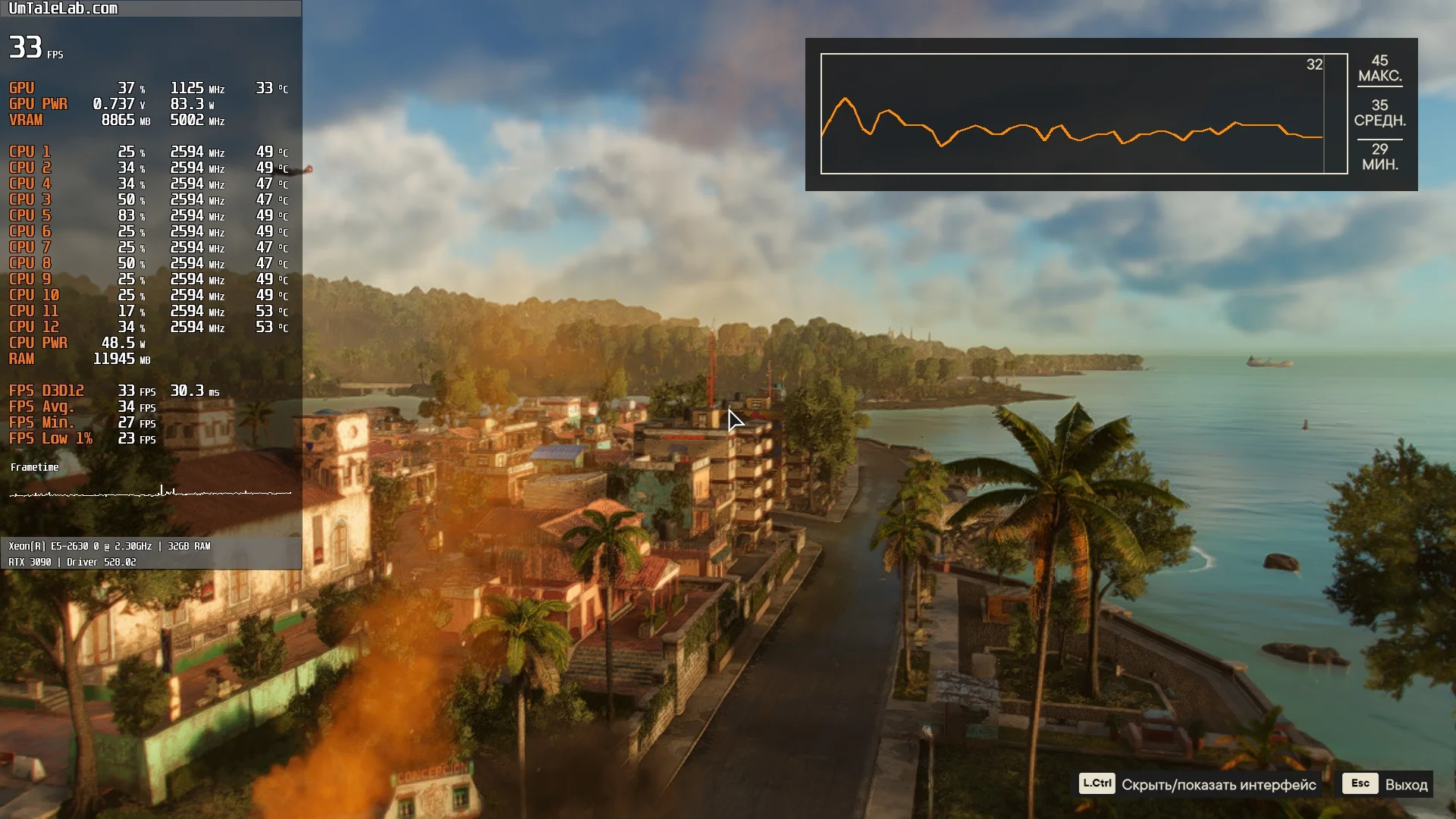
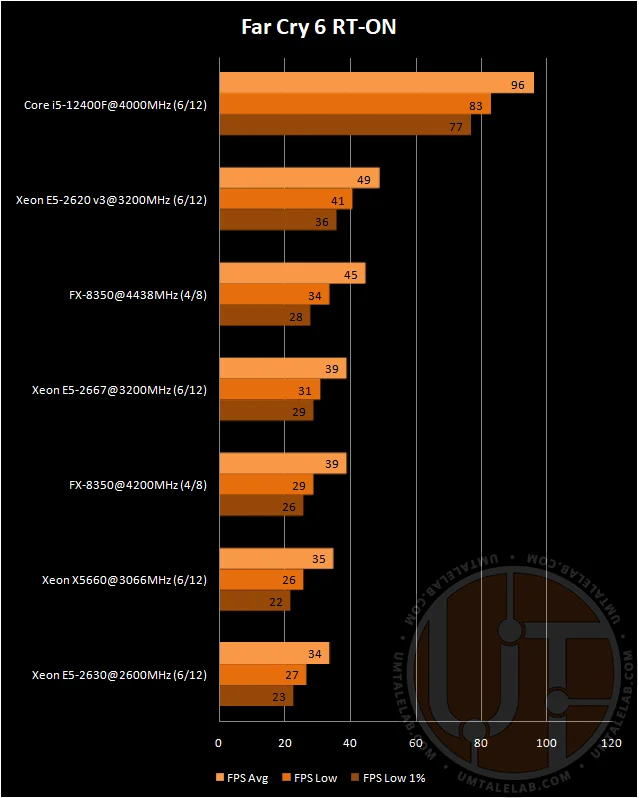
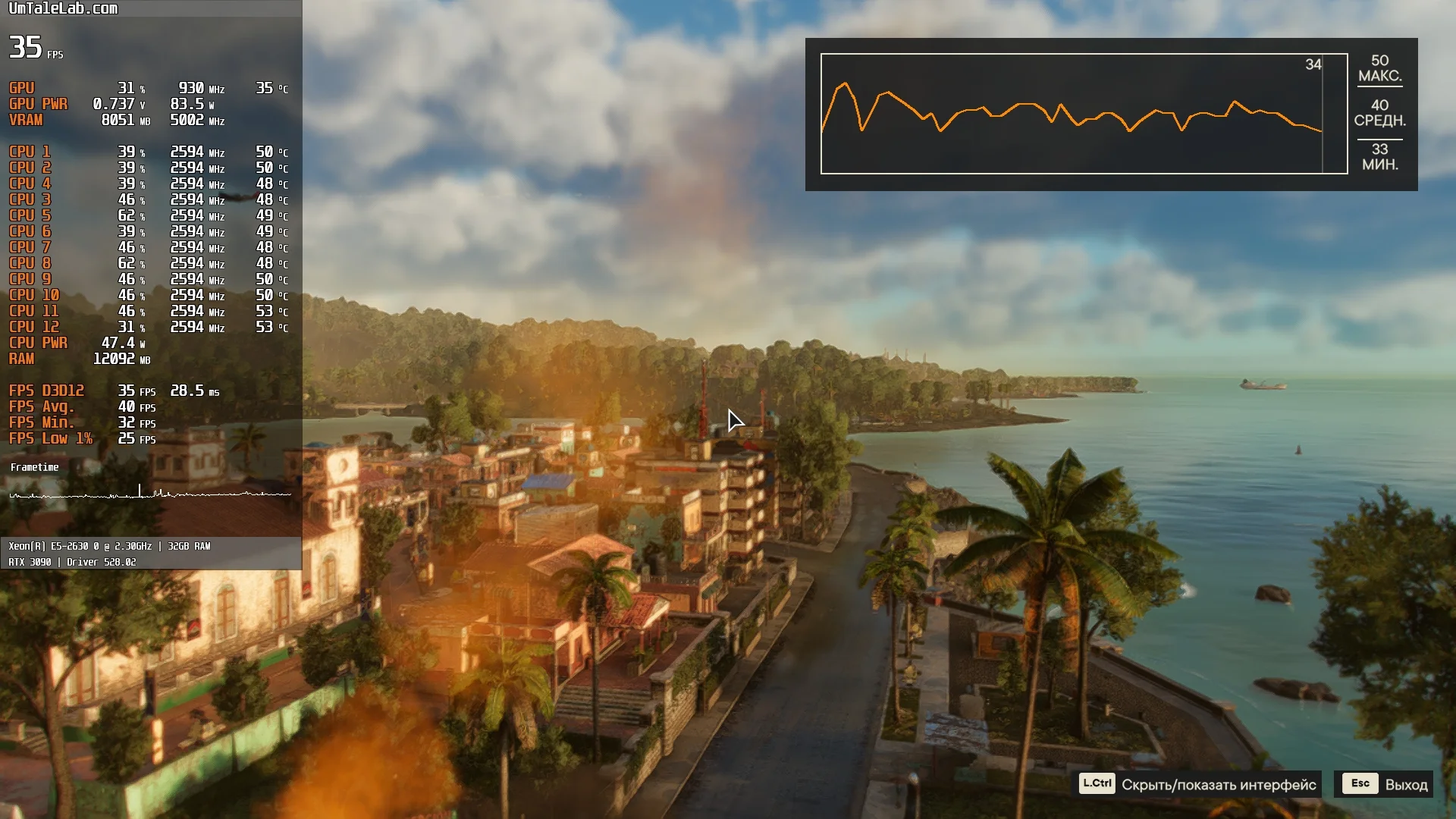
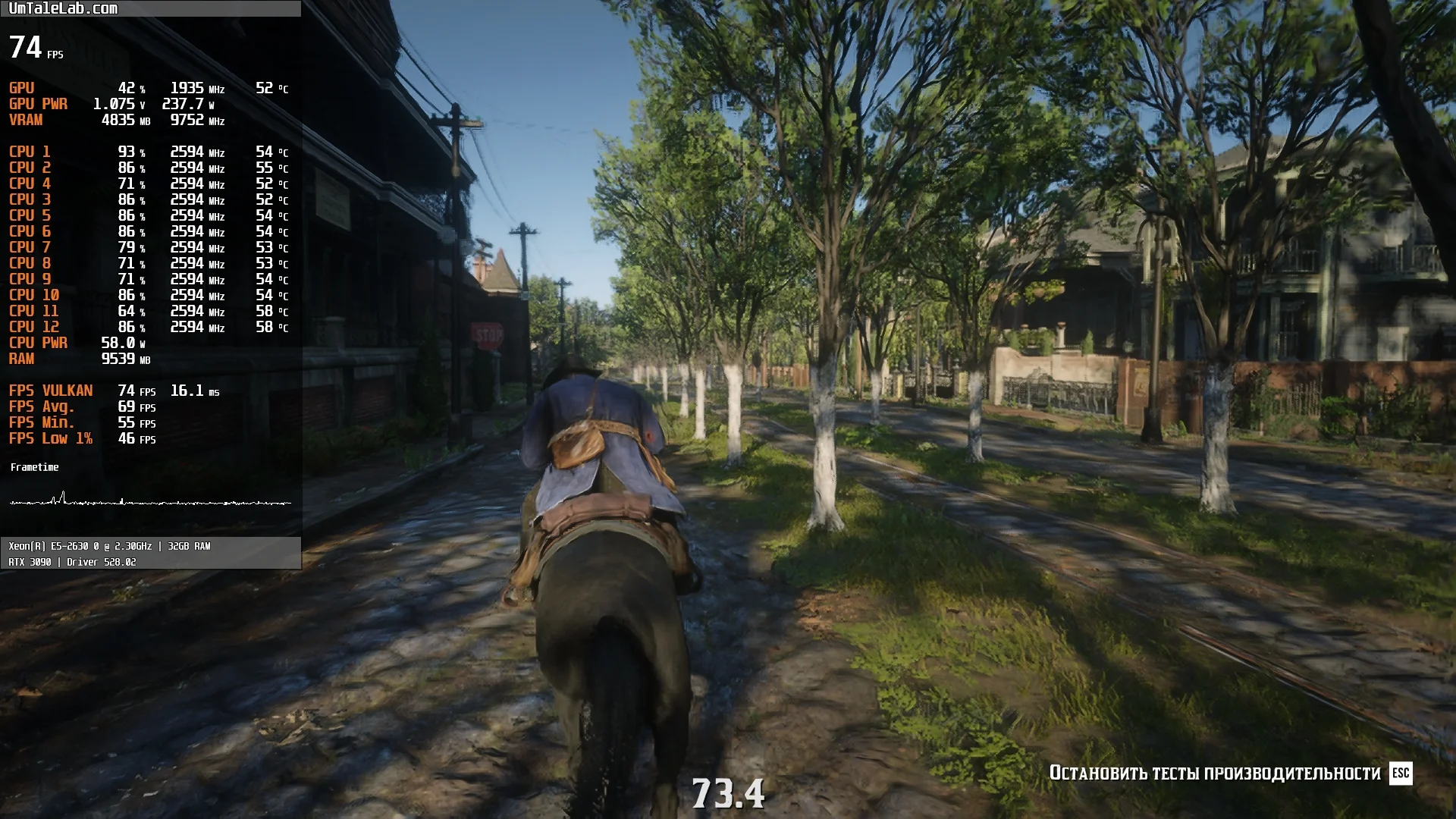
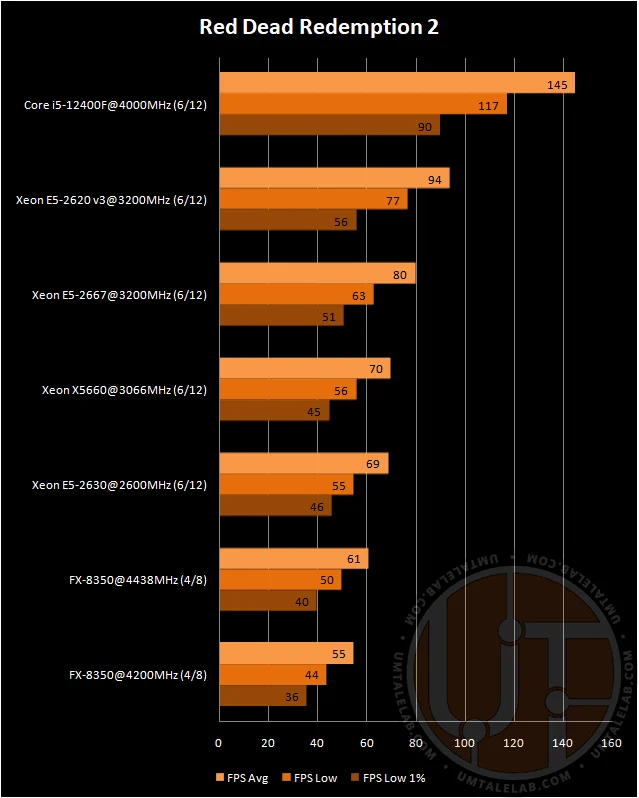
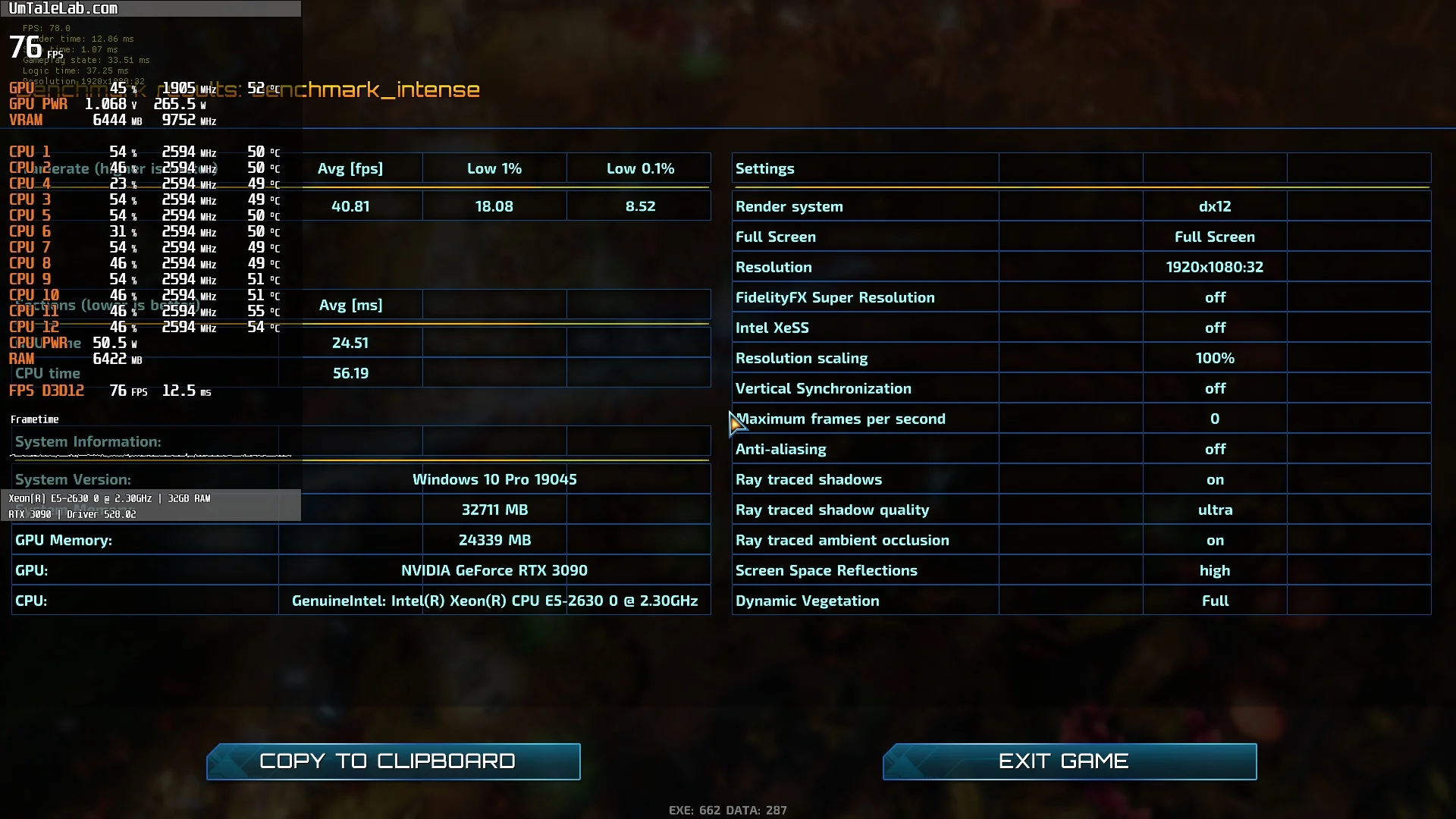
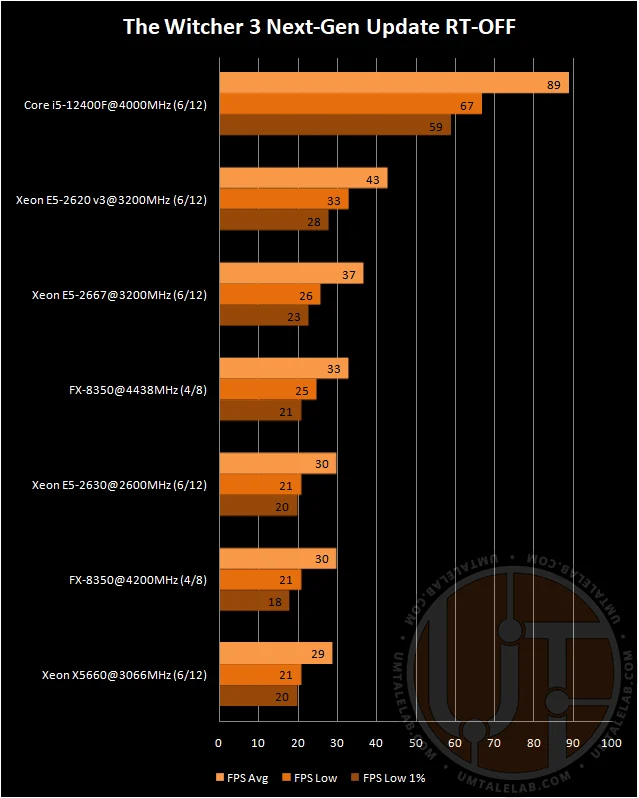
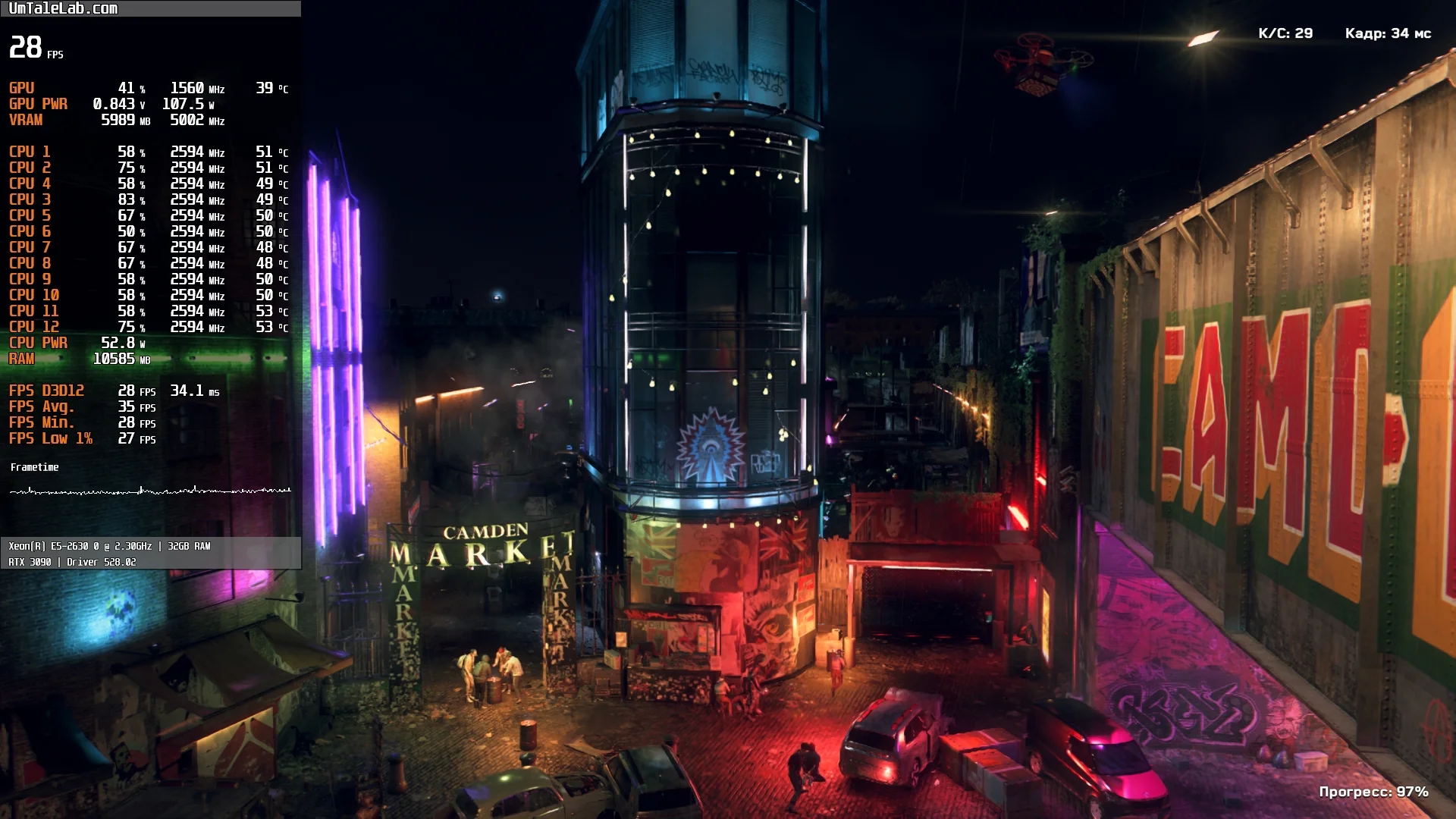
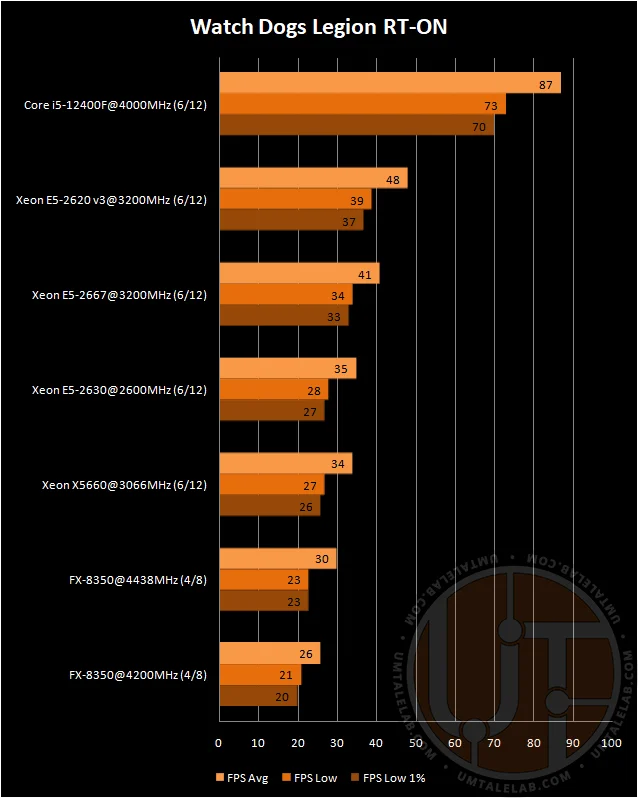
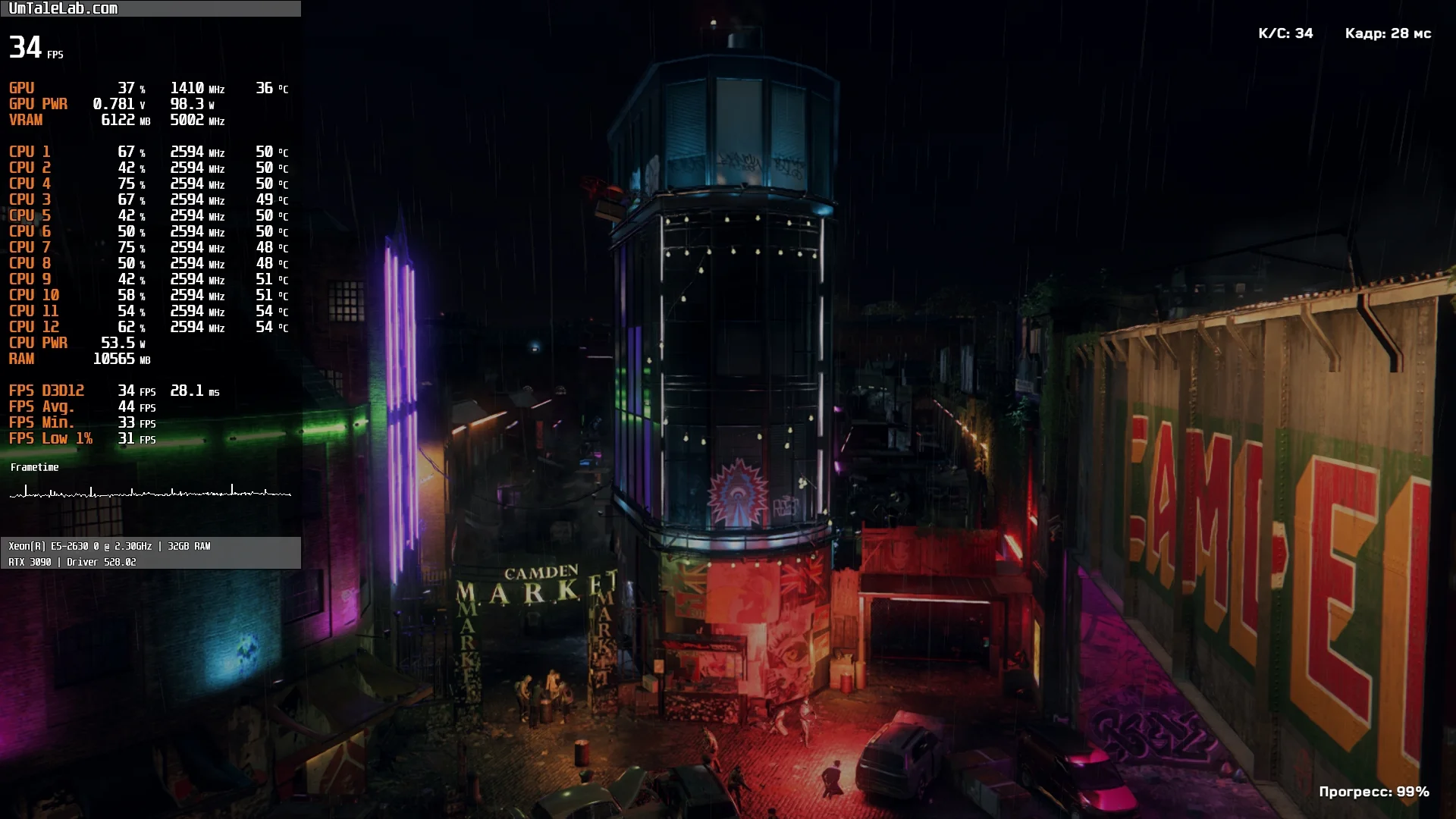
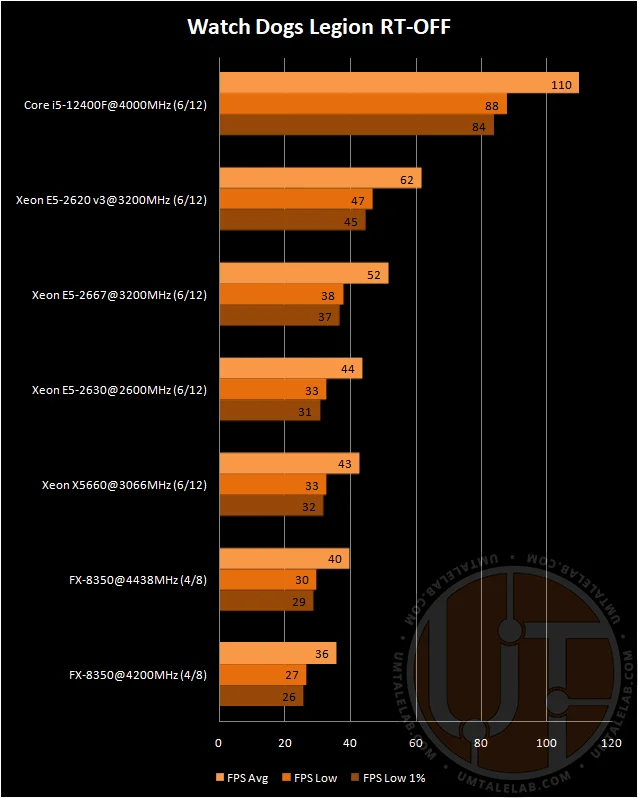
The Xeon E5-2630 doesn't fare as well in games as it does in synthetic benchmarks. While the 6-core chip delivers acceptable performance in Assassin's Creed Valhalla and makes Battlefield 2042 quite playable even with ray tracing, a severe lack of CPU power becomes apparent starting with the legendary Cyberpunk 2077. Titles like Far Cry 6, Marvel's Spider-Man Remastered, The Riftbreaker, The Witcher 3 Next-Gen Update, Watch Dogs Legion, and the PlayStation 3 emulator run extremely unstable with low FPS. However, the Xeon E5-2630 handles Red Dead Redemption 2 without any issues.
It's also worth noting that the E5-2630 can't run Marvel's Spider-Man Remastered with active ray tracing. Furthermore, until the recent patch 4.01, The Witcher 3 Next-Gen Update wouldn't even run in DirectX 12 on the aging Sandy Bridge platform.
Conclusion
2022 brought some surprises: to run most games at max graphics settings, CPUs now require instructions like FMA3 and AVX2. However, the Xeon E5-2630 is an older chip lacking these modern instruction sets, which, combined with its low clock speed, makes it a poor choice for current and future games and software.