TESTS · CPU · AMD
PUBLISHED
READING5 min
Still kicking: overclocking and testing the AMD Athlon 64 X2 3600+
A look at the overclocking and performance of the AMD Athlon 64 X2 3600+. This legendary dual-core CPU was once AMD's most affordable option. Can it still compete today?
Introduction
As I've mentioned in previous articles, games and software have drastically changed since 2005. They now leverage three or even four cores effectively, which is no surprise since that's when the first dual-core CPUs were introduced.
Many also wonder how today's single and dual-core CPUs stack up against those released between 2005 and 2007.
Which brings me to my point. Anyone well-versed in PC hardware has likely heard of the Athlon 64 X2 3600+. This truly legendary processor was AMD's most affordable dual-core solution back in 2006-2007.
Processor
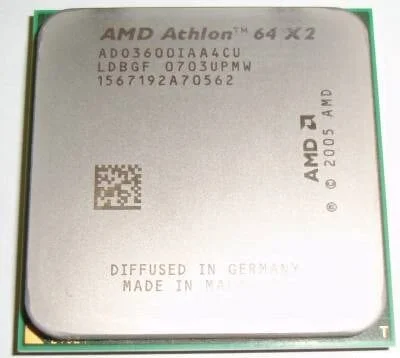
Let's take a look at the star of this article:
 ⤢ ВІДКРИТИ
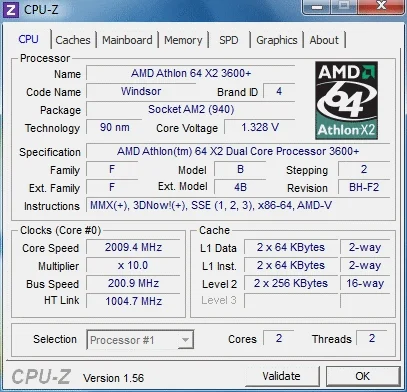
CPU-Z screenshot:
 ⤢ ВІДКРИТИ
The Athlon 64 X2 3600+ uses the 90nm Windsor core (F2 revision), featuring 256KB of L2 cache per core. Its stock clock speed is 2000 MHz, with an HT bus running at 1000 MHz. It operates at 1.300V and has a typical TDP of 45W.
Test system:
Motherboard - ASUS M2N
Motherboard - ASUS M4A785TD-V EVO
Processors - Athlon 64 X2 3600+, Sempron 140, Sempron 3400+, Athlon II X2 220
CPU cooler - Cooler Master Susurro (RR-KCT-T9E1)
RAM - PQI PC6400 (5-5-5-16)
RAM - 2 x Corsair XMS3 PC10700 (9-9-9-34)
Graphics card - ASUS GeForce 9800GT
PSU - FSP 400W
Hard drives - Seagate 160GB, Samsung SP160GB
Software:
Windows 7 x64 (7600) with all critical updates installed through January 2011.
CPU-Z 1.56
CineBench 9.5 x64
CineBench 11.0 x64
Light Work - Renderbench
3D Mark 2006 v1.2.0 (CPU test only)
3D Mark Vantage v1.0.2 (CPU test only)
Hot CPU tester PRO
NVIDIA ForceWare 260.99
wPrime v1.55
Fritz Chess Benchmark
FRAPS v3.1.0/build11052
Games and graphics settings:
GTA4:
Resolution - 1280x1024
Textures – high
Reflection resolution – high
Water quality – very high
Shadow quality – high
Filtering quality – x16
View distance – 30
Detail depth – 100
Traffic density – 100
Depth of field – on/on
Vertical synchronization – off/off
Prototype:
Resolution - 1280x1024
Textures - high
Shadows - high
Anti-aliasing - 0x
CPU overclocking:
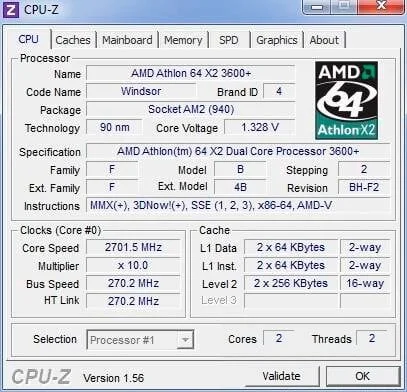
As you may have noticed, we swapped the ASUS M2V test motherboard for AM2 processors with an ASUS M2N. In theory, this change should have brought better disk subsystem performance and richer features, including higher quality audio. But in practice, the M2N also showed significant overclocking potential. On the ASUS M2V, the Athlon 64 X2 3600+ only hit 2500 MHz at 1.3V; with the ASUS M2N, this sample stably ran at up to 2700 MHz with 1.320V!
 ⤢ ВІДКРИТИ
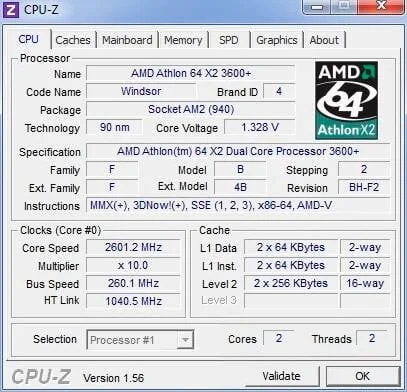
However, the test motherboard couldn't stably handle RAM frequencies above 900 MHz. Lowering the RAM divider significantly dropped performance, so for testing, we decided to reduce the CPU frequency to 2600 MHz:
 ⤢ ВІДКРИТИ
Tests:
 ⤢ ВІДКРИТИ
 ⤢ ВІДКРИТИ
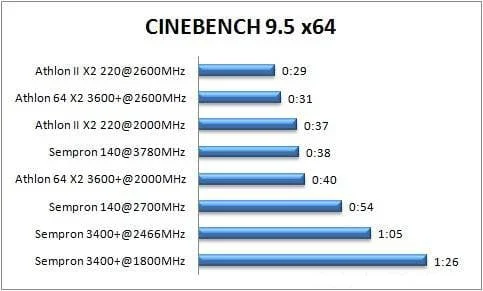
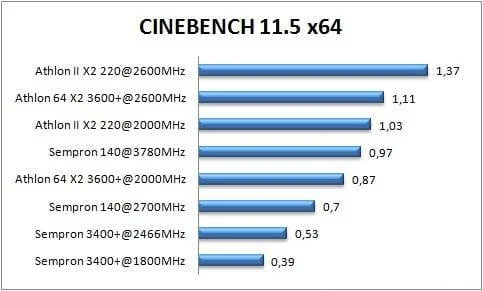
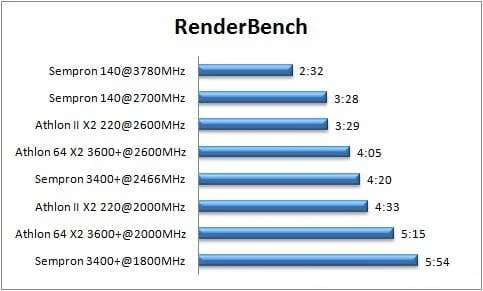
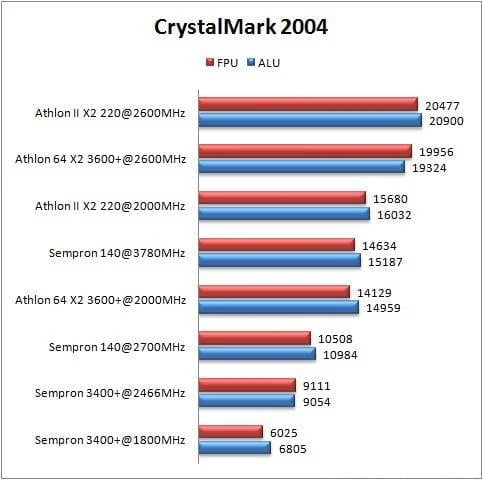
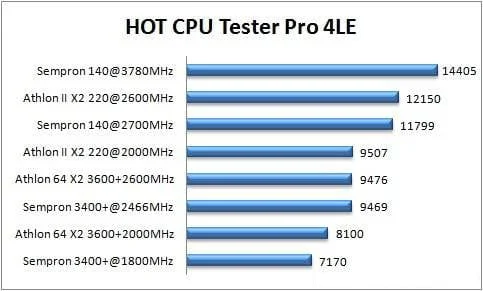
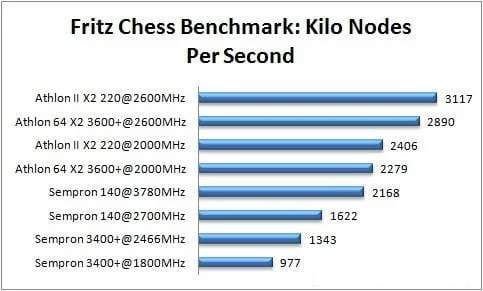
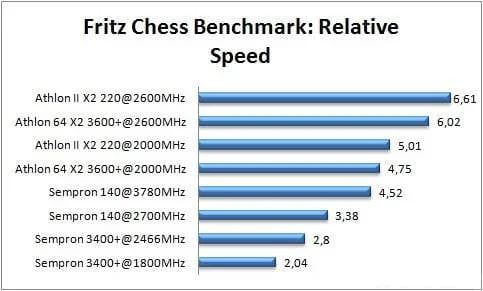
First off, the overclocked single-core Sempron 140, running at 3780 MHz, posted impressive scores. It even managed to beat our article's protagonist running at stock speeds. Only after overclocking did the Athlon 64 X2 3600+ secure a win and outperform its rival, though it still couldn't quite match its bigger sibling, the Athlon II X2, at an equivalent clock speed.
 ⤢ ВІДКРИТИ
As I've mentioned in previous articles, this benchmark is single-threaded. We weren't expecting any miracles from the K8 architecture here; K10.5 significantly outperforms its older sibling.
 ⤢ ВІДКРИТИ
 ⤢ ВІДКРИТИ
 ⤢ ВІДКРИТИ
 ⤢ ВІДКРИТИ
 ⤢ ВІДКРИТИ
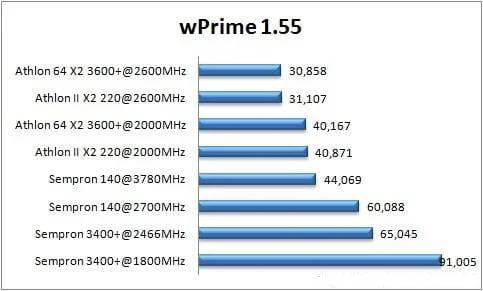
Everything seemed to be going as expected; the Athlon 64 X2 3600+ consistently trailed the Athlon II X2 220 by no more than 10% — until we hit wPrime. When I ran this benchmark on the Athlon 64 X2 3600+, I couldn't believe it: at an identical 2 GHz clock speed, the Athlon II X2 220 actually lost. By a fraction of a second, but it lost. I double-checked everything and rebooted the system, but nothing changed. It seems high-frequency DDR3 memory's negative latencies are to blame here.
 ⤢ ВІДКРИТИ
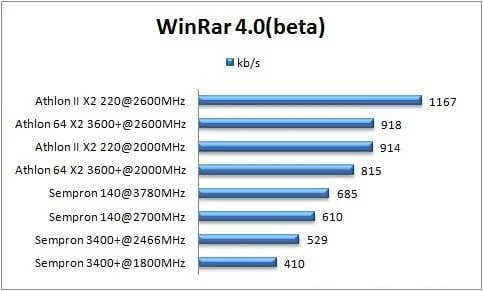
While high-latency DDR3 might hinder wPrime results, it enables the Athlon II X2 220 to significantly outpace the 'old-timer' in WinRAR. And the competition against the Sempron 140 was a clear win for the Athlon 64 X2 3600+; the Sempron couldn't catch up, even when overclocked to 3780 MHz.
 ⤢ ВІДКРИТИ
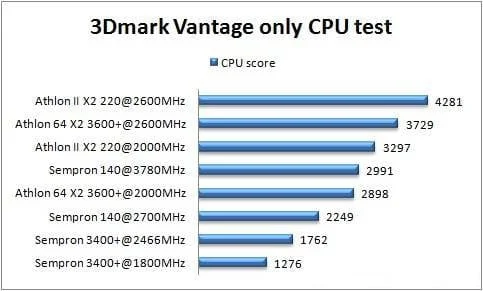
3DMark Vantage prioritized clock speed over an additional core, placing the overclocked Sempron 140 in fourth. The Athlon 64 X2 3600+'s overclock helped it beat the Athlon II X2 running at 2 GHz, but our 'old-timer' couldn't quite match the Athlon II when it was also overclocked to 2600 MHz.
 ⤢ ВІДКРИТИ
 ⤢ ВІДКРИТИ
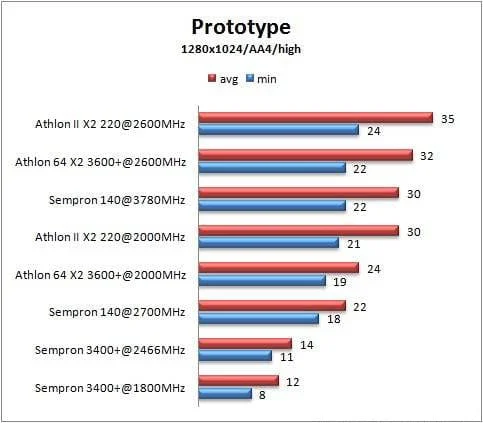
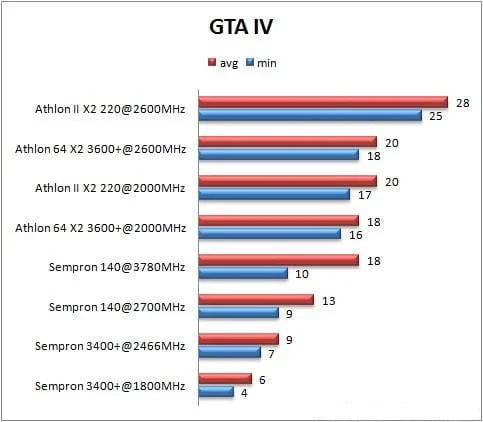
In Prototype, as expected, there were no surprises. GTA 4, however, told a different story, with the Athlon X2 falling behind the Athlon II by 7 FPS in minimum framerates. That's a significant stumble. Overall, overclocking offers virtually no performance benefits for the Athlon 64 X2 3600+ in this title.
Is it worth upgrading from the Athlon 64 X2 3600+?
This CPU once introduced the world of dual-core processing to many everyday users, and it still tries its best not to disappoint its owners. Sure, you could grit your teeth and drop the settings in GTA 4 to get playable framerates, but is it worth further disfiguring an already visually dated game? Meanwhile, the Sempron 180 — AMD's new, cheapest dual-core chip — is hitting shelves. So, do you buy it, or do you hold out for 'Bulldozer'?