TESTS · CPU · AMD
PUBLISHED
READING5 min
Phenom II-level performance at a Pentium Dual Core price: Athlon II X4 641 review and benchmarks
The Athlon II X4 641 delivers Phenom II performance at a Pentium Dual Core price. It outperformed the Pentium G630 and even competed with the Core i5 2300.
A brief look at FM1
It's quite strange how things turned out, as no one expected an AMD CPU socket to last just about a year. Consider this: AM2 survived for over three years, AM2+ extended that lifespan for a similar duration. AM3 is still relevant even now! Not to mention AM3+, which supports not only new AMD FX processors but all AM3 chips as well. This implies that AM3 is, in fact, still alive and well.
So what about FM1? After just one year, this processor socket gave way to the more advanced FM2, which featured a new processor architecture.
Essentially, we're looking at a K8 architecture 'on steroids.' This small section is for those less familiar with AMD's processor history. After all, the K8 — which served as the foundation for AMD's first and, at the time, only 64-bit processor in the world — is also used in the chip we're reviewing today.
For years, K8 was refined and improved, ultimately culminating in its pinnacle of development. AMD won't be developing or releasing processors based on this architecture in the future. Although, it seems likely they'll borrow many technologies for upcoming designs.
The processor
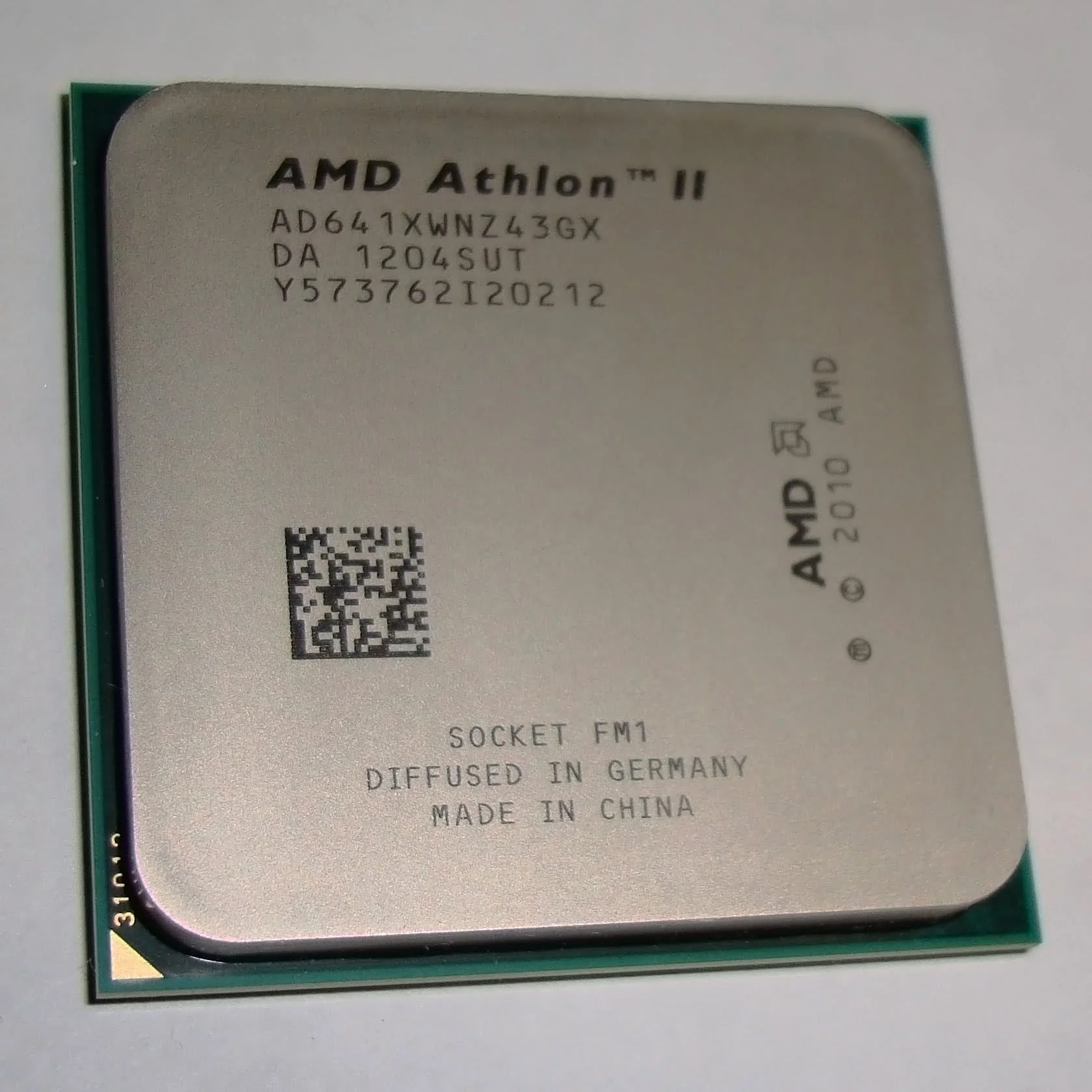
Now let's turn our attention to the processor itself and take a look at its photo:
 ⤢ ВІДКРИТИ
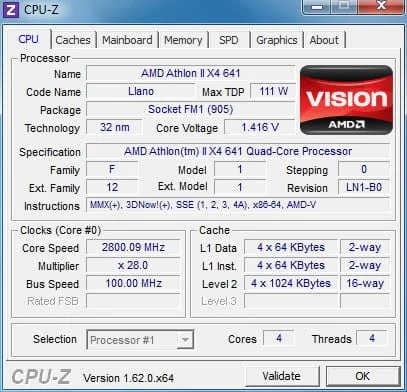
And a screenshot from the CPU-Z utility:
 ⤢ ВІДКРИТИ
The Athlon II X4 641 processor is built on the K10.5 architecture. The 32nm semiconductor die used in this CPU is codenamed Llano. It features 1024KB of L2 cache per core, but no on-die L3 cache. This processor operates at 2800MHz, has a 100-watt thermal design power (TDP), and a nominal voltage of 1.4V. This processor, like all Athlon IIs on the FM1 platform, ships with the integrated graphics core disabled! You won't be able to unlock it! If you're looking for an APU, you should consider AMD A8/A6/A4 series processors or Intel Core i3/i5/i7.
Test bench and software:
LGA1155 motherboard - ASUS P8P61 M-LX2
LGA775 motherboard - MSI P35 Neo Combo
AM3 motherboard - ASUS M4A785TD-V EVO
FM1 motherboard - Biostar A55MLV
Processors - Core 2 Duo E8400, Core 2 Quad Q6600, Core i5 2300, Pentium G630, Athlon II X4 620, Athlon II X4 641
LGA1155 CPU cooler - Cooler Master Hyper 212 Plus
LGA775 CPU cooler - Cooler Master Hyper 212 Plus
AM3 CPU cooler - Cooler Master Hyper 212 Plus
RAM - 2x4GB DDR3 Corsair PC12800 (9-9-9-34)
RAM - 2x2GB DDR2 Corsair PC6400 (5-5-5-16)
Graphics card - Sapphire Radeon HD6950 (800/5000MHz)
PSU - Chieftec 600W GPS-600-A8
Hard drives - Samsung SP320GB
Software:
Windows 7 x64 SP1
CPU-Z 1.62
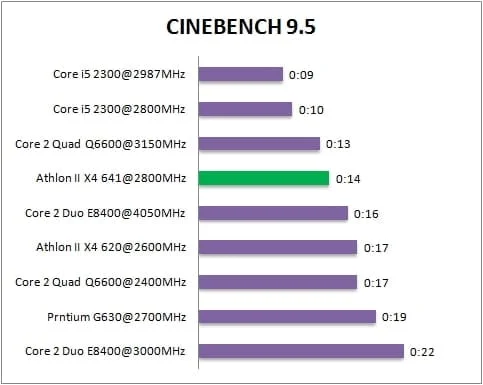
CineBench 9.5 x64
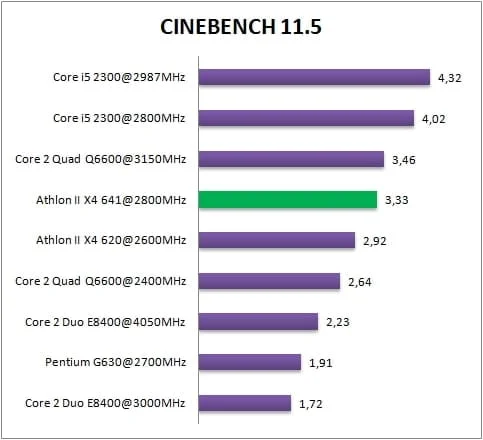
CineBench 11.5 x64
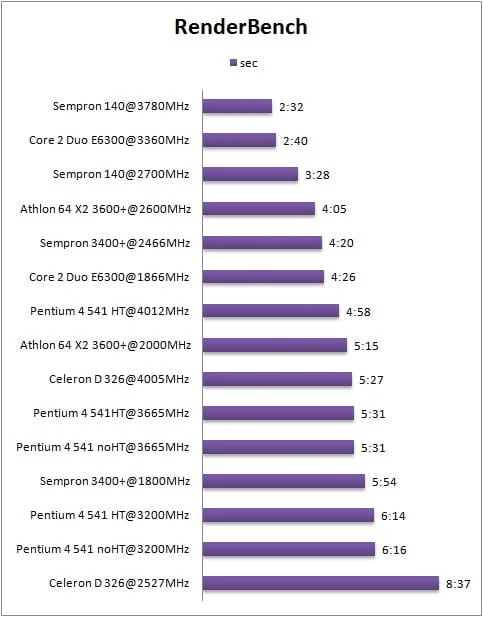
Light Work - Renderbench
3D Mark 2006 v1.2.0 (CPU test only)
3D Mark Vantage v1.1.1 (CPU test only)
Hot CPU tester PRO
AMD Catalyst 13.3
wPrime v1.55
Fritz Chess Benchmark
SuperPi 1.4
FRAPS v3.1.0
In-game graphics settings:
GTA IV:
Resolution - 1280x1024
Textures – high
Reflection quality – high
Water quality – very high
Shadow quality – high
Filtering quality – x16
View distance – 100
Detail distance – 100
Vehicle density – 100
Depth of field – on/on
Vertical sync – off/off
Prototype:
Resolution - 1280x1024
Textures - high
Shadows - high
Anti-aliasing - 0x
Testing had to be conducted without overclocking, as the test bench motherboard simply lacked that option. We also decided to select opponents based on their cost, considering both new and used prices. The Core i3 2300 was included purely as an aspirational target for our 'contenders.' The primary rival, of course, based on price, is the Pentium G630; it's even slightly more expensive than the Athlon II X4 641. Although, in my city, the prices for these processors are identical.
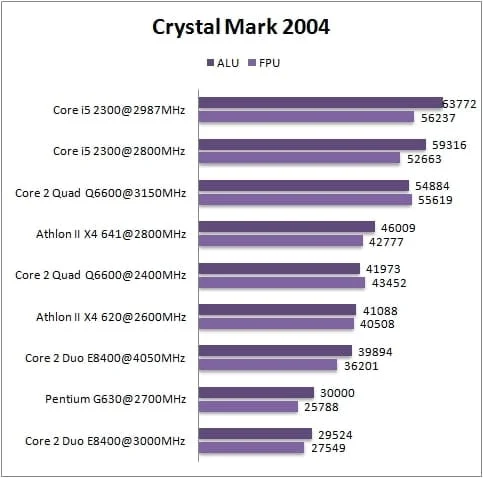
That seems to cover everything I wanted to say. All benchmarks will be presented without commentary, as it's simply unnecessary here. Let's move on to the conclusion of this review.
Rendering
 ⤢ ВІДКРИТИ
 ⤢ ВІДКРИТИ
 ⤢ ВІДКРИТИ
Overall performance
 ⤢ ВІДКРИТИ
Computation
 ⤢ ВІДКРИТИ
 ⤢ ВІДКРИТИ
Archiving
 ⤢ ВІДКРИТИ
Gaming: Synthetic benchmarks
 ⤢ ВІДКРИТИ
 ⤢ ВІДКРИТИ
Gaming
 ⤢ ВІДКРИТИ
 ⤢ ВІДКРИТИ
Conclusion
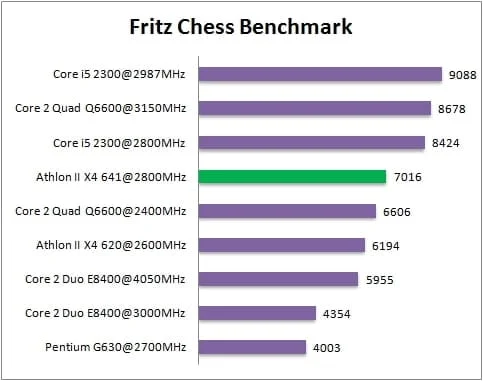
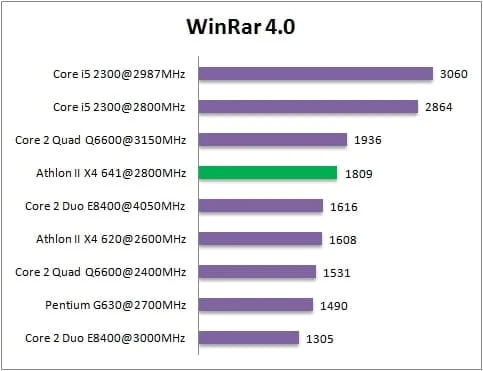
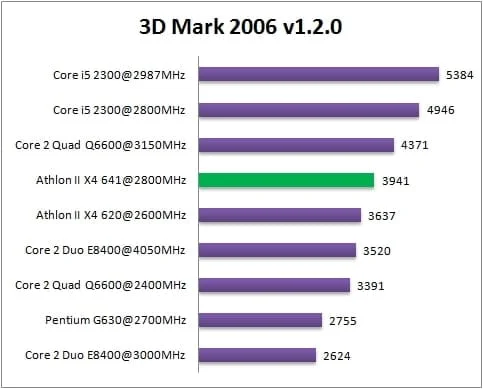
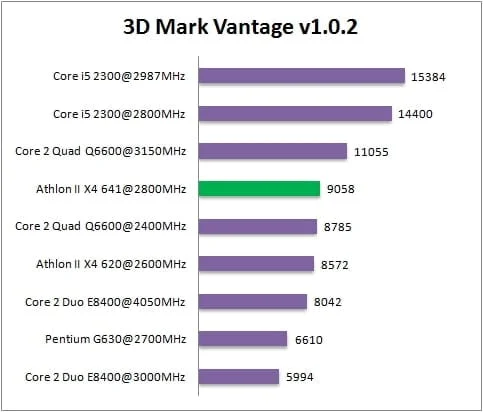
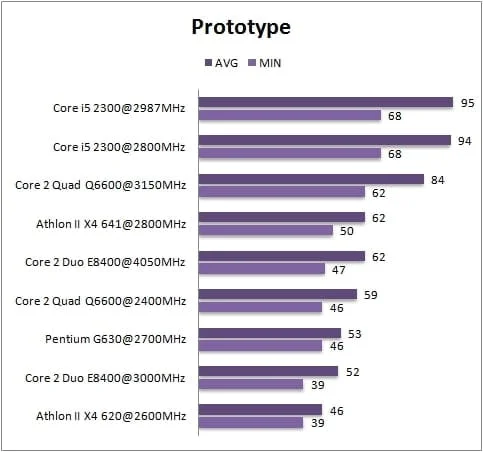
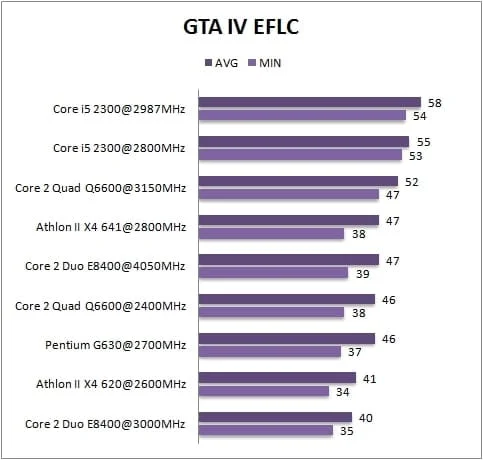
The Athlon II X4 641 managed to outperform its direct competitor, the Pentium G630, in all benchmarks. What's more, it even managed to compete with the pricier Core i5 2300 in some disciplines! While it didn't outright beat it anywhere, considering the latter's cost of ~$180 versus ~$70 for our review subject, that's a tremendous success!
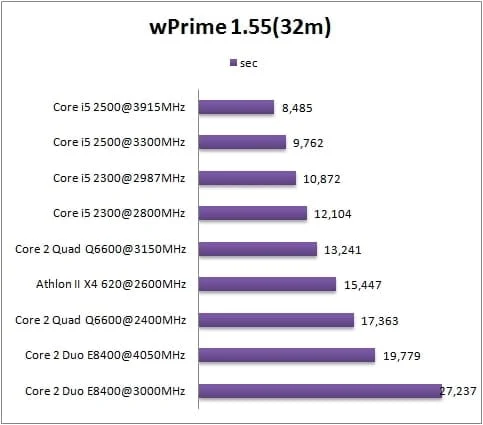
A quick note on other competitors: the Core 2 Quad Q6600 once again confirmed its relevance, while the Core 2 Duo E8400 proved its inadequacy. Nowadays, two cores simply can't deliver much performance.
The Athlon II X4 641 left an overwhelmingly positive impression. Even the fact that the FM1 platform is essentially dead doesn't detract from that.
The 'six-forty-one' allows you to build an inexpensive yet quite powerful system. This is especially true for users who upgrade their components every 3-5 years and don't typically swap out a CPU without also changing the motherboard.
For this price, it's an excellent processor, and motherboards for it are significantly cheaper than those for FM2.