TESTS · CPU · INTEL
PUBLISHED
READING16 min
How the 10-core Intel Xeon E5-2660 v3 handles modern games
We put the 10-core Intel Xeon E5-2660 v3 to the test. Can this old server chip still compete in today's games? We dive into its performance and the real-world impact of Hyper-Threading.
Over the past few months, the 20-thread Xeon E5-2660 v3 processor has gained significant popularity among budget-conscious gamers. It's cheap, boasts a rather high Turbo Boost frequency, and comes with a substantial amount of L3 cache—all for a mere $23.
Here, we'll investigate if this audacious budget newcomer can provide serious competition to cheaper, more current chips like the E5-2620 v3 and E5-2630 v3.
Processor
What we have here is a 10-core, 20-thread processor based on the relatively current Intel Haswell-EP architecture, codenamed Xeon E5-2660 v3. Let's take a look at the chip itself:
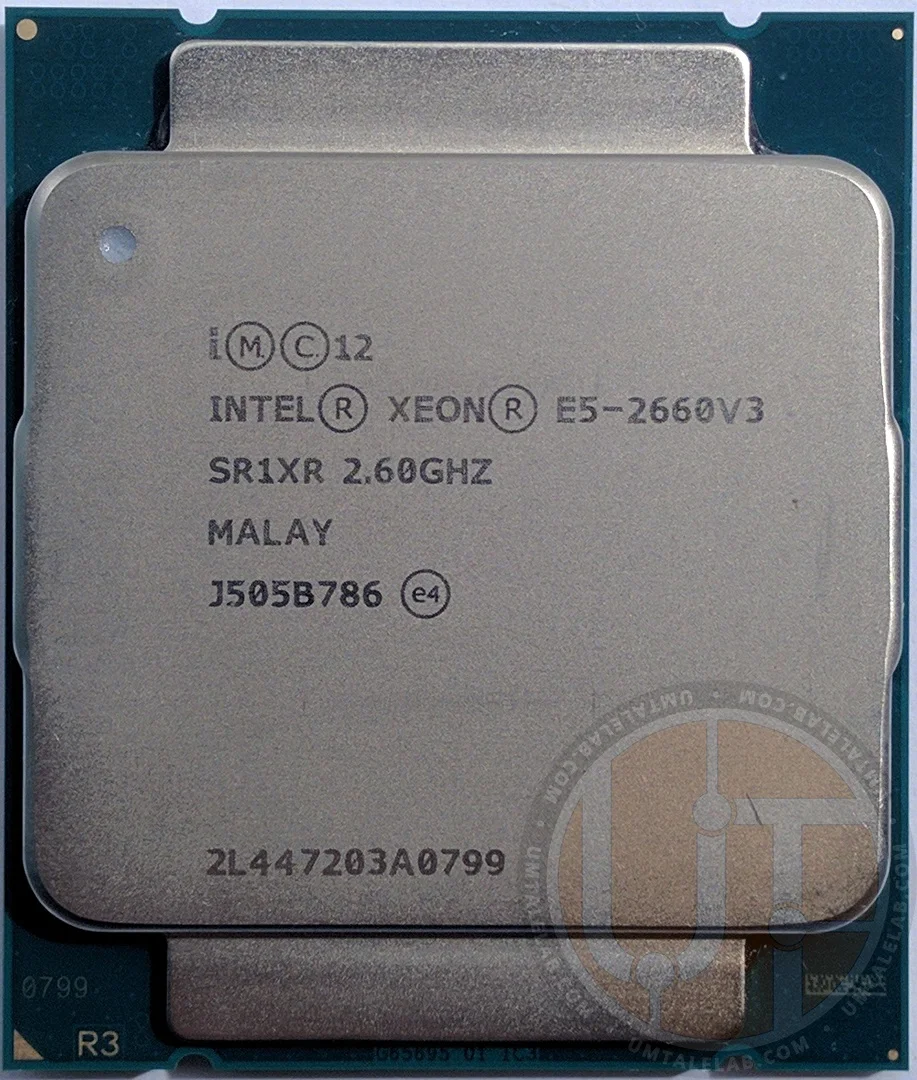
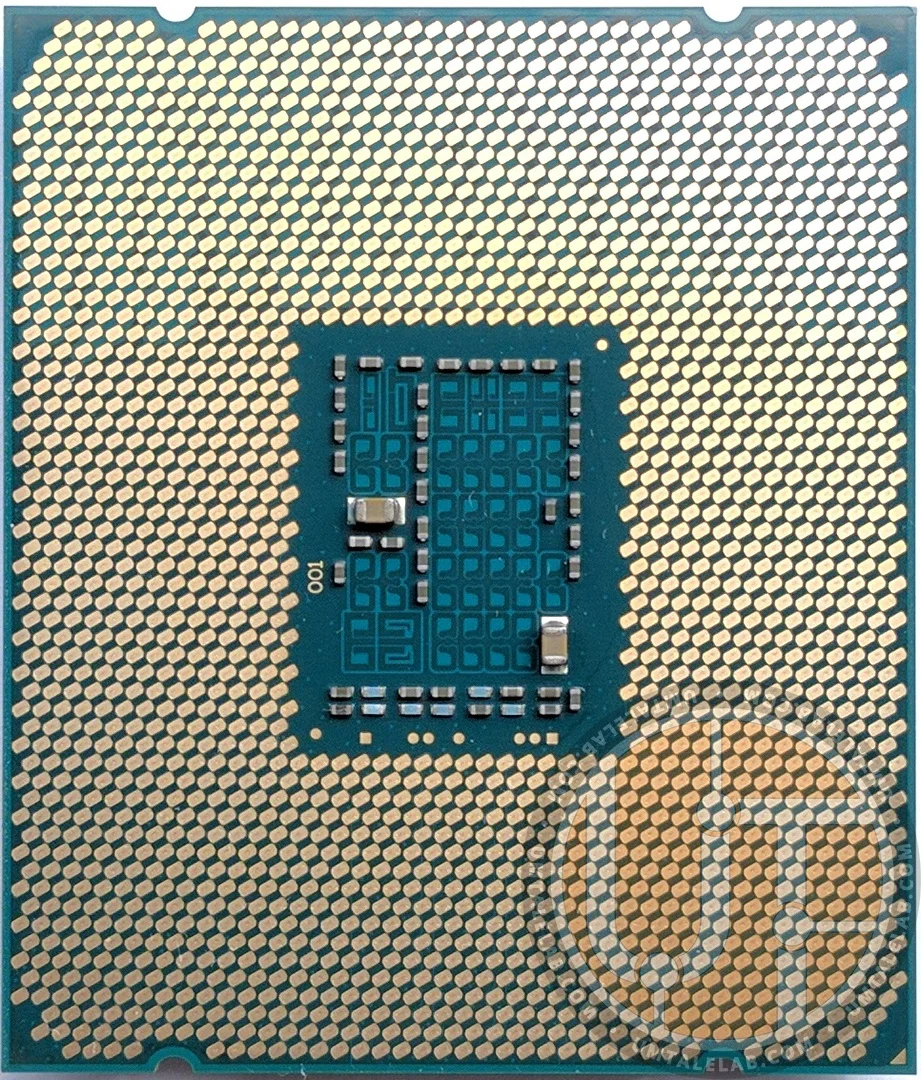
Our sample bears the SR1XR marking; the chip was manufactured in Malaysia. Its nominal frequency is a respectable 2600 MHz, and the TDP is set at 105W. In general, virtually any cooler with three or four heat pipes should be able to handle a processor like this.
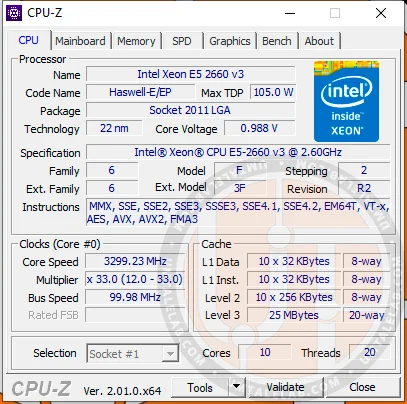
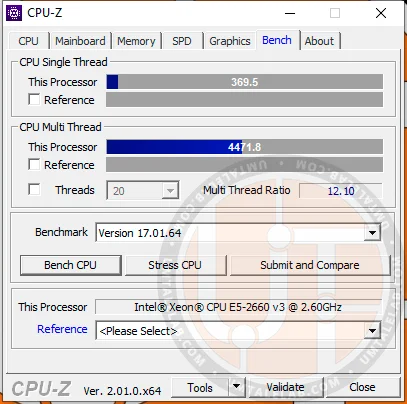
The E5-2660 v3 processor is based on a 22nm, 10-core, 20-thread Haswell-EP R2 die variation. This chip is designed for LGA 2011 v3 motherboards. Its nominal frequency is 2600 MHz, but with Turbo Boost 2.0 technology, it can increase significantly: up to 3300 MHz for a single core and 2900 MHz for all 10 cores/20 threads. But that's easily fixable.
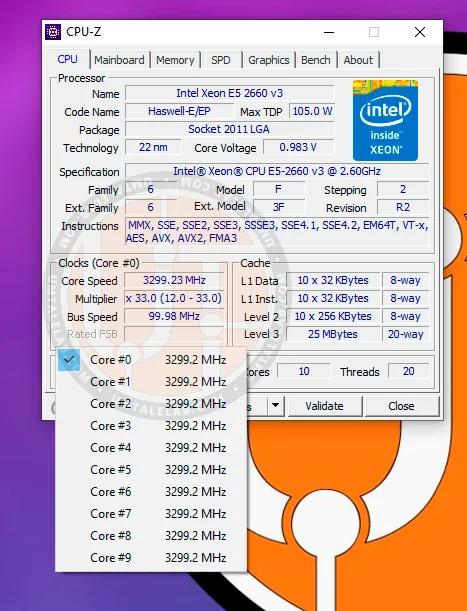
Currently, there's an endless number of BIOS modifications available for LGA 2011 v3 motherboards that allow all processor cores/threads to operate at the maximum single-core Turbo Boost frequency. This means our test subject, the E5-2660 v3, can work quite stably at 3300 MHz across all 10 cores and 20 threads. And that's precisely what we did:
 ⤢ ВІДКРИТИ
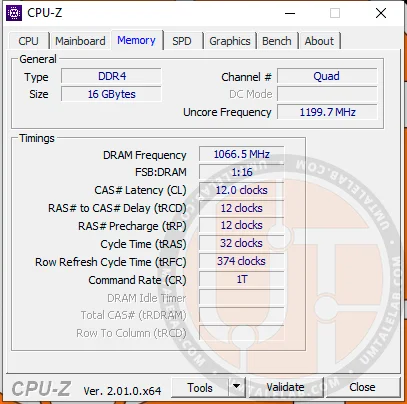
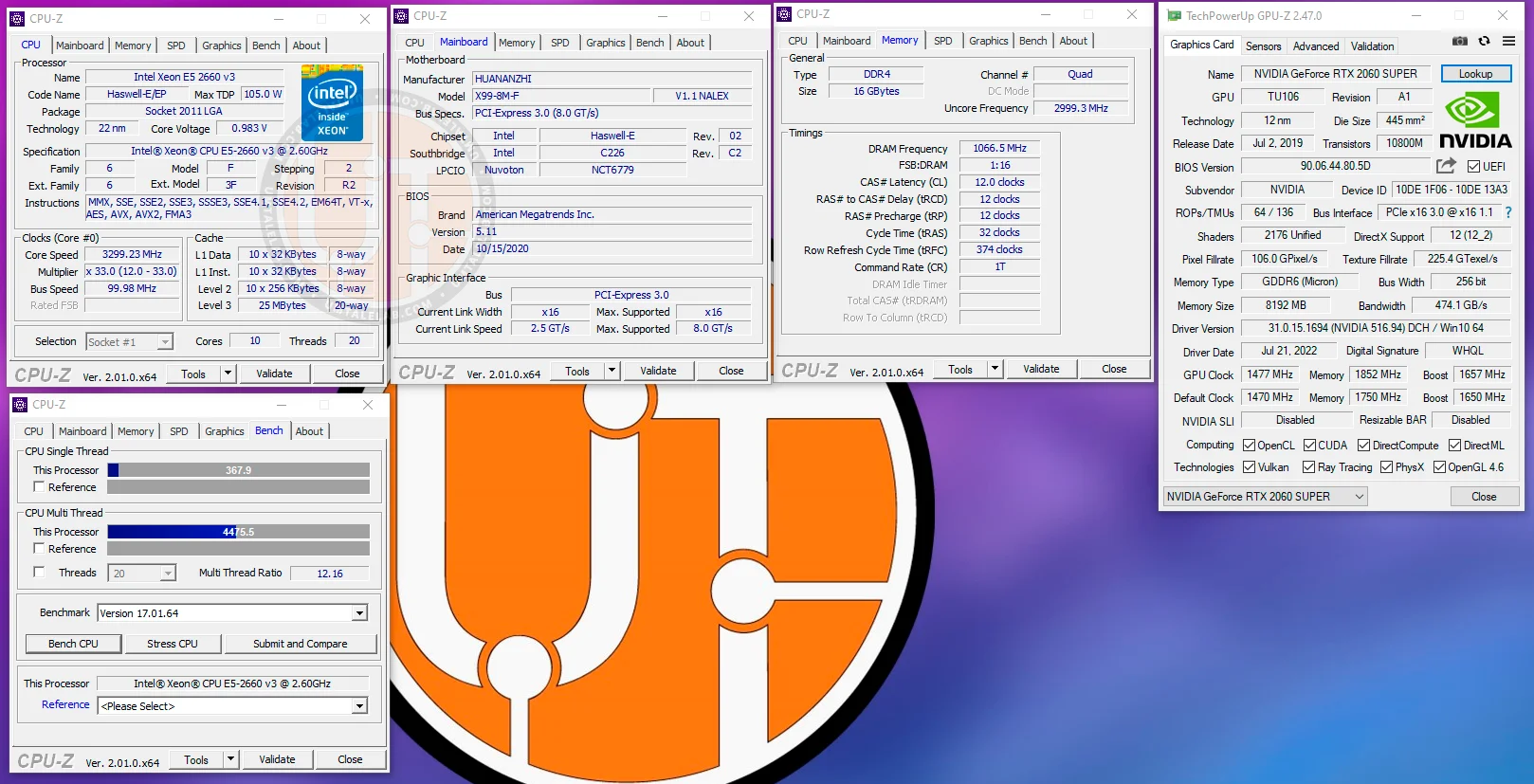
Other Xeon E5-2660 v3 specifications include: the chip is equipped with 256 KB of L2 cache per core and a truly large for its time 25 MB L3 cache. The speed of the E5-2670 v3's integrated memory controller is fixed at 3000 MHz, and the L3 cache also operates at this speed. The maximum RAM frequency is limited by its quad-channel DDR4-2133 MHz controller.
In addition to all the above characteristics, it's worth noting that this 10-core Haswell chip supports essential instructions for 2022, including SSE4.2, AVX, and AVX2. This feature helps avid gamers launch virtually any new release this year without issues, and as practice shows, even with ray tracing enabled.
 ⤢ ВІДКРИТИ
Test setup and software
Test setup
Intel processors— Xeon X3470, Core i7-2600, Xeon X5660, Xeon E5-2667, Xeon E5-2620 v3, Xeon E5-2630 v3, Xeon E5-2660 v3;
AMD processors— FX-8350, FX-6350;
CPU cooling— Cooler Master Hyper 212 Black Edition (RR-212S-20PK-R1);
RAM for LGA 1155 and 1156— four 8GB HyperX Genesis Na’Vi Edition (KHX16C9C2K2/8) modules for a total of 32GB;
RAM for LGA 1366— three 8GB HyperX Genesis Na’Vi Edition (KHX16C9C2K2/8) modules for a total of 24GB;
RAM for LGA 2011— four 8GB Micron MT36JSF1G72PZ-1G4M1HF modules for a total of 32GB;
RAM for LGA 2011 v3— four 4GB G.SKILL DDR4 F4-2400C15S-4GNT modules for a total of 16GB;
RAM for AM3+— four 8GB HyperX Genesis Na’Vi Edition (KHX16C9C2K2/8) modules for a total of 32GB;
Motherboard LGA 1156— DELL OptiPlex 980 (0D441T, mod-BIOS);
Motherboard LGA 1155— Gigabyte GA-Z68P-DS3 (rev. 2.0);
Motherboard LGA 1366— DELL T3500 (09KPNV);
Motherboard LGA 2011— DELL T3610 (09M8Y8);
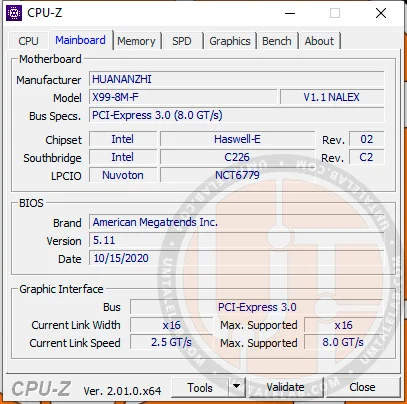
Motherboard LGA 2011 v3— Qiyida X99-H9 with a modified Huananzhi x99-8m-f BIOS (Unlock Turbo Boost, unlocked CPU timing and voltage control);
Motherboard AM3+— ASUS M5A97 LE R2.0;
Graphics card— KFA2 GeForce RTX 2060 SUPER 8GB (~1950/14816MHz, Power Limit 112%);
Solid-state drive— KINGSTON SUV400S37120G 120.0 GB (Windows 10), KINGSTON SUV400S37240G 240.0 GB (Games), KINGSTON SUV400S37400G 400.0 GB (Games);
Power supply unit— Chieftec GPS-1250C.
Software
Operating system:Windows 10 x64 with the latest updates as of September 2022;
Graphics card drivers:NVIDIA GeForce 516.94 WHQL;
FPS measurement software:MSI Afterburner 4.6.4;
Games:tested using current game versions as of September 2022;
Game settings:tested at maximum graphics settings in 720p resolution.
Tested CPU settings
Intel processors:Core i7-2600@3400MHz, Dual-Channel DDR3@1866MHz (DDR3 timings 10-11-11-26, DDR3 voltage 1.550v);
Xeon X3470@3200MHz, Dual-Channel DDR3@1333MHz;
Xeon X5660@3066MHz, Triple-Channel DDR3@1333MHz;
Xeon E5-2667@3200MHz, Quad-Channel DDR3@1333MHz;
Xeon E5-2620 v3@3200MHz, Quad-Channel DDR4@1866MHz (DDR4 timings 10-10-10-24);
Xeon E5-2630 v3@3200MHz, Quad-Channel DDR4@1866MHz (DDR4 timings 10-10-10-24);
Xeon E5-2660 v3@3300MHz, Quad-Channel DDR4@2133MHz (DDR4 timings 12-12-12-32);
AMD processors:FX-6350@4200MHz, CPU-NB@2200MHz, Dual-Channel DDR3@1866MHz;
FX-6350@4595MHz, CPU-NB@2608MHz, Dual-Channel DDR3@2086MHz (CPU Core voltage — 1.440v, CPU-NB voltage — 1.375v, DDR3 voltage — 1.660v);
FX-8350@4200MHz, CPU-NB@2200MHz, Dual-Channel DDR3@1866MHz;
FX-8350@4434MHz, CPU-NB@2608MHz, Dual-Channel DDR3@2086MHz (DDR3 timings 11-12-12-30, CPU Core voltage — 1.416v, CPU-NB voltage — 1.375v, DDR3 voltage — 1.660v).
You can learn more about almost all the tested processors in our fullreviews, or by checking out theblogs section for shorter notes.
A quick reminder about our CPU testing methodology: each game was run five times. We then took the average frame rate from these five runs and recorded it as the final result. Also, it's worth reiterating:all games were installed on an SSD.
Benchmark results
Special considerations
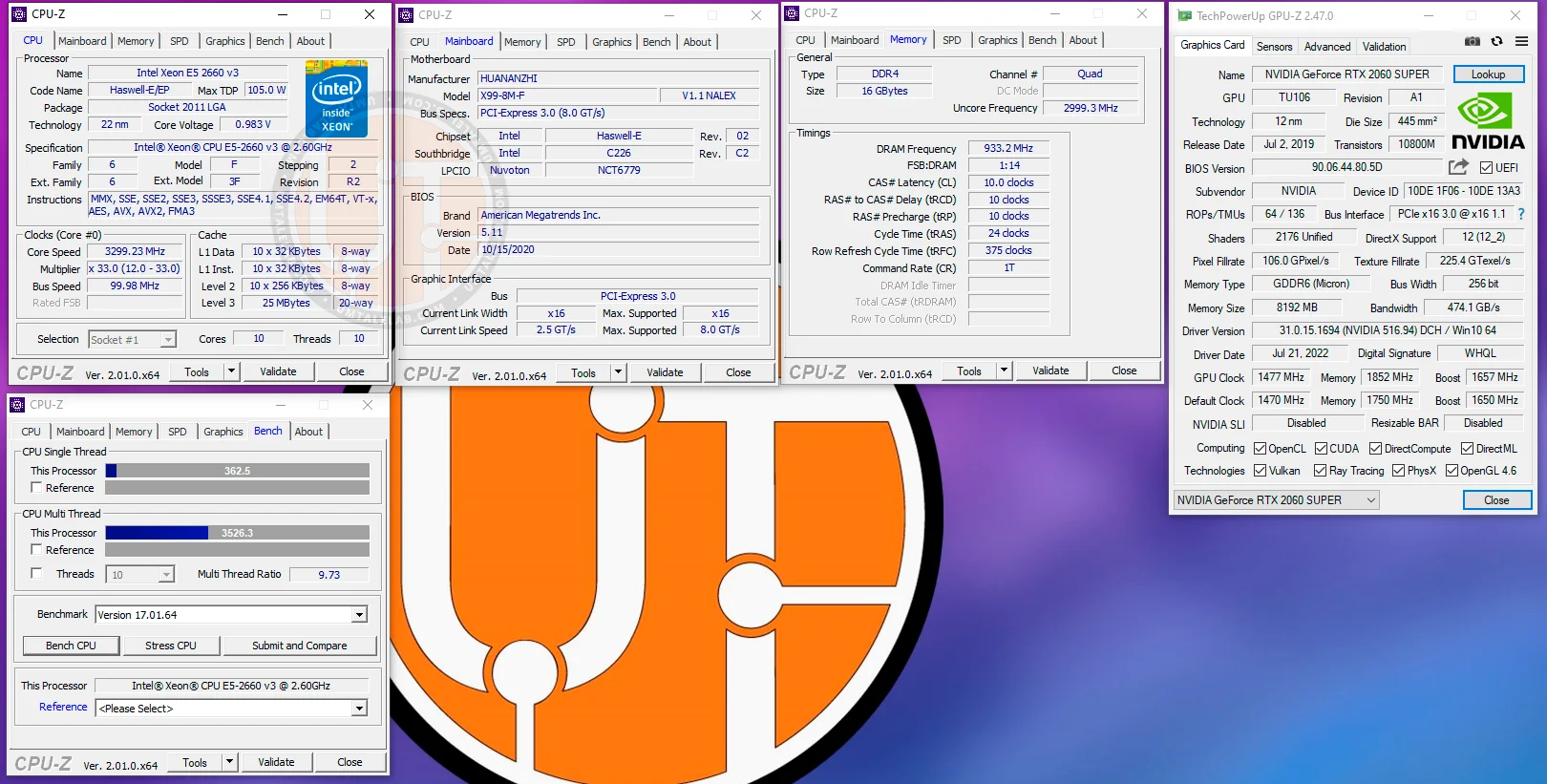
Before diving into the performance charts, there's an important observation: During tests of the 20-thread E5-2660 v3, we noticed a significant performance drop compared to the seemingly weaker E5-2630 v3 in certain projects that utilize fewer threads (4-8). After investigating this anomaly, we found that disabling Hyper-Threading (virtual threads / SMT) often positively impacts the ultimate gaming performance of such high-thread-count CPUs. Consequently, we decided to conduct additional tests on the E5-2660 v3 with Hyper-Threading disabled.
 ⤢ ВІДКРИТИ
In the charts, this configuration will be labeled as "Xeon E5-2660 v3@3300MHz 10/10", while the standard one will be "Xeon E5-2660 v3@3300MHz 10/20"
Assassins creed valhalla
 ⤢ ВІДКРИТИ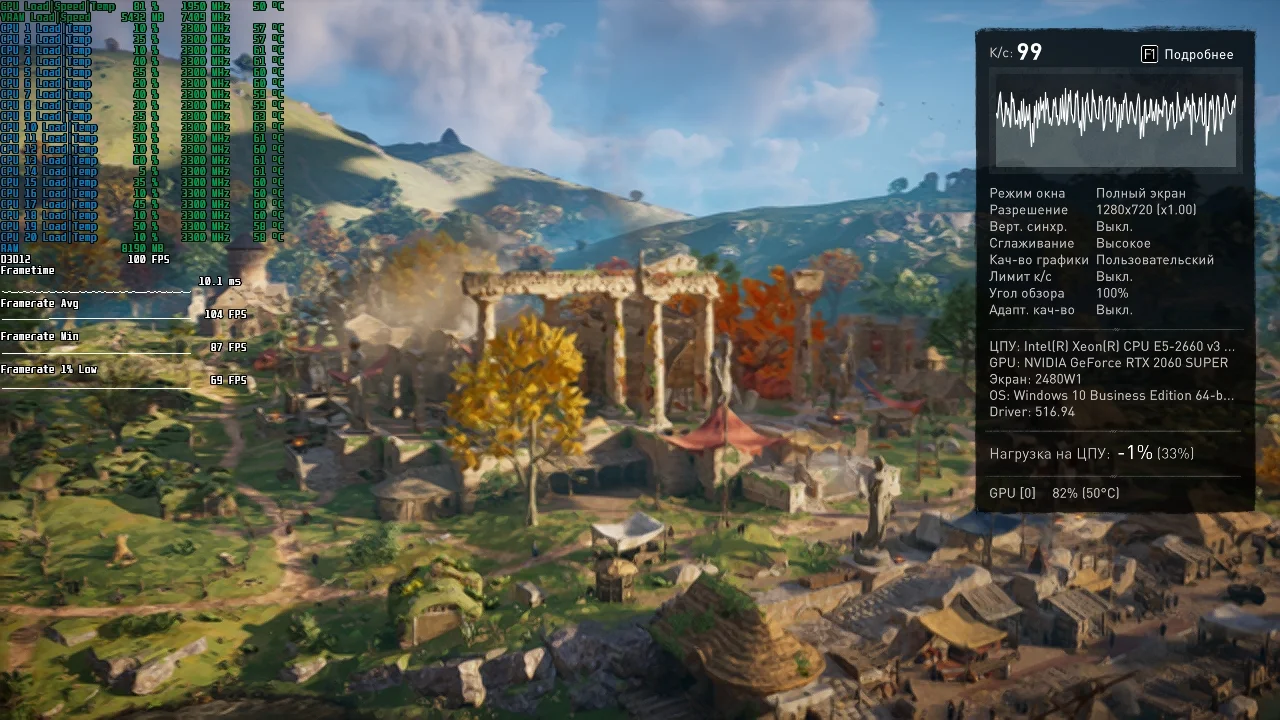
 ⤢ ВІДКРИТИ
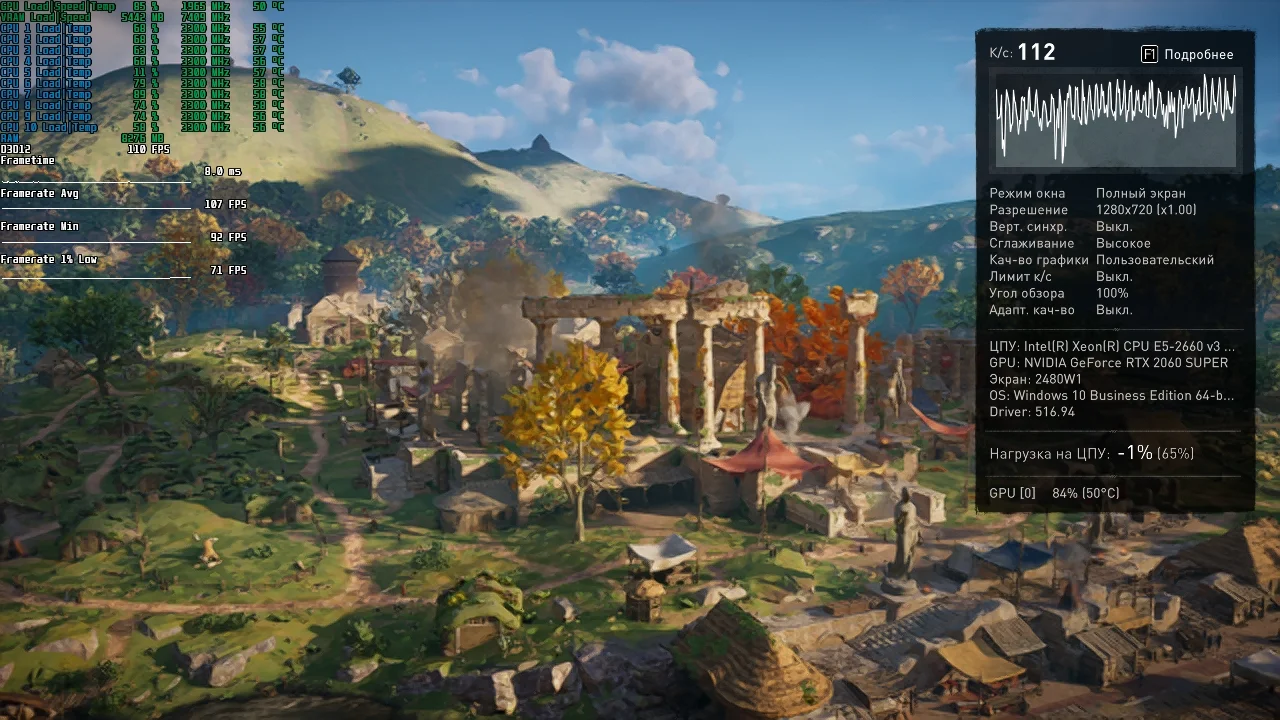
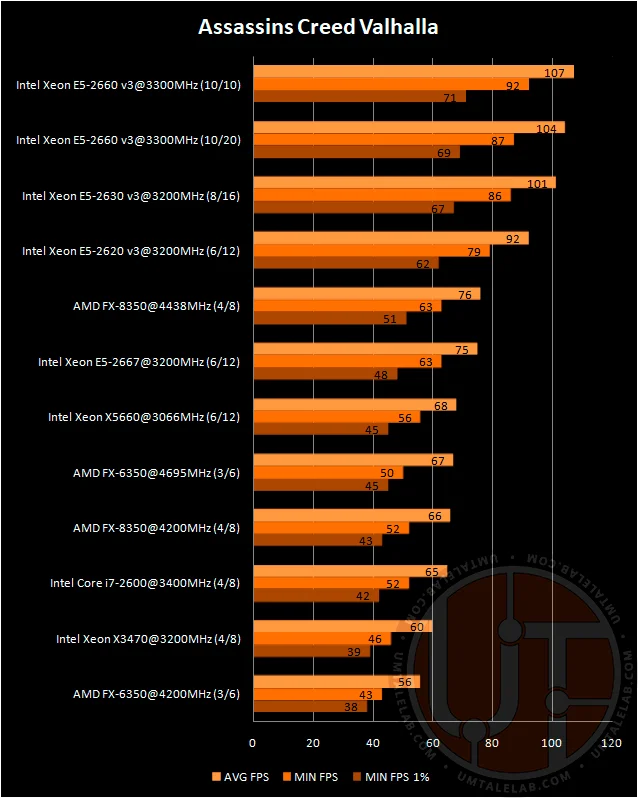
In the latest installment of the "Assassin's Creed" franchise, "Valhalla," the 10-core, 20-thread Haswell shows only a slight edge over its 8-core sibling. However, simply disabling HT propels the 2660 v3 into the lead, significantly outpacing the E5-2630 v3! This is exactly what we discussed in the "Special Considerations" section. In "Valhalla," those extra 10 threads actually hurt performance; some games run much better on "pure" 10 cores.
Battlefield 2042
 ⤢ ВІДКРИТИ
Ray tracing - on
 ⤢ ВІДКРИТИ
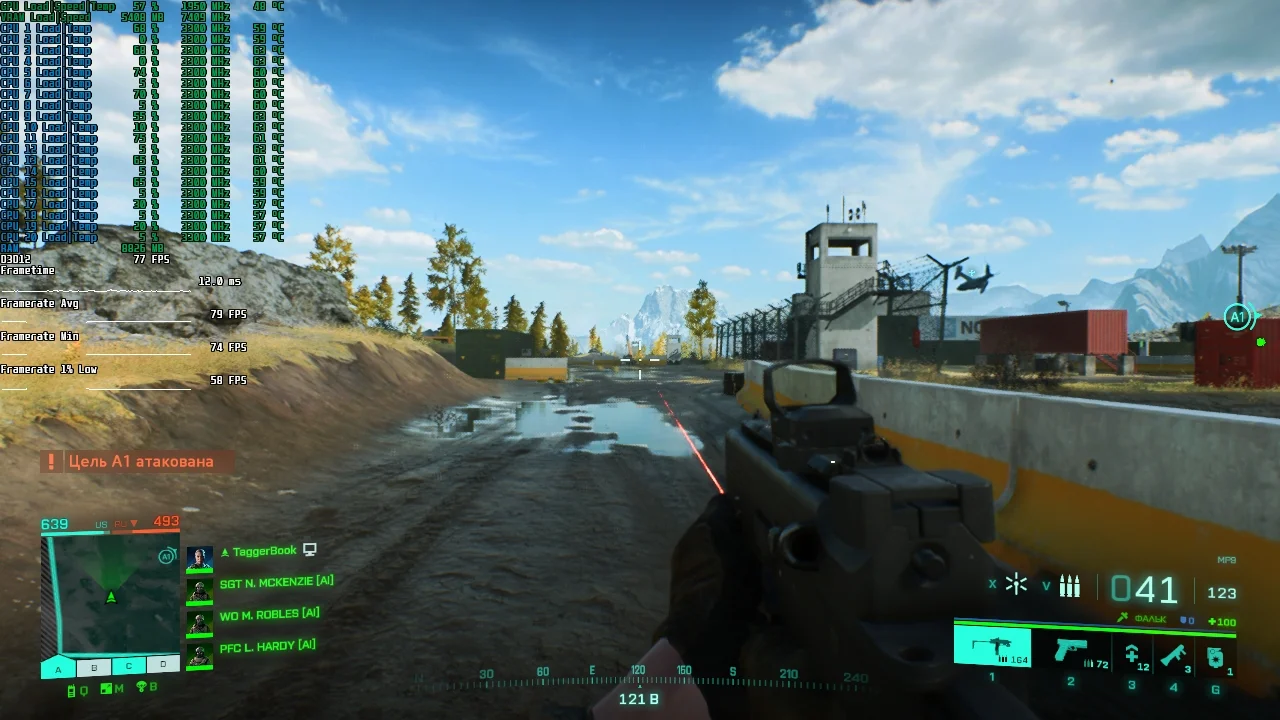
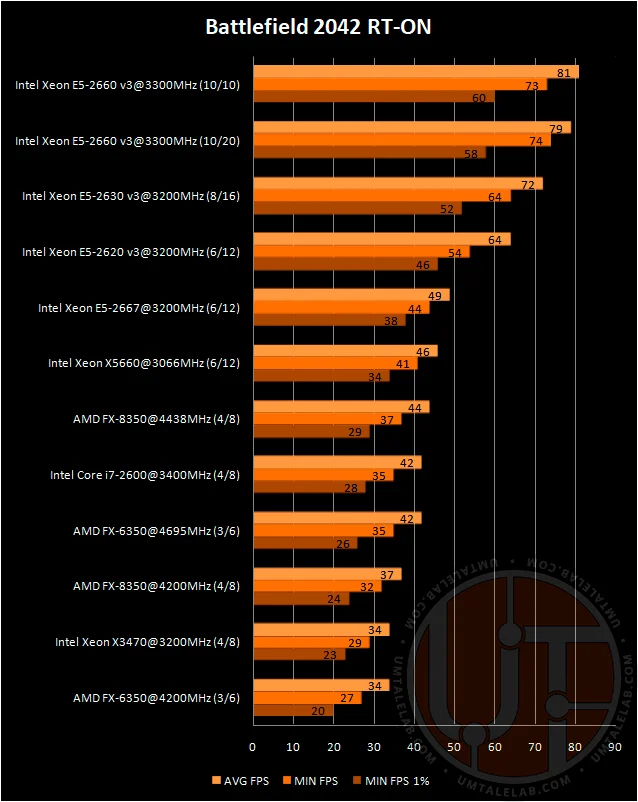
In Battlefield 2042, with ray tracing enabled, the Xeon E5-2660 v3's two additional cores showed a noticeable impact. The 20-thread processor achieved a 10% lead in average FPS and an 11% lead in minimum frame rate. Interestingly, BF2042 with RT performs slightly better on processors without Hyper-Threading.
Ray Tracing - OFF
 ⤢ ВІДКРИТИ
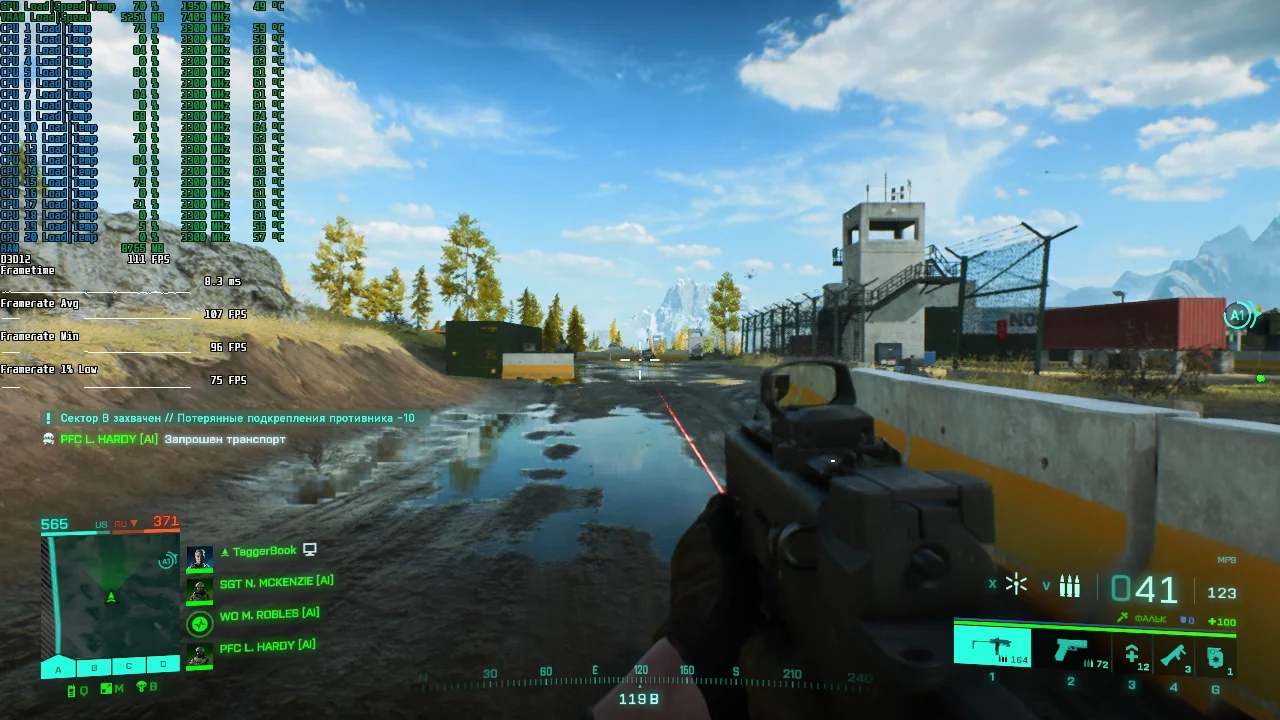
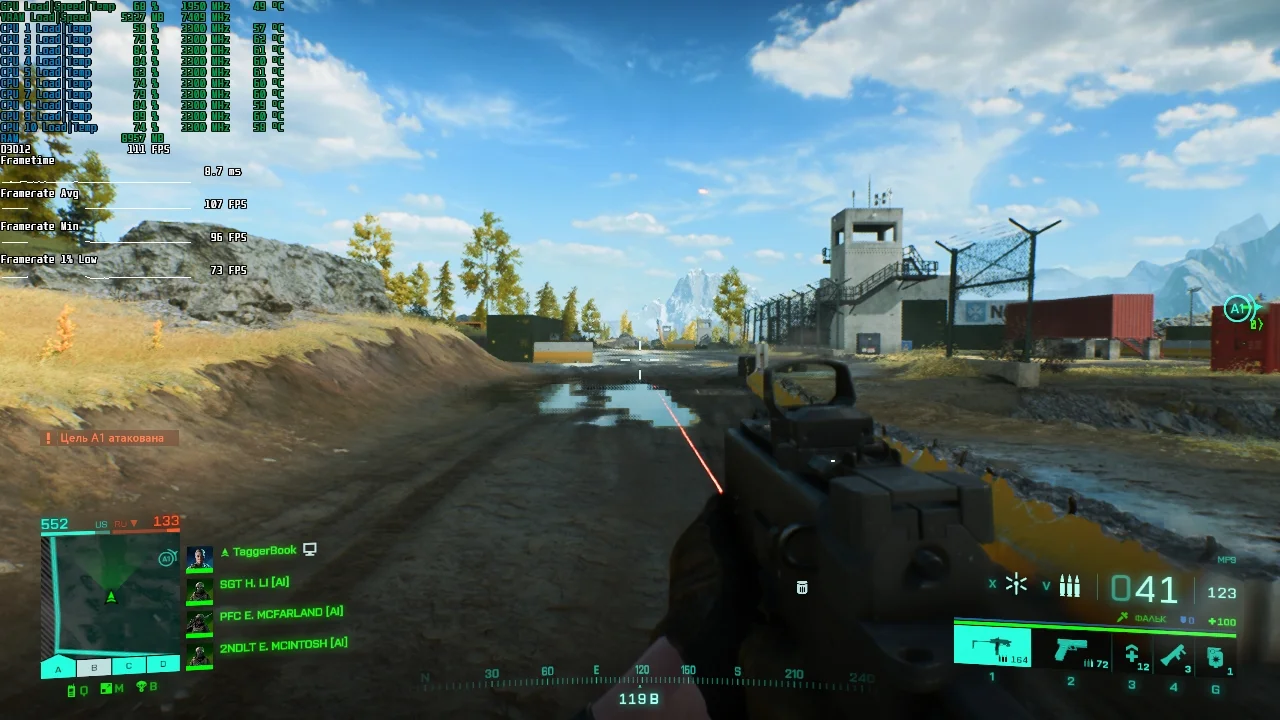
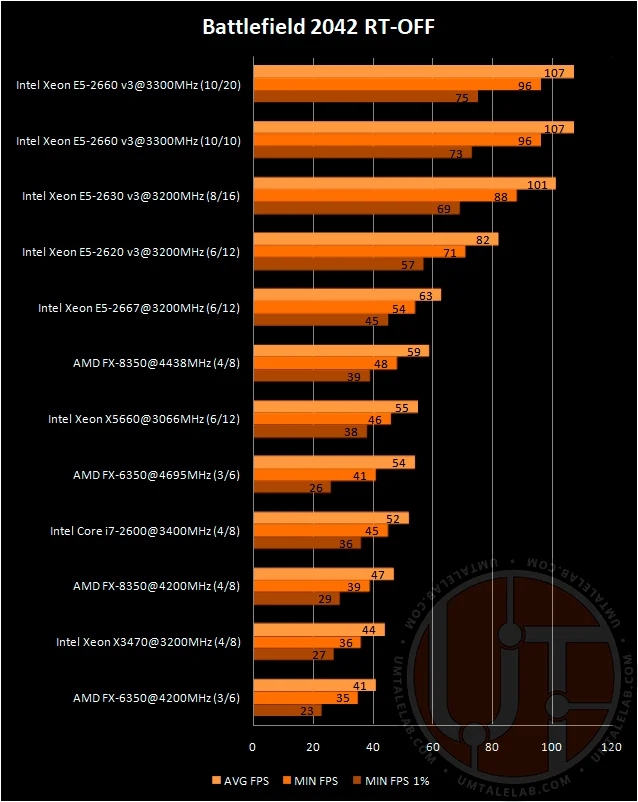
With ray tracing deactivated, the E5-2660 v3's lead over the E5-2630 v3 shrinks to 6% in average FPS and 9% in minimums. Sadly, these gains aren't significant enough to justify upgrading from an 8-core to a 10-core chip.
When comparing the two 2660 v3 versions, we saw parity. Both the 20-thread and 10-core processors delivered identical results, with any differences in rare events falling within the margin of error.
Cyberpunk 2077
 ⤢ ВІДКРИТИ
Ray Tracing - ON


 ⤢ ВІДКРИТИ
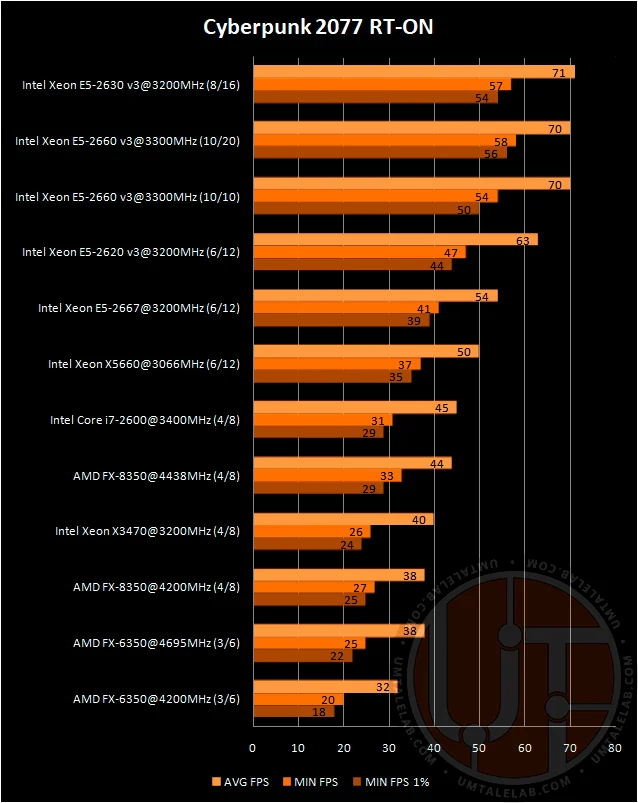
In Cyberpunk 2077 with ray tracing enabled, the results are quite contradictory. While the E5-2660 v3 delivered a more consistent minimum FPS, the 20-thread chip couldn't outperform the 16-thread E5-2630 v3 in average frame rates. This wasn't a fluke; we ran additional benchmarks, and the results were consistently reproducible. Objectively, minimum FPS is far more critical than average, making the E5-2660 v3 the more logical choice for CDPR's title.
However, with HT disabled, the E5-2660 v3 doesn't fare as well, with its minimum frame rate significantly lower than the E5-2630 v3's.
Our research indicates that Cyberpunk 2077 can effectively utilize up to 16 threads. However, if a chip has too many execution units, performance might actually decrease. It's important to note this only applies to CPUs built on older architectures like Haswell.
Ray Tracing - OFF


 ⤢ ВІДКРИТИ
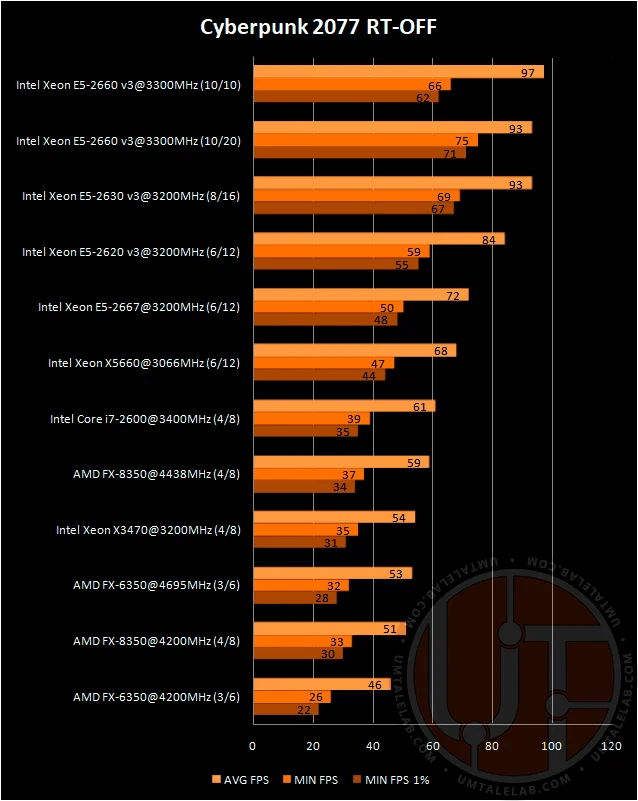
Disabling ray tracing introduces some interesting changes. The E5-2660 v3 now matches the E5-2630 v3 in average FPS and extends its lead even further in minimum frame rates. However, with HT deactivated, the 10-core chip, while showing an unrivaled average frame rate, completely tanked in minimum FPS. This essentially rules out disabling Hyper-Threading for Cyberpunk 2077.
Destiny 2
 ⤢ ВІДКРИТИ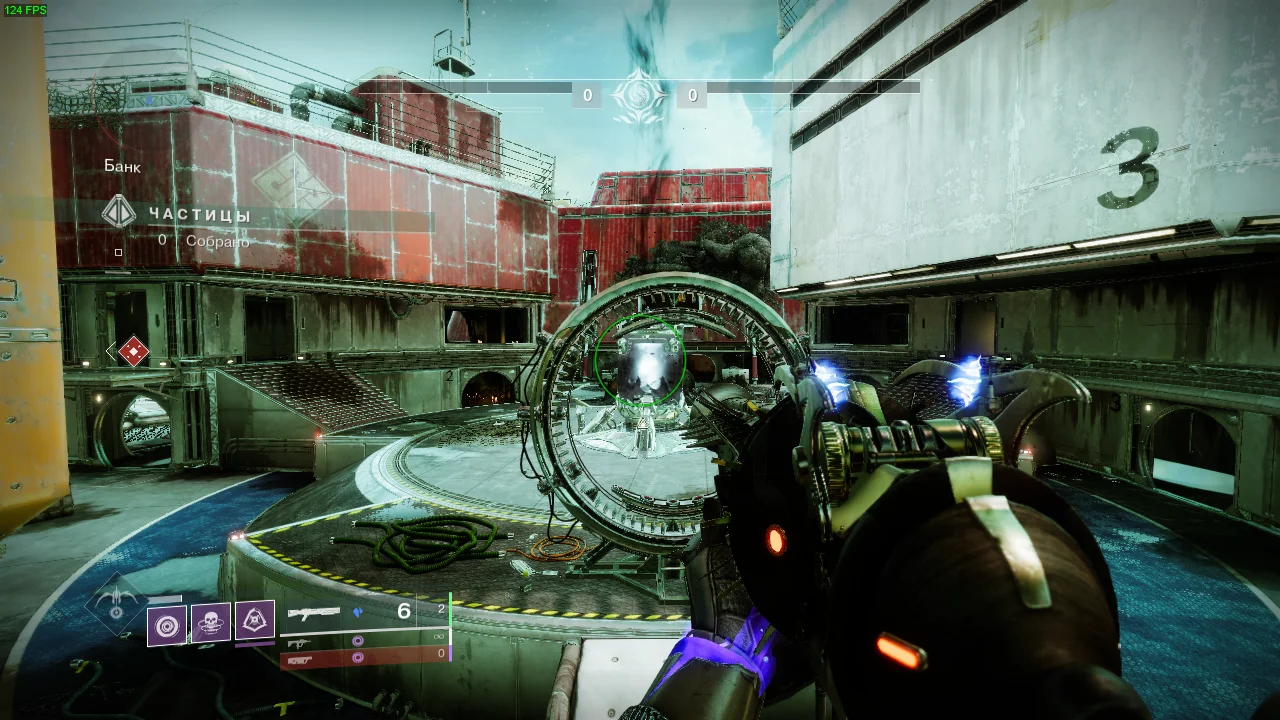
 ⤢ ВІДКРИТИ
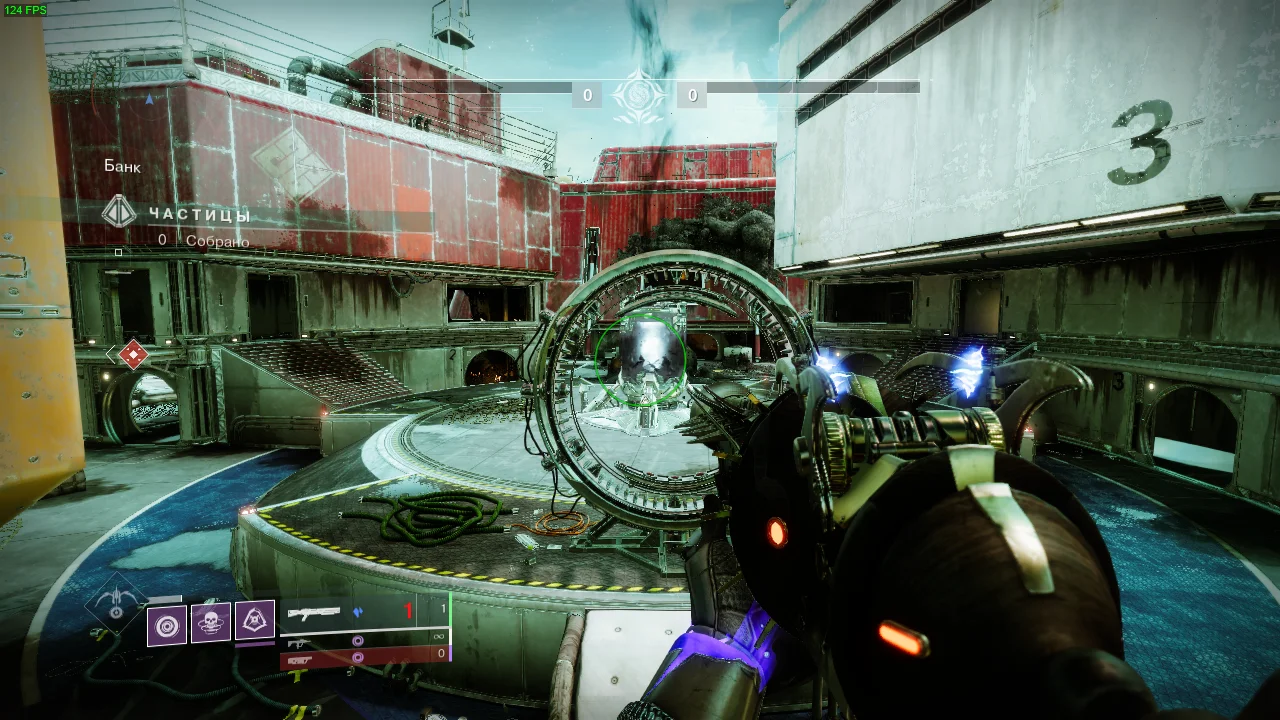
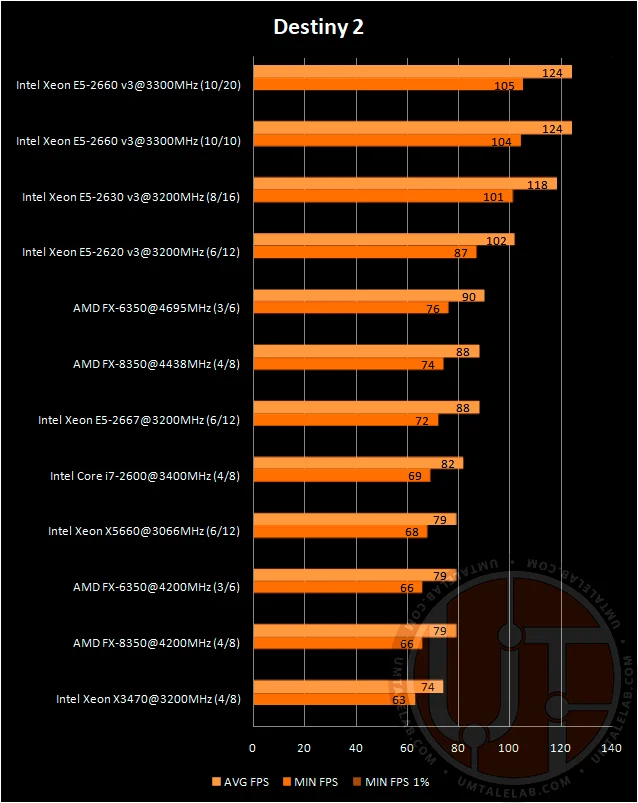
Destiny 2, a multiplayer session shooter, actively uses up to 8 threads, making it nearly impossible to gain a performance advantage from additional CPU cores. However, Bungie's title responds well to increased L3 cache. This characteristic allows the 10-core E5-2660 v3 to still edge out its eight-core competitor. Despite this, the 20-thread Haswell didn't secure a truly significant lead.
When comparing 10 cores against 20 threads, any observed difference falls within the margin of error.
Elden Ring
 ⤢ ВІДКРИТИ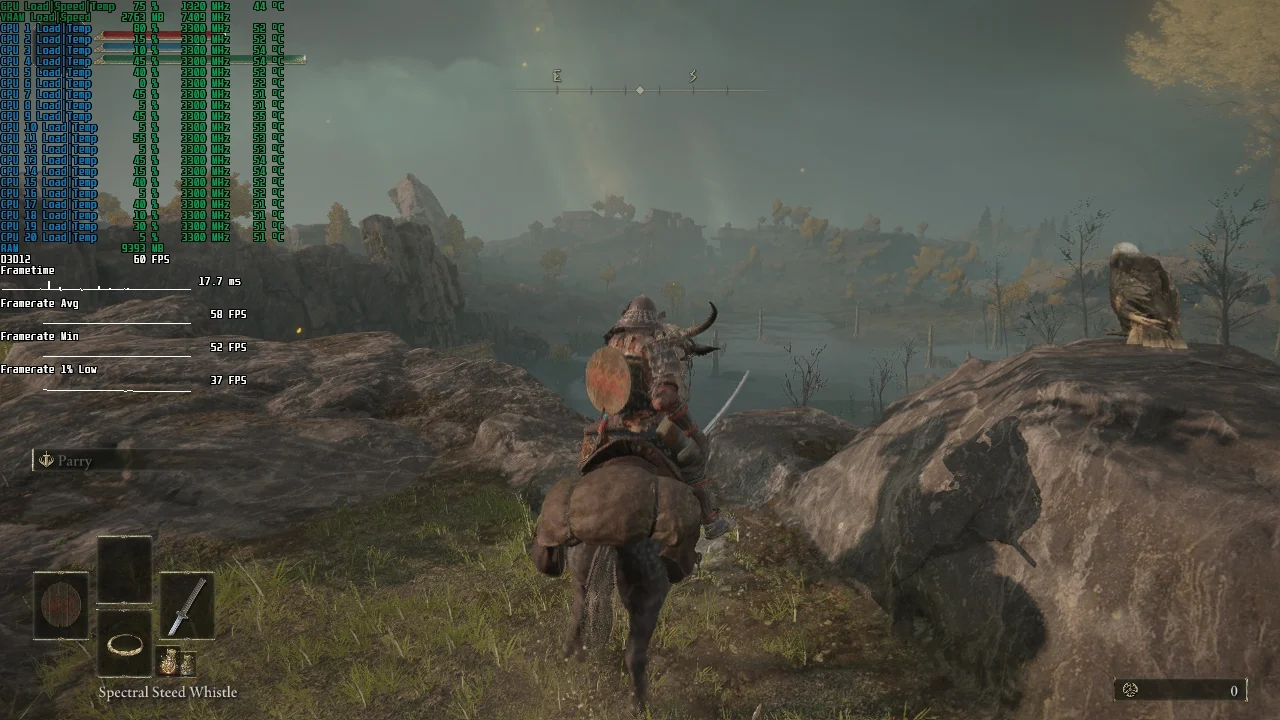

 ⤢ ВІДКРИТИ
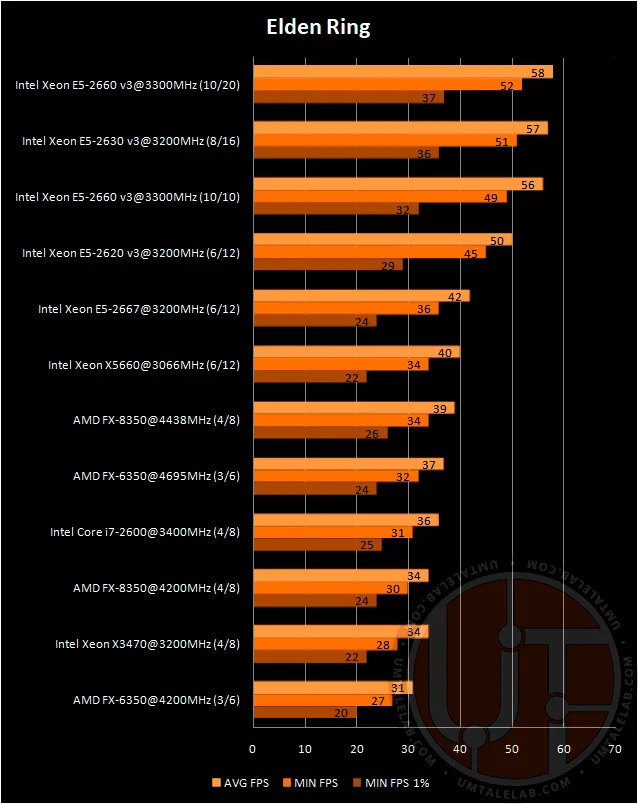
Elden Ring's performance hasn't changed much since our last article on the E5-2630 v3. The soulslike action RPG remains poorly optimized; even the 20-thread E5-2660 v3, despite its substantial 25MB L3 cache, frequently suffers from minor stutters, and the framerate is extraordinarily unstable. Still, it's noteworthy that the star of this review delivers the best performance.
But that's not the most interesting part. Disabling Hyper-Threading significantly reduces the E5-2660 v3's performance, causing this 10-core chip to lose out to the 16-thread E5-2630 v3.
Far Cry 6
 ⤢ ВІДКРИТИ
Ray Tracing — ON
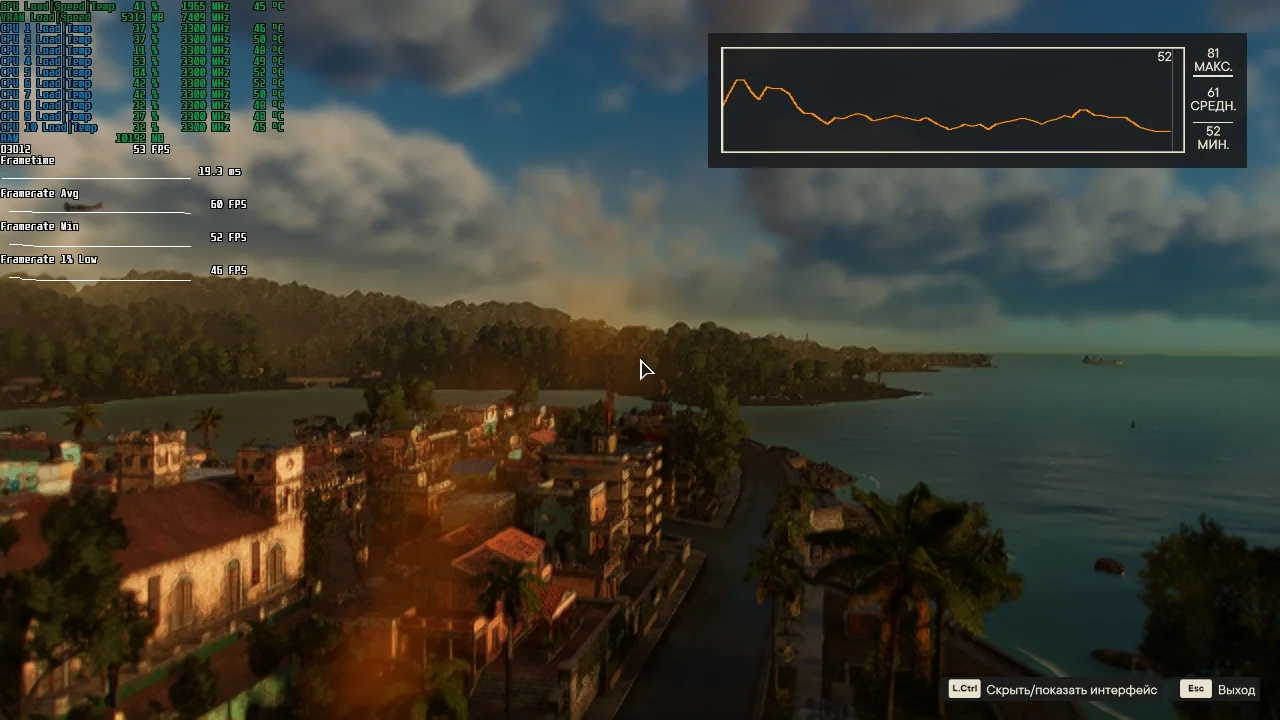
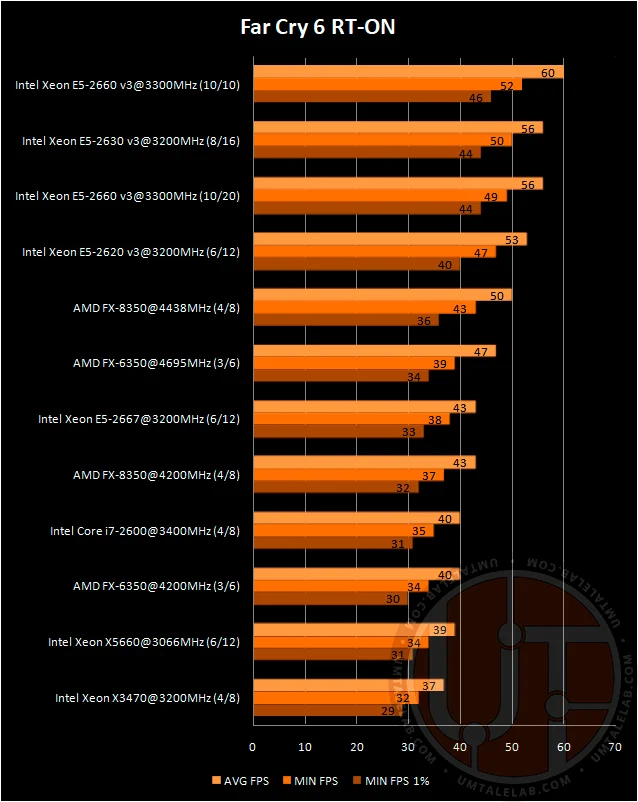 ⤢ ВІДКРИТИ
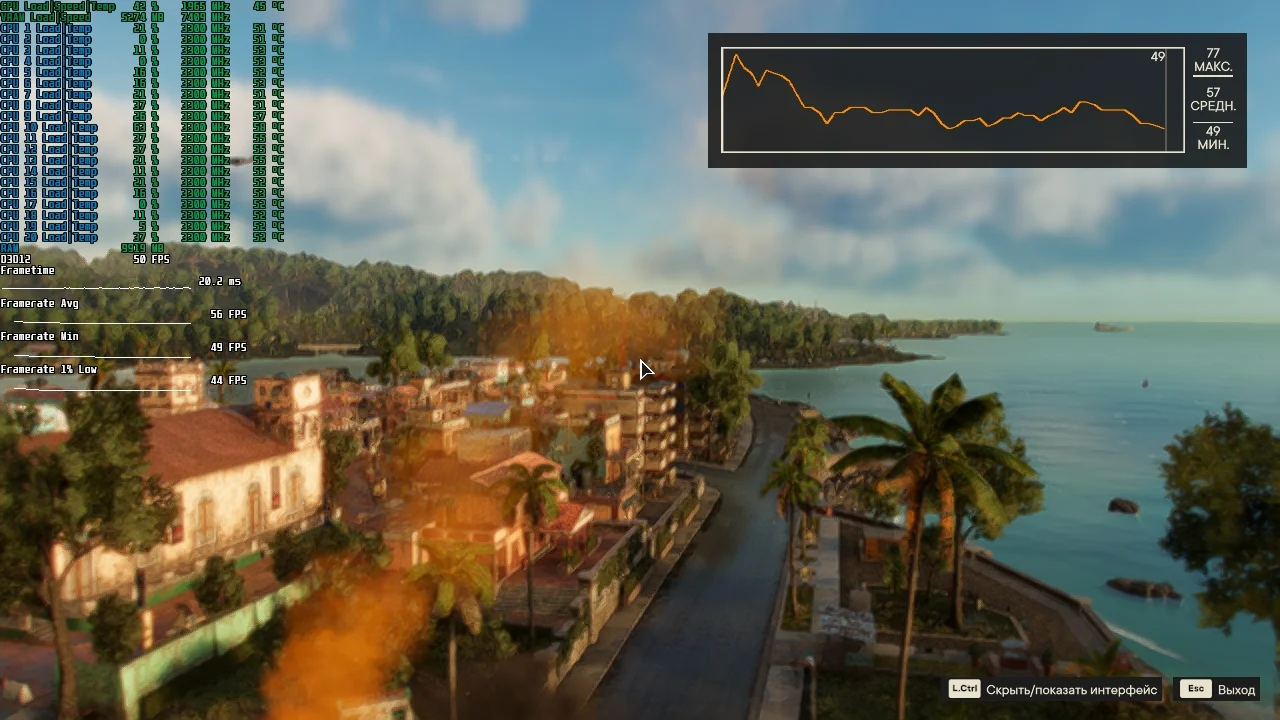
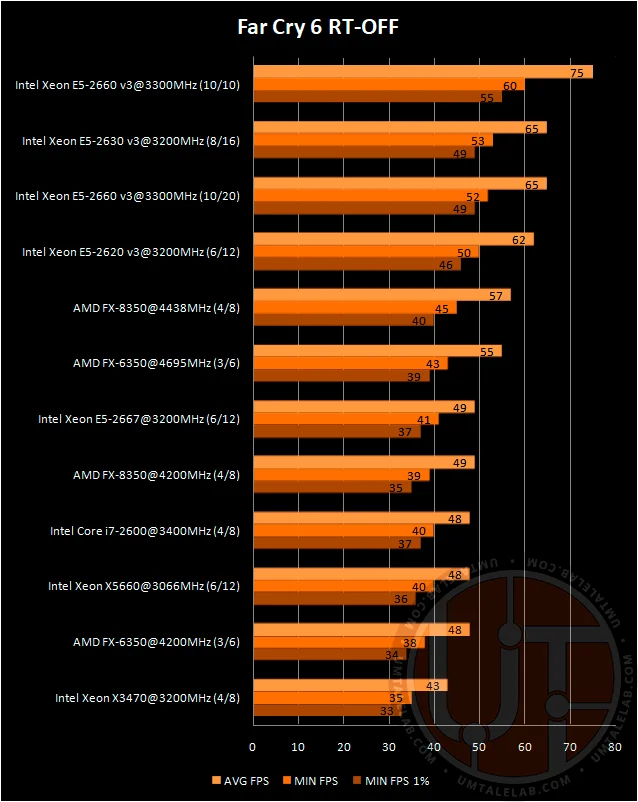
Far Cry 6 struggles with CPU load distribution when thread counts exceed 12, meaning additional execution units can actually hinder performance. The graphs clearly demonstrate this: with HT enabled, the E5-2660 v3 slightly trails the E5-2630 v3. But disable HT, and the 'pure' 10-core leaves its younger sibling no chance, hitting 60 frames per second even with ray tracing. An impressive result!
Ray Tracing — OFF
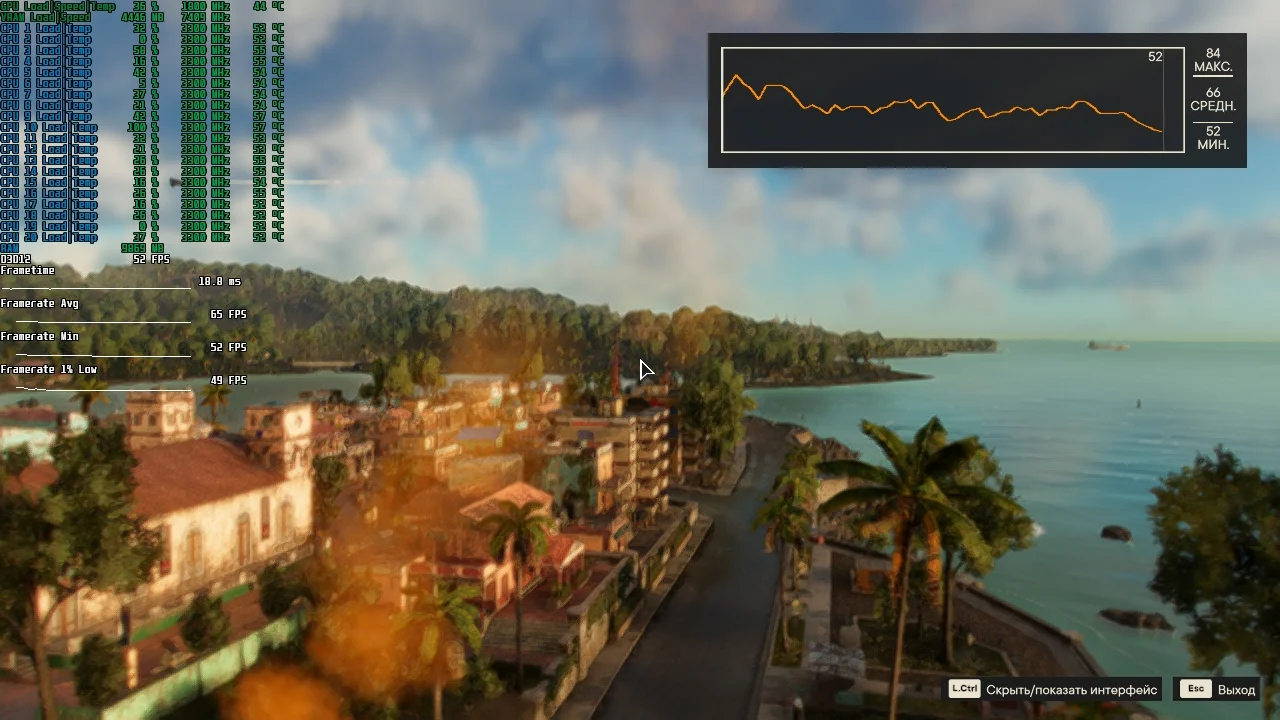
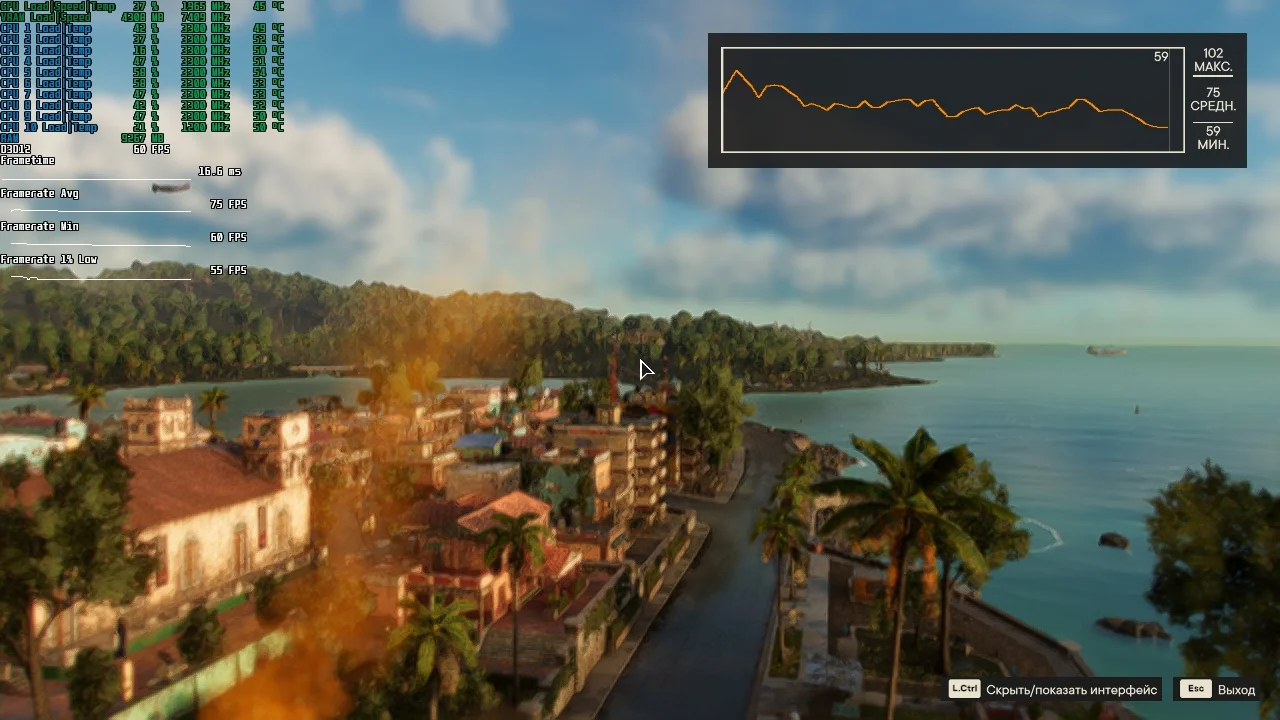
 ⤢ ВІДКРИТИ
With ray tracing deactivated, the situation changed quite significantly. The 10-core Xeon E5-2660 v3 without HT extended its lead over the 16-thread E5-2630 v3 to 15%, and by the same amount, it outperformed its own full-fledged 20-thread version. It's now abundantly clear that Hyper-Threading severely impacts performance in Far Cry 6.
Marvel's Spider-Man Remastered
 ⤢ ВІДКРИТИ
Ray Tracing — ON


 ⤢ ВІДКРИТИ
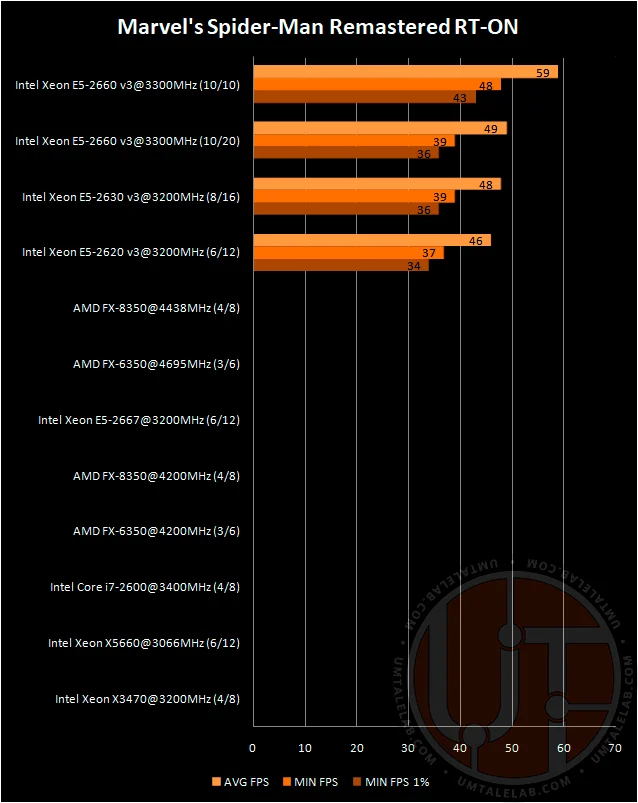
Marvel's Spider-Man Remastered with ray tracing enabled presents a similar scenario, where Hyper-Threading once again negatively impacts the E5-2660 v3 chip. Without HT, the 10-core CPU delivers 20% higher performance. While developers might address this in future patches, this former PS4 exclusive currently runs better without Hyper-Threading.
Ray Tracing — OFF


 ⤢ ВІДКРИТИ
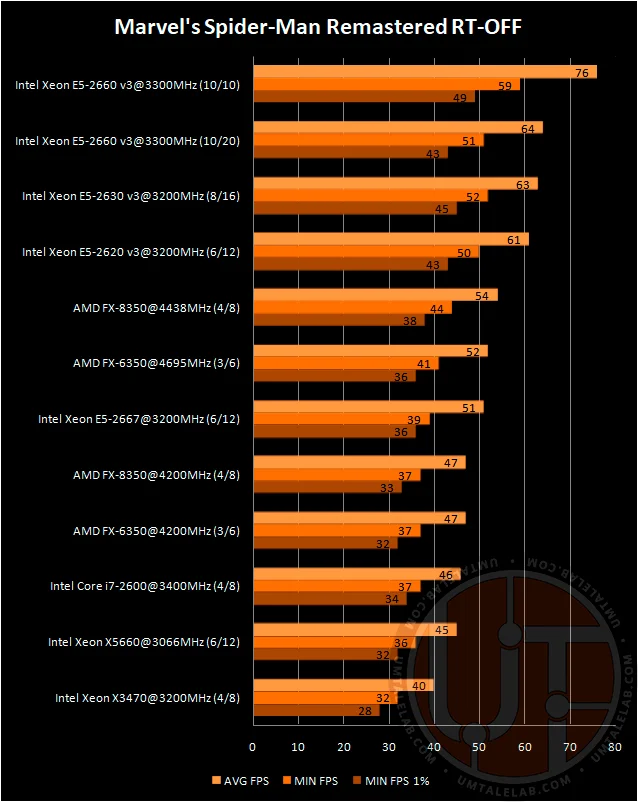
Disabling RT made little difference. The E5-2660 v3 without Hyper-Threading still holds a significant lead, while its full 20-thread version saw its minimum FPS drop to E5-2620 v3 levels.
Marvel's Guardians of the Galaxy
 ⤢ ВІДКРИТИ
Ray Tracing — ON


 ⤢ ВІДКРИТИ
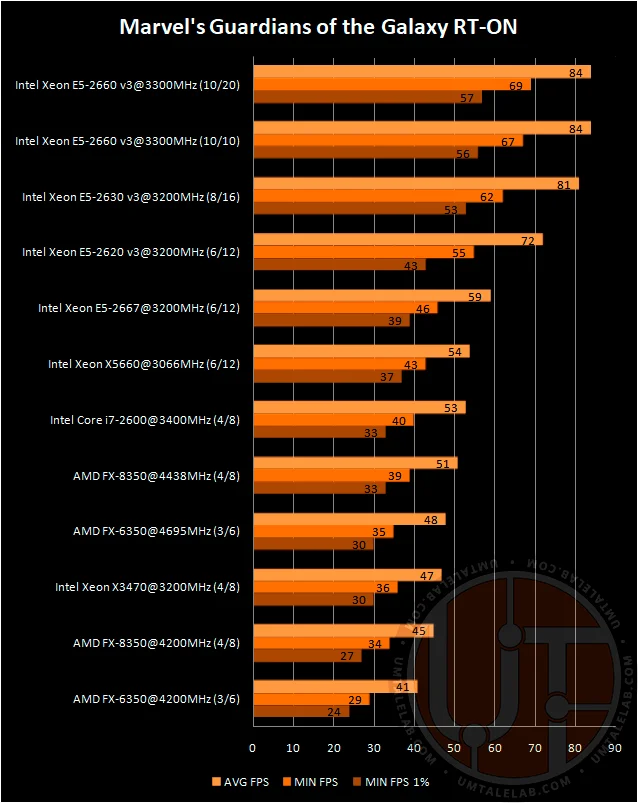
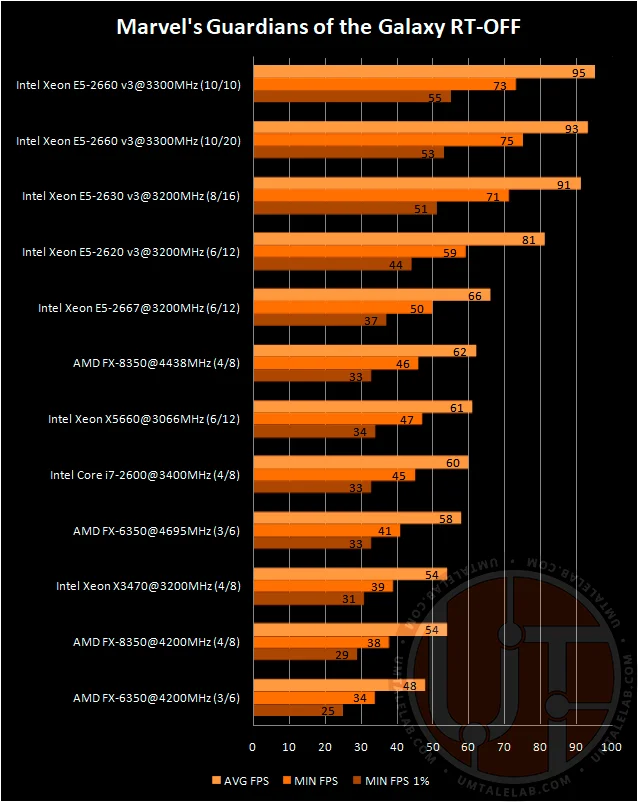
With ray tracing enabled, Marvel's Guardians of the Galaxy is far better optimized for multi-threaded CPUs. The E5-2660 v3 shows a 4% lead in average FPS, an 11% lead in minimum FPS, and a 7% lead in 1% lows over the 2630 v3. Despite this, even an 8-core Haswell delivers acceptable framerate stability, which makes the 20-thread E5-2660 v3 feel like overkill.
As for the head-to-head between the two E5-2660 v3 variants, it's virtually a draw, with the full E5-2660 v3 holding a slight edge.
Ray Tracing — OFF


 ⤢ ВІДКРИТИ
Without ray tracing, framerates increase across all processors. However, the performance hierarchy and margins remain largely unchanged.
Saints Row [2022]
 ⤢ ВІДКРИТИ
Ray Tracing — ON
 ⤢ ВІДКРИТИ
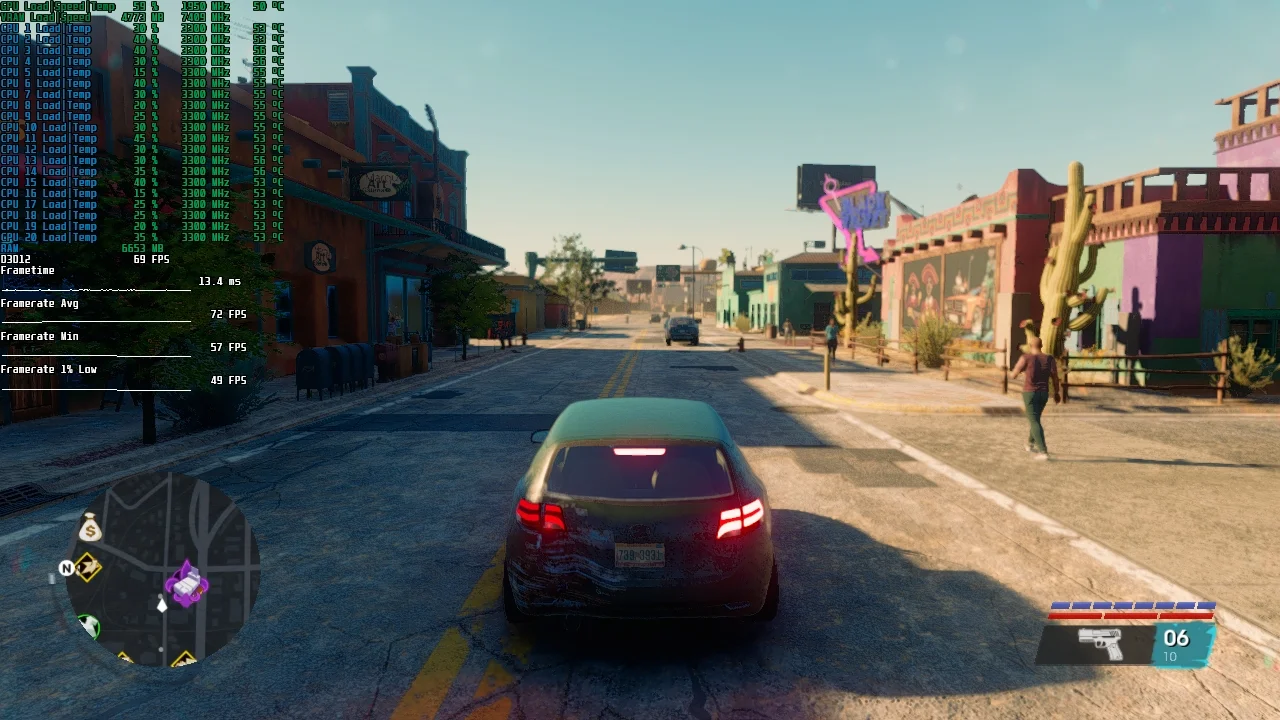
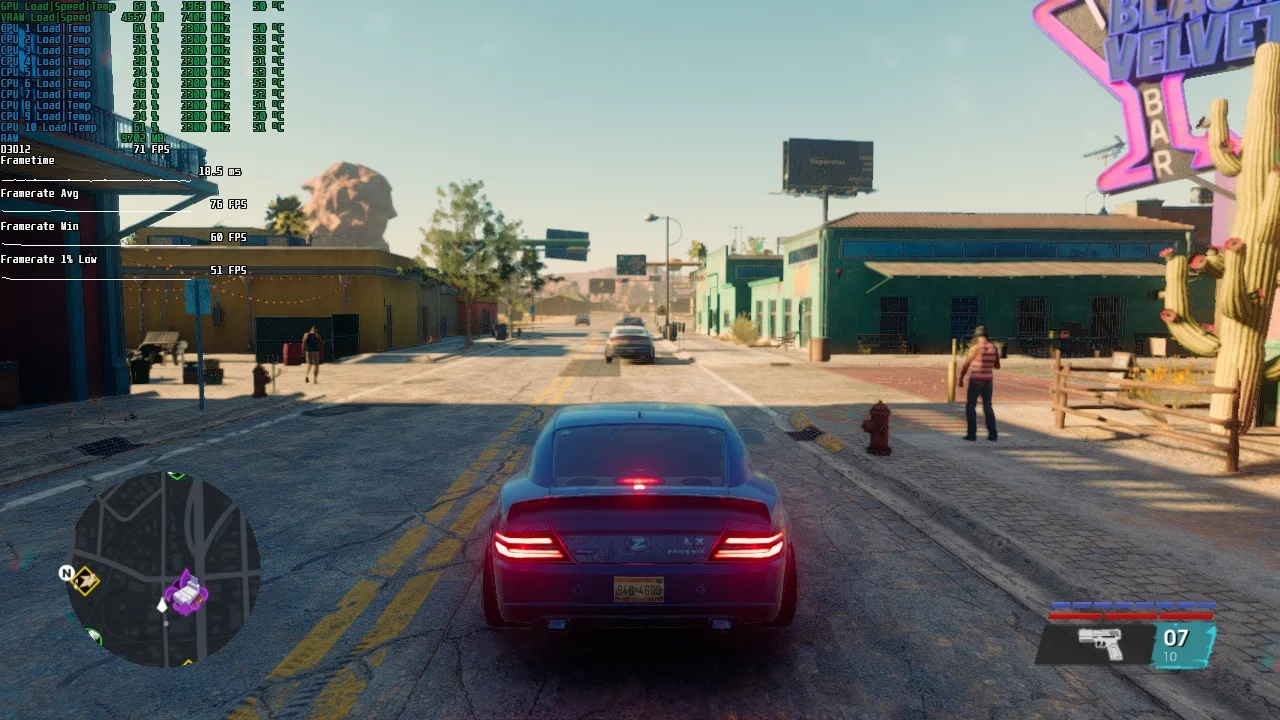
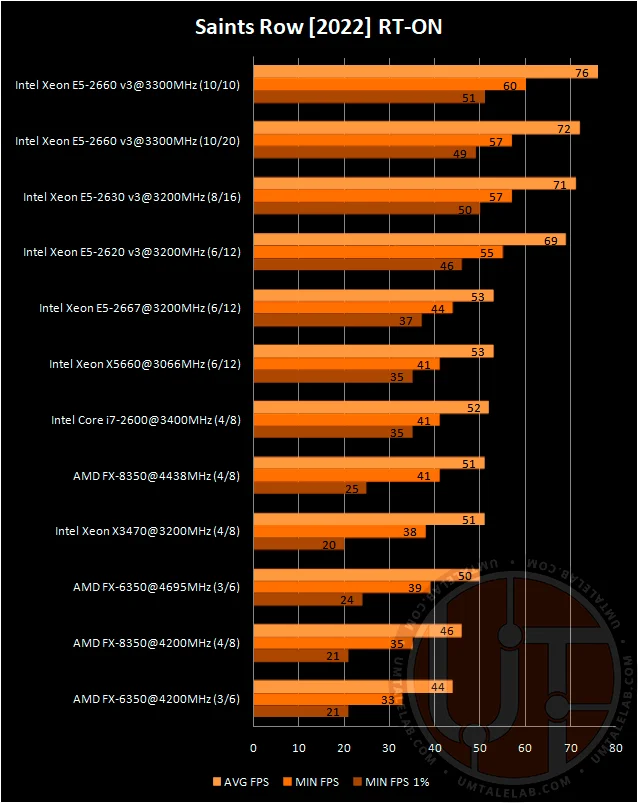
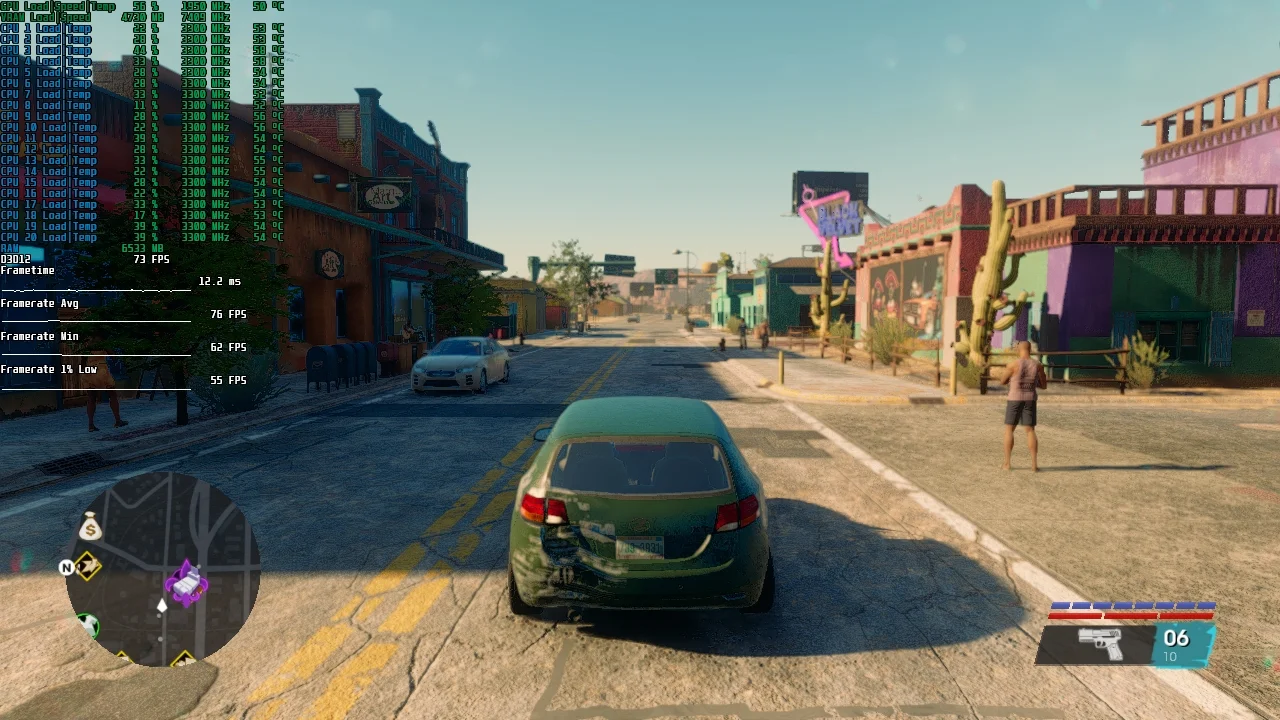
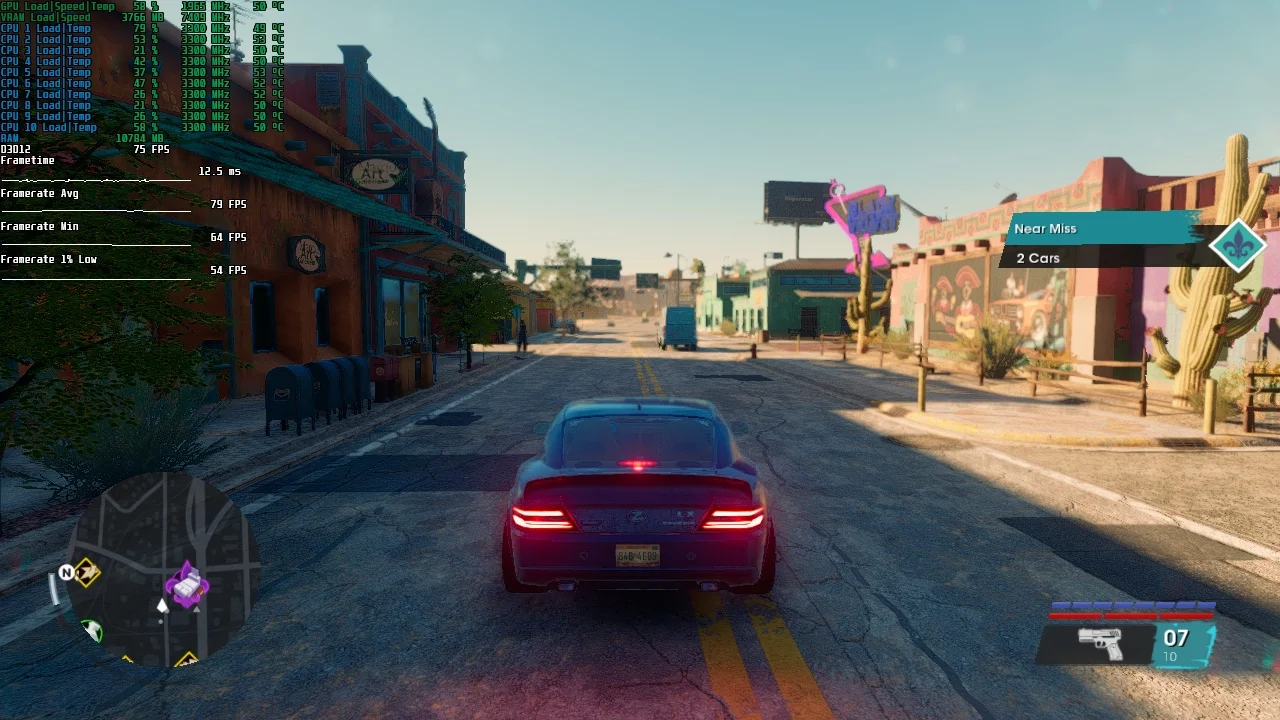
In the Saints Row reboot, enabling ray tracing won't yield noticeable framerate improvements when upgrading from an E5-2630 v3 to an E5-2660 v3. However, disabling Hyper-Threading on the 10-core chip will net you an additional 7%, which is quite decent.
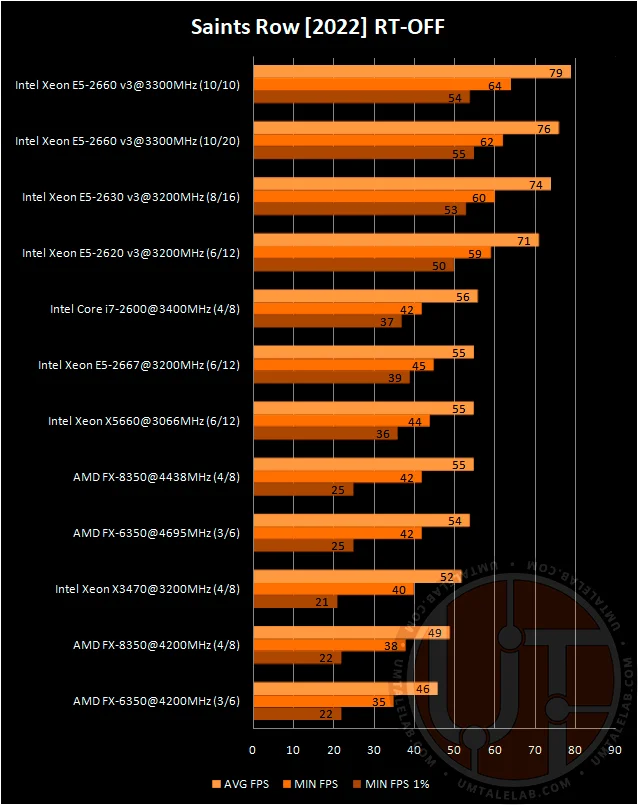
Ray Tracing — OFF
 ⤢ ВІДКРИТИ
With ray tracing disabled, the pattern repeats: both E5-2660 v3 variants still only slightly outperform the E5-2630 v3.
Red Dead Redemption 2
 ⤢ ВІДКРИТИ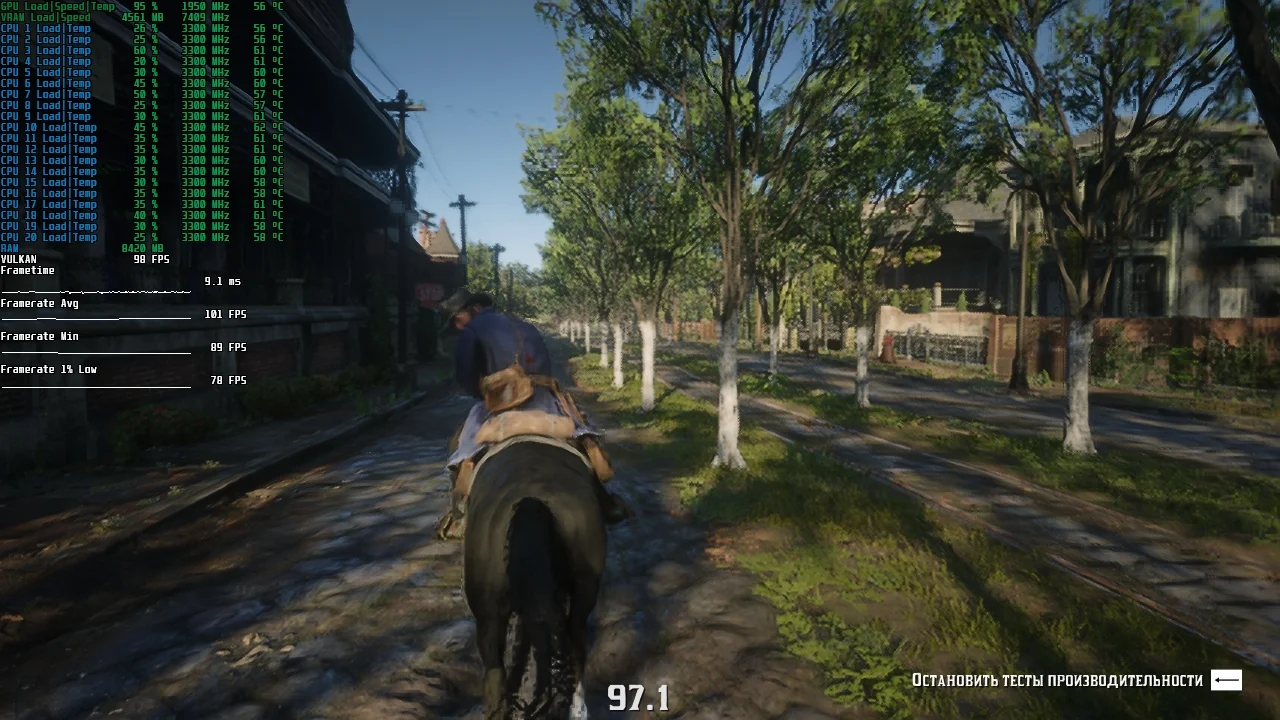
 ⤢ ВІДКРИТИ
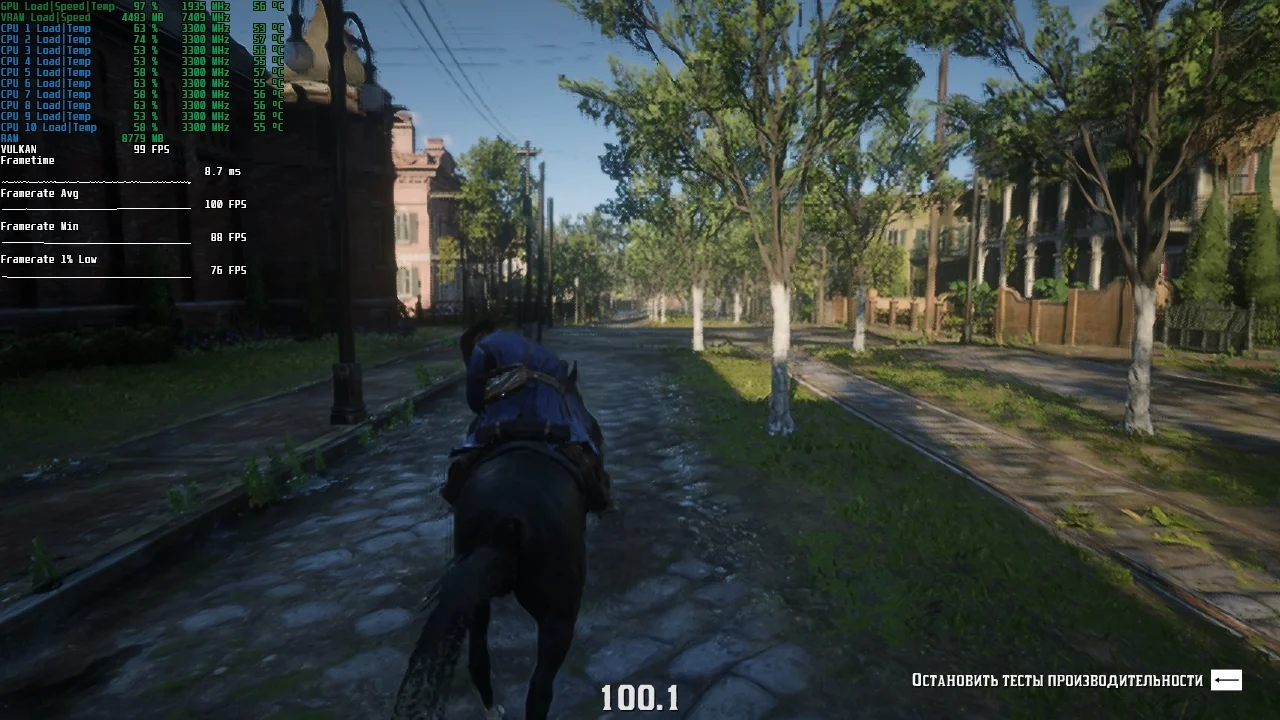
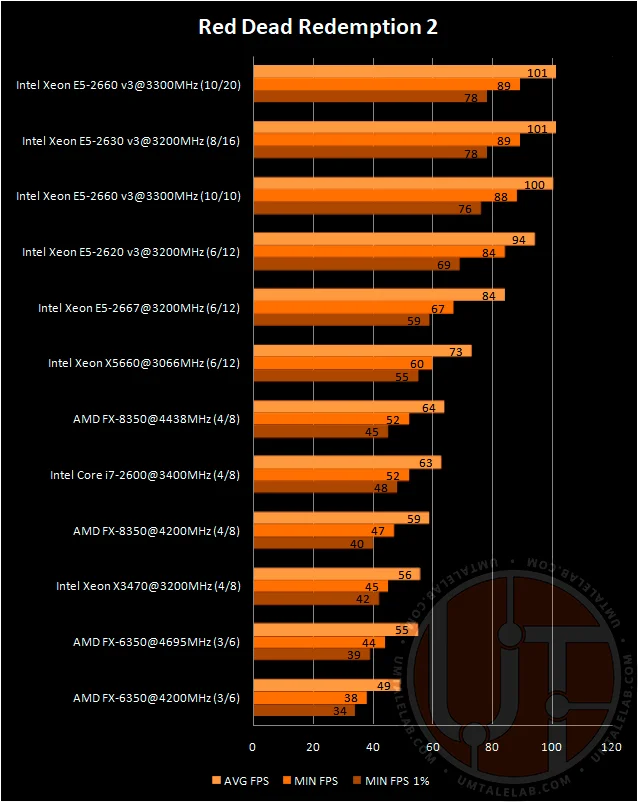
Unfortunately, even at 720p, the RTX 2060 SUPER graphics card struggles to adequately test processors in Red Dead Redemption 2 at max settings. Even so, it's clear the E5-2660 v3 without HT delivers slightly lower FPS than its 20-thread counterpart.
Watch Dogs Legion
 ⤢ ВІДКРИТИ
Ray Tracing — ON


 ⤢ ВІДКРИТИ
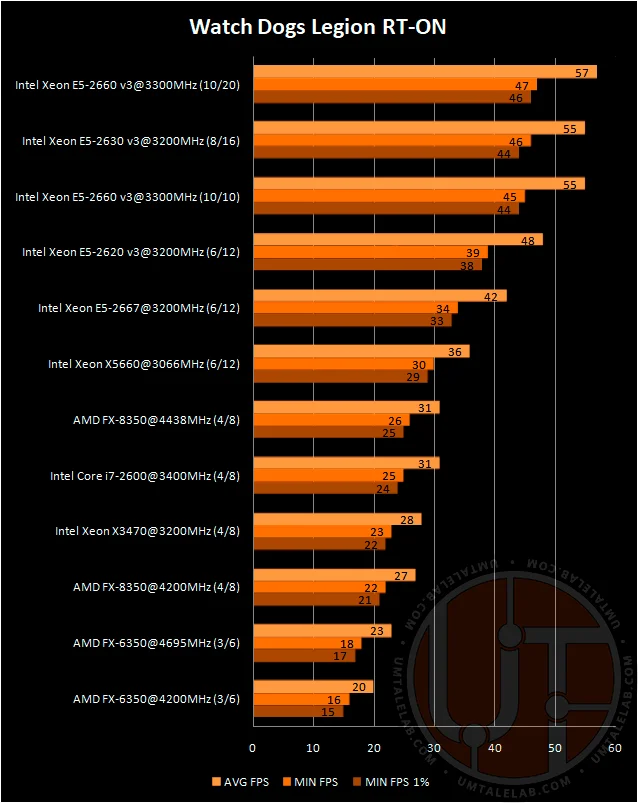
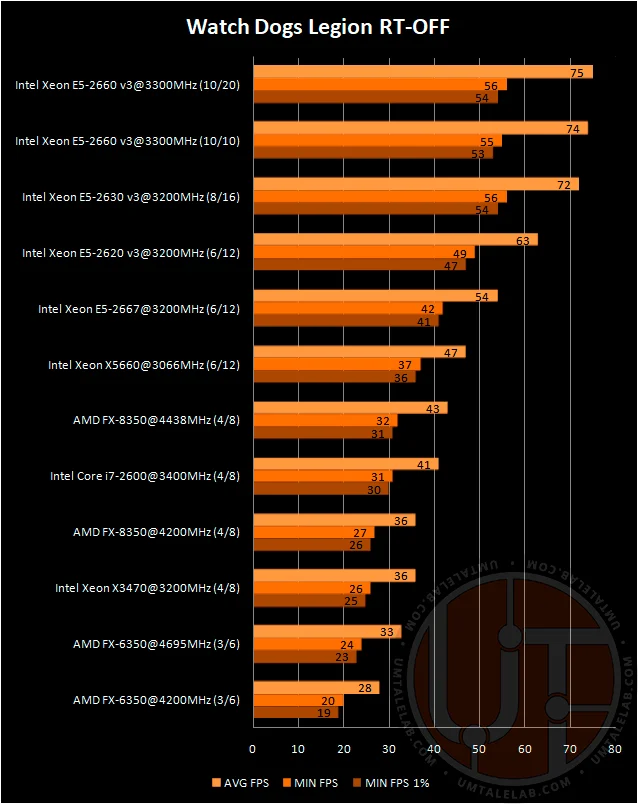
Finally, we've reached the most demanding game in our test suite: Watch Dogs Legion. Ubisoft's third installment in the popular series scales well with more processor execution units, but only up to 8 cores and 16 threads. The 20-thread E5-2660 v3 only managed a 3% lead over the E5-2630 v3. In fact, disabling HT in this game actually reduced the 10-core chip's performance, albeit not significantly.
Ray Tracing — OFF

 ⤢ ВІДКРИТИ
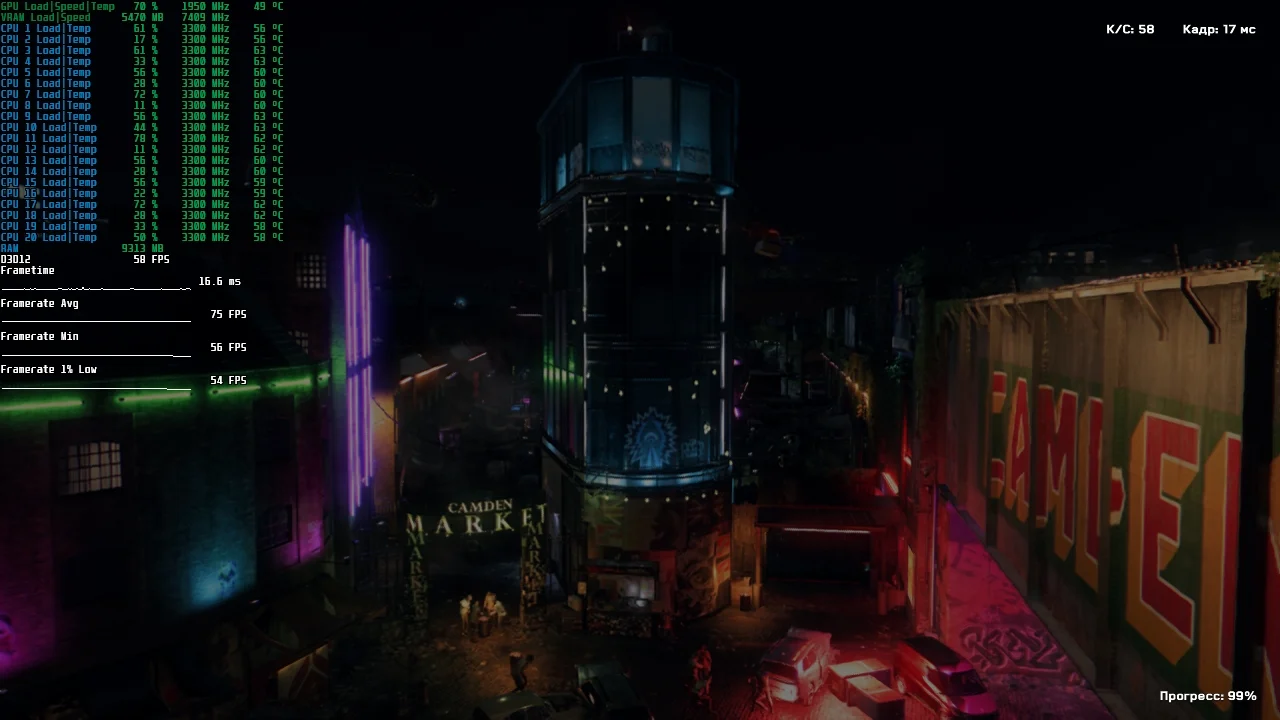
In the less demanding mode without ray tracing, the performance difference between the E5-2660 v3 and E5-2630 v3 practically vanishes, making it largely irrelevant for the end user.
E5-2660 v3 (10/20) advantage over E5-2630 v3 (8/16) in 11 games:
Game: | AVG FPS | MIN FPS | MIN FPS 1% |
|---|---|---|---|
Assassins Creed Valhalla | 5.94% | 6.98% | 5.97% |
Battlefield 2042 RT | 9.72% | 15.63% | 11.54% |
Battlefield 2042 | 5.94% | 9.09% | 8.7% |
Cyberpunk 2077 RT | -1.41% | 1.75% | 3.7% |
Cyberpunk 2077 | 0% | 8.7% | 5.97% |
Destiny 2 | 5.08% | 2.97% | |
Elden Ring | 1.75% | 1.96% | 2.78% |
Far Cry 6 RT | 0% | -2% | 0% |
Far Cry 6 | 0% | -1.89% | 0% |
Marvel’s Spider-Man Remastered RT | 2.08% | 0% | 0% |
Marvel’s Spider-Man Remastered | 1.59% | -1.92% | -4.44% |
Marvel’s Guardians of the Galaxy RT | 3.7% | 11.29% | 7.55% |
Marvel’s Guardians of the Galaxy | 4.4% | 2.82% | 3.92% |
Saints Row [2022] RT | 1.41% | 0% | -2% |
Saints Row [2022] | 2.7% | 3.33% | 3.77% |
Red Dead Redemption 2 | 0% | 0% | 0% |
Watch Dogs Legion RT | 3.64% | 2.17% | 4.55% |
Watch Dogs Legion | 4.17% | 0% | 0% |
Average gain in 11 games | 2.82% | 3.38% | 3.06% |
Only Battlefield 2042 and Marvel's Guardians of the Galaxy saw a noticeable performance boost from the four additional threads. The remaining games in our test suite simply couldn't utilize that many CPU execution threads.
E5-2660 v3 (10/10) advantage over E5-2660 v3 (10/20) in 11 games:
Game: | AVG FPS | MIN FPS | MIN FPS 1% |
|---|---|---|---|
Assassins Creed Valhalla | 2.88% | 5.75% | 2.9% |
Battlefield 2042 RT | 2.53% | -1.35% | 3.45% |
Battlefield 2042 | 0% | 0% | -2.67% |
Cyberpunk 2077 RT | 0% | -6.9% | -10.71% |
Cyberpunk 2077 | 4.3% | -12% | -12.68% |
Destiny 2 | 0% | -0.95% | |
Elden Ring | -3.45% | -5.77% | -13.51% |
Far Cry 6 RT | 7.14% | 6.12% | 4.55% |
Far Cry 6 | 15.38% | 15.38% | 12.24% |
Marvel’s Spider-Man Remastered RT | 20.41% | 23.08% | 19.44% |
Marvel’s Spider-Man Remastered | 18.75% | 15.69% | 13.95% |
Marvel’s Guardians of the Galaxy RT | 0% | -2.9% | -1.75% |
Marvel’s Guardians of the Galaxy | 2.15% | -2.67% | 3.77% |
Saints Row [2022] RT | 5.56% | 5.26% | 4.08% |
Saints Row [2022] | 3.95% | 3.23% | -1.82% |
Red Dead Redemption 2 | -0.99% | -1.12% | -2.56% |
Watch Dogs Legion RT | -3.51% | -4.26% | -4.35% |
Watch Dogs Legion | -1.33% | -1.79% | -1.85% |
Average gain across 11 games | 4.1% | 2.13% | 0.73% |
As expected, the performance difference between an E5-2660 v3 with Hyper-Threading enabled and the same CPU without HT heavily depends on the specific workload. For instance, deactivating multi-threading in Cyberpunk 2077 significantly impacts minimum FPS. Yet, in Marvel's Spider-Man Remastered and Far Cry 6, disabling HT is absolutely essential for optimal performance.
Here are the results; ultimately, it's up to you to decide which mode best suits your processor.
Conclusion
Our testing revealed that the Xeon E5-2660 v3 is a rather ambiguous processor. While it was undoubtedly faster than the 8-core E5-2630 v3 in 90% of cases, its advantage often wasn't substantial. Moreover, to get a noticeable 'boost' in poorly optimized projects, you need to disable Hyper-Threading, leaving only 10 cores active.
Therefore, it seems quite clear that upgrading from a 16-thread 2630 v3 to a 2660 v3 makes no sense. However, if you're building a new LGA 2011 v3 system from scratch in 2022, then opting for the 20-thread Haswell is definitely the better choice.