BLOGS · GAME BLOGS
PUBLISHED
READING13 min
Dark Souls 2: A mediocre sequel, yet a great spin-off
While Dark Souls 2 is often seen as a disappointing sequel, it's a valuable spin-off. It introduced innovations that influenced Bloodborne, DS3, and Elden Ring.
Just to be clear upfront: everything presented here is solely the author's personal opinion, not the definitive truth. If you see things differently, feel free to jump into the comments for a discussion on this piece.
Introduction
Since its launch, Dark Souls 2, the successor to Hidetaka Miyazaki's iconic title, has often been dismissed as non-canonical, a failure, or simply irrelevant. What's more, every detractor of the 'second' game seems to have their own 'unique,' indisputable, and decisively argued take on why the project doesn't deserve its place. Fans of the original often cite DS2's unusual, sometimes muddled, and often poorly designed levels. They're also convinced the sequel is pointless due to its lack of direct connection to Gwyn's legacy, the Lord of Cinder's descendants, and their once-great kingdom. Meanwhile, players who gravitated towards the third installment frequently point to DS2's dull, weak, and frankly monotonous bosses. They'll also invariably mention the middling graphics, the clearly redundant weapon durability system, the frustrating health reduction mechanic after each death, the implementation of the controversial 'Adaptability' stat, and the debatable utility of 'Life Gems' (health-restoring stones).
To some extent, most of the criticisms leveled against Dark Souls 2 are genuinely valid. However, it's crucial to acknowledge that, at its core, the Dark Souls sequel is only indirectly part of the main series; in practice, it functions quite differently. It makes more sense to consider the second installment a distinct 'Soulslike' project — or even a spin-off — rather than a direct, numbered entry in the series. But does this distinction excuse its flaws and shortcomings? Let's break it down.
Dark Souls 2 isn't a sequel
First off, Dark Souls 2 was developed by a secondary team at FromSoftware, led by Tomohiro Shibuya and Yui Tanimura. At the time, Hidetaka Miyazaki's core team was busy refining the engine and working on an entirely new Soulslike project: Bloodborne. This meant they simply couldn't fully participate in the Dark Souls sequel's development. Of course, Shibuya and Tanimura, who stepped in for Miyazaki, did consult with the maestro. But frankly, consulting and directing development are two entirely different things. It should be obvious how profoundly a change in game director impacts development and the project's mechanics. Given this, it's safe to say DS2 is merely a 'variation on the theme' of Dark Souls. The project never truly aimed to be a full-fledged sequel, despite Bandai Namco's aggressive marketing. Incidentally, Dark Souls 2 isn't the only victim of shrewd rights holders for popular franchises. We don't need to look far for examples: among relatively recent games that struggled due to poor marketing, consider Battlefield Hardline. Instead of the usual Battlefield developer, DICE, it was handled by the no-less-talented folks at Visceral Games. However, like DS2, Hardline suffered from weak funding, flawed marketing, and a rigid tie-in to the main series. Hardline is also widely considered a failure, but fundamentally, much like Dark Souls 2, it was a somewhat different game with interesting mechanics, an iconic setting, and its own philosophy that was never truly allowed to shine. Fans mistakenly expected classic Battlefield gameplay from Hardline. When they didn't get what they wanted, they quickly became disillusioned, turning goodwill into resentment. As a result, Hardline's popularity quickly faded, and a rather good game swiftly fell into obscurity. Sound familiar? But we've strayed. Let's return to the main topic of this piece.
A numbered entry outside the series?
So, what does this mean? Is DS2 non-canonical and unrelated to the main game series? Given the third installment's storyline and Miyazaki's overarching vision, it's safe to say it's not entirely canonical. The game feels more like a spin-off from the main series. It was developed by entirely different people with their own distinct worldview and philosophy. Their fresh perspective on the franchise helped subtly shift Miyazaki's established concepts, leading to genuinely necessary and important changes in core mechanics and overall gameplay improvements for the series.
Dark Souls 2 as a source of inspiration
Consider this: those Life Gems are essentially a direct analogue to Bloodborne's Blood Vials, implemented for a slightly more dynamic gameplay experience. Undeniably, in Bloodborne, you have to farm them by killing specific monsters, which makes acquiring them slightly more involved than the 'mundane' soul farming to buy Life Gems. However, in essence, they function similarly as 'infinite' resources. Furthermore, these consumables significantly speed up gameplay, favoring a departure from the classic Estus Flask mechanic.
Delving deeper, for instance, the ability to travel between bonfires (or their equivalents in other games) from the very start was adopted by Miyazaki in all subsequent FromSoftware projects. Moreover, DS2's multifaceted and well-thought-out combat system, with its diverse stances, unique attacks, and weapon combinations, found new life, first partially in Dark Souls 3, and then fully in the recent Elden Ring.
If we consider Dark Souls 2's PvP, even the sequel's most ardent haters concede that battles against other Hollows are exceptionally well-executed, arguably surpassing both the first and third installments in some aspects.
Everything has its downsides
Dark Souls 2's bosses aren't as diverse as we'd truly like. Knights, bigger knights, shielded knights, and slightly more elaborate knights – that's essentially how you can describe the vast majority of the sequel's bosses. With the exception of the Fume Knight and, to some extent, Velstadt, the Royal Aegis, most of the other armored bosses pose no serious threat, even to a newcomer — much less a series veteran who's conquered Demon's Souls and the original Dark Souls. And that's genuinely unimpressive. Out of 41 available bosses in the game, truly unique ones number no more than 10, and that's being generous.
Moreover, beyond the weak design of some enemies, the game features soulless copies of bosses from the original game, like the Old Dragonslayer and the Belfry Gargoyles. Even worse, there's self-plagiarism in the form of the Old Iron King and the Two Dragonriders (two of them, Karl!). Because, clearly, if a player easily handles one utterly unchallenging boss, then two of those 'brave, identical fellows' will surely pose a worthy challenge to a leveled-up Hollow. Right? Fortunately, only a handful of the truly dangerous and powerful enemies suffer from these particular drawbacks.
Unique Bosses, Naturally
 ⤢ ВІДКРИТИ
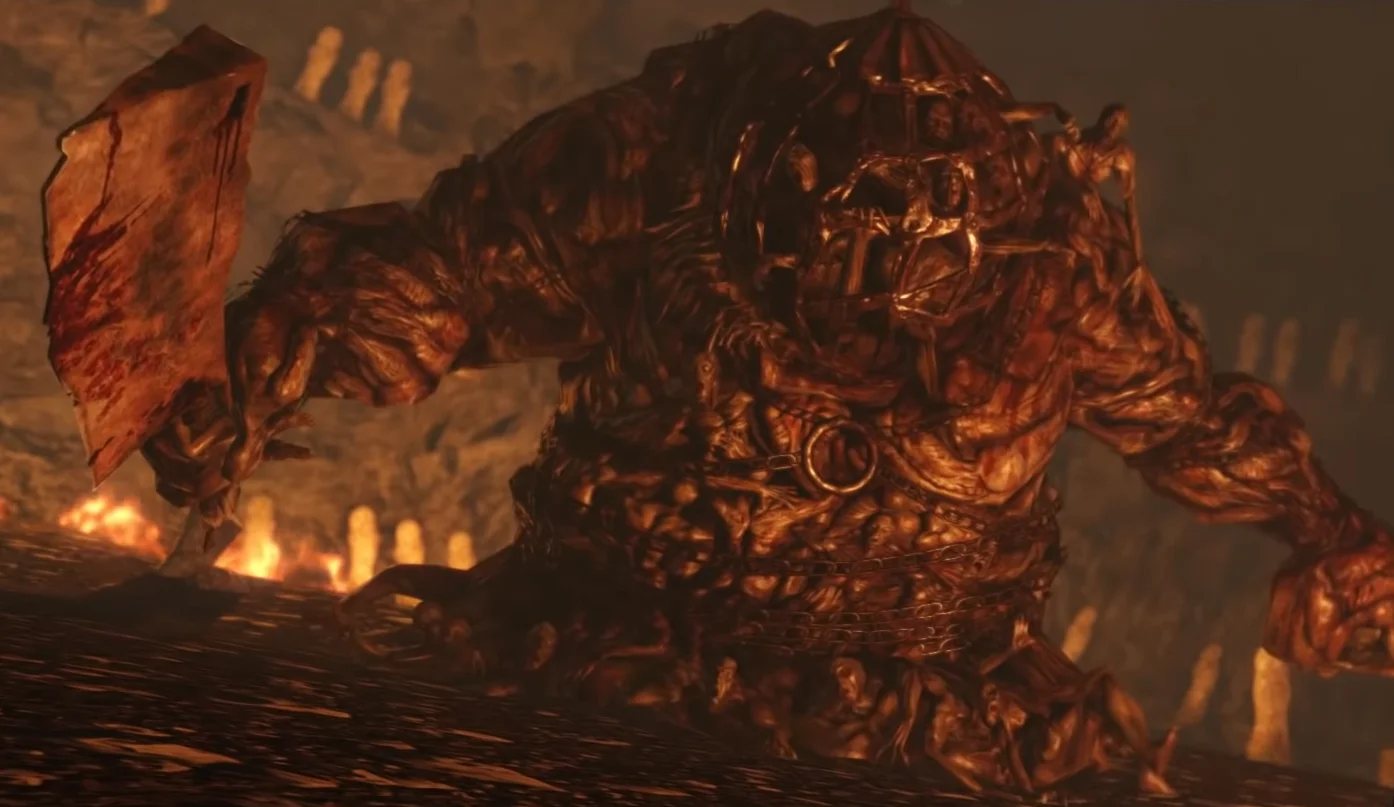
The Rotten is a massive, decaying (no surprise there) undead monstrosity. It's an amalgamation of countless hollows, all controlled by one hollow perched on its shoulder. As one of the first truly powerful bosses, it stands as a significant obstacle on the player's path. Beyond its potent attacks, the fight against the Rotten is complicated by the fiery cavern floor around the arena's center. Moreover, the boss vomits a corrosive fluid from what appears to be a mouth (if you can call the gaping maw in its torso that). If you're using fire weapons, charcoal pine resin, or pyromancy, this liquid will literally incinerate you, dealing massive damage. A key feature of the Rotten fight is the ability to significantly alter the battle by severing its upper (and essentially only) limbs. However, the boss can regrow these severed body parts. Fun fact: a popular fan theory suggests the Rotten is a reincarnation of Nito, Lord of Gravelord, a boss from the original Dark Souls.
 ⤢ ВІДКРИТИ
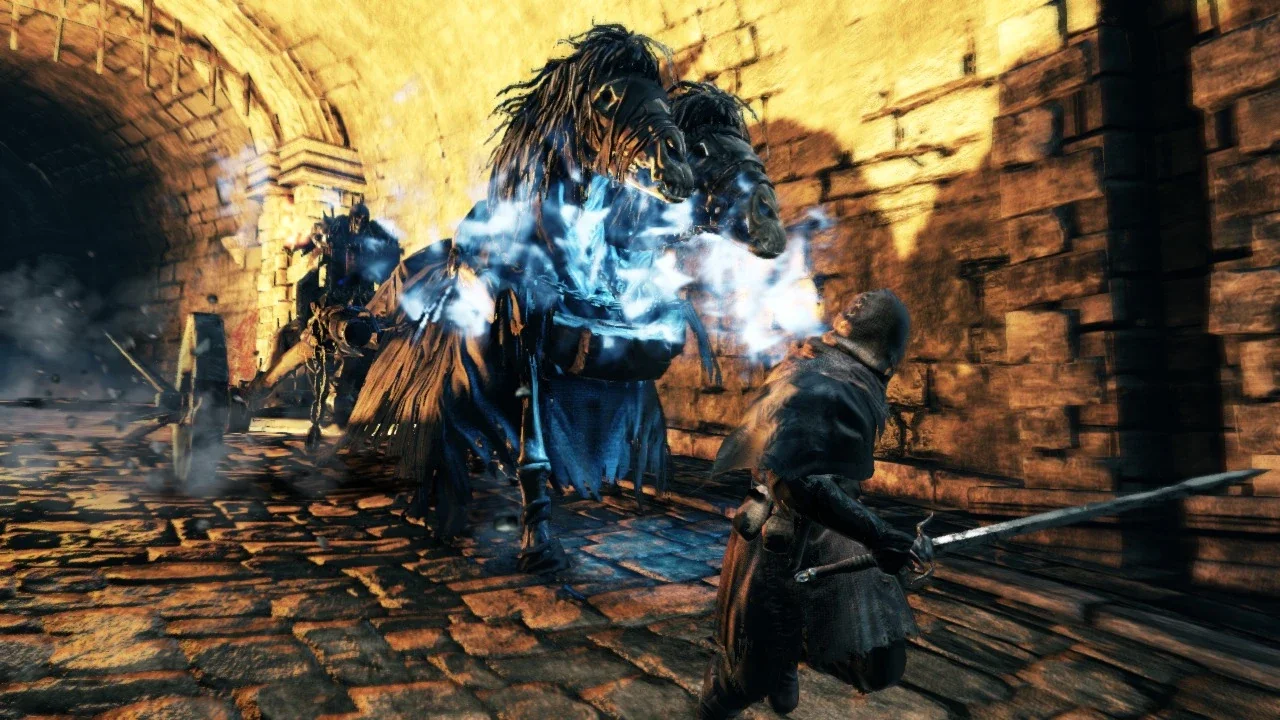
The Executioner's Chariot (hello, Elden Ring!) is a small chariot pulled by a two-headed hollow horse and driven by an executioner. While optional and relatively straightforward, its battle isn't like a typical boss fight in the franchise. The boss races around a circular corridor, cutting down anyone in its path with sharp blades attached to its wheels. Additionally, regular monsters in the corridor significantly slow the player's movement. Players have several ways to destroy the Chariot, but the developers intended for it to be stopped first: you need to run around the entire circle, hiding from the boss in the corridor's alcoves, and pull a specific lever. This action lowers a gate, causing the enemy to crash into it at full speed. The actual boss fight then ensues with the two-headed horse, as the driver (the executioner) dies from the collision. On a first playthrough, the Chariot doesn't pose too many problems, but its unique mechanics make it memorable.
 ⤢ ВІДКРИТИ
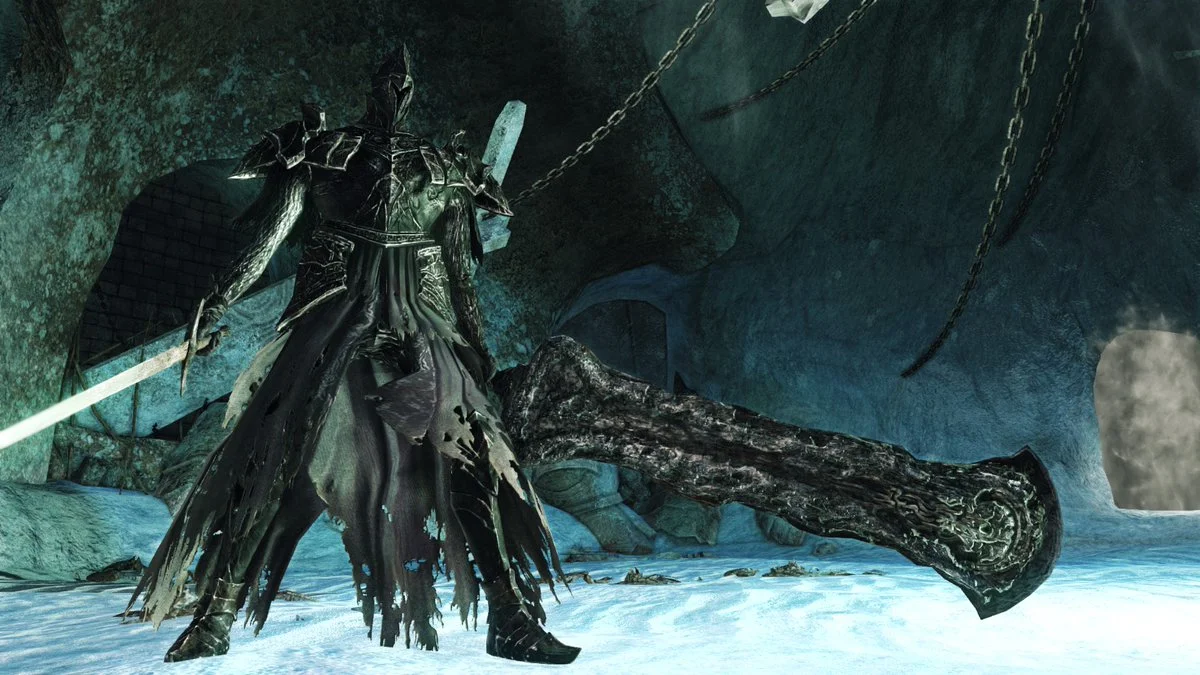
The Fume Knight (true name, Raime) was King Vendrick's former protector and a virtuosic sword master. His pirouettes have made countless gamers spend many hours in Raime's chambers. The boss has two phases; the first isn't particularly problematic, as players will have already faced many strong opponents like the Looking Glass Knight. However, after losing 50-60% of his health bar, the Fume Knight transitions to his second phase. Here, players confront the boss's true power. He discards one of his two blades, wielding only a single, massive two-handed sword. Raime ignites it, gaining the ability to use dark pyromancy. What's more, incoming damage to the boss is significantly reduced in the second phase, and his moveset becomes much more aggressive. There's another interesting detail about the Fume Knight: if you enter his chambers wearing Velstadt's Helm (Velstadt was Raime's former companion and the king's other guardian), the boss fight immediately begins in its second phase. The explanation is simple: the companions once had a fierce quarrel, after which Velstadt challenged Raime to a duel. Velstadt won, declared his former ally a traitor, and exiled him from the kingdom.
And these aren't even all the interesting adversaries: there's the Old Iron King, the Demon of Song (undeniably easy, but intriguing upon first encounter, and the path to it is dozens of times harder than the fight itself), Scorpioness Najka, the Darklurker, Duke's Dear Freja, and Nashandra. However, while the final boss, Nashandra, is relatively unique, she poses almost no real threat – despite being one of the game's ultimate challenges! Personally, though, I believe Dark Souls 2's main appeal isn't in its intricate and challenging bosses, but rather in its melancholic story and deep characters.
A Story That Hooks You
 ⤢ ВІДКРИТИ
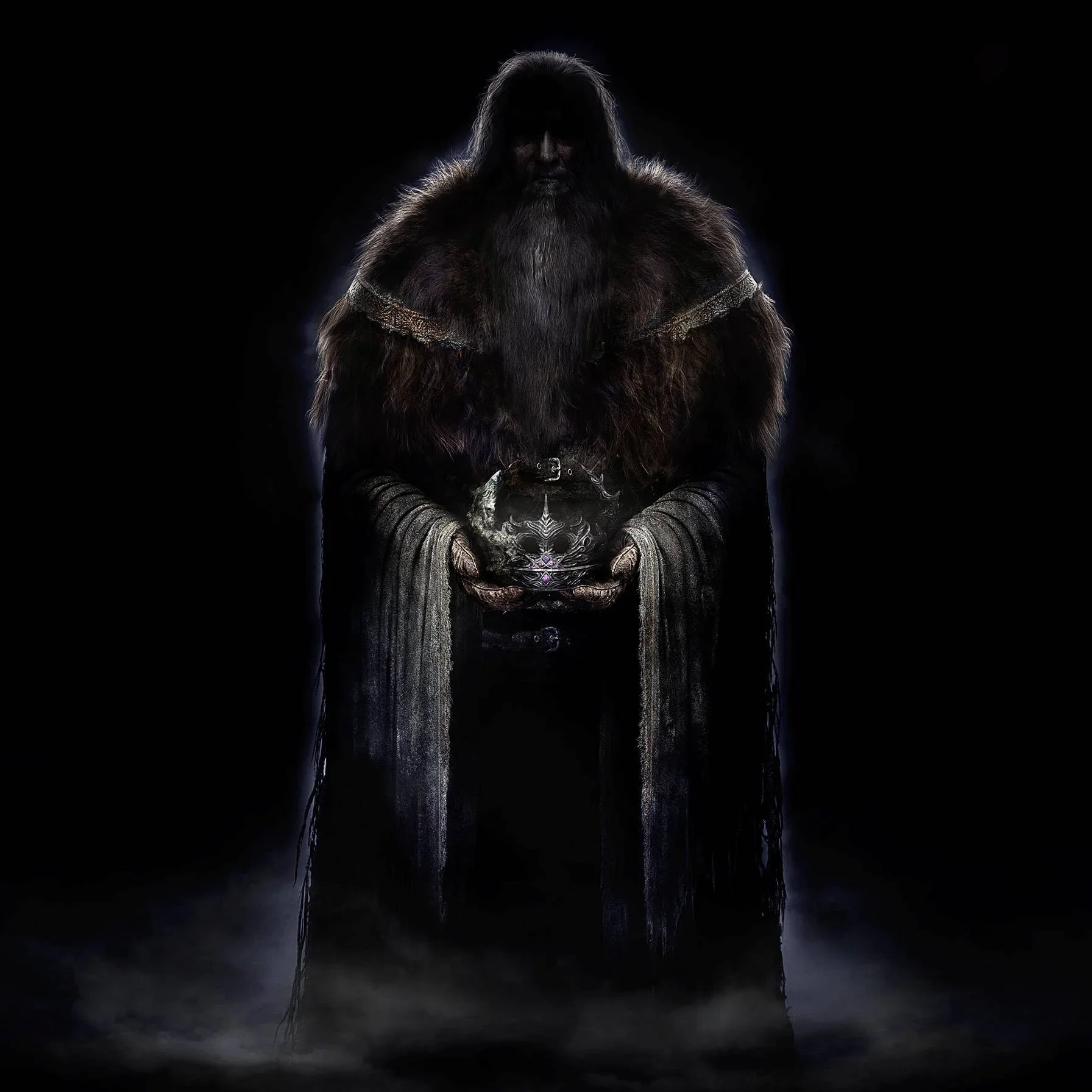
What could be sadder than a deceived man in love? King Vendrick embodies the destructive power of blind love for his wife, the Queen, who commanded him to invade another continent and eradicate the race of giants. This unleashed a chain of irreversible events that, in turn, led the once-great kingdom of Drangleic to decline and ruin. And what about the protagonist? They're no king, no subject, no soldier. Essentially, this isn't their world, not their kingdom. They're merely seeking salvation – a cure for their affliction. Yet, it turns out the fate of the decaying kingdom is directly intertwined with their quest for a cure. By playing through the game, talking to every NPC, exploring every corner, examining every sword and piece of armor, and reading their descriptions, the player slowly delves into the deeply tragic history of Dark Souls 2's world. By the end of the main storyline, upon meeting King Vendrick and witnessing what the once-great commander has become, a sense of emptiness washes over you. The ruler confined himself to a small room to protect the throne from Nashandra, but he ultimately failed. All that remains is a faceless, desiccated corpse, aimlessly wandering an oval hall.
Majula
 ⤢ ВІДКРИТИ
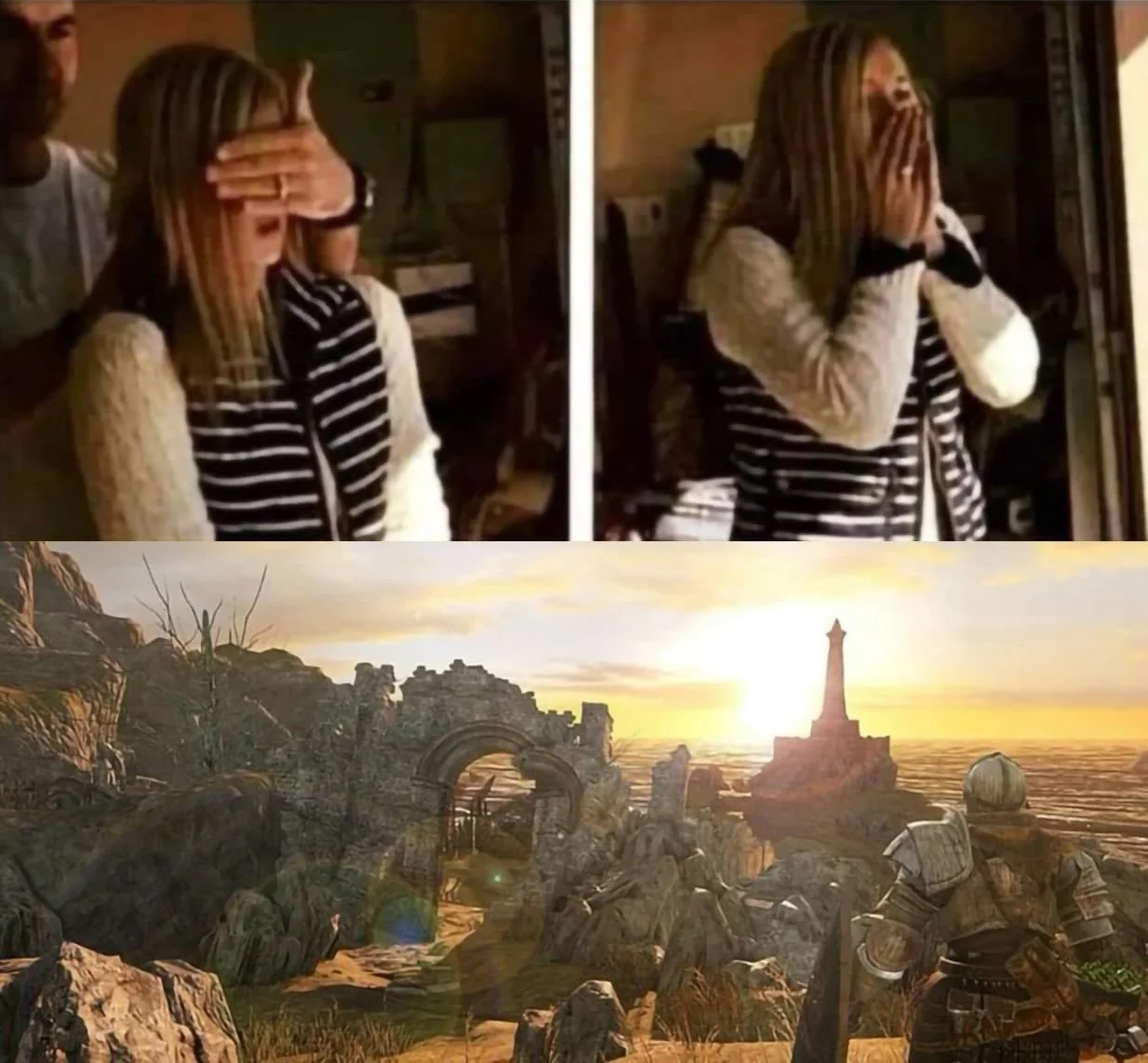
Majula welcomes players with its unforgettable vistas, simultaneously oppressive and soothing music, and its doomed local residents, whose numbers will increase significantly by the end of the game (if you helped facilitate it, that is). Majula serves as both a welcome and a gateway, ushering players into a new world filled with far more tenacious and dangerous enemies. Majula feels like a Limbo, harboring a fragment of Dark Souls 2's lost grandeur.
The Bottom Line
 ⤢ ВІДКРИТИ
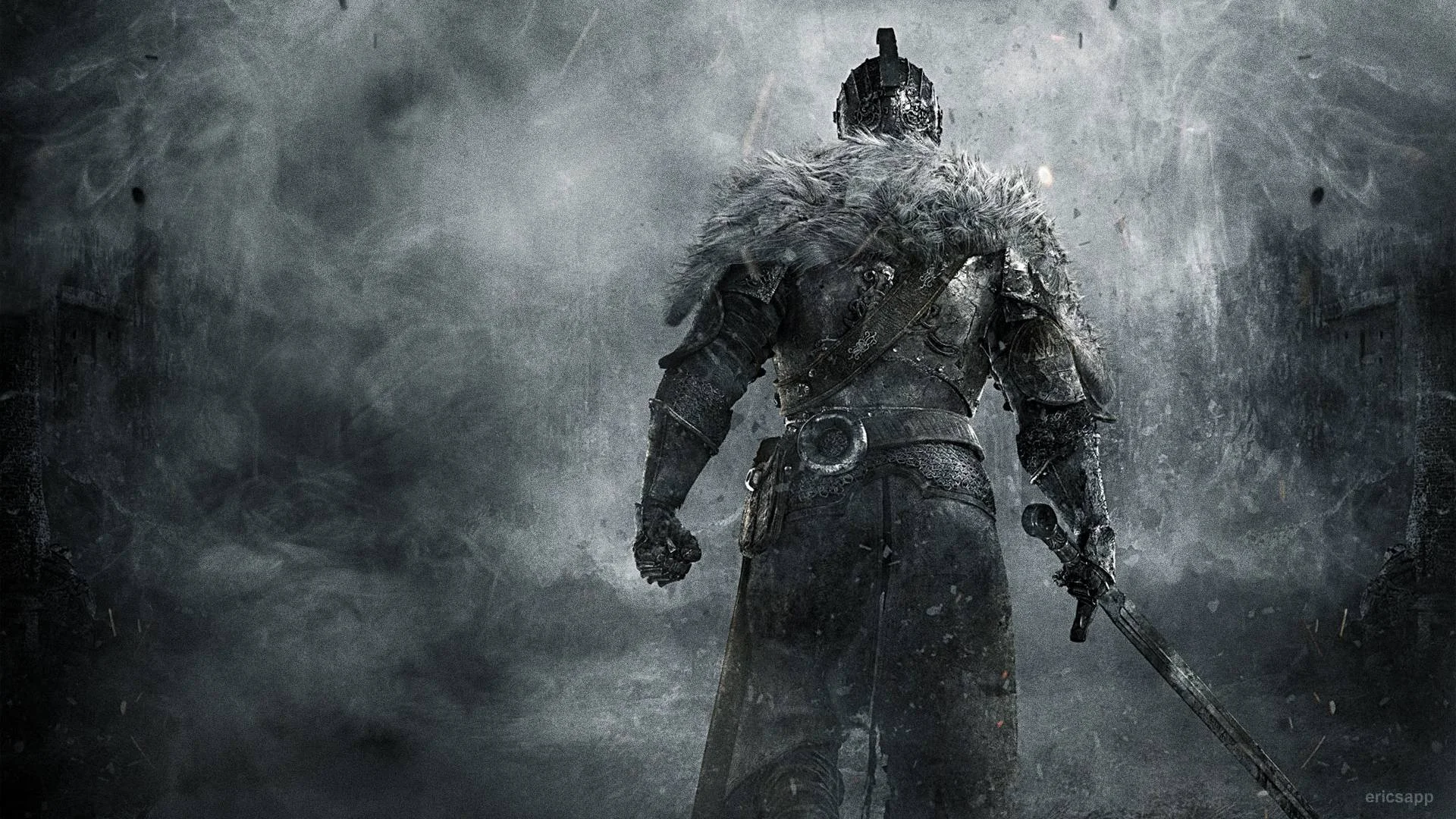
To summarize, I believe Dark Souls 2, through a fortunate turn of events, allowed many casual gamers to take their first step into hardcore gaming. After successfully finishing 'the second one,' they eagerly devoured the rest of From Software's creations and countless Soulslike projects.
Of course, Dark Souls 2 has its share of problems and flaws. However, these quickly become irrelevant once you immerse yourself in the world's rich history and the tragic fates of its inhabitants.
If you've spotted any inaccuracies in the descriptions of skills, bosses, plot, or lore, please let me know in the comments, and I'll be sure to correct the text. Thanks for reading, and I'll catch you in the next blog!