TESTS · CPU · INTEL
PUBLISHED
READING7 min
Budget bomb: Intel Celeron G530 review and benchmarks
A detailed look at the Intel Celeron G530: performance analysis, comparisons with rivals, and a verdict on whether this budget CPU is worth buying.
Introduction
The wait for Celeron processors on the LGA1155 platform felt endless. News reports repeatedly hinted at their imminent arrival, but summer dragged on without any budget CPU releases. You've probably already asked yourself, "Why do we even need them?"
Consider this: what platform truly thrived without this family? Socket 423 and its Pentium 4 quickly faded. Next, Socket 478 saw Celeron releases and had a lifespan of five years. Then came the long-lived LGA775, where the Celeron brand went through multiple architectures and process nodes. After that, LGA1366 arrived; while it didn't get budget options, it didn't need them either, being a high-end segment.
LGA1156 followed LGA1366, only to vanish little more than a year later. History clearly shows Intel doesn't release budget Celerons for platforms already on life support. The arrival of the Celeron "G" series for LGA1155 suggests this socket will live on for at least two, possibly even three, more years. After all, Intel itself claims it will release processors based on the upcoming Ivy Bridge architecture for it.
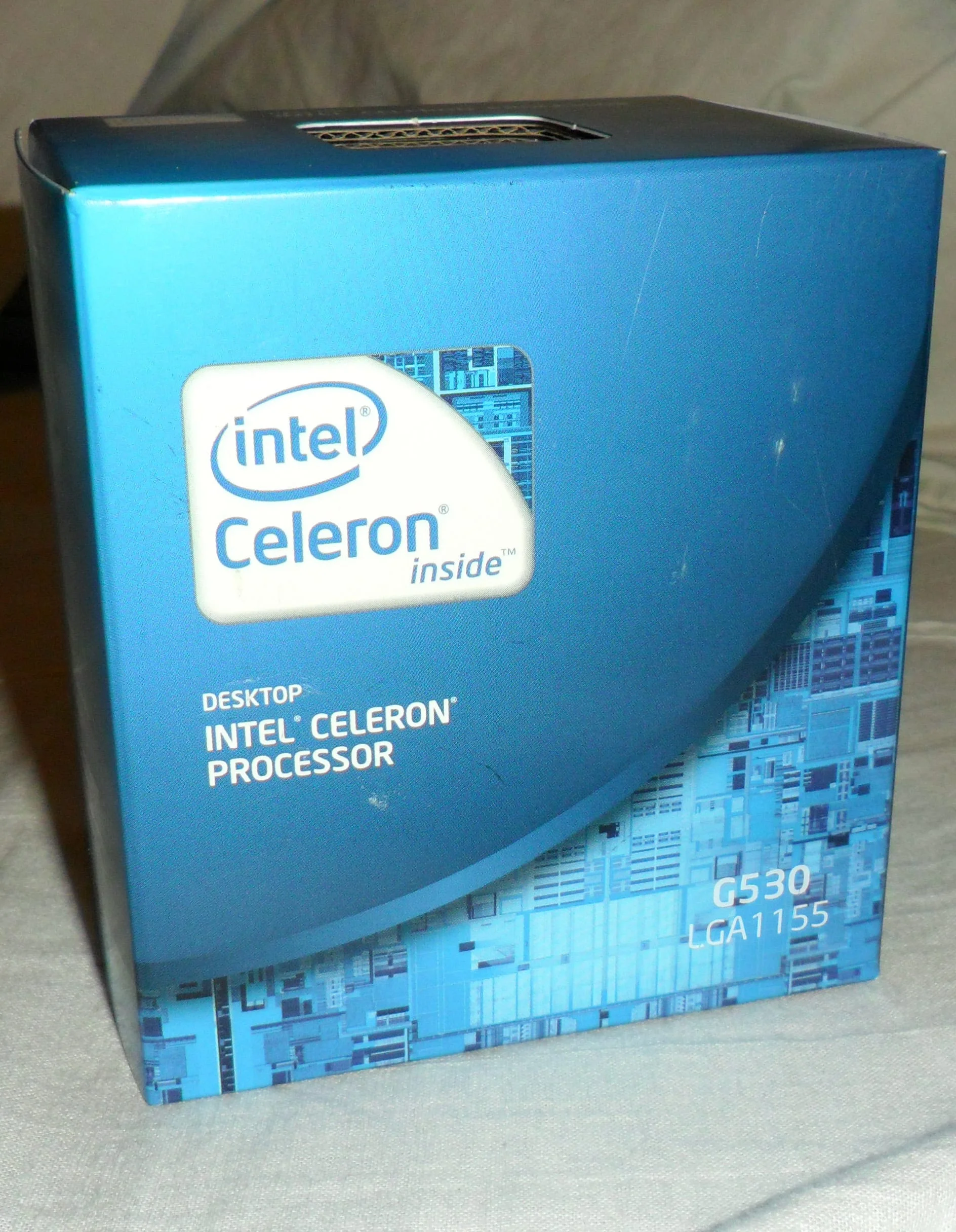
Intel released three CPUs under the Celeron G brand: the Celeron G440, Celeron G530, and Celeron G540. The G440 is a single-core model with a 1600 MHz clock speed and 1MB of L3 cache. The G5xx processors are dual-core solutions, and our test lab received the entry-level Celeron G530.
Let's look at its packaging:
 ⤢ ВІДКРИТИ
 ⤢ ВІДКРИТИ
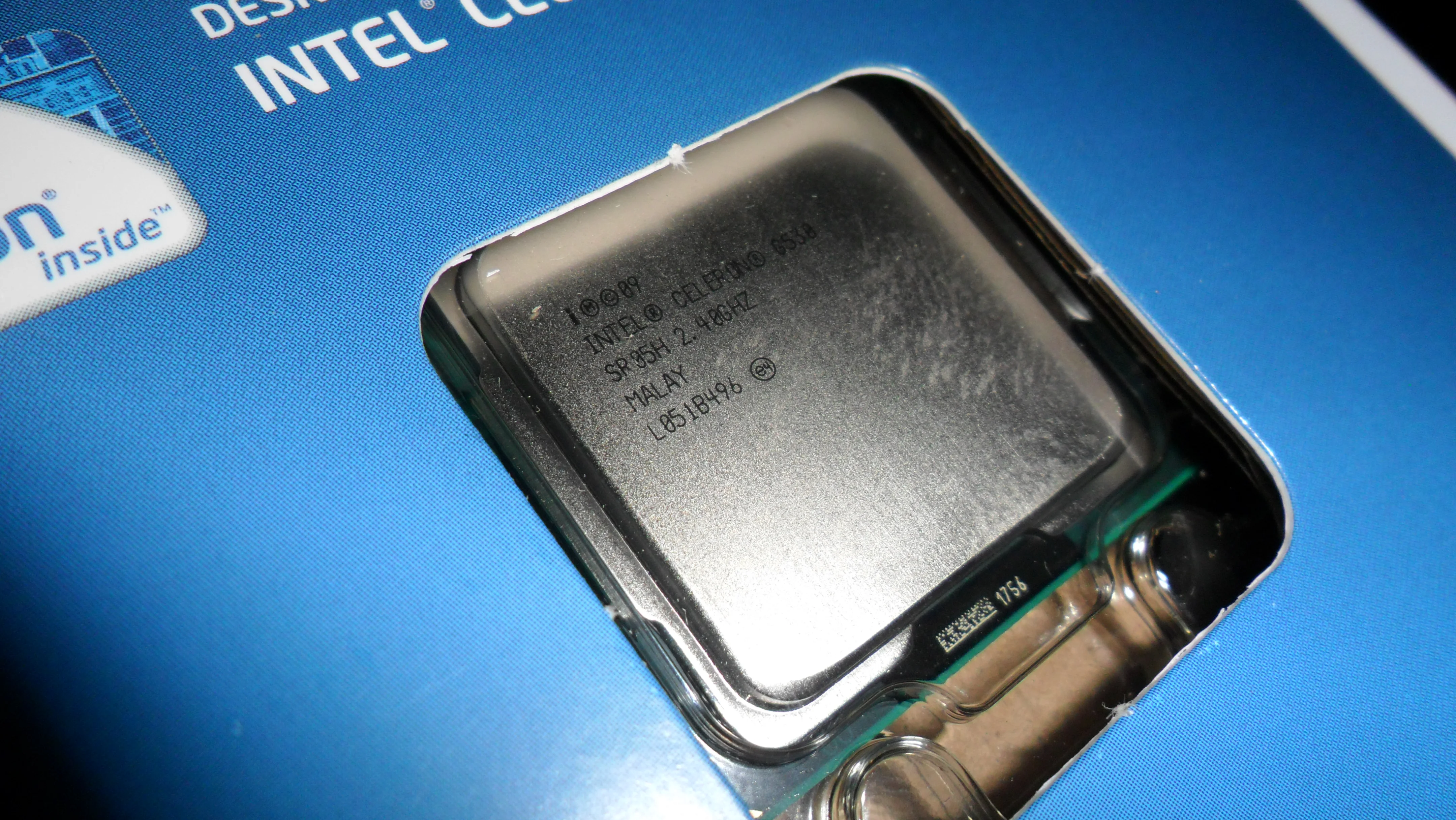
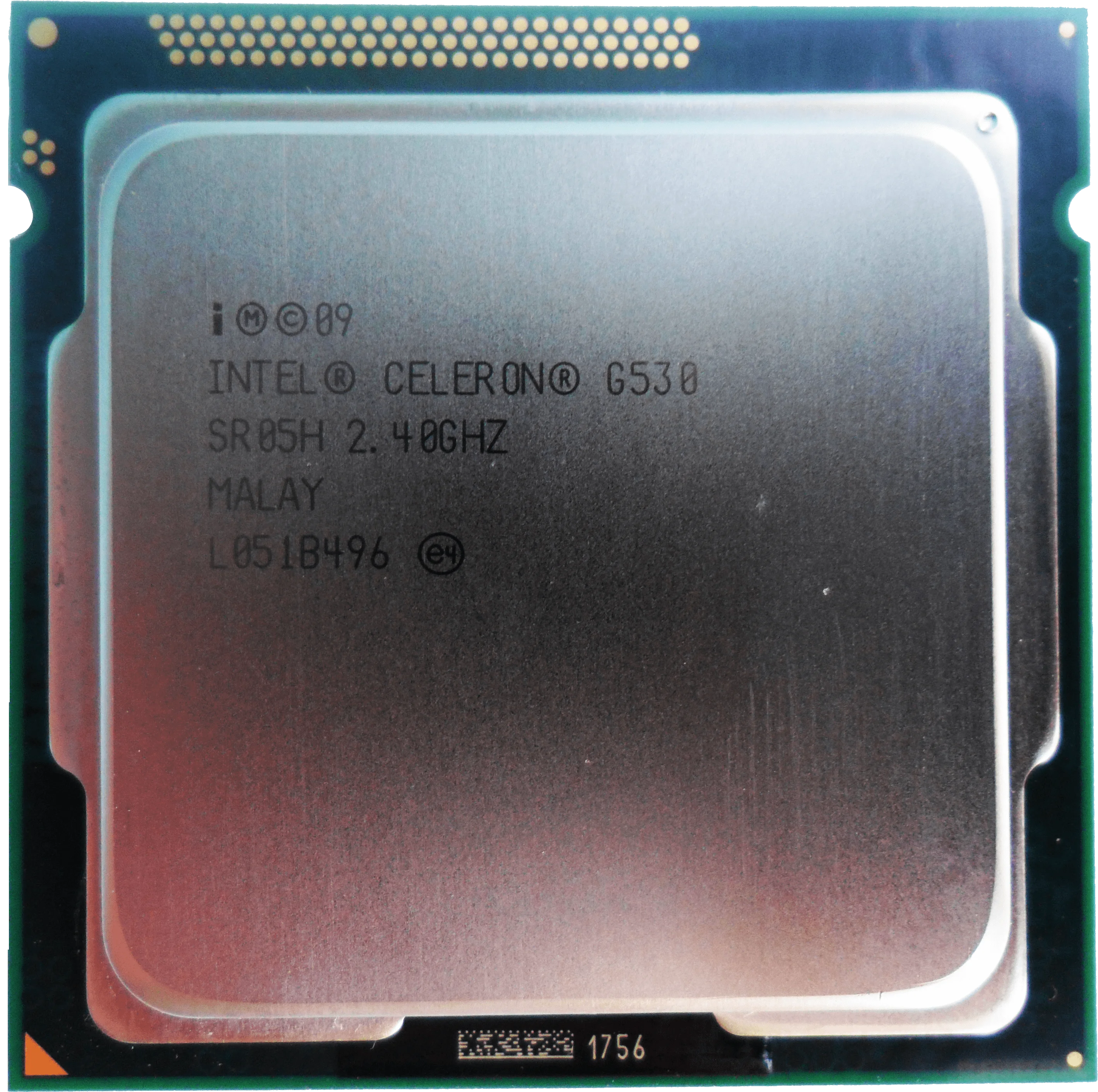
Now, let's examine the processor itself:
 ⤢ ВІДКРИТИ
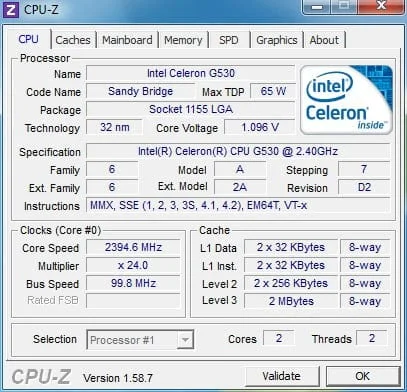
And a CPU-Z screenshot:
 ⤢ ВІДКРИТИ
Our test sample is marked SR05H. The Celeron G530 processor is based on the 32nm Sandy Bridge core. The chip features 256 KB of L2 cache per core and 2 MB of shared L3 cache. Its clock speed is 2400 MHz, achieved with a 24x multiplier and a 100 MHz BCLK. The nominal voltage is 1.08V. It's also worth noting that, unlike its higher-end siblings, this processor lacks AVX instruction set support.
 ⤢ ВІДКРИТИ
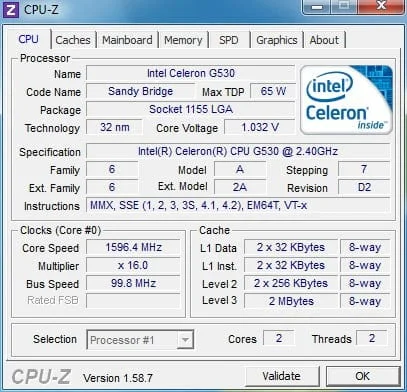
Thanks to Intel Speed-Step technology, the processor drops its frequency to 1600 MHz when idle, the lowest possible for Sandy Bridge cores.
 ⤢ ВІДКРИТИ
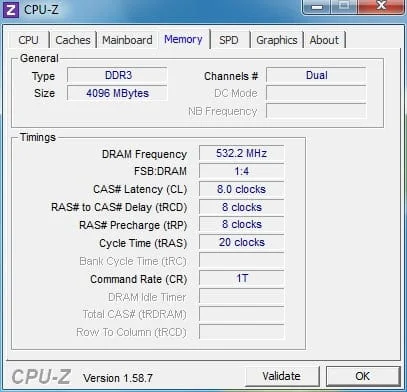
Also, when buying this processor, remember that its memory controller doesn't support RAM frequencies higher than 1066 MHz.
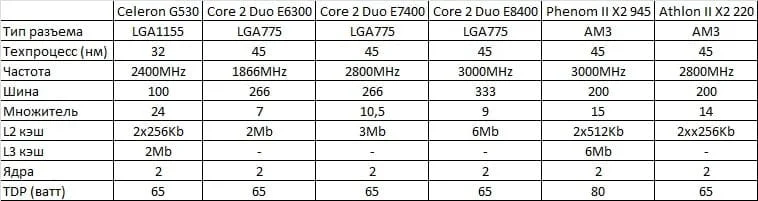
Let's look at the processor comparison table:
 ⤢ ВІДКРИТИ
The newcomer faces a tough challenge against powerful veterans of the CPU world. Its low clock speed could prove to be a significant handicap. To find out, it's time to dive into the benchmarks.
Test setup:
LGA1155 motherboard - ASUS P8P61 M-LX2
LGA775 motherboard - Biostar P35D2A7
AM3 motherboard - ASUS M4A785TD-V EVO
Processors - Core 2 Duo E6300, Core 2 Duo E8400, Phenom II X4 945 (two cores disabled), Athlon II X2 220, Celeron G530
LGA1155 CPU cooler - Intel BOX
LGA775 CPU cooler - Zalman 7700cu
AM3 CPU cooler - Cooler Master Susurro (RR-KCT-T9E1)
RAM - 2x2GB DDR3 Corsair XMS3 PC10700 (9-9-9-34)
RAM - 2x2GB DDR2 Corsair PC6400 (5-5-5-16)
Graphics card - Sapphire Radeon HD5770 (960/5300MHz)
PSU - FSP 500W
Hard drive - Samsung SP160GB
Software:
Windows 7 x64 SP1
CPU-Z 1.58
CineBench 9.5 x64
CineBench 11.5 x64
Light Work - Renderbench
3D Mark 2006 v1.2.0 (CPU test only)
3D Mark Vantage v1.1.1 (CPU test only)
Hot CPU tester PRO
AMD Catalyst 11.9
wPrime v1.55
Fritz Chess Benchmark
SuperPi 1.4
FRAPS v3.1.0
In-game graphics settings:
GTA IV:
Resolution - 1280x1024
Textures – high
Reflection resolution – high
Water quality – very high
Shadow quality – high
Filtering quality – x16
View distance – 100
Detail depth – 100
Traffic density – 100
Depth of field – on/on
Vertical sync – off/off
Prototype:
Resolution - 1280x1024
Textures - high
Shadows - high
Anti-aliasing - 0x
Rendering
 ⤢ ВІДКРИТИ
 ⤢ ВІДКРИТИ
 ⤢ ВІДКРИТИ
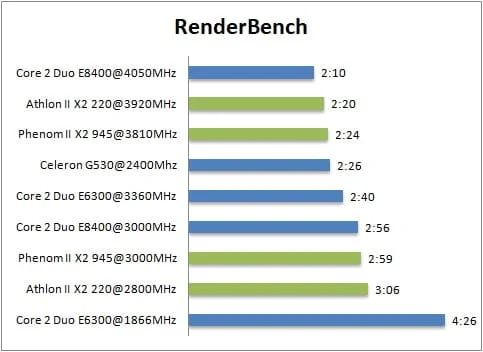
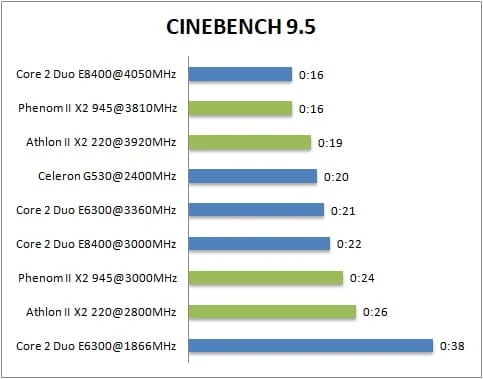
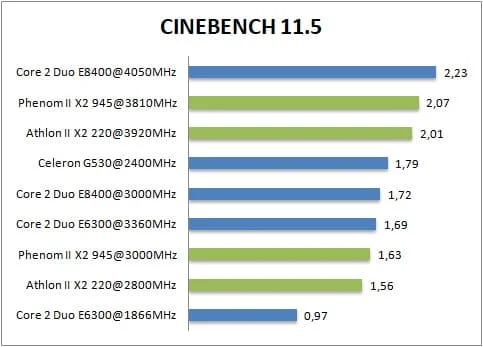
If you've read our previous article on the Core i5 2300 and Core i5 2500, you likely know how much faster the new architecture is in rendering. But here, the gains are simply colossal! Only overclocked previous-generation processors could outperform the newcomer.
Overall performance
 ⤢ ВІДКРИТИ
 ⤢ ВІДКРИТИ
 ⤢ ВІДКРИТИ
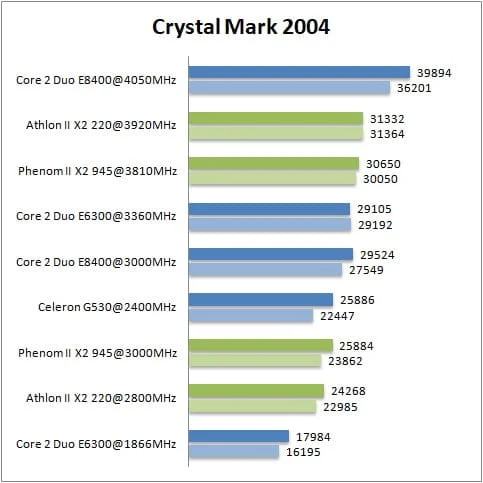
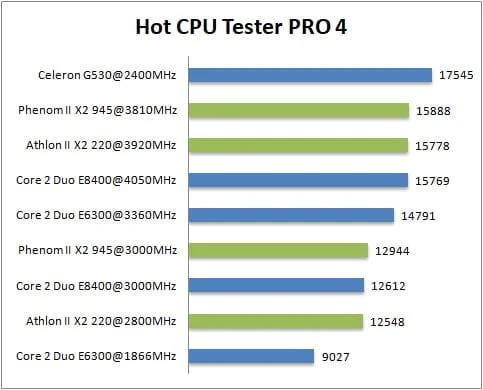
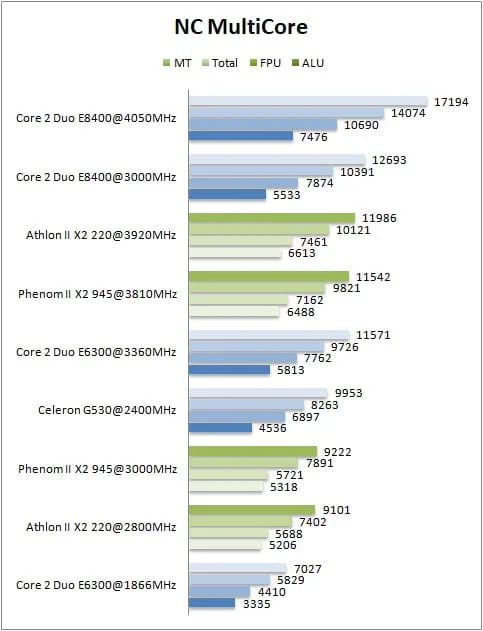
A strong start and a decent follow-up — that's how we can describe the overall performance benchmarks. By surpassing the Phenom II X2, the Celeron G530 proved that AMD needs to step up its game, as the Athlon II X2 looks lackluster compared to the newcomer. Hot CPU Tester Pro delivered a surprise: the Celeron G530 outpaced all rivals, even the Core 2 Duo E8400 running at 4050 MHz couldn't catch Intel's new chip.
Computation
 ⤢ ВІДКРИТИ
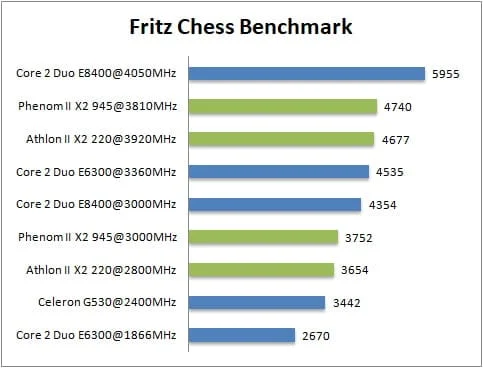 ⤢ ВІДКРИТИ
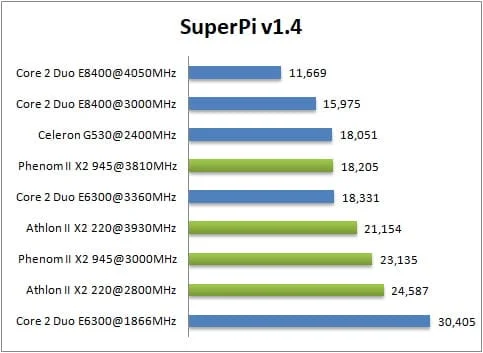 ⤢ ВІДКРИТИ
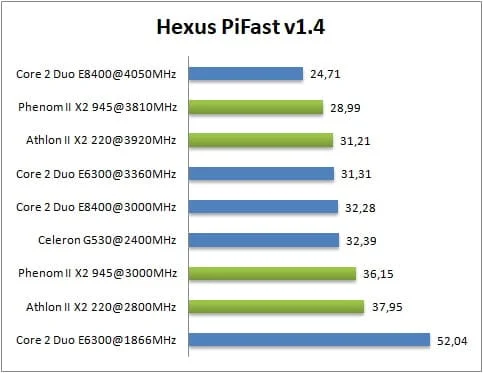 ⤢ ВІДКРИТИ
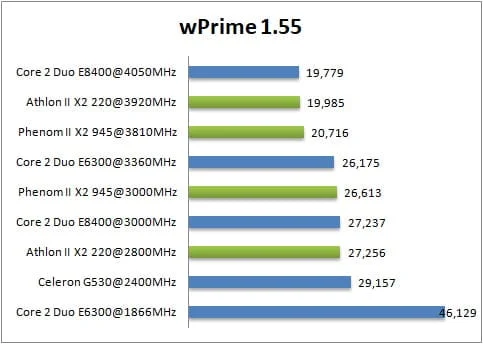
Slower and slower; here, the Celeron G530 lost to the Athlon II X2 220 in two tests.
Video encoding
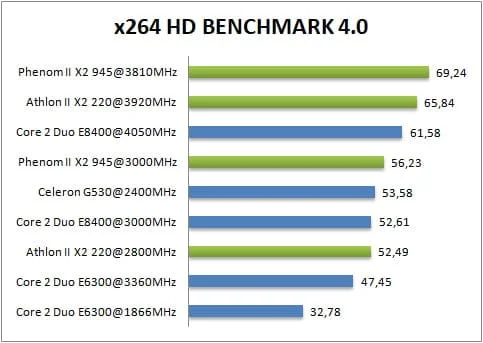 ⤢ ВІДКРИТИ
In x264 video encoding, the Celeron G530 performed admirably, outperforming the Core 2 Duo E8400 at its stock clocks. However, it couldn't catch the Phenom II X2. Against overclocked rivals, the stock G530 looks extremely weak.
Archiving
 ⤢ ВІДКРИТИ
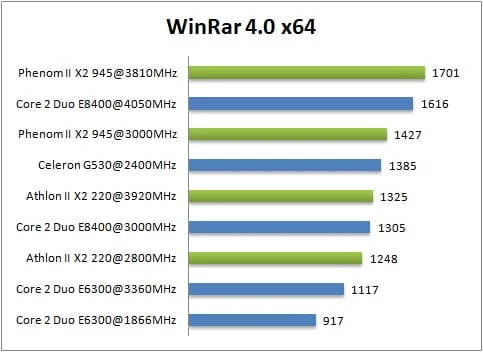
Architectural improvements and an updated memory controller helped the Celeron G530 secure fourth place, surpassing the E8400 and an overclocked Athlon II X2.
Gaming: synthetic benchmarks
 ⤢ ВІДКРИТИ
 ⤢ ВІДКРИТИ
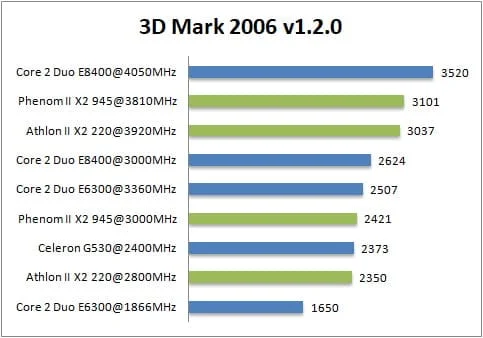
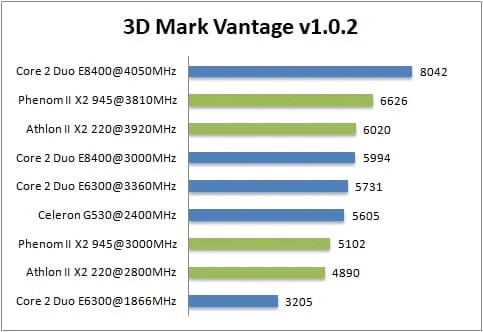
In the synthetic 3DMark benchmark, the newcomer could only compete with AMD's processor family. Core 2 processors traditionally hold very strong positions in Futuremark's test suites, but considering its extremely low core clock speed, the Celeron G530 still performed quite well.
Gaming
 ⤢ ВІДКРИТИ
 ⤢ ВІДКРИТИ
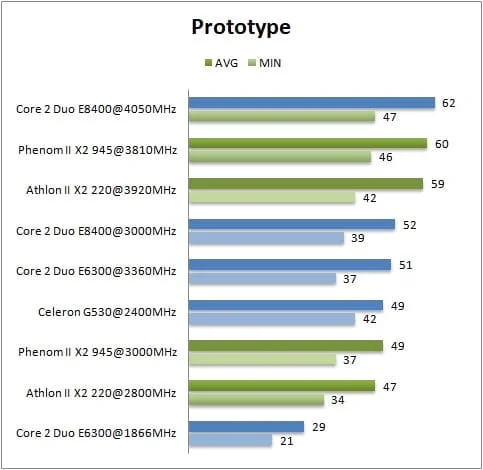
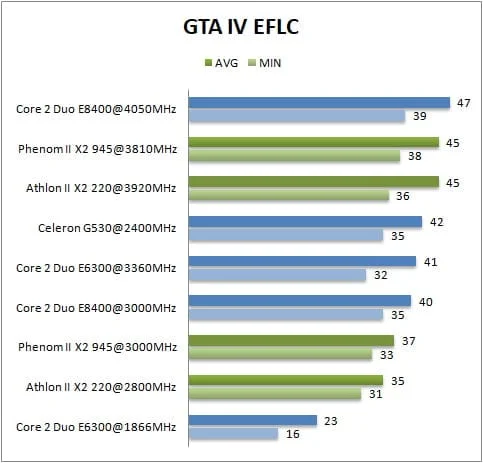
Gaming is where even the slowest Sandy Bridge-based processor starts to shine! While rivals in Prototype still tried to compete with the Celeron G530, they utterly capitulated in GTA IV, with only overclocked CPUs managing to surpass the audacious newcomer.
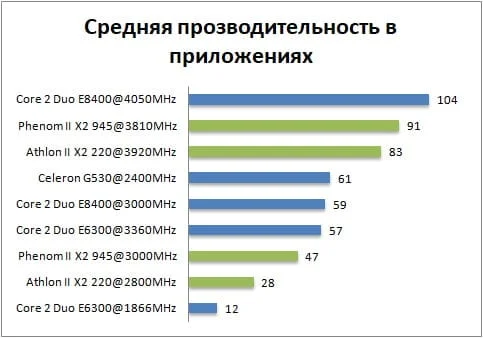
For this review, we decided to introduce new graphs based on overall performance calculations across all tests. The first graph shows average application performance:
 ⤢ ВІДКРИТИ
The Celeron looks quite compelling. While it loses in some areas, it still manages to clinch first place among stock competitors. The E8400's deficit is easily compensated by its excellent overclocking potential — something the Celeron, with its locked multiplier, simply cannot boast.
 ⤢ ВІДКРИТИ
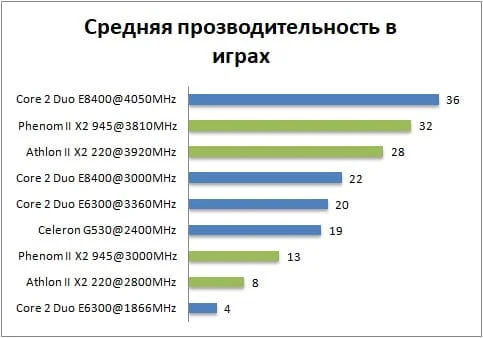
3DMark significantly marred gaming performance, but the fact remains: the Celeron G530 only managed to outperform the Phenom II X2 and its younger sibling, along with the perennial underdog Core 2 Duo E6300.
 ⤢ ВІДКРИТИ
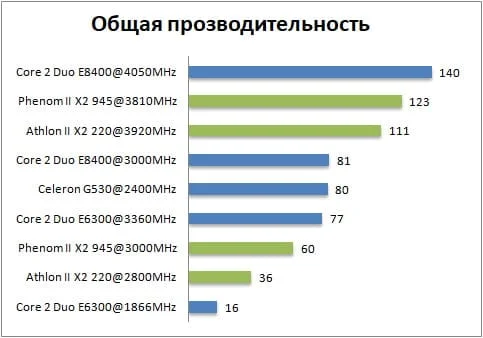
In overall performance, which combines both gaming and application benchmarks, the Celeron landed just one step below the E8400, losing by only a point. This is quite impressive, considering its ~$50 price tag.
Conclusion
When I started testing the Celeron G530, I couldn't have imagined its true performance against the chosen rivals. Now I'm wondering: did I even title this review correctly? Perhaps it should have been: "Outrunning the Core 2 Duo E8400 and Phenom II X2"? After all, in several applications, the newcomer proved faster than these processors running at their stock frequencies. Regardless, Intel has delivered a genuinely powerful entry-level solution capable of outstanding performance for your money.
Should you buy it for gaming? The answer is pretty obvious: no. However, it's perfectly suitable as a temporary solution before buying a Core i5, for example. The one thing you absolutely shouldn't do is purchase it as a stopgap before getting a Core i3. The price difference between those processors isn't significant enough to warrant spending money twice.
Author: UmTale Test bench components: UmTale, DENIM