TESTS · CPU · AMD
PUBLISHED
READING8 min
Athlon II X2 250 review, benchmarks, and overclocking
A comprehensive look at the Athlon II X2 250, including benchmarks and overclocking. AMD's new dual-core CPU delivers power, efficiency, and impressive overclocking headroom.
Not long ago (about half a year back), AMD introduced its new dual-core processors to the wider market, specifically the Phenom II X2 550 and Athlon II X2 250. While more powerful members of this family, like the newer Athlon II X2 255, now exist, it hasn't appeared for sale in our city yet.
What's new?
Indeed, what has changed with the processor? There are three key updates worth noting: a 45nm manufacturing process, support for current DDR3 memory modules, and the return of 2MB of L2 cache! Now, let's dive into a more detailed examination of the new core.
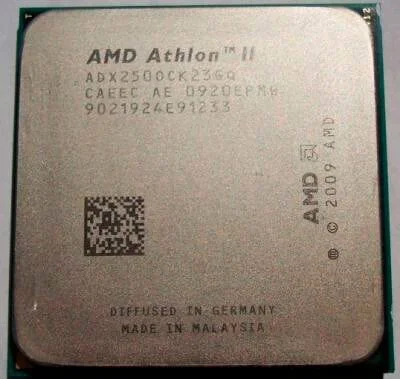
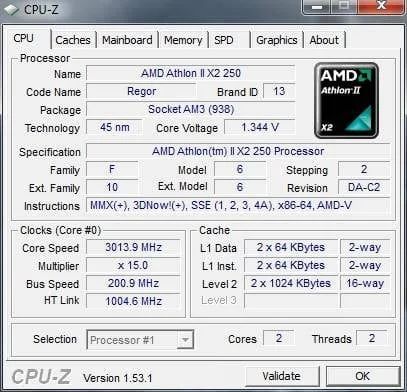
The Athlon II X2 250 is based on the 45nm Regor core, revision C2. It operates at 3GHz and features 1MB of L2 cache per core, totaling 2MB.
Designed for the AM3 socket, it's also backward compatible with older AM2+ motherboards. Owners of those boards may only need to flash a newer BIOS revision in some cases. It's also worth noting that despite its high clock speed, this processor maintains relatively low power consumption, around 65W, thanks to the denser 45nm manufacturing process.
 ⤢ ВІДКРИТИ
The CPU-Z screenshot doesn't reveal anything new, but it confirms the information above:
 ⤢ ВІДКРИТИ
The new Regor core shares more similarities with the older Windsor core (Athlon 64 X2 6000+ 3000MHz) than with Kuma (Athlon X2 7750BE 2700MHz) or Brisbane (Athlon X2 6000+ 3100MHz).
The first had 2MB of L2 cache, the second featured 1MB of L2 and 2MB of L3 cache, and the third had just 1MB of L2 cache. Based on all of this, the Athlon X2 7750 theoretically presents a strong challenger to the new processor, but we couldn't get our hands on one.
Test setup and competitors
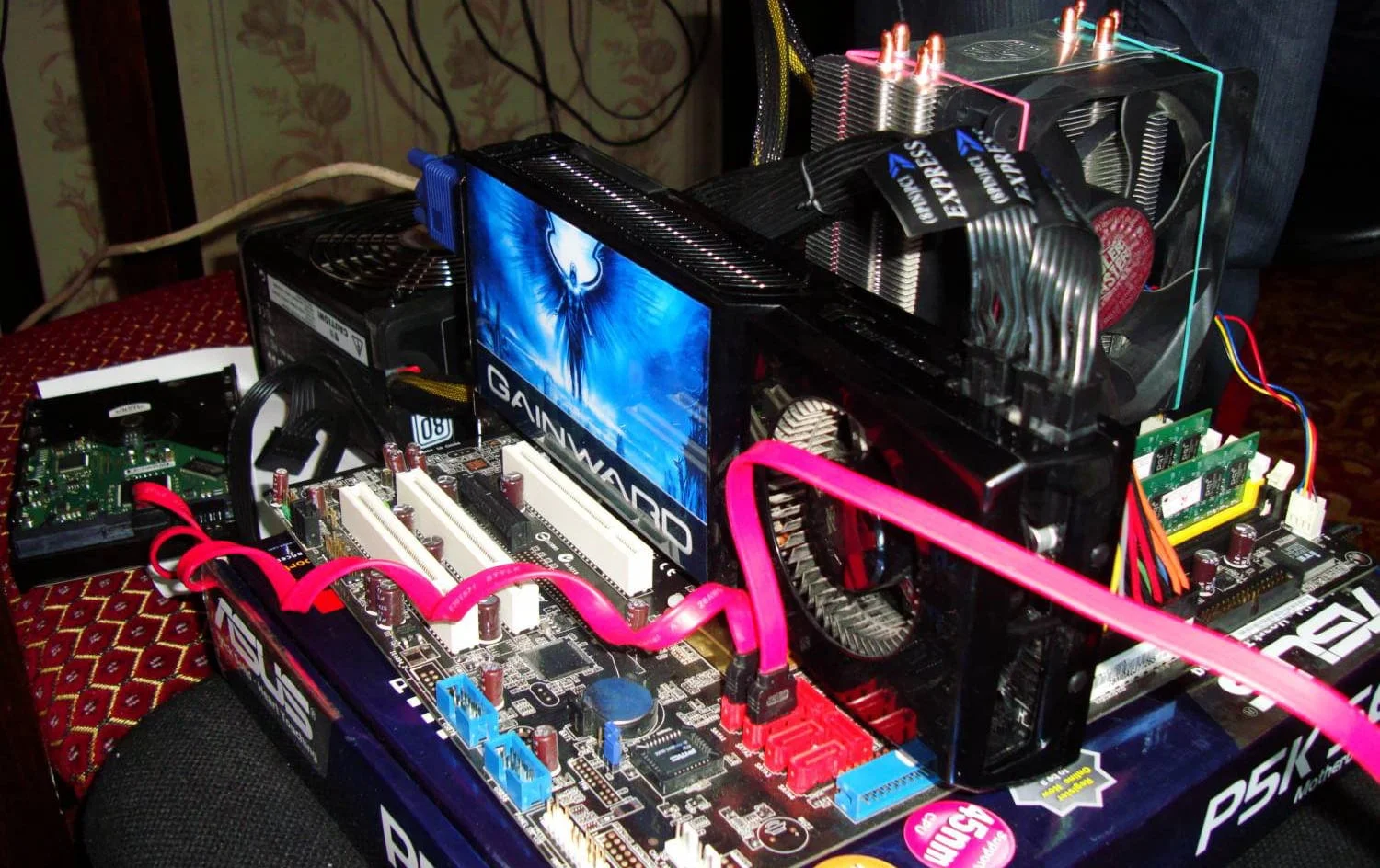
We used the following configuration for testing:
Processors: Athlon 64 X2 6400+ BE, Athlon X2 4200+, Athlon II X2 250, Core 2 Duo E6300
CPU cooler: Cooler Master Hyper 212+
Motherboard: ASUS M2N68-AM SE2, ASUS M2N-E, Biostar P35D2A7
Graphics card: Gainward GeForce GTX280
RAM: Two PQI 2GB DDR2 PC6400 modules (5-5-5-12)
Hard drive: Samsung SP160GB
Power supply: Cooler Master 500W SP
 ⤢ ВІДКРИТИ
Despite its rather low price and unassuming appearance, the test motherboard performed admirably, reaching frequencies typically seen on higher-end products.
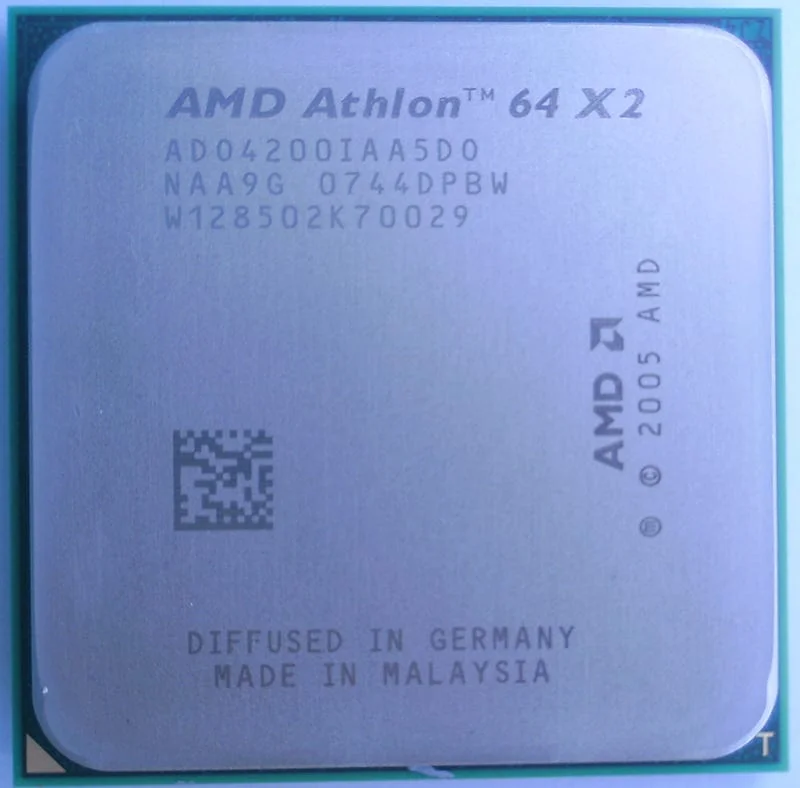
Here's our first competitor:
 ⤢ ВІДКРИТИ
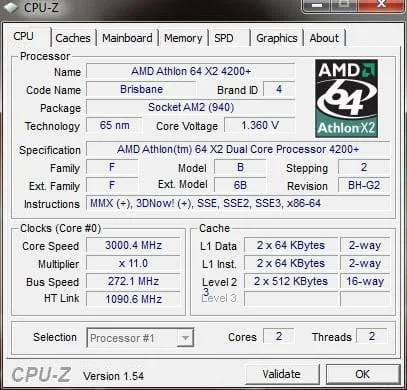
The aging Athlon 64 X2 4200+, which surprisingly hit frequencies as high as 3GHz without any voltage increase to the core.
 ⤢ ВІДКРИТИ
As you may have noticed in the screenshot above, I aimed for relatively nominal frequencies across all other CPU blocks, and the same applied to the RAM. Its frequency was only off by 16MHz, settling at 816MHz, which won't affect the final benchmark results in any way.
Our third chip also hails from AMD: the rather unpopular and hot Athlon 64 X2 6400+ BE:
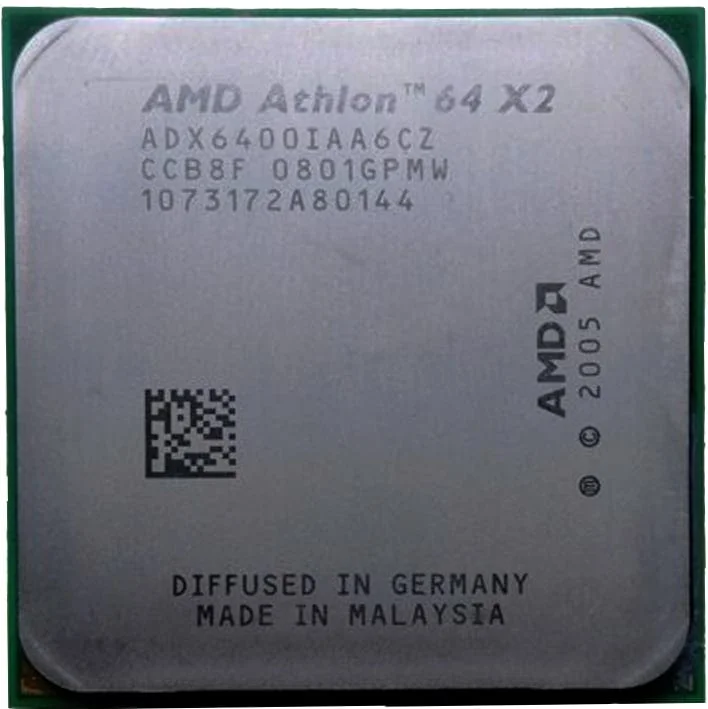 ⤢ ВІДКРИТИ
Fortunately, working with it was much simpler. I just needed to lower the CPU multiplier to achieve the desired 3000MHz:
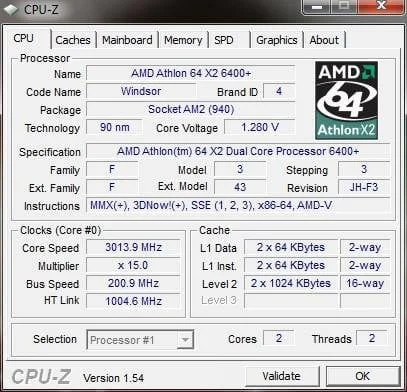 ⤢ ВІДКРИТИ
I'd like to offer my subjective take on this processor. It's somewhat similar to the graphics card used in our test rig. It runs terribly hot—so much so that even our capable test cooler, which effortlessly tames a Phenom II X4 965, couldn't keep the Athlon 64 X2 6400+'s temperature under 50 degrees. But as it's a former top-tier chip, we can overlook these quirks.
Simply put, before the arrival of the Phenom II X2 and Athlon II X2, this was AMD's fastest dual-core processor.
Representing Intel's processors is the rather old, but extremely affordable and powerful (especially after overclocking) Core 2 Duo E6300:
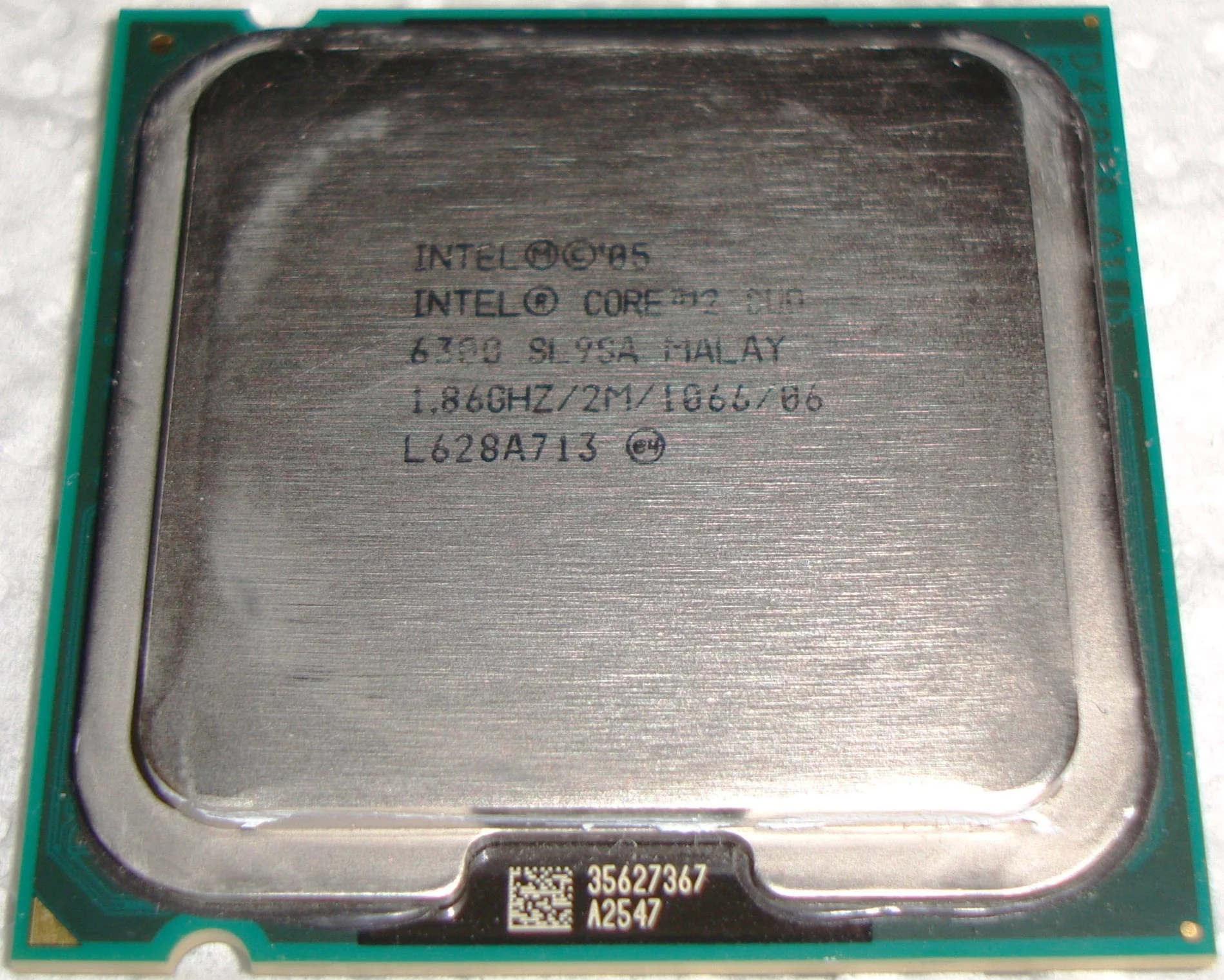 ⤢ ВІДКРИТИ
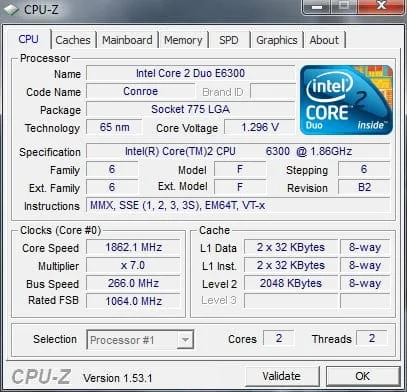 ⤢ ВІДКРИТИ
Don't worry about its clock speed; we'll address that with overclocking a bit further down.
CPU overclocking
Let's move on to overclocking. This particular Athlon II X2 250 was, frankly, a bit weak. At nominal voltage, it managed 3600MHz, and with voltage bumped to 1.5V, it booted at 3900MHz, but I couldn't get it stable.
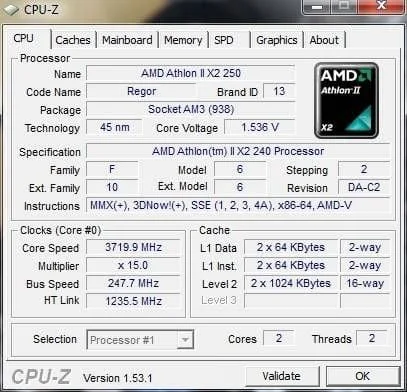
Adjusting voltage and lowering the bus frequency by 5MHz yielded no improvement. Rock-solid stability was achieved at 3719MHz with 1.536V. Most Athlon II X2 samples tend to overclock to around this frequency. Here's a CPU-Z screenshot:
 ⤢ ВІДКРИТИ
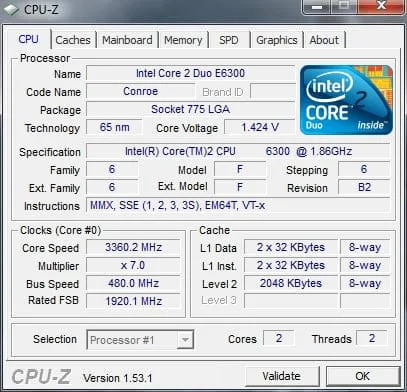
Next, we overclocked the Core 2 Duo E6300. Thanks to our test motherboard, overclocking wasn't particularly difficult. I quickly found a somewhat stable 3400MHz, then achieved absolute stability at 3360MHz with 1.424V.
 ⤢ ВІДКРИТИ
This is a rather mediocre result, but further attempts didn't yield any improvements.
Benchmarks
Unfortunately, the processor wasn't with us long enough for a full testing suite. Here's a selection of benchmarks the CPU completed before leaving our lab:
Rendering
 ⤢ ВІДКРИТИ
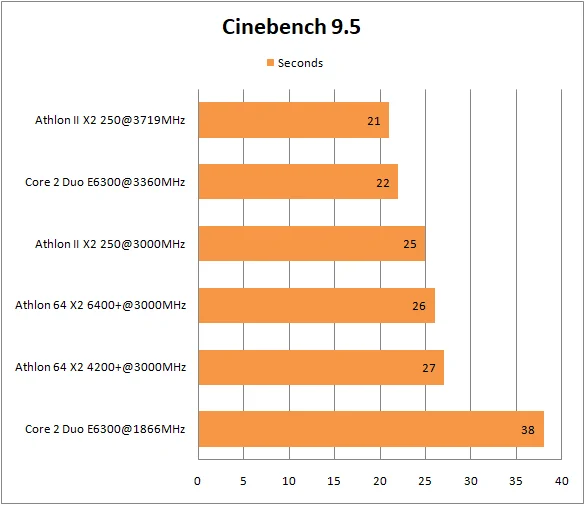
Cinebench 9.5, a benchmark suite capable of utilizing a large number of active CPU cores. Thanks to architectural improvements, the new Regor core outperforms its closest rival, Windsor, by 4%. The Brisbane core lags significantly, by 8%. The Core 2 Duo E6300 shows exceptionally strong performance, almost catching up to the Athlon II (overclocked by 300MHz higher) even at lower frequencies.
 ⤢ ВІДКРИТИ
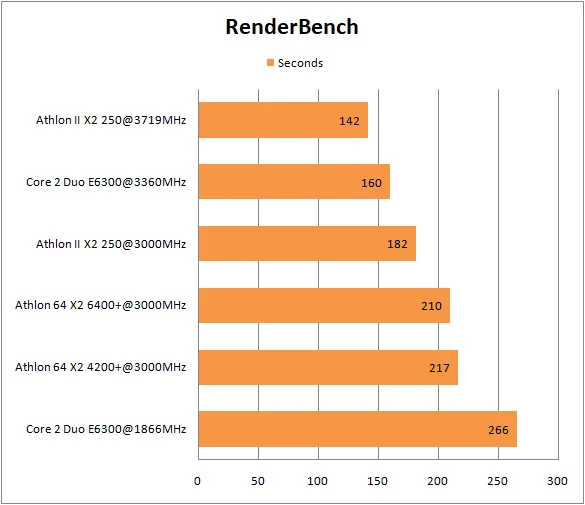
This particular test only utilizes a single thread. It clearly demonstrates the capabilities of the updated architecture. Under equal conditions, the Windsor core fell behind the new Regor by about 14%! Here, the Core 2 Duo no longer seems as threatening.
Overall performance
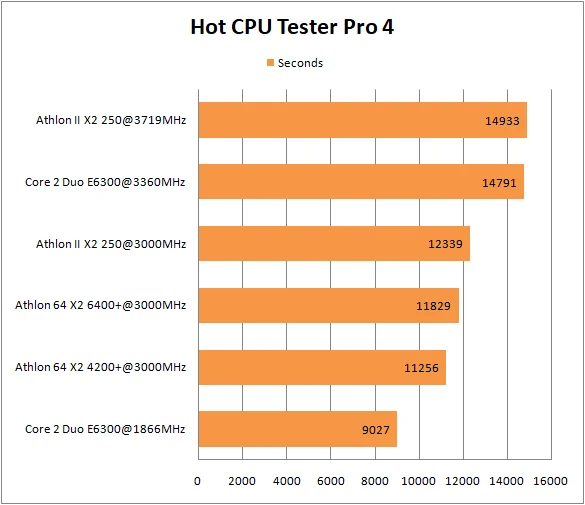 ⤢ ВІДКРИТИ
The chart shows that this benchmark suite only utilizes a single thread. The new core's advantage here is minimal, at just 5%. The E6300, on the other hand, performs extremely confidently and aggressively. Considering the 300MHz difference, it's the clear favorite.
Gaming: Synthetic benchmarks
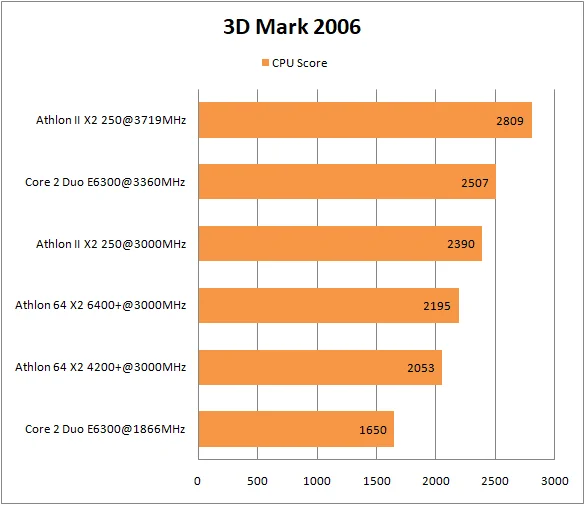 ⤢ ВІДКРИТИ
Regor's performance in 3DMark 2006 pleasantly surprised me. In the CPU test, the gap between the Athlon 64 X2 6400+ and Athlon II 250 was about 9%.
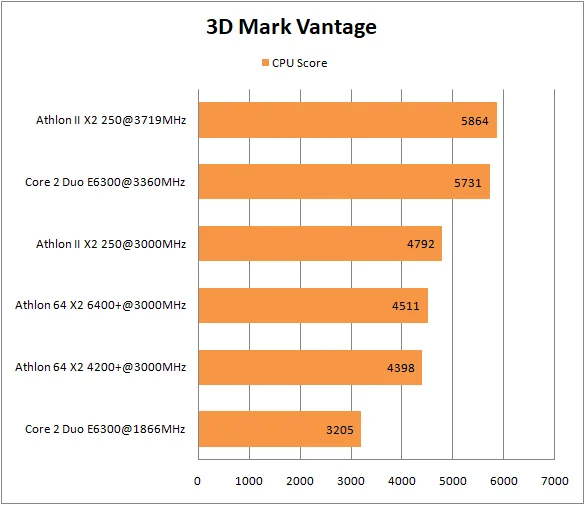 ⤢ ВІДКРИТИ
In FutureMark's latest benchmark suite, the Athlon II X2's victory isn't quite as convincing. The CPU test shows a 6% gap. Far more interesting and impressive is the Core 2 Duo E6300. While it didn't shine particularly in the 2006 version, it truly came alive in Vantage. Despite its lower clock speed, it almost caught up to the newcomer, which was overclocked to 3719MHz.
Gaming
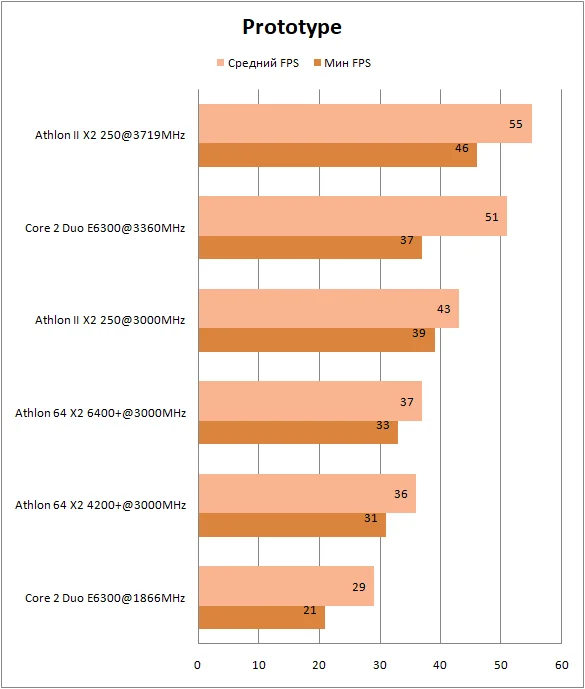 ⤢ ВІДКРИТИ
Our final benchmark in today's review is the game Prototype. This is a fairly CPU-dependent title. To play it without significant FPS drops, you previously needed at least a triple-core CPU. But with the arrival of AMD's new Athlon II generation, everything is changing!
Regor's minimum framerate significantly surpasses Windsor's average at the same frequency! Moreover, the average framerate finally exceeded 40!
Overclocking brings even more impressive results. Minimum FPS rose to 46, and average to a substantial 55! Previously, Core 2 Duo CPUs clocked above 3GHz were definitely the better choice for this game. But now, you have options.
Conclusion
AMD's new dual-core CPU proved to be a powerful solution, effortlessly outperforming the previous top-tier Athlon 64 X2 6400+. Even though it ran at a reduced frequency, we observed a performance gap of up to 10% in some cases. And that's before considering the 6400+'s whopping 125W power draw.
Many are likely wondering if it's worth upgrading an Athlon 64 X2 to a new Athlon II X2. Based on today's review, I'd say it's probably not. Unless you're extremely concerned about your electricity bill... even then, I don't see it as a strong enough reason to pay extra for a mere 10% performance boost.
It's a different story if you're running, say, an old and low-frequency Athlon 64 X2 or Core 2 Duo. In that case, an Athlon II might make sense. But only if you're not keen on fiddling with overclocking your aging CPUs.
Author: UmTale Test bench components provided by: UmTale, MTP