![Overclocking the Intel Xeon X5650 processor [B1, Westmere-EP]](/_next/image?url=https%3A%2F%2Fumtale-media.s3.eu-central-1.amazonaws.com%2Fimages%2Fcontent%2F571d08be-f6c3-4cbc-b4b0-ae505ddd4c5e.webp&w=3840&q=75)
BLOGS · OVERCLOCKING
PUBLISHED
READING11 min
Overclocking the Intel Xeon X5650 processor [B1, Westmere-EP]
The once-popular Intel Xeon X5650 just can't cut it in 2021. Is an overclock on the old LGA 1366 platform worth the effort, or is it time for a new build? We investigate its real-world effectiveness.
From 2014 to 2017, the Intel Xeon X5650 chip was one of the most popular processors for the LGA 1366 platform. Its incredible price-to-performance ratio—offering a relatively low cost for then-top-tier performance—made it an easy recommendation for virtually any task. The 6-core Westmere-EP effortlessly handled all games and digital content creation.
However, that was way back in 2017. In the realities of 2021, the Xeon X5650 is still widely used among owners of LGA 1366 motherboards. But now, it often struggles to deliver decent performance in most of the tasks it's given.
Some believe that overclocking can revive the old 6-core chip, making it feel new again and delaying an impending upgrade. But this is a rather contentious claim. First, to overclock a 6-core, 32nm chip, you need an expensive branded motherboard from ASUS, MSI, or GIGABYTE, as only these types of boards offer the necessary BIOS settings. Second, achieving truly high frequencies with such a power-hungry processor requires a high-performance cooler and a robust power supply. And third, to get a noticeable performance boost after overclocking the CPU, you'll also need quality RAM capable of reaching around 2000 MHz.
Given that in 2021, you can easily build an LGA 2011/2011v3 system for a modest cost, investing additional funds into an old platform like LGA 1366 seems like madness.
But let's not jump to conclusions. Instead, we'll put this to the test to see if additional investments in overclocking can justify themselves and truly delay a complete migration from LGA 1366.
The processor
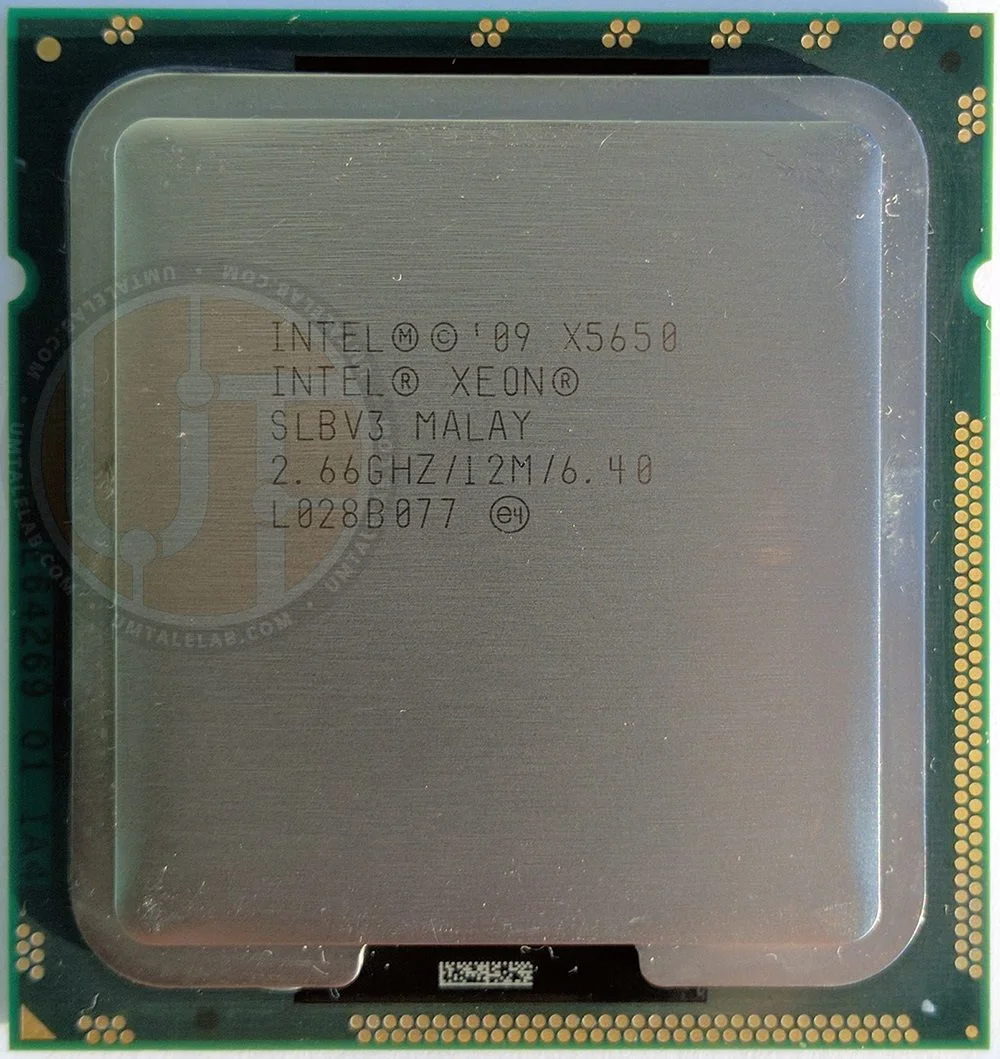
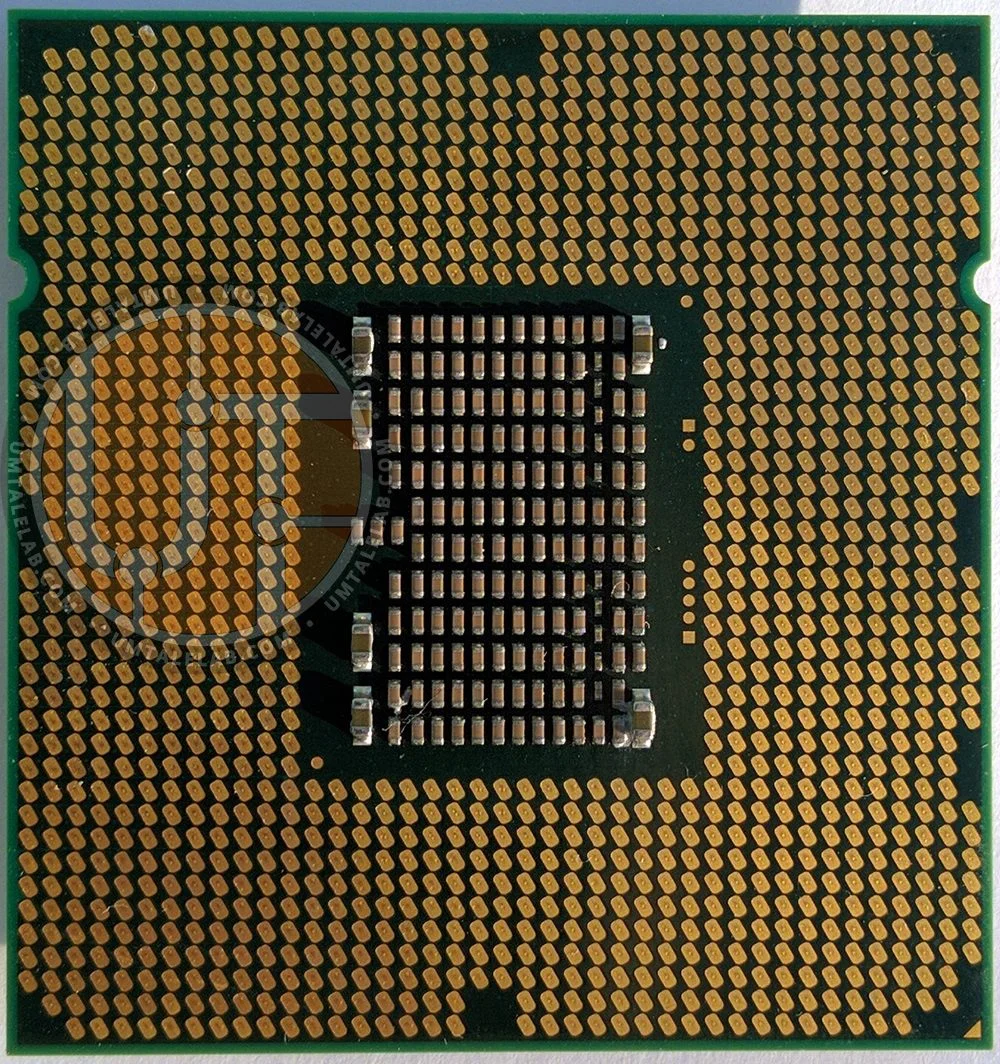
The Intel Xeon X5650 chip's codename is Westmere-EP, which refers to the Westmere architecture—a shrink of Nehalem. Beneath this CPU's integrated heat spreader lies a single 32nm, six-core monolithic die, specifically a B1 revision.
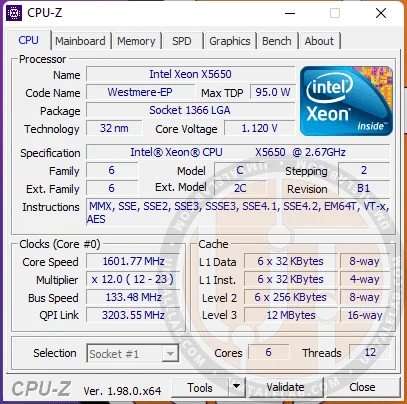
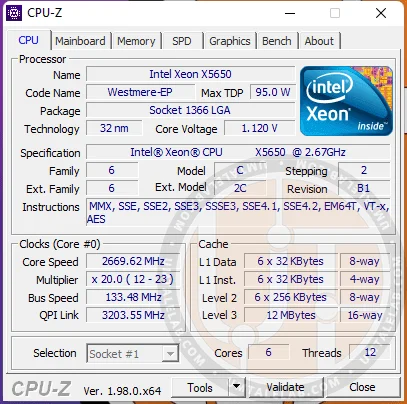
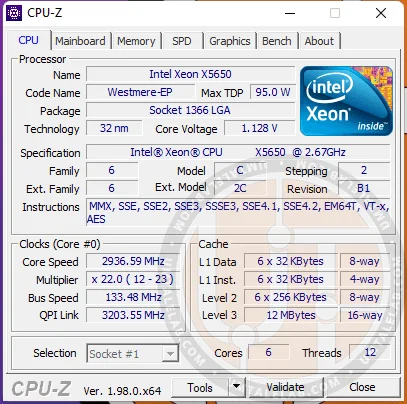
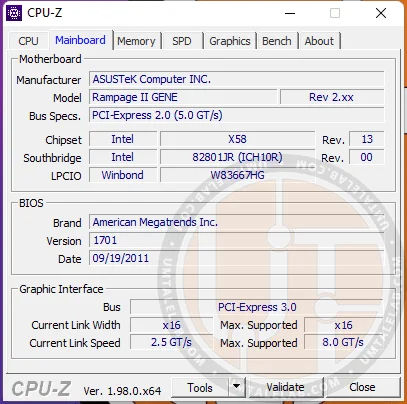
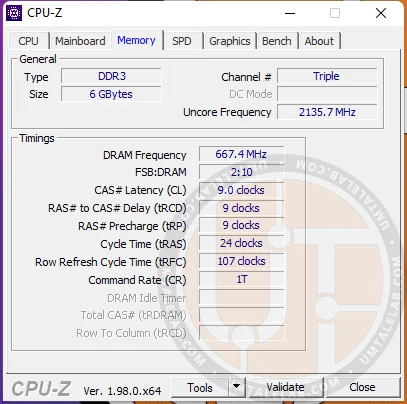
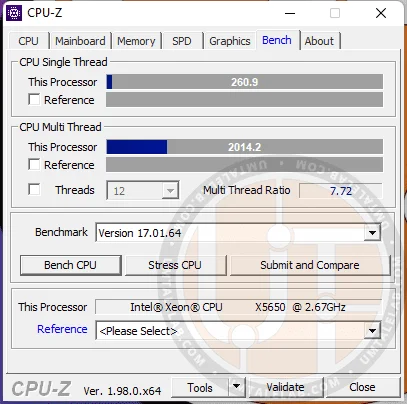
The Xeon X5650 processor features six cores and twelve threads, with a nominal clock speed of 2667 MHz. Its maximum single-core Turbo Boost frequency reaches 3066 MHz, while all six cores can boost to 2933 MHz. During idle periods, the chip's frequency can drop to 1600 MHz, significantly saving power.
The chip is equipped with 256 KB of L2 cache per core and a generous 12 MB of shared L3 cache.
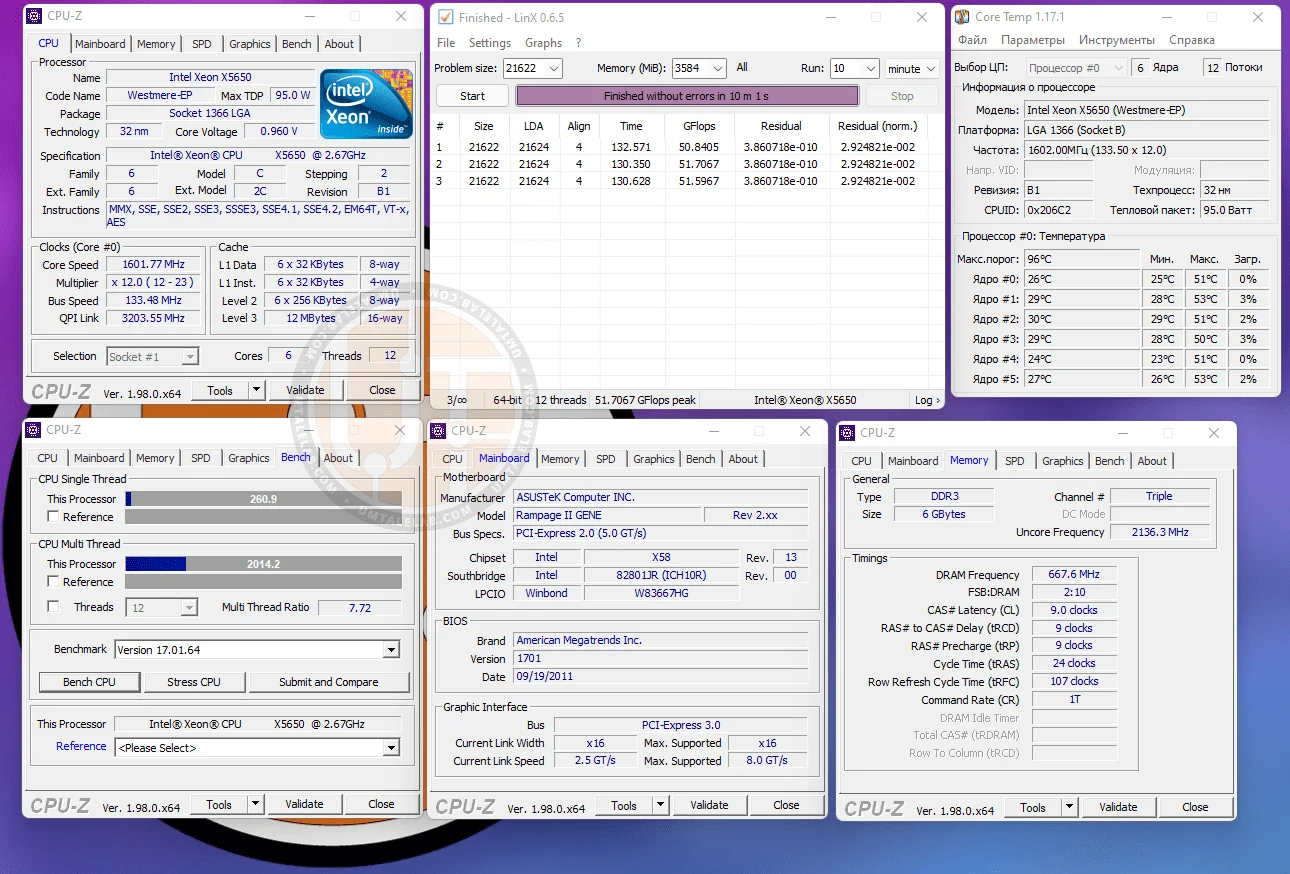
The Westmere-EP memory controller and L3 cache should operate at 2667 MHz. However, for some reason, our test motherboard, the ASUS Rampage II Gene, defaults its frequency to 2133 MHz—a speed more typical of first-generation Core i7 processors than Xeon chips. We'll leave that decision to the conscience of ASUS engineers.
The processor's standard voltage should be between 1.230 and 1.350 volts. However, the ASUS Rampage II Gene motherboard interferes once again; even with a single core boosting to 3066 MHz, it doesn't allow this parameter to exceed 1.160 volts (verified with a multimeter).
 ⤢ ВІДКРИТИ
Otherwise, fortunately, the ASUS Rampage II Gene adheres to Intel's specifications: the X5650 chip works perfectly fine with officially supported triple-channel 1333 MHz DDR3 RAM, and its TDP doesn't exceed 95 watts.
Test bench
ProcessorsXeon X5650, Xeon E5-2620v3;
CoolingCooler Master Hyper 212 Black Edition (RR-212S-20PK-R1);
RAM for LGA 1366 overclocking3x 2GB Hynix (HMT325U7EFR8C-RD) for a total of 6GB;
RAM for LGA 2011 v34x 4GB G.SKILL DDR4@1866MHz F4-2400C15S-4GNT for a total of 16GB (10-10-10-24 latencies);
Motherboard for LGA 1366 overclockingASUS Rampage II Gene Rev 2 (BIOS 1701);
Motherboard for LGA 2011 v3Kllisre X99-D8 (AD12) with modified BIOS (unlocks Turbo Boost and timing control);
Graphics cardXFX R9-270X-CDFC@1150/1500MHz;
Solid-state driveKINGSTON 120GB SA400S37120G (Windows 11), KINGSTON 480GB SA400S37/480G (for storage-demanding games);
Hard driveSeagate 2TB ST2000DM008-2FR102 (for other games);
Power supplyChieftec GPS-1250C.
Xeon X5650 overclocking
First, let's explore the capabilities of our specific Xeon X5650 chip at stock core, RAM, and memory controller voltages.
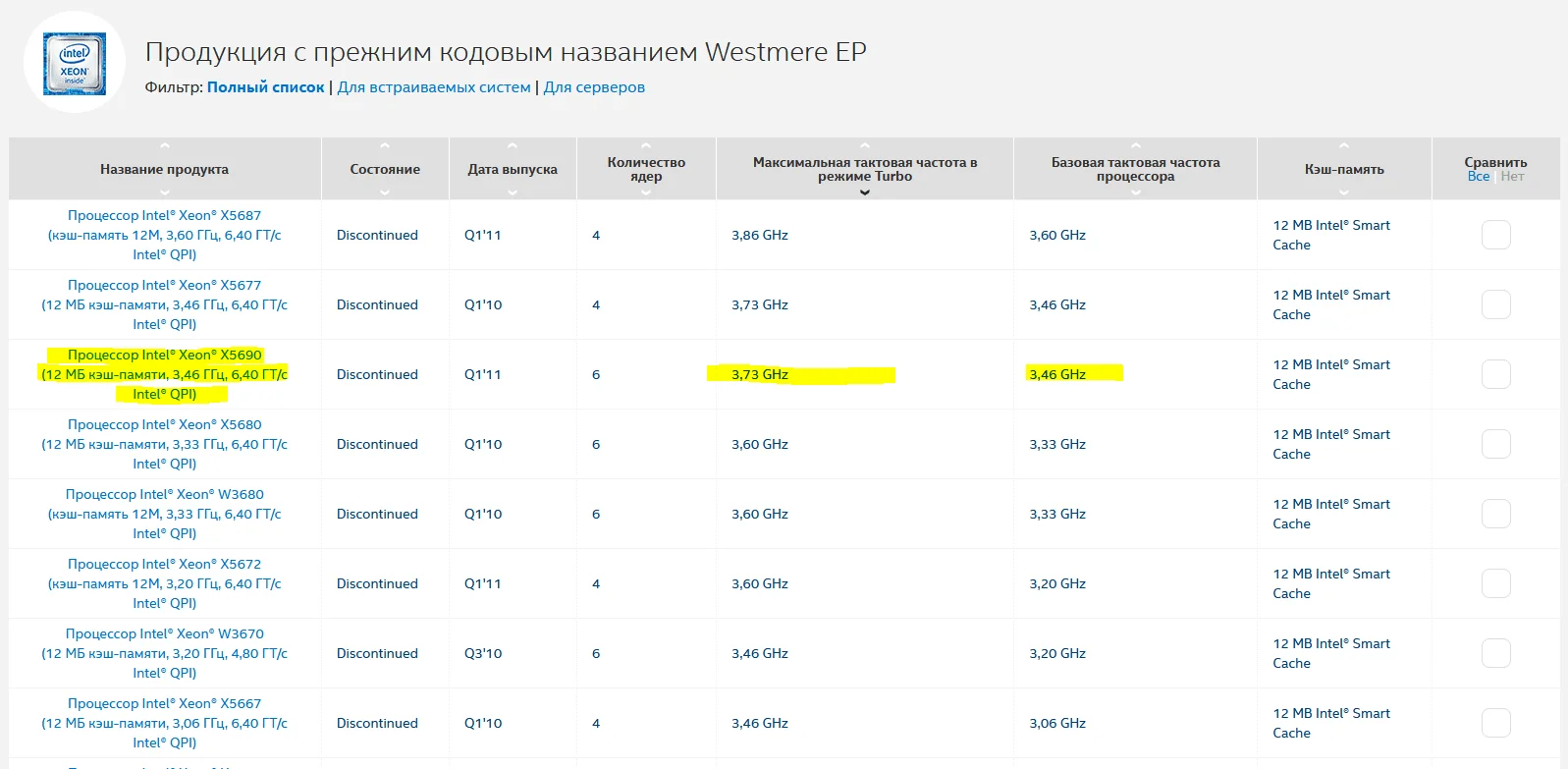
Don't fret if you're not deeply familiar with processor generations or manufacturing processes. To get an idea of your CPU's theoretical potential, simply find its core's codename (Westmere-EP in our case), then Google the highest-end model using that same core.
 ⤢ ВІДКРИТИ
The fastest 6-core CPU with the Westmere-EP codename is the Xeon X5690. It boasts a 3466MHz base clock and a substantial 3733MHz turbo boost. This theoretically suggests our chip should also be capable of stable operation at 3.4-3.7GHz with stock voltages.
However, it's important to note that the X5650's nominal voltage is considerably lower than Intel's official specs. Therefore, we'll use two reference points: 1.160V and 1.230V.
Overclocking without voltage increase
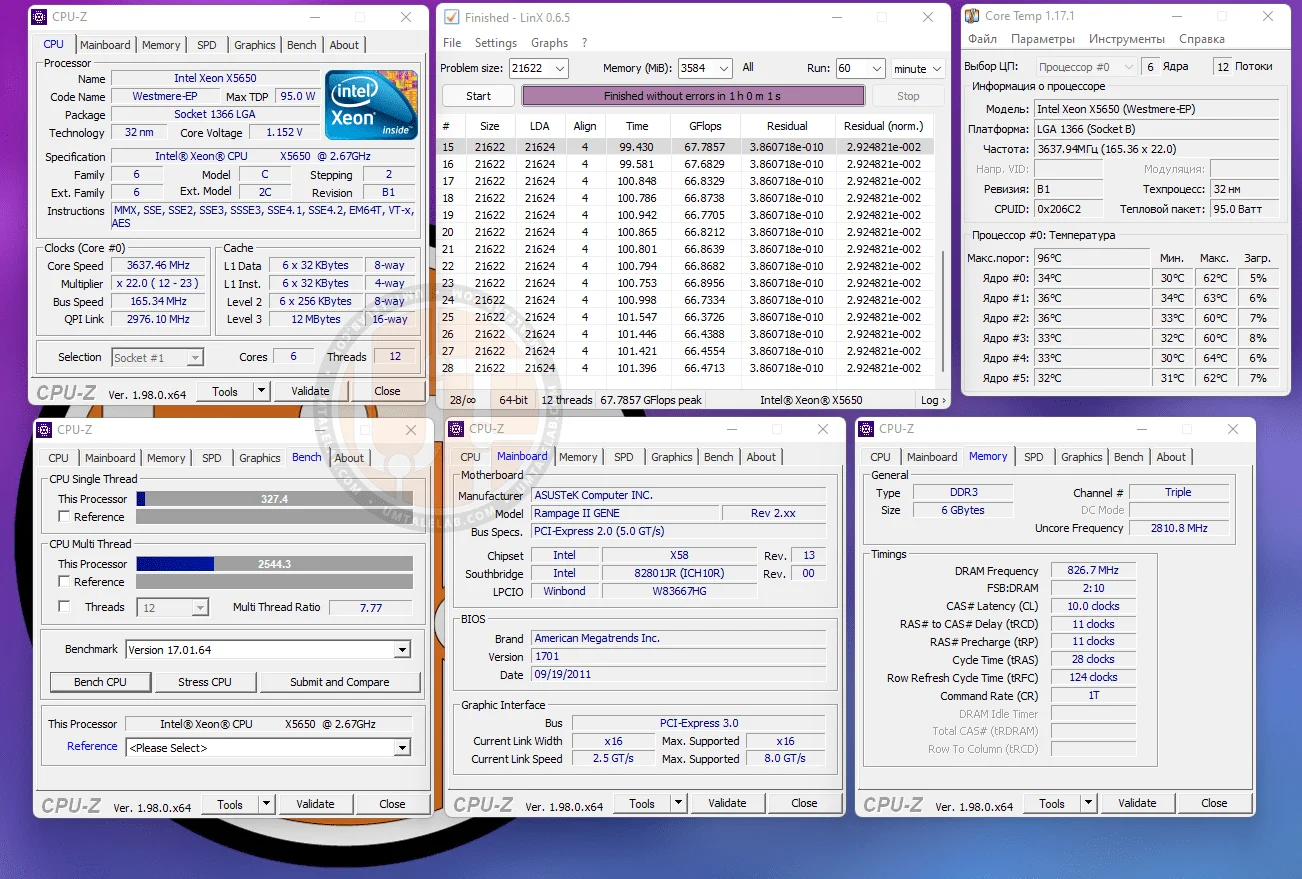
First, let's see what our X5650 sample can achieve with 1.160V for the cores and 1.200V for the QPI/DRAM Core (which includes the Uncore, L3 cache, and memory controller).
 ⤢ ВІДКРИТИ
To our surprise, the X5650 test sample easily cleared the 3500MHz mark, achieving rock-solid stability at 3637MHz for the cores and 2810MHz for the QPI/DRAM Core. This is a solid showing, hinting at promising overclocking headroom with increased voltage.
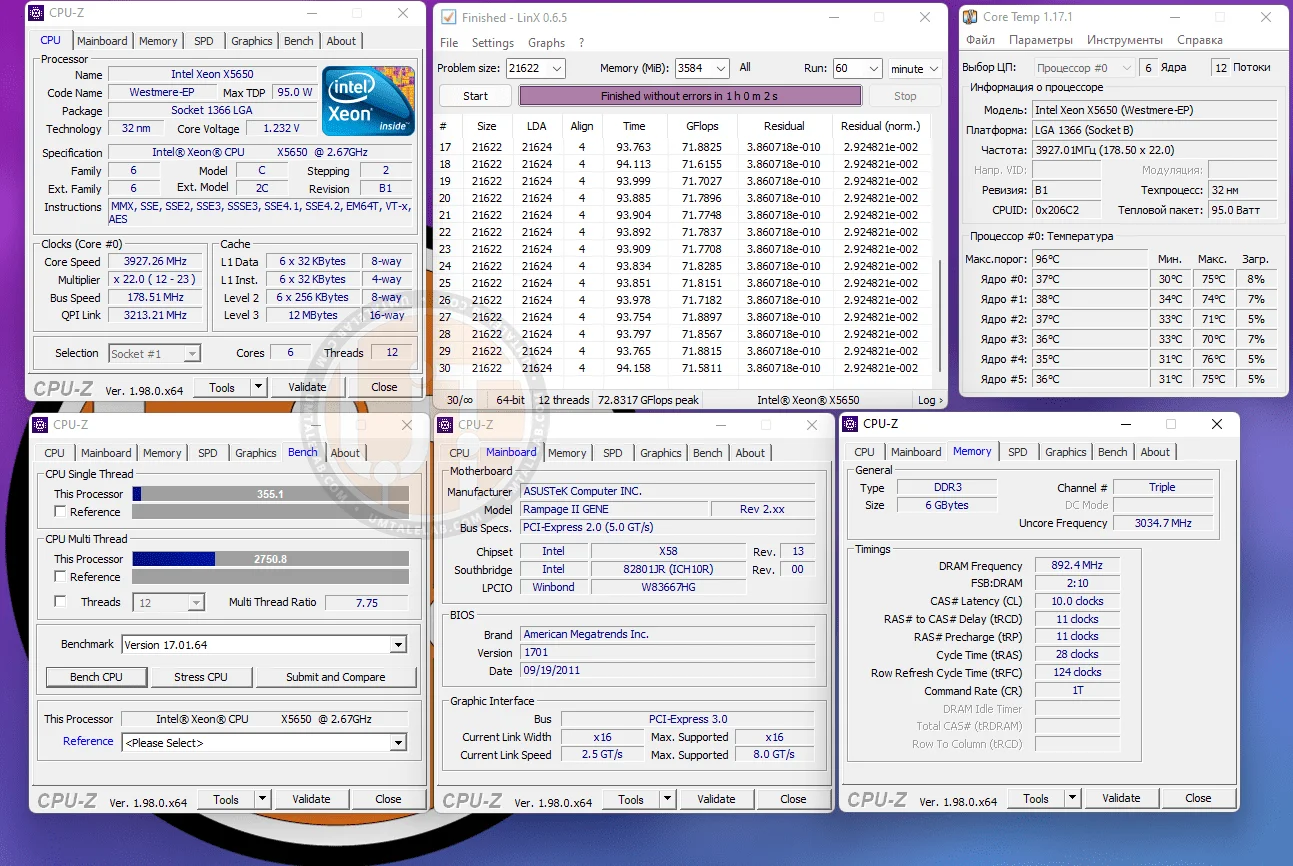
Next, we'll examine what our X5650 sample can do with 1.230V for both the cores and the QPI/DRAM Core (L3 cache and memory controller).
 ⤢ ВІДКРИТИ
At voltage settings closer to Intel's specifications, the X5650 chip didn't particularly impress. It couldn't even breach the 4000MHz barrier, settling instead at 3927MHz for the cores and 3034MHz for the Uncore section (QPI/DRAM Core/L3 cache).
This is a surprisingly weak result for a 32nm processor. Typically, even 45nm D0 stepping chips could reliably operate at frequencies approaching 4100MHz with 1.230V.
Still, time is unforgiving. It's likely our X5650 sample has degraded somewhat over more than a decade of use, no longer able to hit high frequencies at stock voltages. Fortunately, we have the option to significantly increase those voltages.
Overclocking with increased voltage
With roughly 1.280V for the cores and 1.250V for the QPI/DRAM Core, the X5650 chip managed 4000/3094MHz. But pushing further became significantly harder. After several hours, we determined the chip couldn't maintain stability at 4400MHz, even with 1.4V.
It's worth noting that while the processor passed AIDA64's stress tests, launching LinX immediately resulted in an error, halting the test.
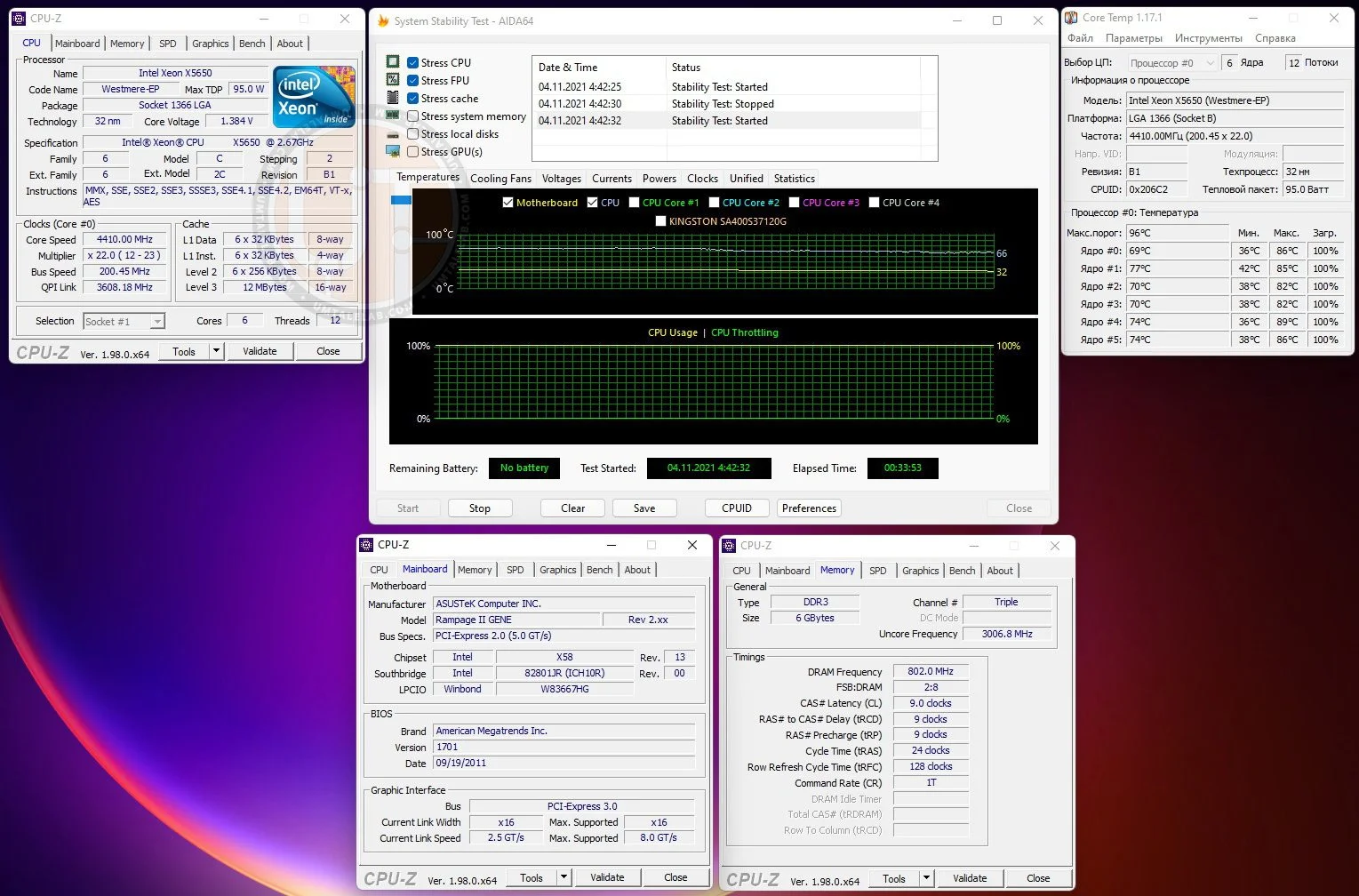
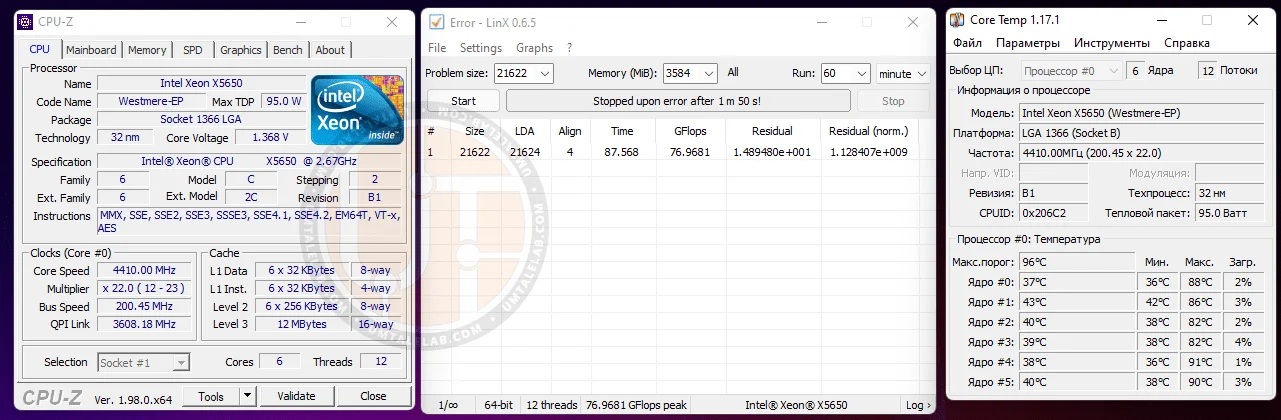
It's debatable whether applying this 'incomplete' overclock result is worthwhile for daily gaming or multimedia use. However, if you're a digital content creator, absolutely avoid unstable overclocks; you don't want to risk corrupting your project files.
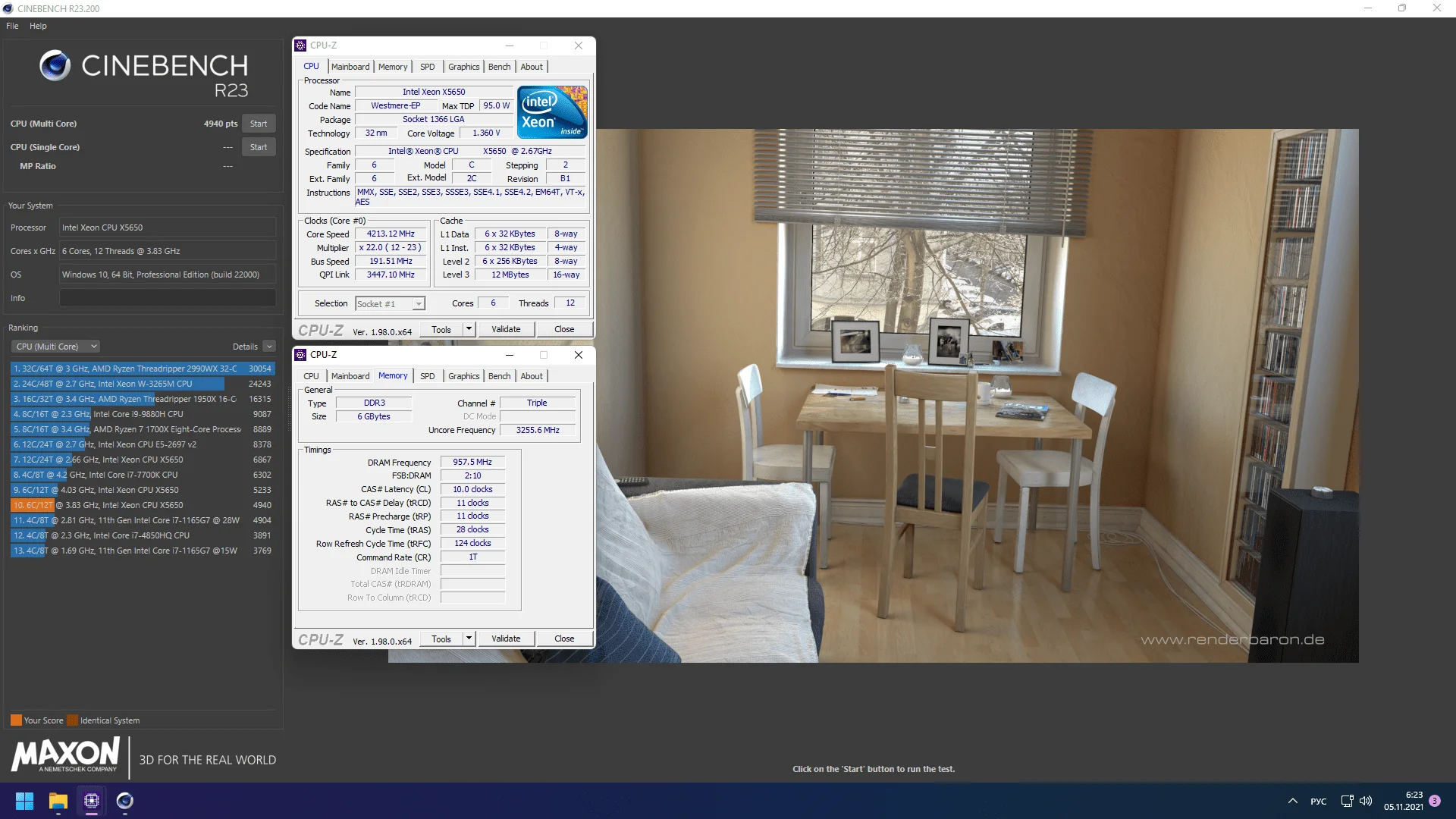
The processor was stabilized at 4213/3255MHz, with core voltage at 1.360V, QPI/DRAM Core at 1.290V, CPU PLL at 1.825V, and DDR3 at 1.69V.
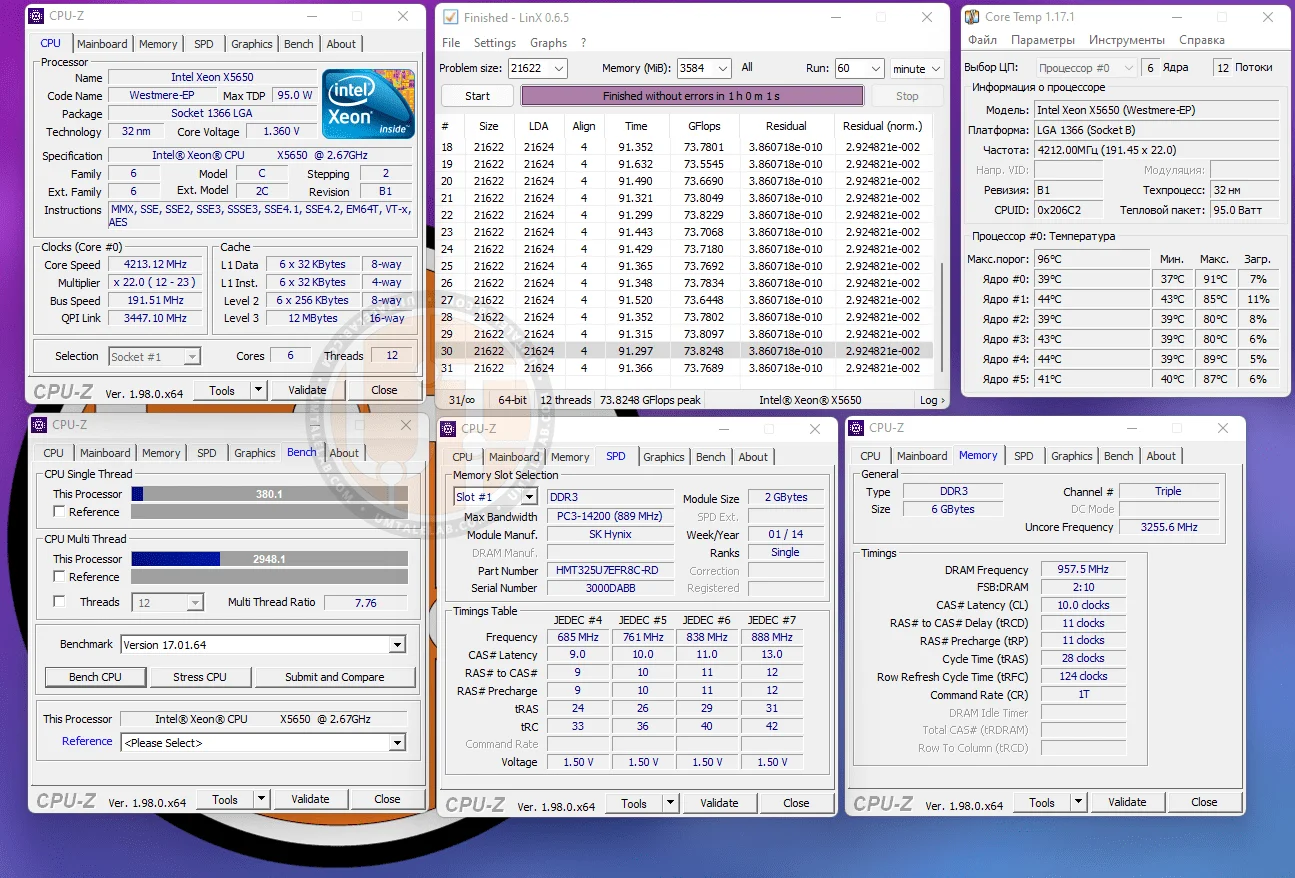 ⤢ ВІДКРИТИ
This isn't the worst result, but according to our data, it's far from average. More often than not, 32nm Westmere-EP chips can hit 4400MHz with just over 1.3V.
Now, let's see what gains overclocking provides compared to stock settings.
Xeon X5650: Stock clocks vs. overclocking and Xeon E5-2620 v3
Here's a rapid benchmark of the Xeon X5650 chip at 2933MHz and 4200MHz across several games, benchmarks, and applications. We'll also compare it to the most affordable member of the current budget-friendly LGA 2011v3 platform: the Xeon E5-2620v3.
Applications and benchmarks
AIDA64 v6.50.5800
X5650@2667-2933МГц | X5650@4200МГц | E5-2620v3@3200МГц | |
Memory Read | 18686 | 24019 | 45365 |
Memory Write | 16118 | 20025 | 45215 |
Memory Copy | 18895 | 24735 | 45439 |
Memory Latency | 66.4 | 53.8 | 68.6 |
CPU Queen | 46300 | 66461 | 56119 |
CPU PhotoWorxx | 8763 | 12005 | 26937 |
CPU ZLib | 295.7 | 419.7 | 409.3 |
CPU AES | 9972 | 14326 | 21707 |
CPU SHA3 | 674 | 987 | 1765 |
FPU Julia | 14031 | 21051 | 37758 |
FPU Mandel | 6845 | 10150 | 19242 |
FPU SinJulia | 6088 | 8748 | 6088 |
FP32 Ray-Trace | 1999 | 3047 | 6655 |
FP64 Ray-Trace | 1095 | 1682 | 3484 |
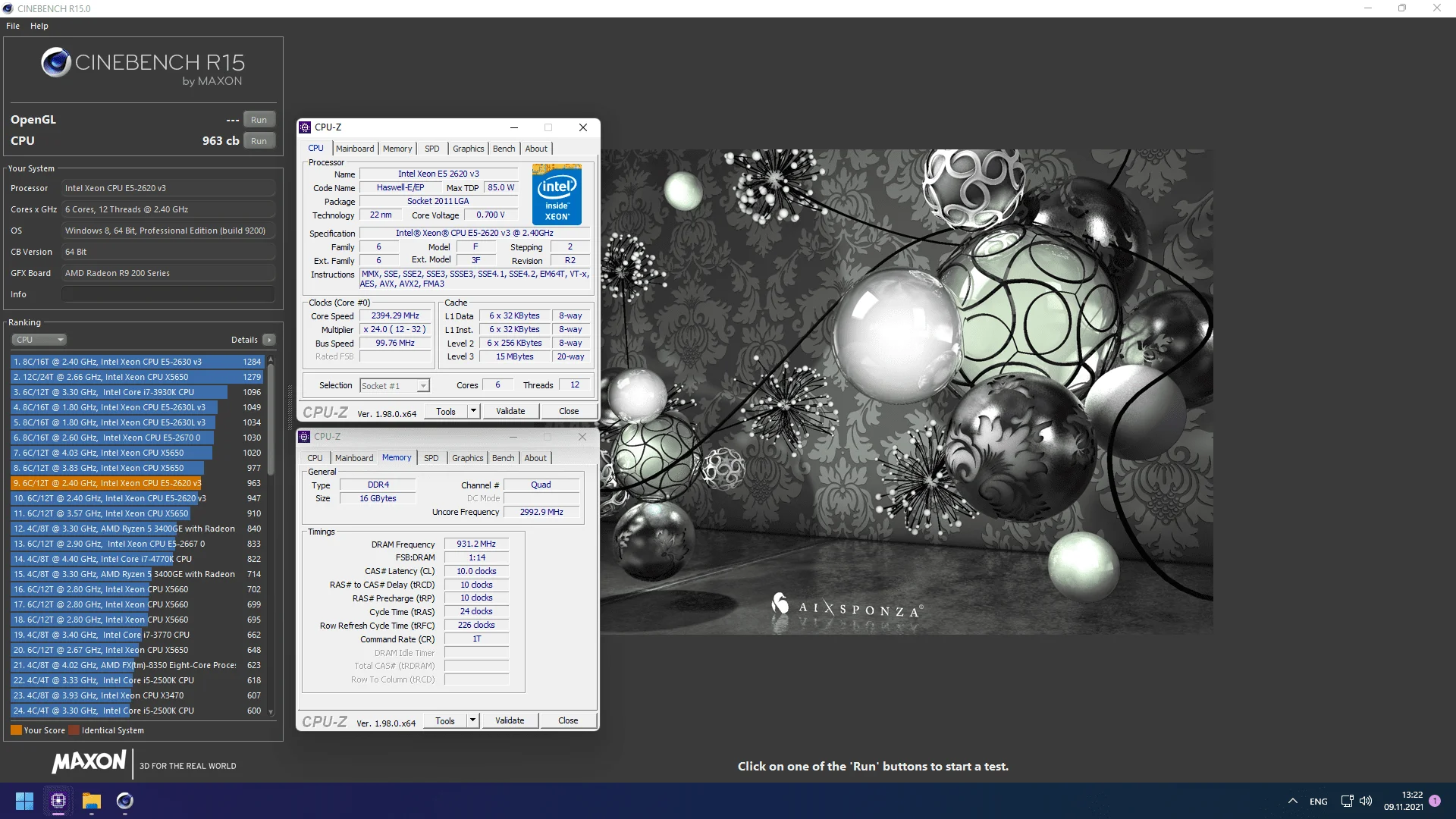
Cinebench R15
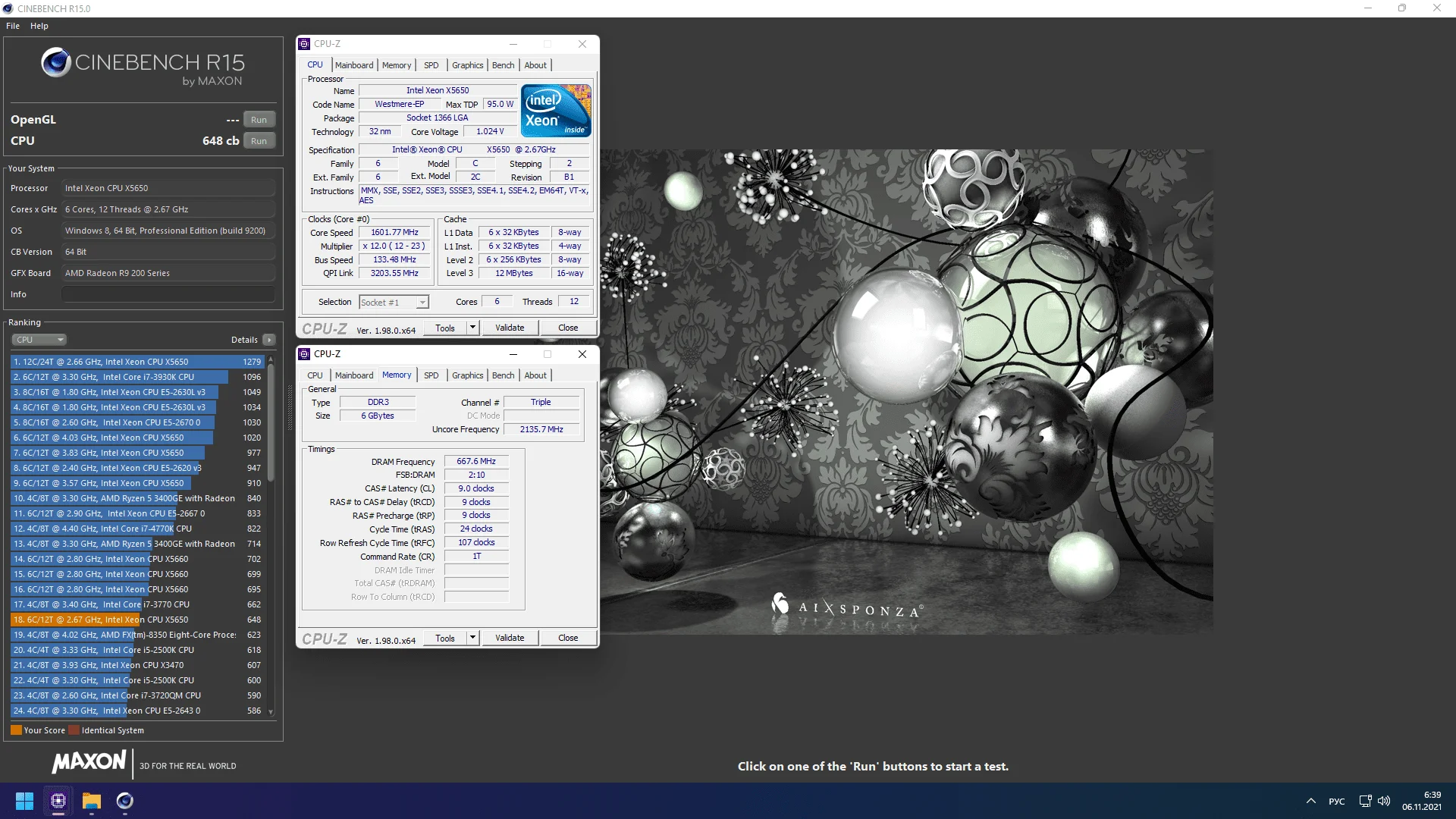
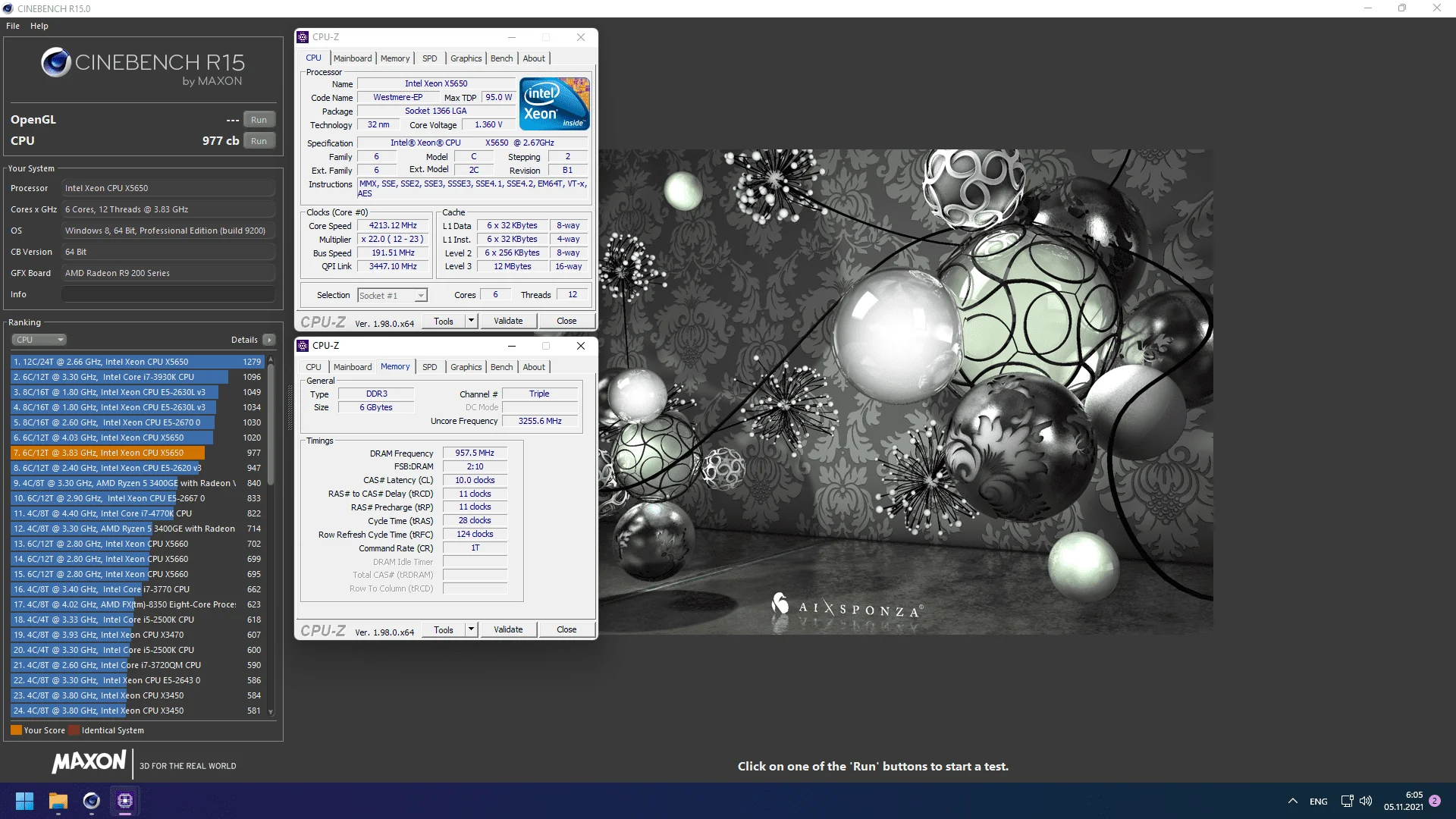
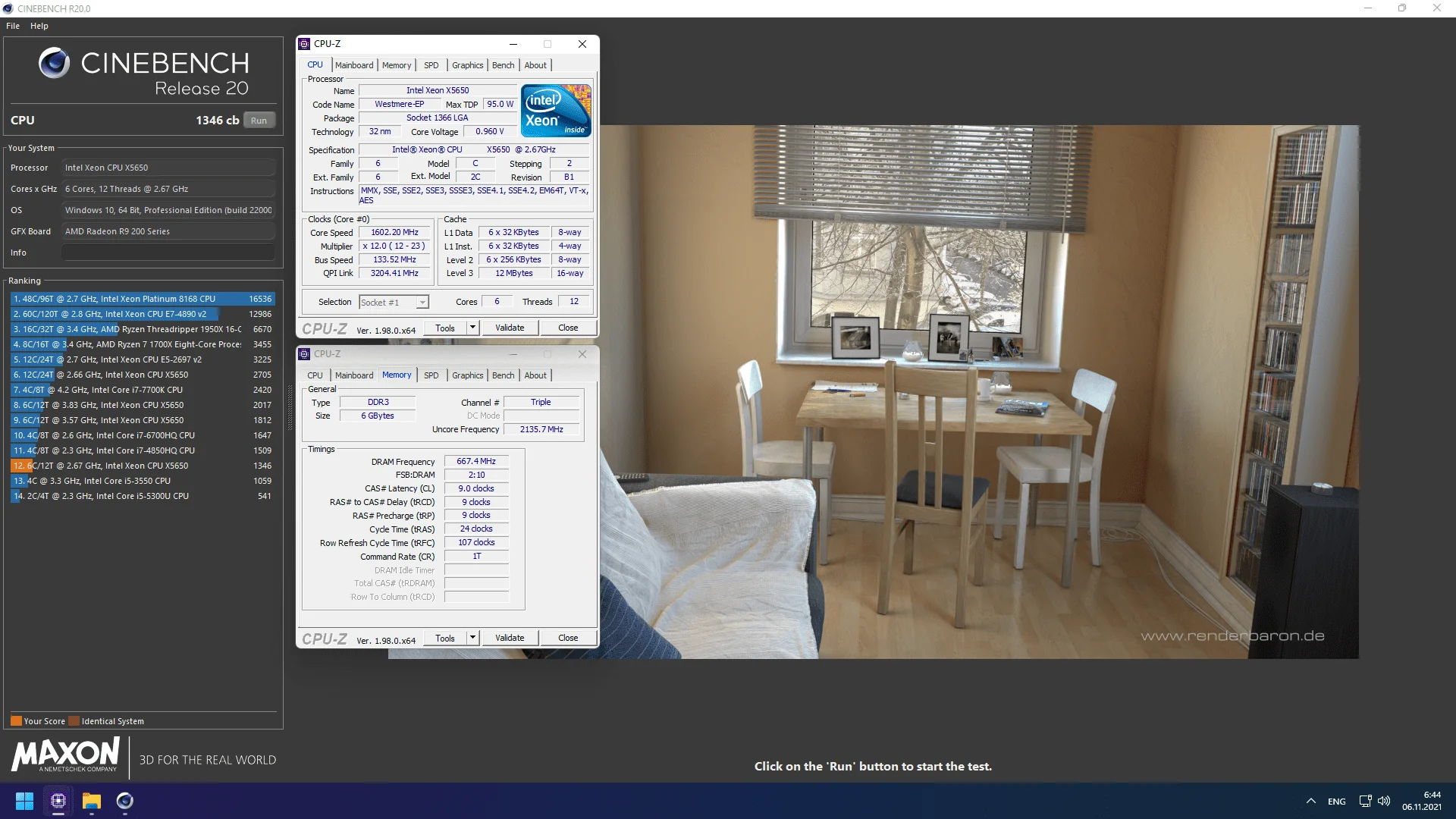
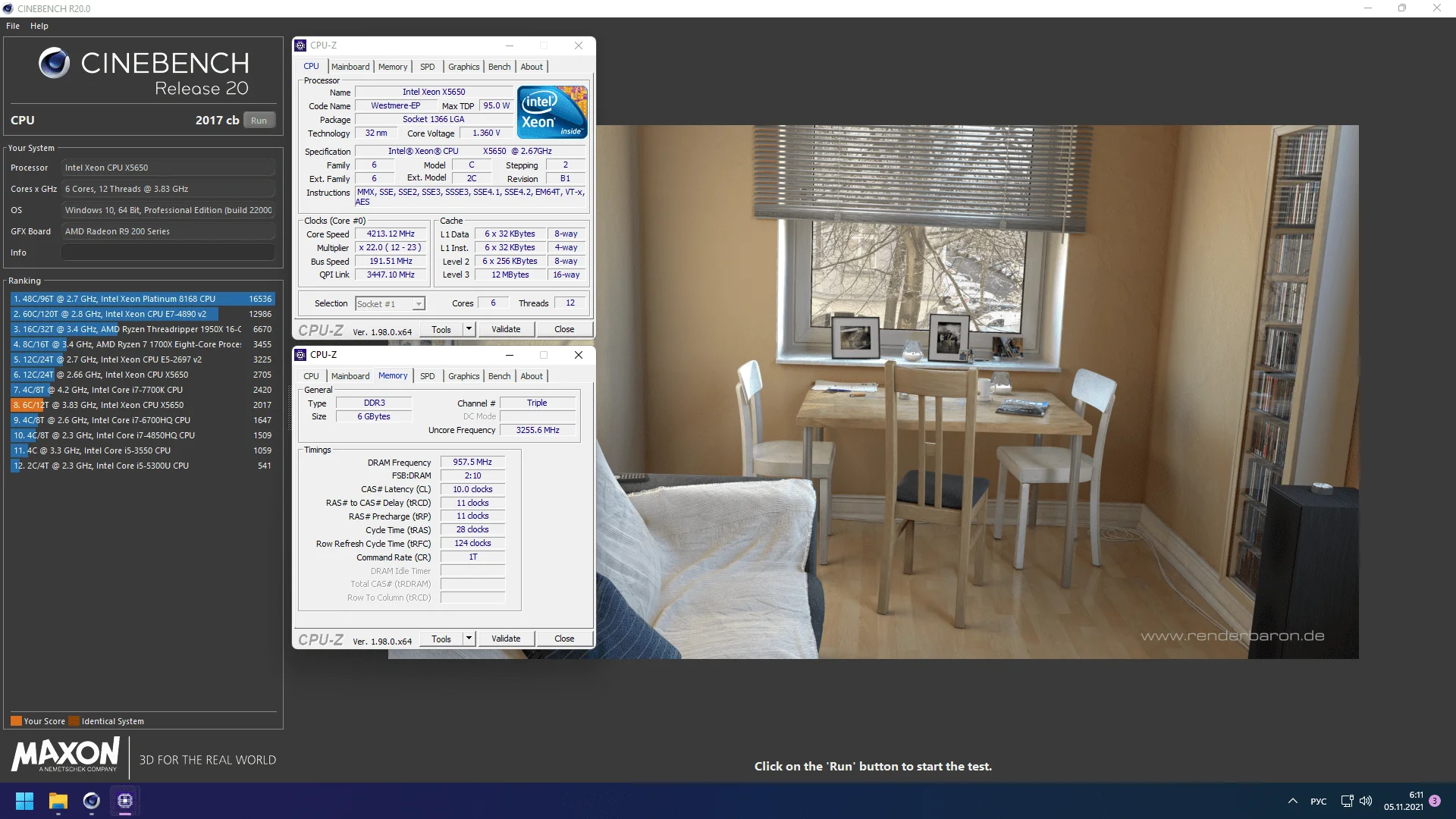
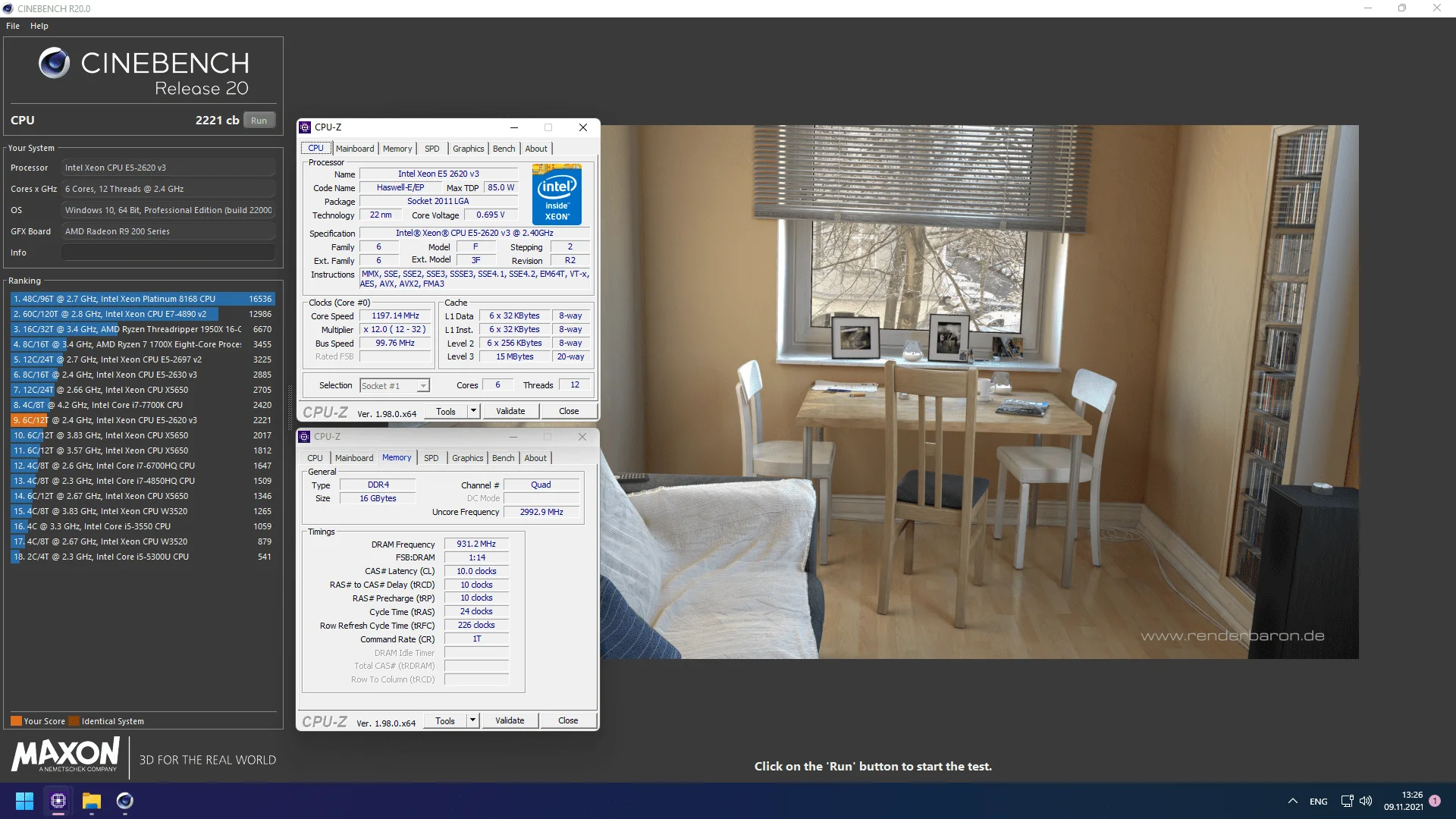
Cinebench R20
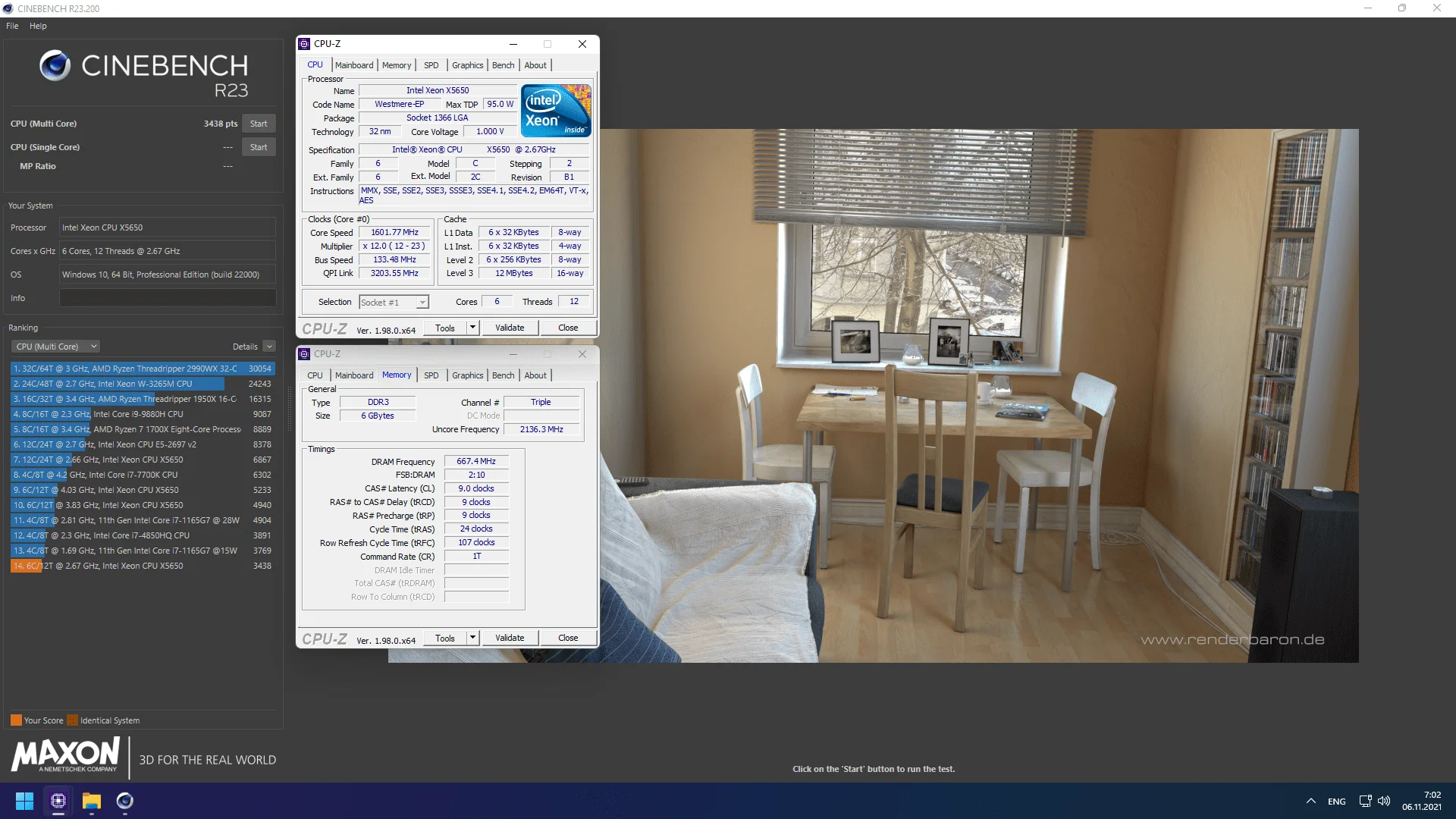
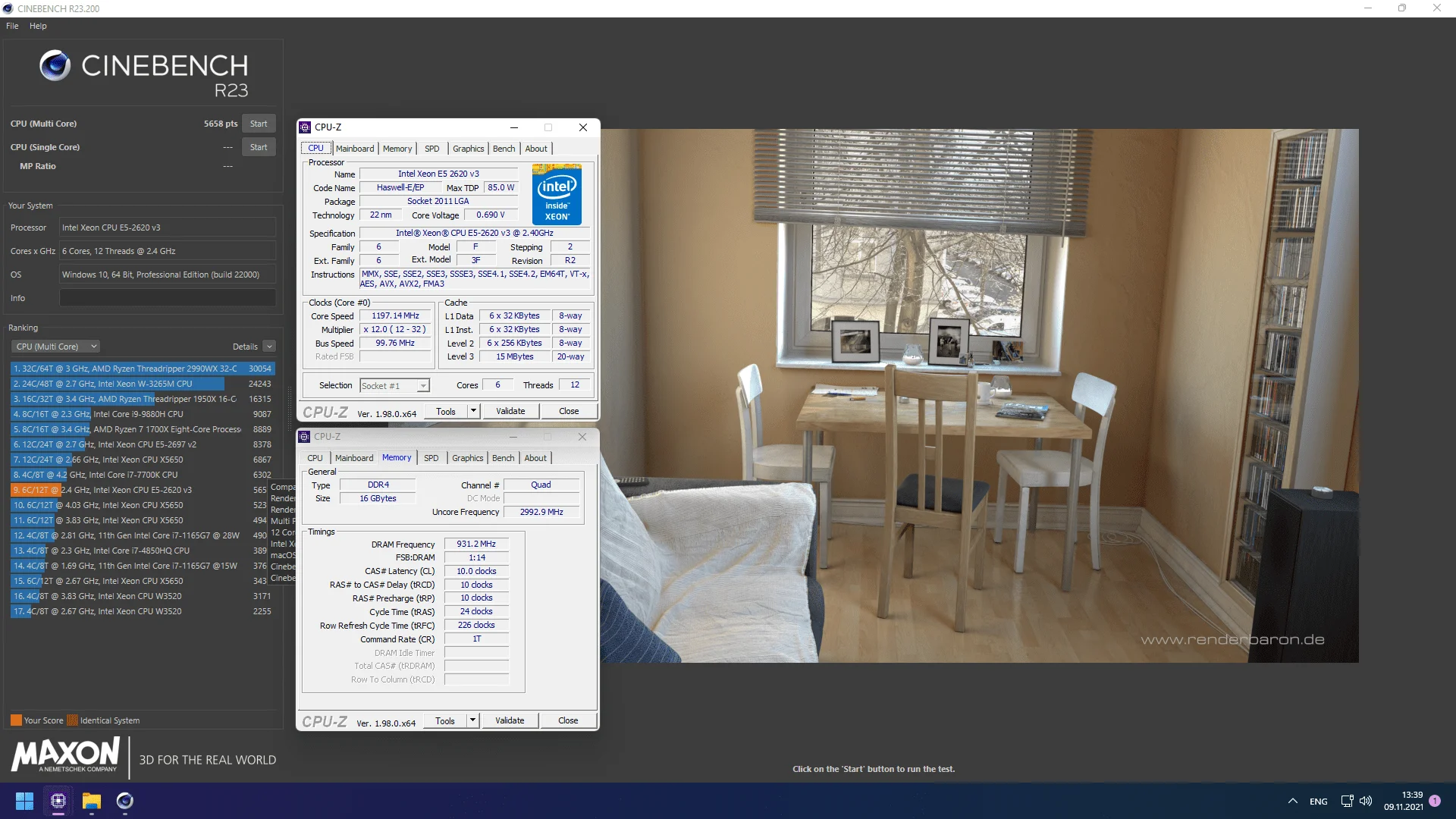
Cinebench R23
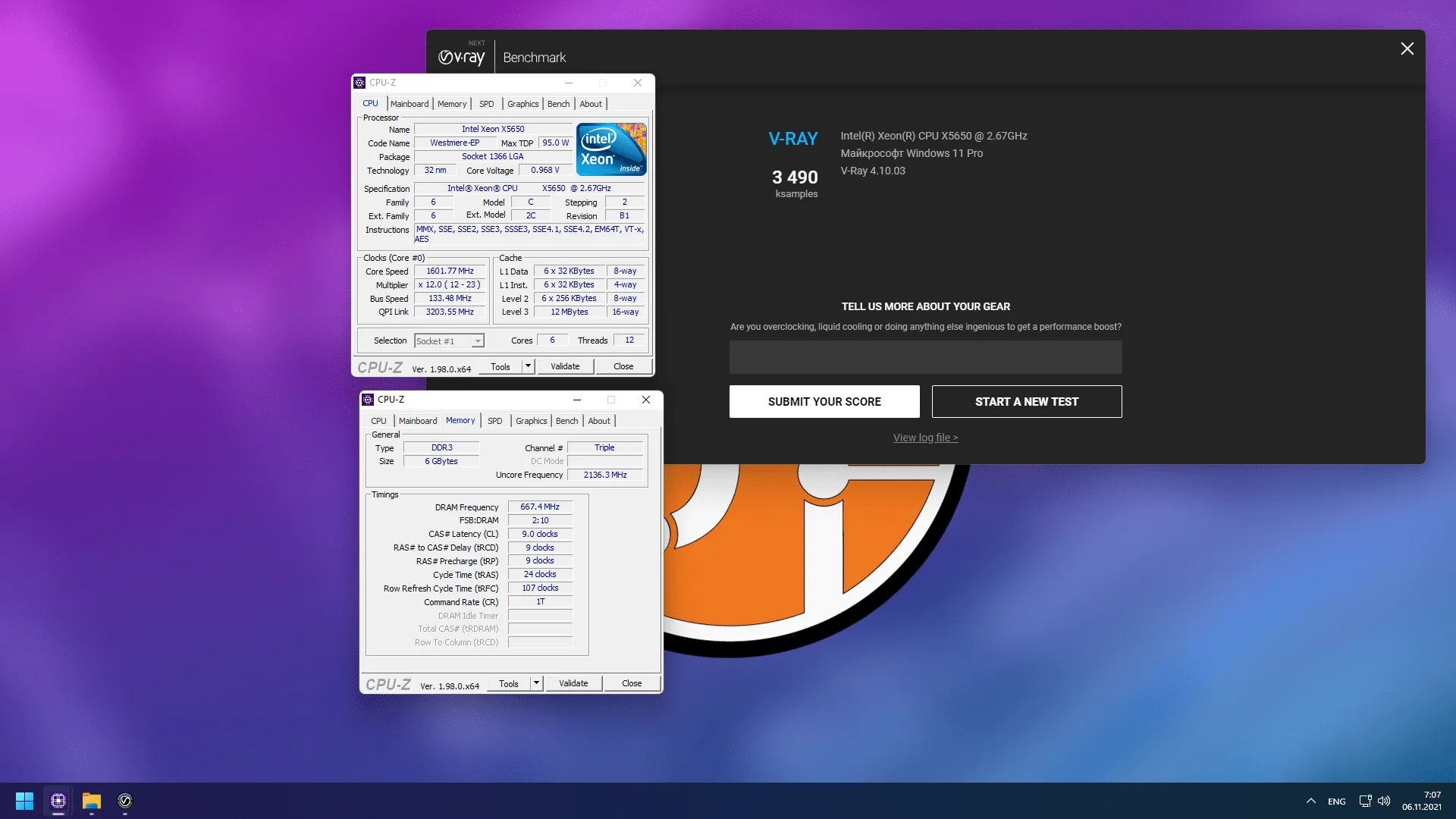
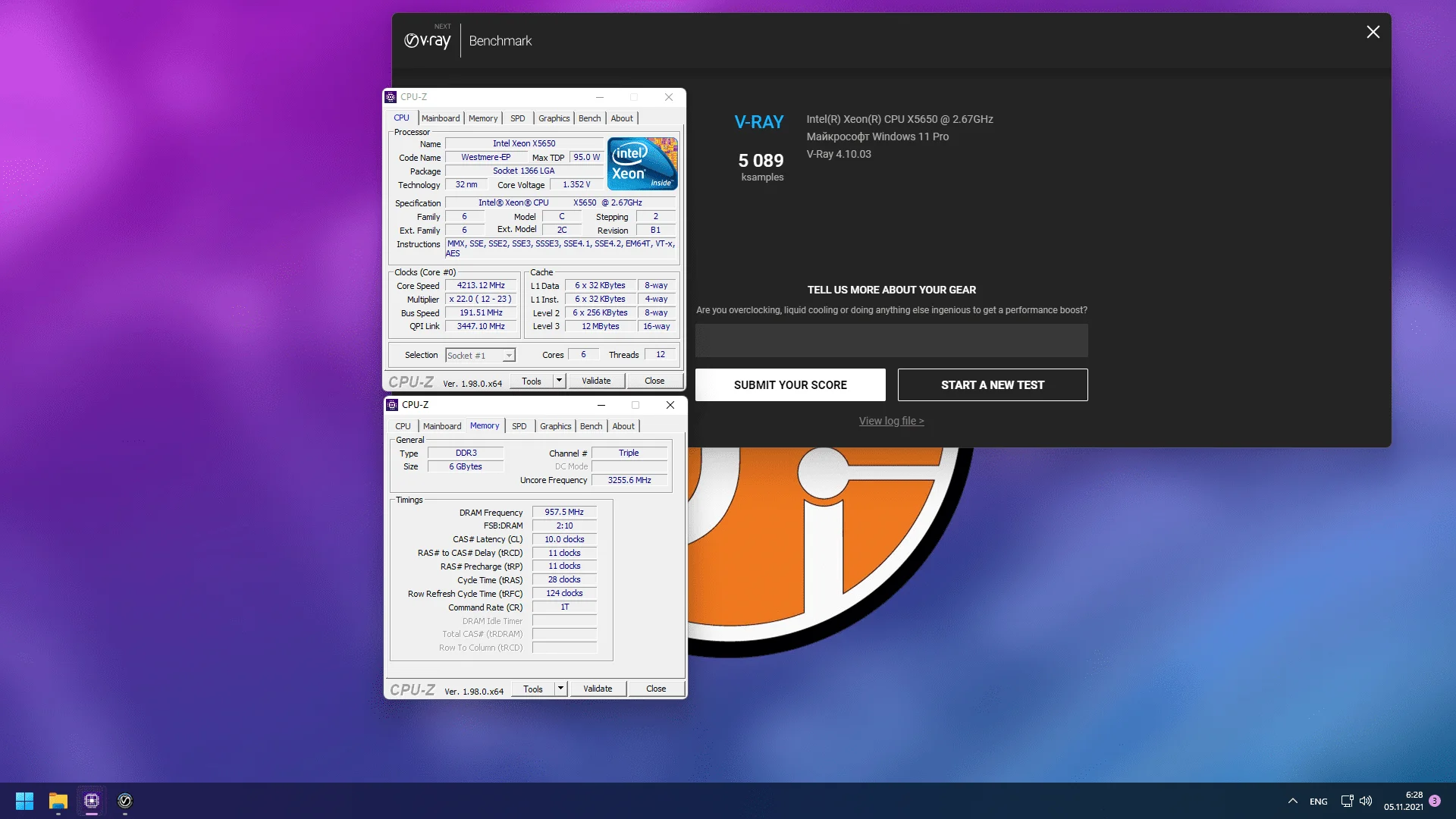
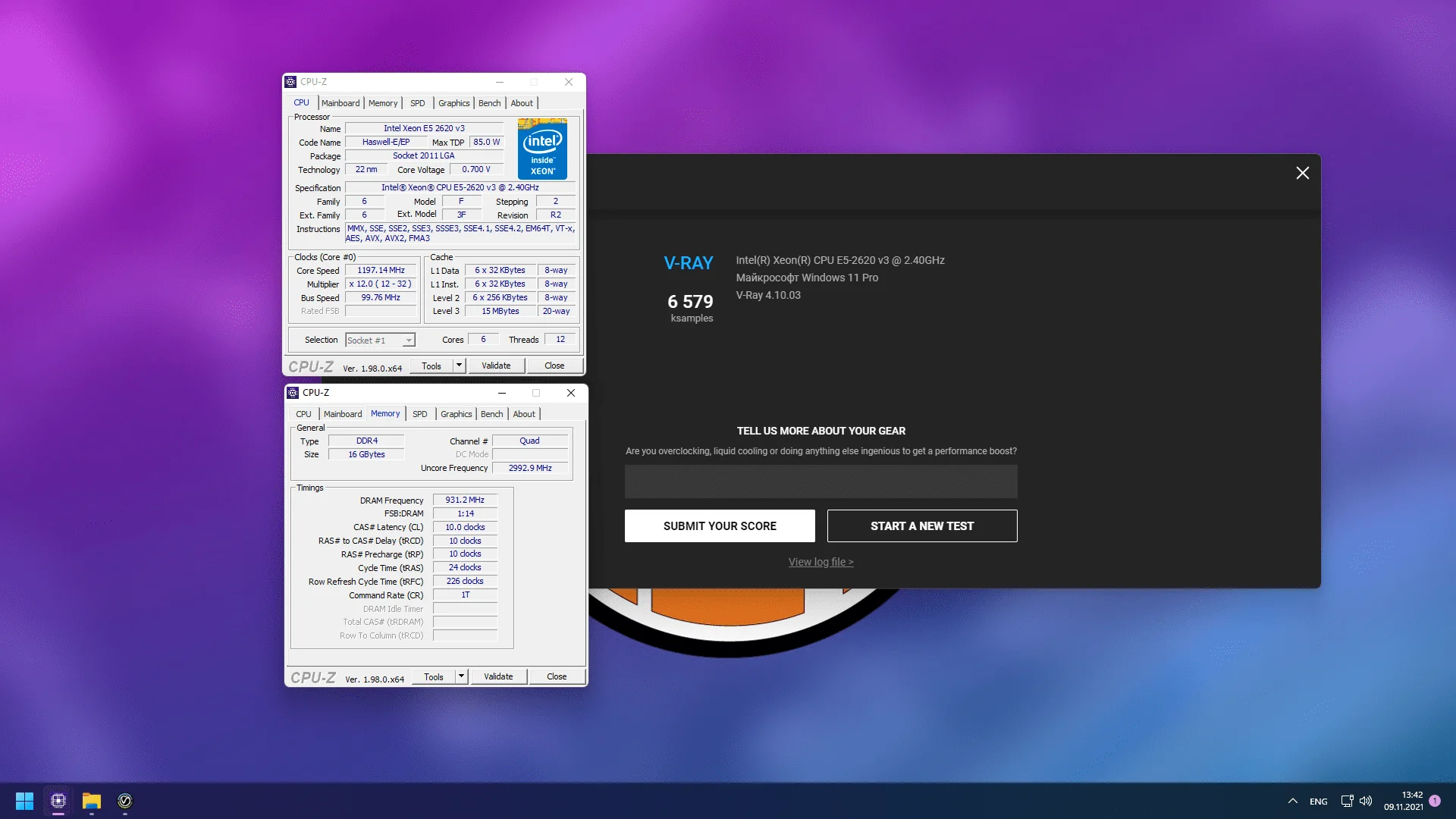
V-Ray 4
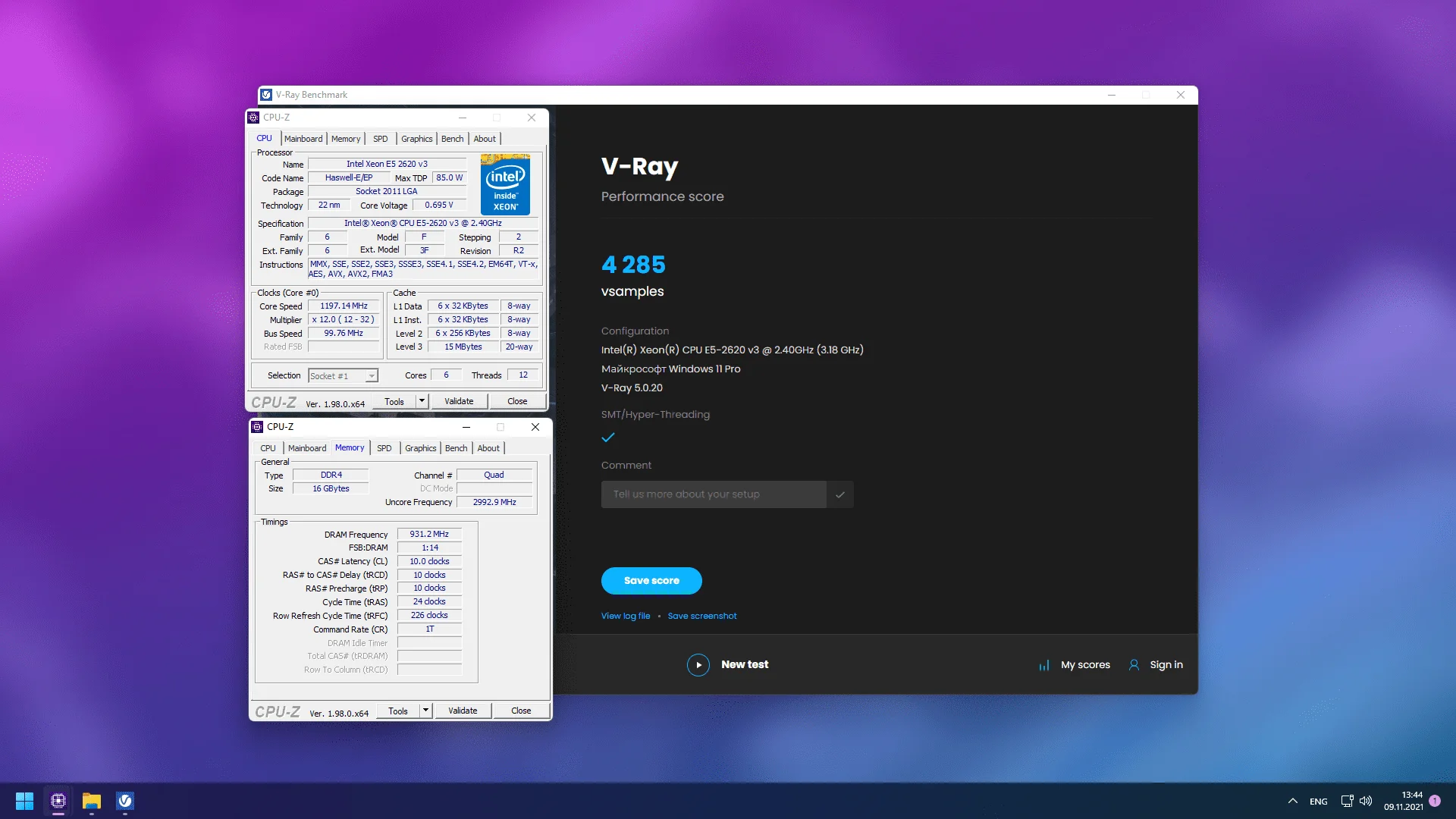
V-Ray 5
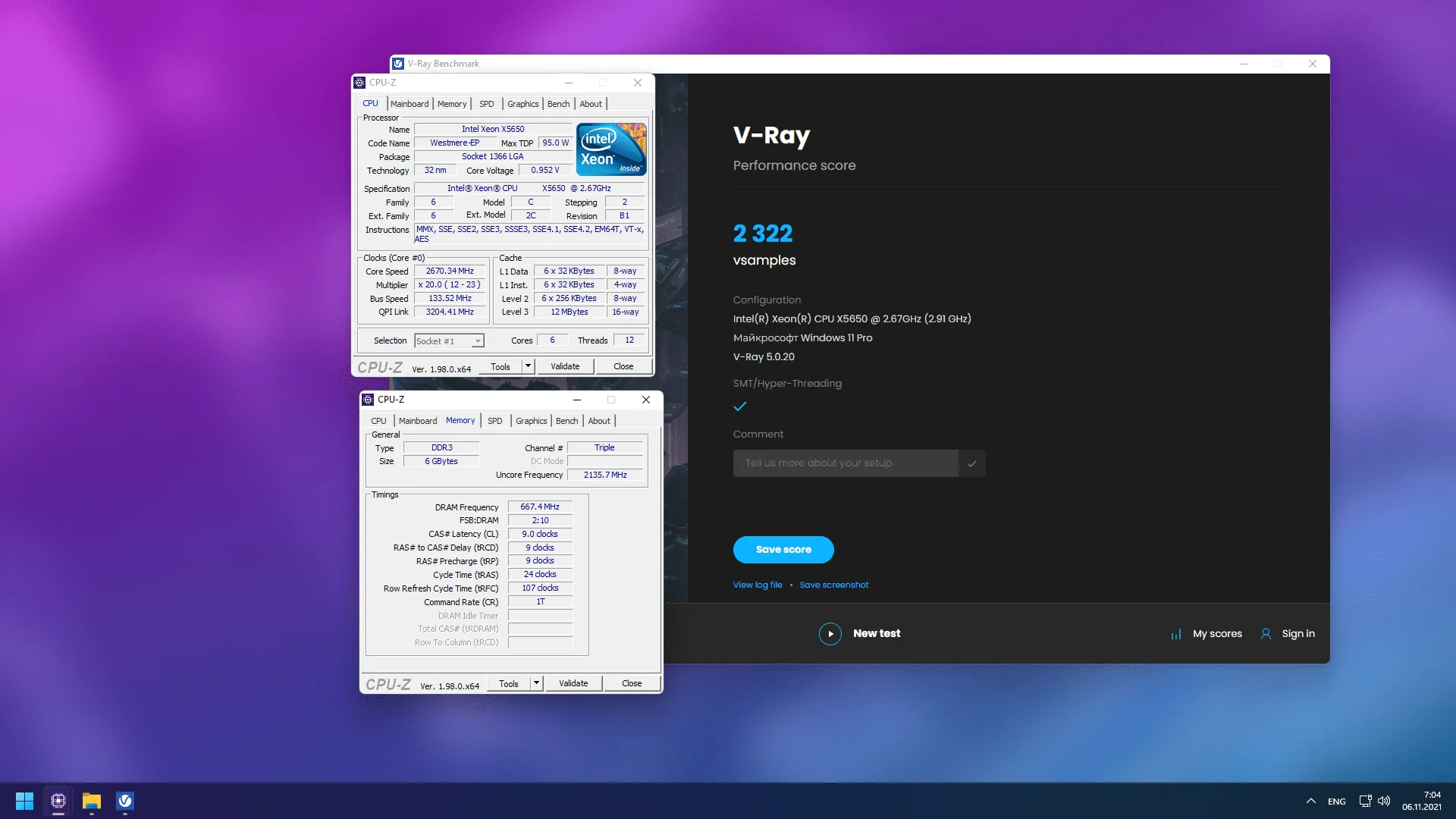
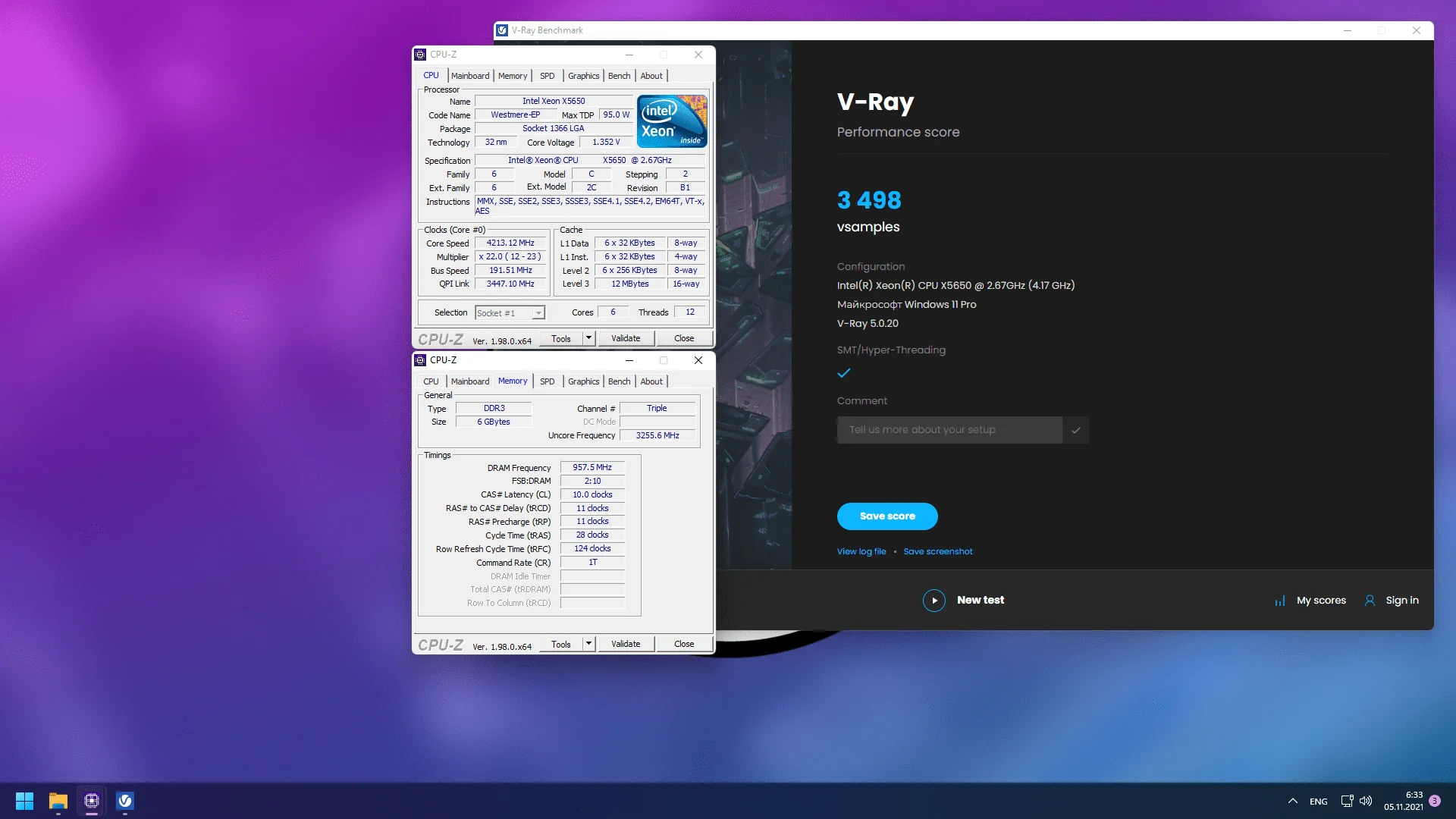
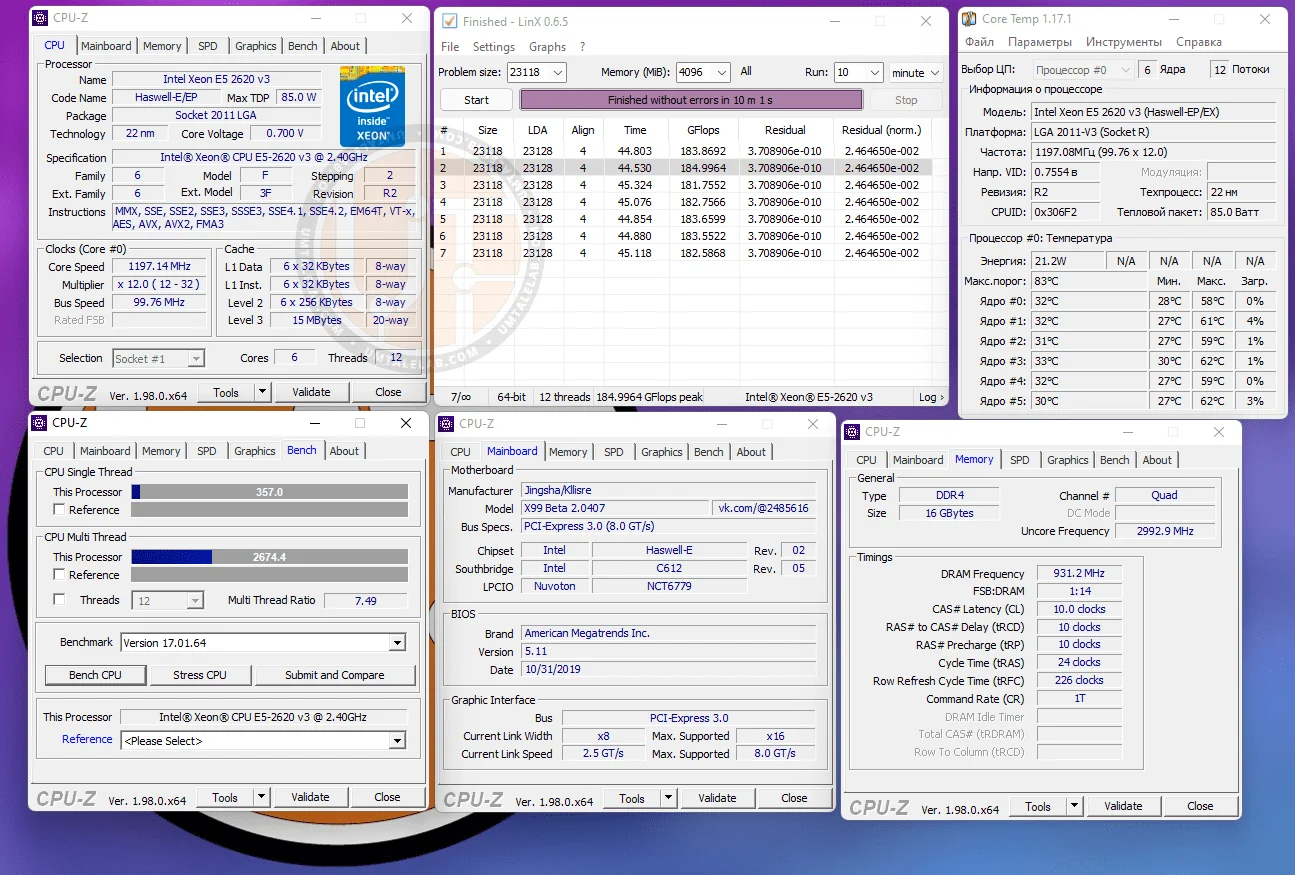
LinX
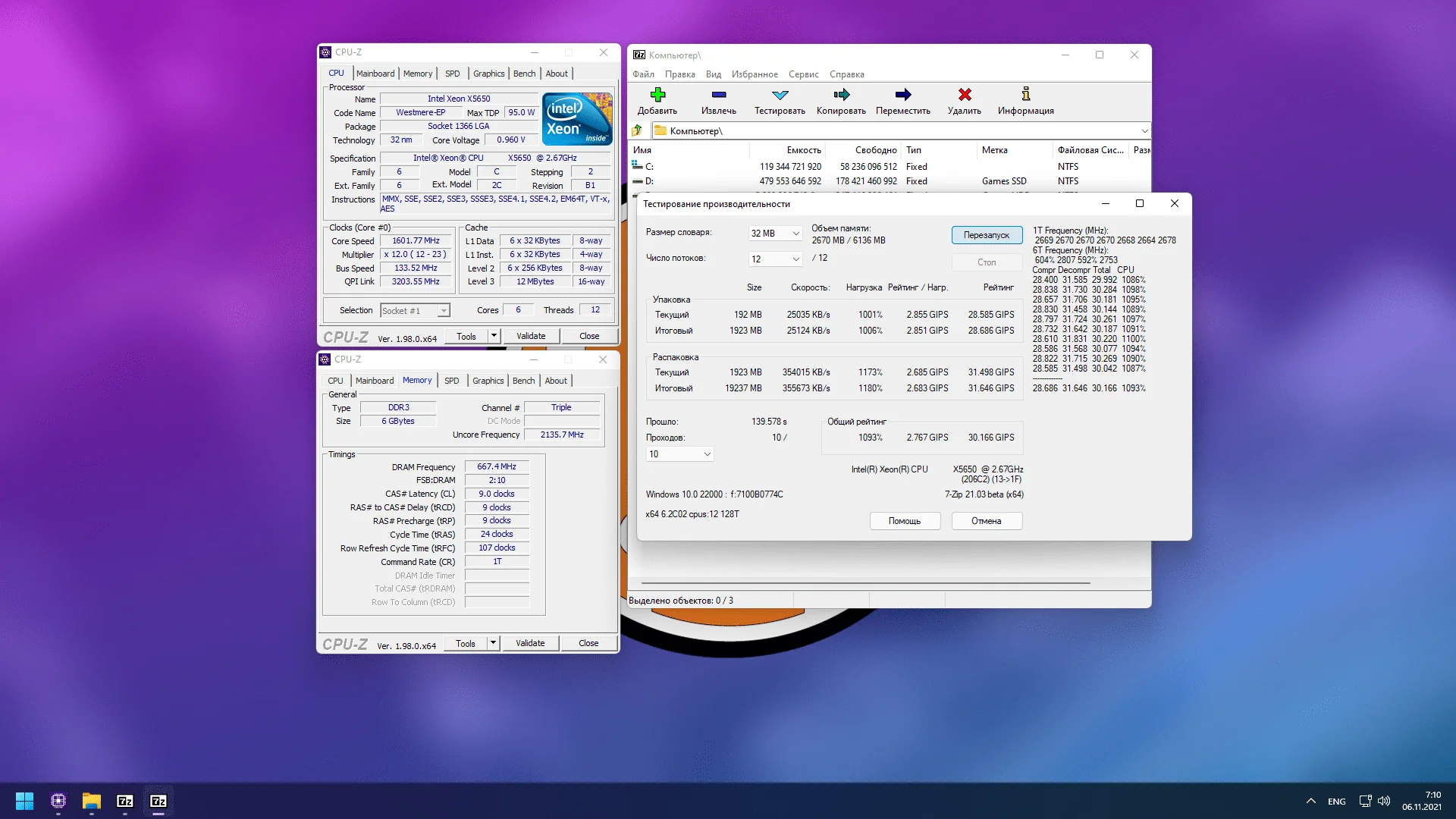
7-Zip
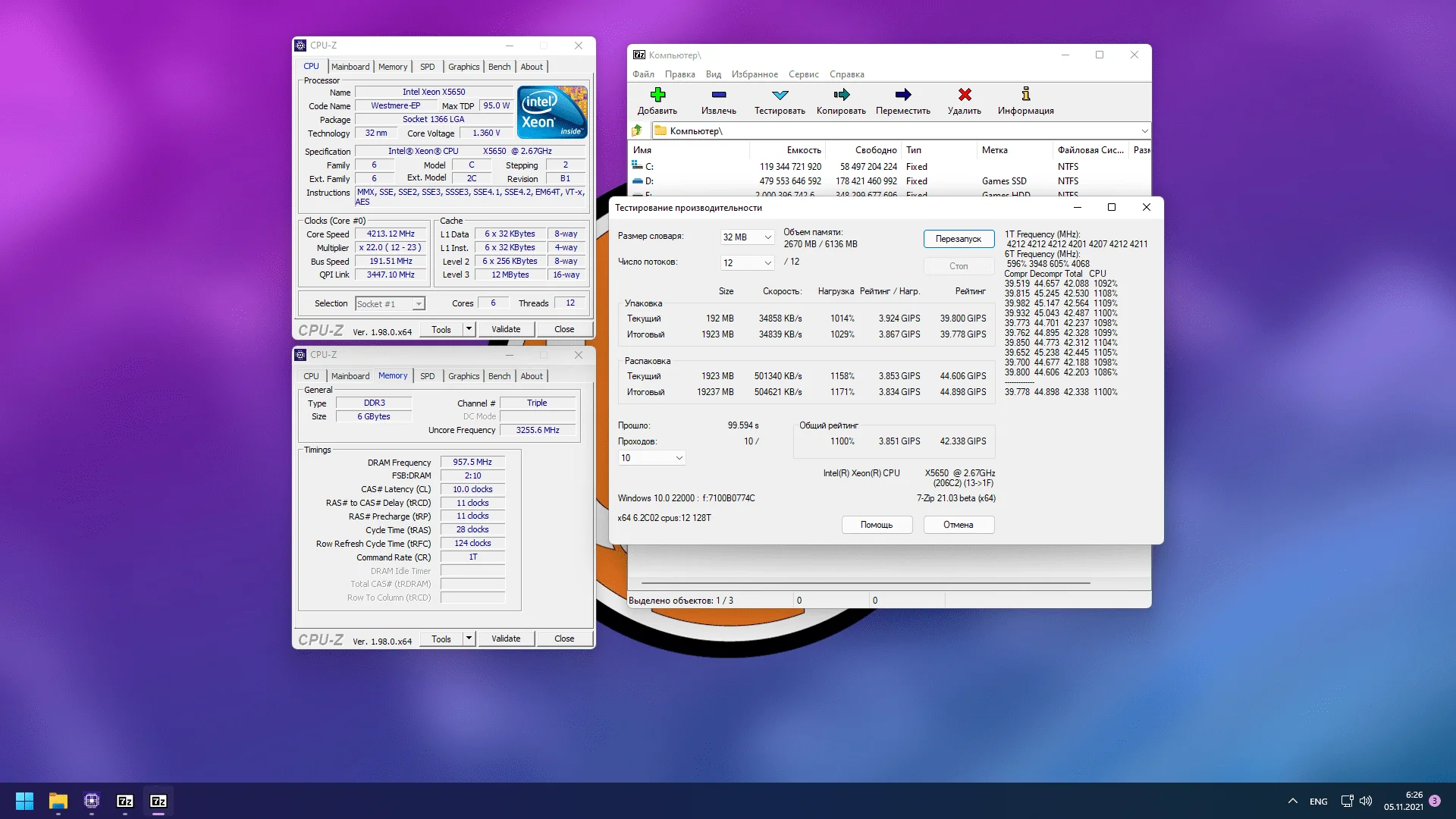
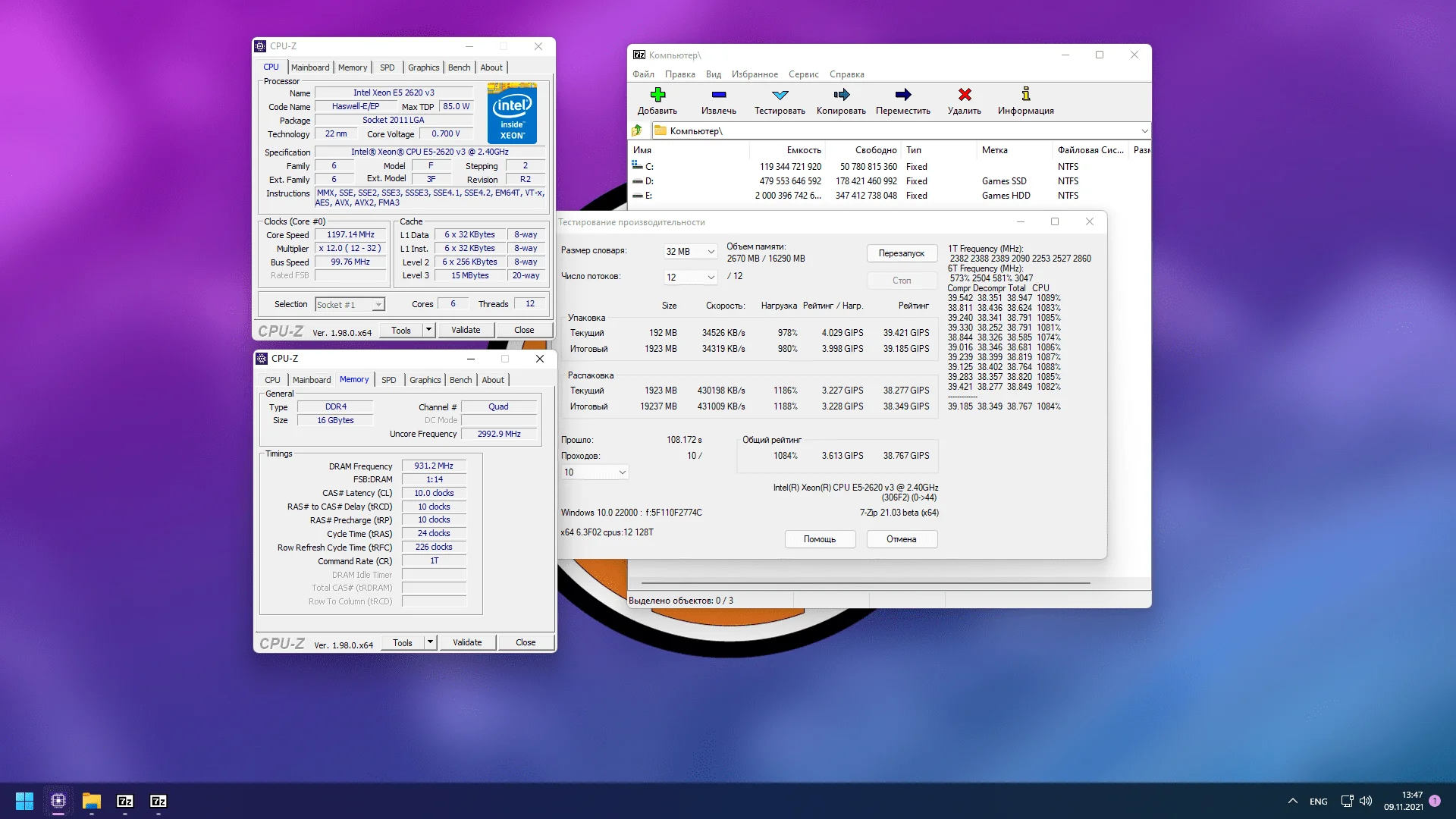
Benchmark | X5650@2667-2933MHz | X5650@4213MHz | E5-2620v3@3200MHz | Overclocking Gain | Difference between X5650@4213MHz and E5-2620v3@3200MHz |
Cinebench R15 | 648 | 977 | 963 | 50.77% | -1.43% |
Cinebench R20 | 1346 | 2017 | 2221 | 49.85% | +10.11% |
Cinebench R23 | 3438 | 4940 | 5658 | 43.68% | +14.53% |
V-Ray 4 | 3490 | 5089 | 6579 | 45.81% | +29.27% |
V-Ray 5 | 2322 | 3498 | 4285 | 50.64% | +22.49% |
LinX 0.6.5 | 51 | 73 | 182 | 43.13% | +149% |
7-Zip | 30166 | 42338 | 38768 | 40.35% | -8.43% |
Across all benchmarks, the average performance gain was an impressive ~46%, especially considering the clock speed only increased by 40%. While the X5650@4200MHz managed to slightly outperform the E5-2620v3@3200MHz in two of the seven tests, its significant lag in the other five effectively negates these minor victories.
Games
Far Cry 5
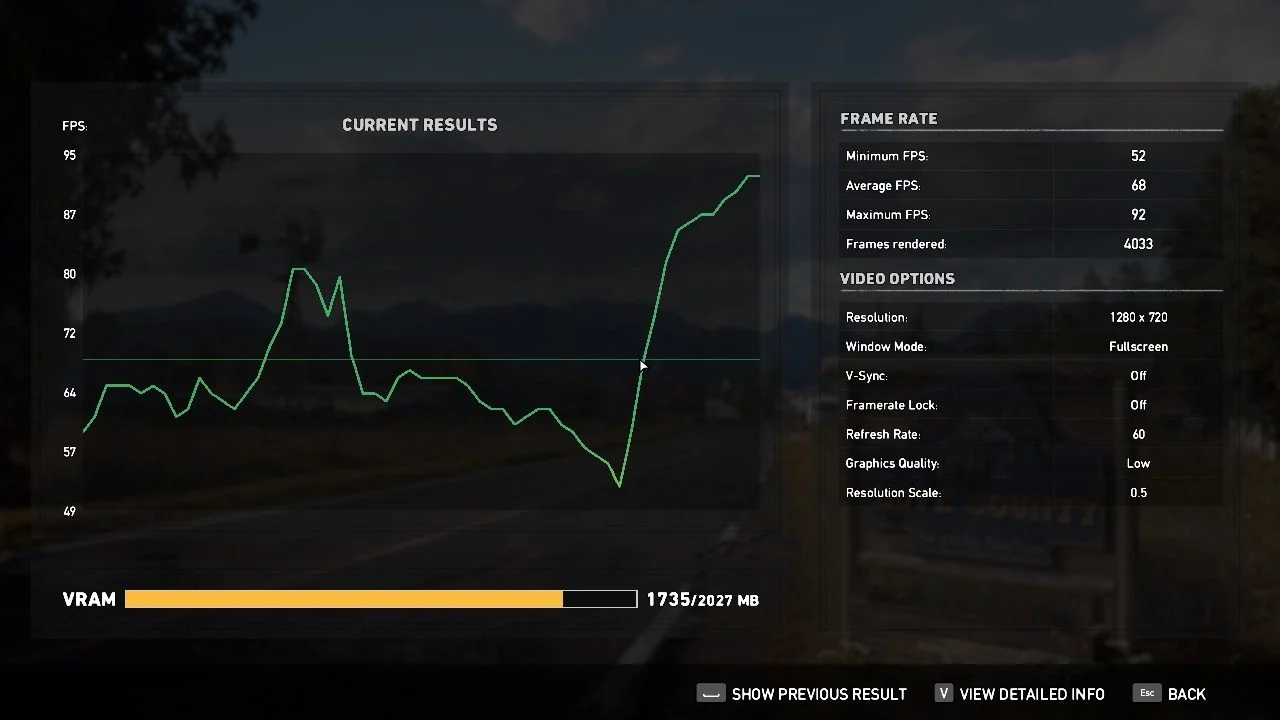
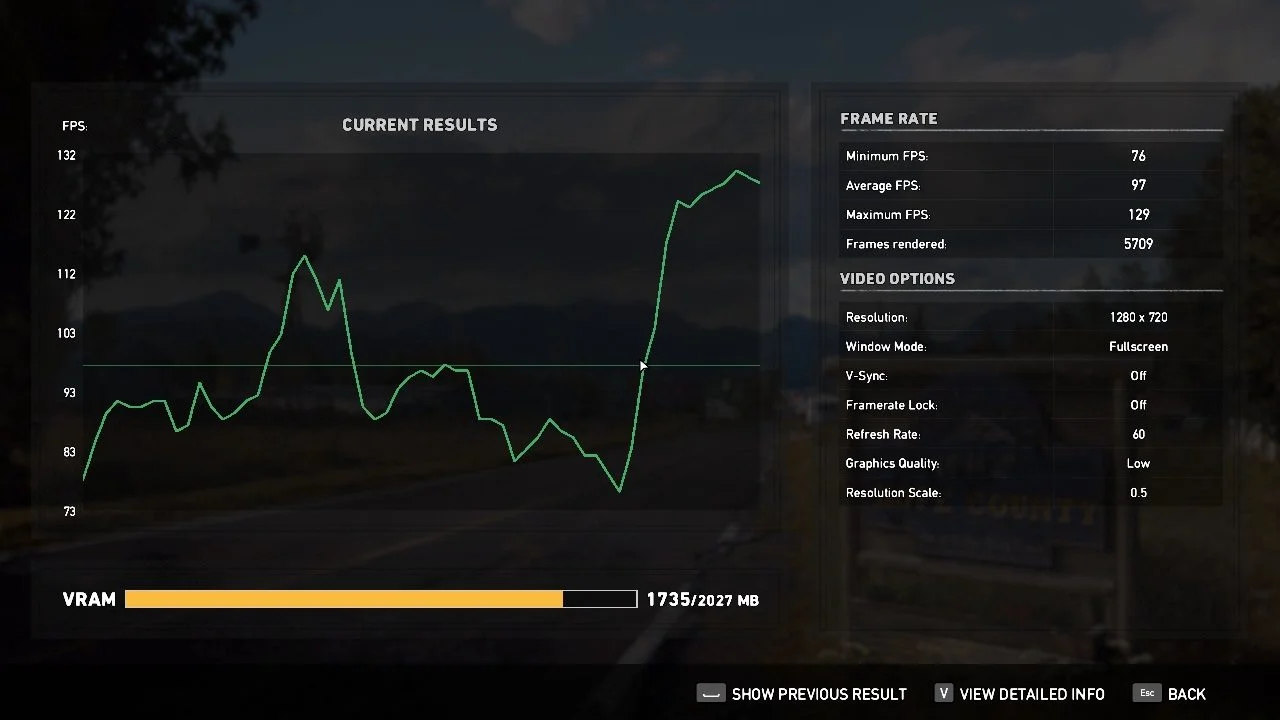
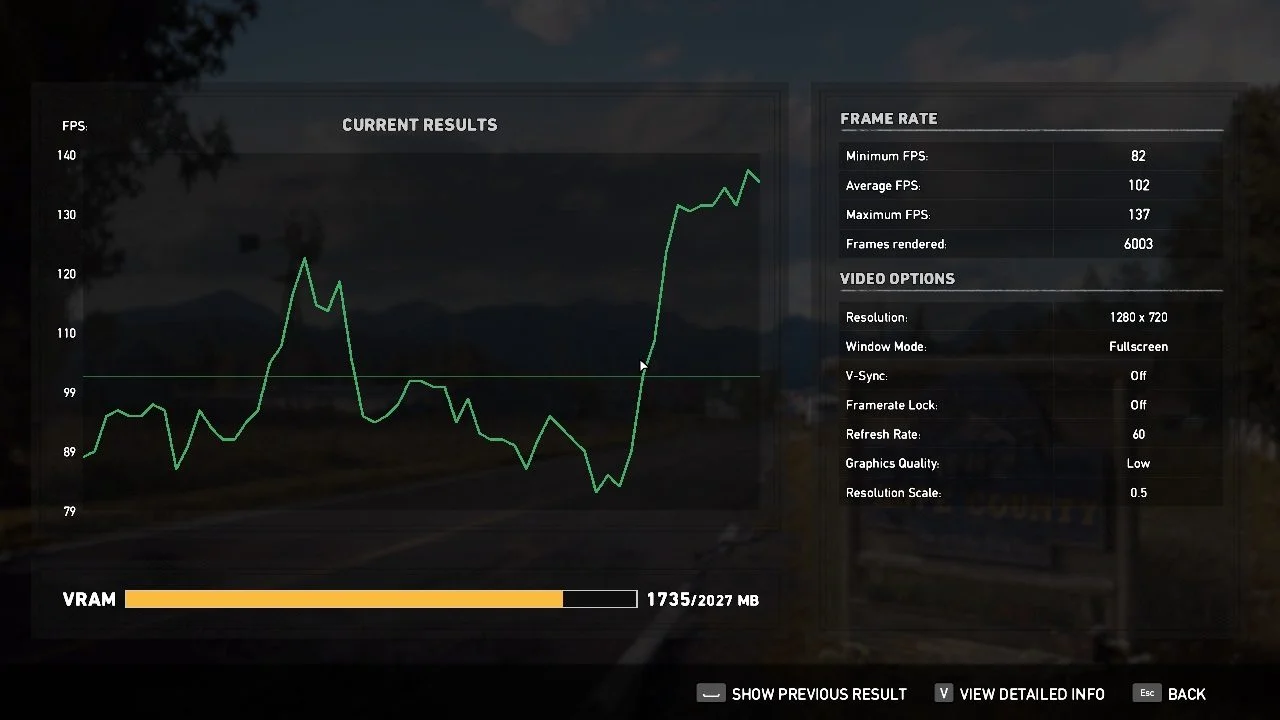
Far Cry 5 | Average FPS | Minimum FPS |
X5650@2667-2933MHz | 68 | 58 |
X5650@4213MHz | 97 | 76 |
E5-2620v3@3200MHz | 102 | 82 |
Overclocking gain | 42.64% | 31.03% |
Difference between X5650@4213MHz and E5-2620v3@3200MHz | +5.15% | +7.89% |
Watch Dogs Legion
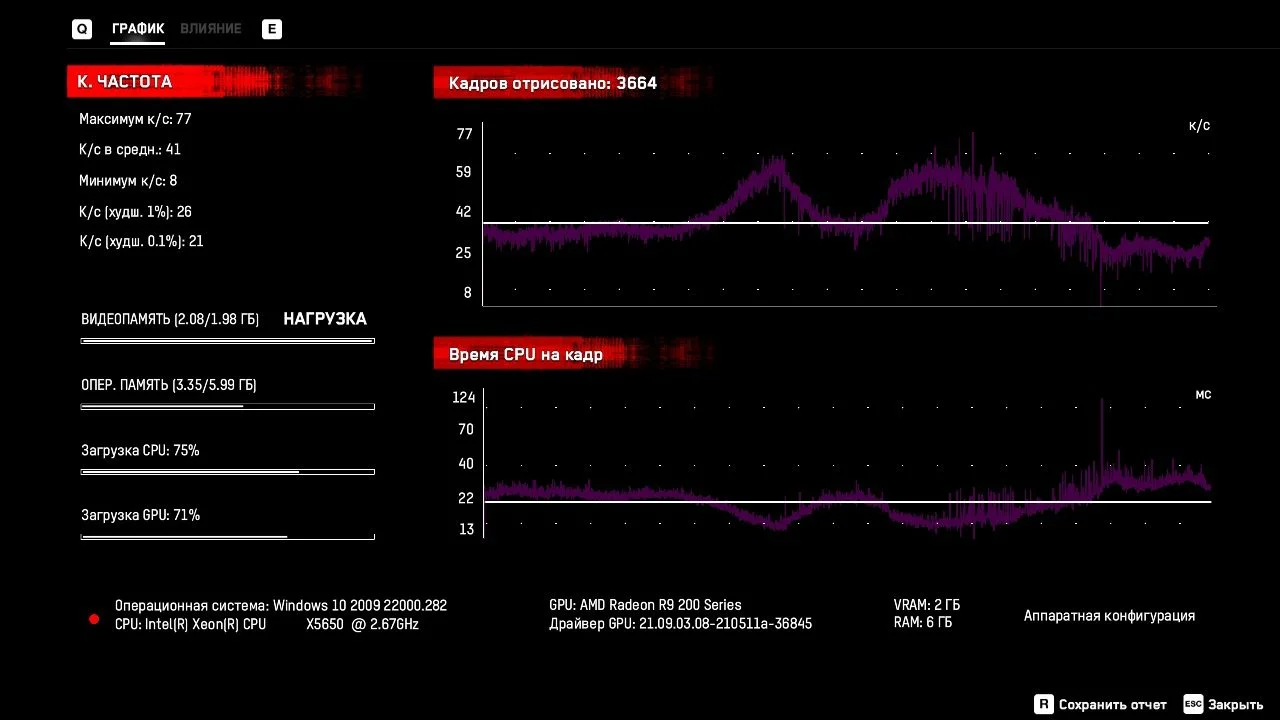
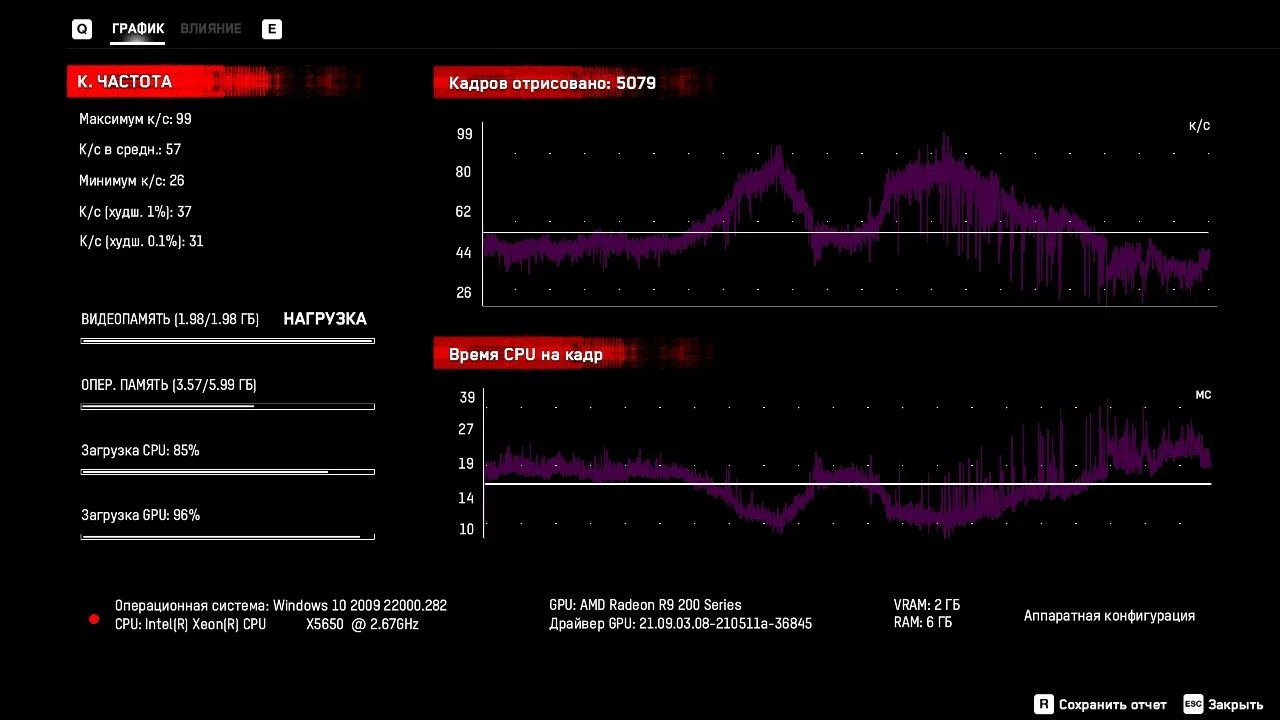
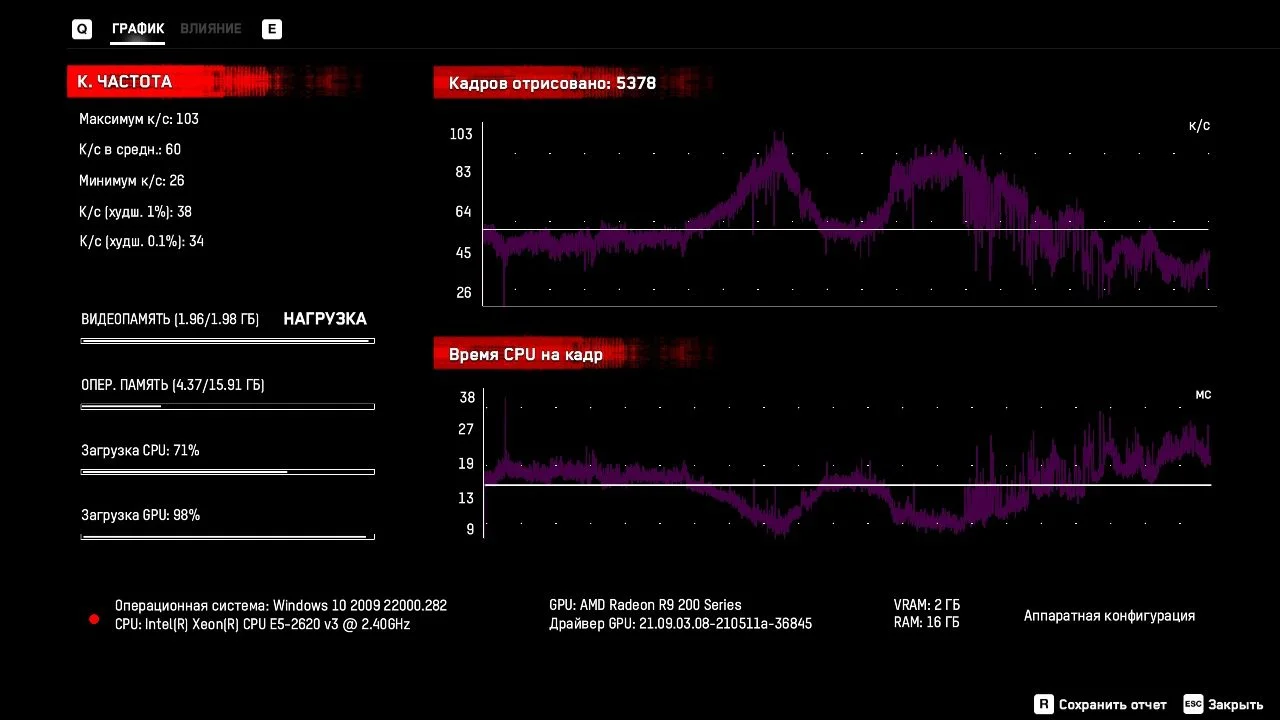
Watch Dogs Legion | Average FPS | Minimum FPS |
X5650@2667-2933MHz | 41 | 8 |
X5650@4213MHz | 57 | 26 |
E5-2620v3@3200MHz | 60 | 26 |
Overclocking gain | 39.02% | 225% |
Difference between X5650@4213MHz and E5-2620v3@3200MHz | 5.26% | 0% |
The average performance gain in games was around 40%. That's a solid result, especially since the CPU frequency increased by roughly the same amount. This essentially confirms a near-linear performance increase directly correlated with clock speed gains.
Notably, in Watch Dogs Legion, the stock chip delivered an extremely disappointing minimum framerate, even after averaging three runs. Overclocking, however, yielded a staggering 225% increase in minimum FPS.
The X5650@4200MHz trailed the E5-2620v3 by just 5% in games. Even with only two titles in our current selection, that's an impressive showing.
More in-depth benchmarks for these processors will be featured in an upcoming article, which will cover a trio of 6-core and a pair of 8-core CPUs. Keep an eye on our website for updates.
Summary
Let's kick things off with the overclock. While hitting 4200MHz isn't a bad outcome, it's not spectacular either; it's pretty average. Roughly 60% of all existing 6-core Westmere-EP processors (excluding ultra-low-frequency models) should manage a similar clock speed. For an 11-year-old chip, that's entirely acceptable.
The frequency increased by 40%, yielding roughly a 40% performance boost — a pretty linear correlation. But the real question is whether the juice is worth the squeeze.
A branded motherboard capable of overclocking LGA 1366-compatible CPUs will set you back around $100, which is comparable to a decent Chinese board for the LGA 2011 v3 platform. Factor in $30-50 for a cooling system to keep thermals in check, and a quality 600-700 watt power supply could easily push past the $80-100 mark.
While you can effectively write off the $100 for the motherboard due to similar pricing across platforms, justifying the roughly $120 spent on the PSU and cooler is a tougher sell. Furthermore, remember that an overclocked processor will draw significantly more power than a stock E5-2620v3 or comparable chips.
Simply put, in 2021, overclocking older LGA 1366 processors isn't a particularly cost-effective decision from a financial perspective.
It's a different story, however, if you already own all the aforementioned components and are now asking yourself, "Is it worth it?" In that scenario, absolutely. If overclocking won't cost you any additional investment, then by all means, go for it. Just remember: all modifications to your hardware are performed at your own risk.
If you found this material useful and would like to see more similar tests on UmTale Lab, please support our site on Patreon! The primary goal of our fundraising efforts is to expand our component inventory and enhance testing quality. This includes replacing our test bench drive with a higher-capacity SSD and purchasing a capture card to minimize the impact of gameplay recording (via ShadowPlay) on final benchmark results, among other improvements.