NEWS · HARDWARE
PUBLISHED
READING2 min
AMD Ryzen 7 5800X is a worse deal than Intel's Core i7-10700K in price-to-performance value
The Ryzen 7 5800X costs 19% more than the Core i7-10700K but is only 5% faster in games, making Intel's CPU the better buy.
According to extensive testing by our colleagues at TechSpot (be sure to check out their full review), AMD's new 8-core processor isn't nearly as good of a value as Team Red claimed.
For starters, the Ryzen 7 5800X starts at $450, whereas Intel's equivalent 8-core, 16-thread Core i7-10700K can be found for $380. That $70 difference is significant. Even though AM4 motherboards generally cost less than LGA 1200 ones, the CPU price gap is so wide that it easily offsets any motherboard savings.
But maybe the Ryzen 7 5800X is so much faster than the Core i7-10700K that the premium is fully justified? In productivity apps, absolutely. AMD's chip dominates the i7-10700K in virtually every benchmark, making it the obvious choice for creative pros. Gaming, however, is a different story. Let's look at the benchmarks:
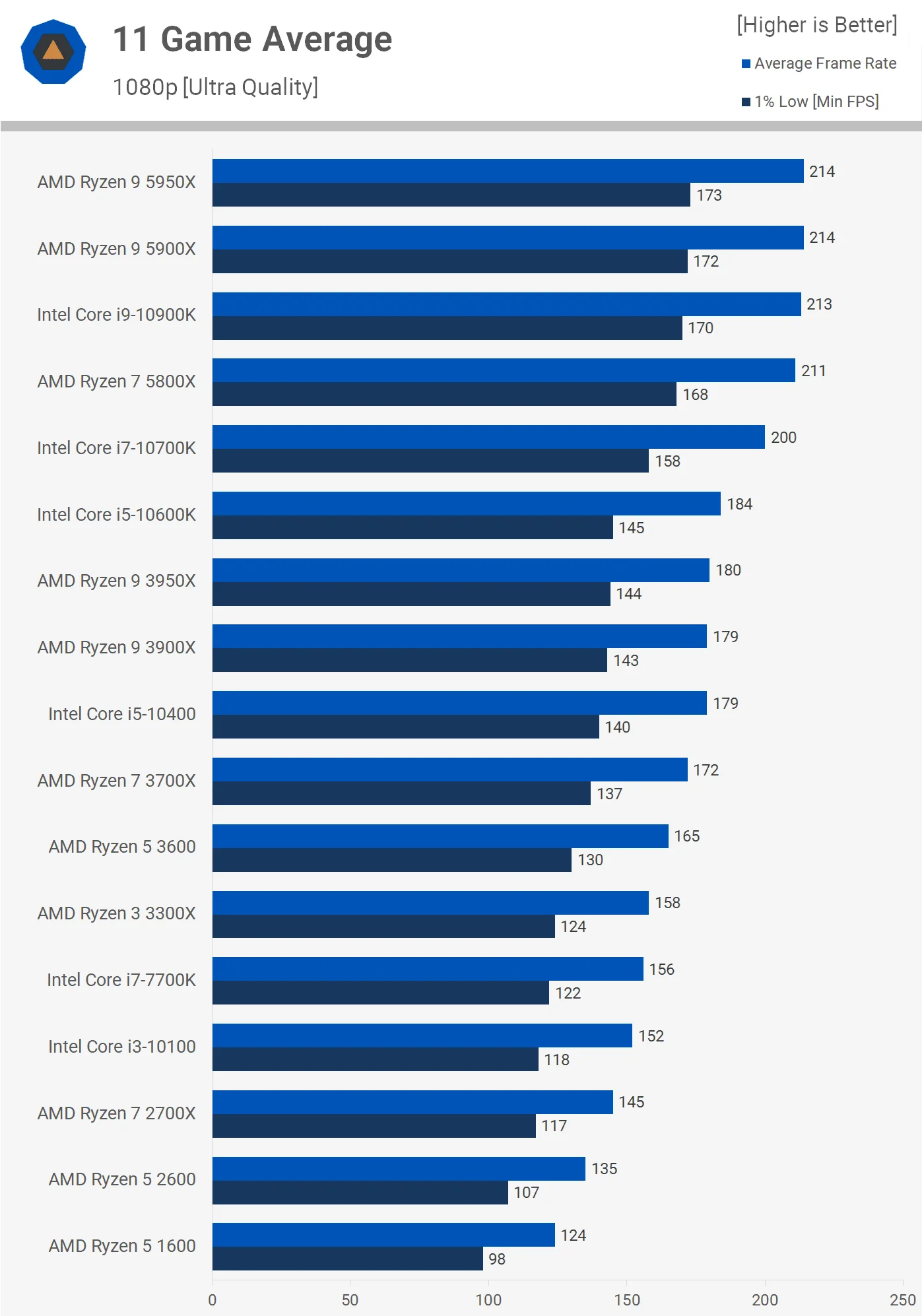
And here is the average gaming performance of the Ryzen 7 5800X across 11 titles:
 ⤢ ВІДКРИТИ
The Ryzen 7 5800X does edge out the Core i7-10700K, and AMD has finally beaten Intel in single-core performance. However, from a value perspective, the Ryzen 7 5800X is a tough sell: for a mere 5% performance advantage, AMD is charging a whopping 19% premium over the Core i7-10700K.
This leaves PCIe 4.0 support as the Ryzen 7 5800X's only major selling point (and only on 500-series motherboards). If you don't need it, the cheaper Intel Core i7-10700K is likely the smarter buy. That's especially true since the LGA 1200 platform will support at least one more CPU generation, while the Ryzen 5000 series is the end of the road for the AM4 socket.